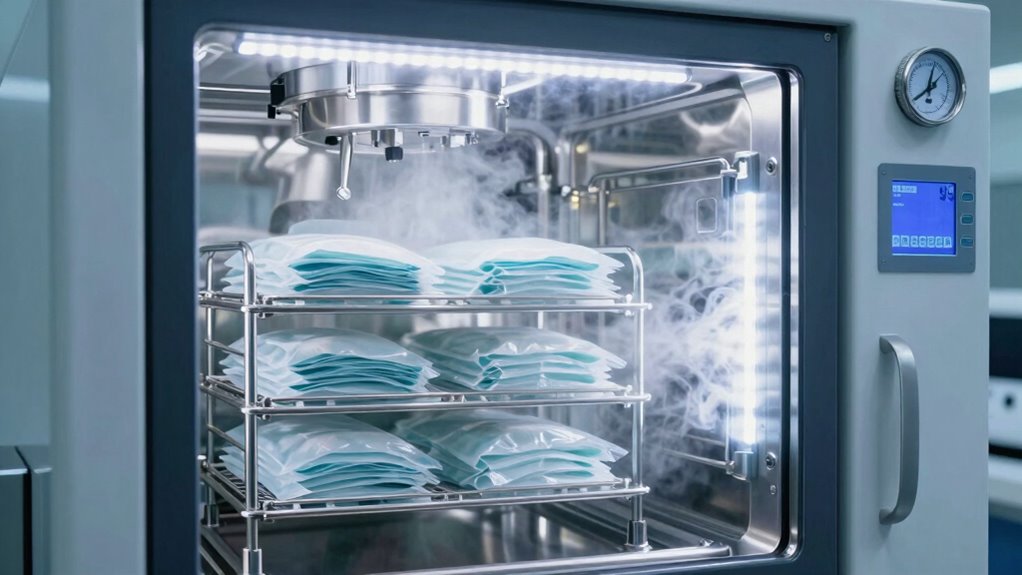
Autoclave cycles include gravity displacement and pre-vacuum methods, each suited to different sterilization needs. Gravity cycles rely on steam’s weight to push air out, making them ideal for porous items and standard tools, while pre-vacuum cycles use a vacuum pump to remove air quickly, better for wrapped or complex items like lumens and endoscopes. Understanding when each cycle functions helps guarantee your sterilization process is effective; continue to explore to master their proper use.
Key Takeaways
- Gravity cycles displace air naturally with steam, suitable for porous or heat-tolerant items.
- Pre-vacuum cycles use a vacuum pump to remove air, providing faster sterilization.
- Gravity cycles are ideal for simple loads like glassware and surgical tools; pre-vacuum suits complex or lumened instruments.
- Pre-vacuum cycles are more effective for wrapped, dense, or complex items due to better steam penetration.
- Choose the cycle type based on item material, load complexity, and sterilization speed requirements.

Have you ever wondered how sterilization in medical and laboratory settings guarantees safety? It all begins with strict sterilization protocols designed to eliminate all forms of microbial life, ensuring that equipment is safe for patient care and experiments. Central to these protocols is the autoclave, a device that uses pressurized steam to achieve sterilization. To keep autoclaves functioning effectively, proper equipment maintenance is essential. Regularly inspecting seals, gauges, and safety valves prevents malfunctions that could compromise sterilization. When equipment is properly maintained, you can trust that each cycle will meet safety standards. Understanding the different autoclave cycles is key to selecting the right process for your needs. The two main types are gravity displacement and pre-vacuum cycles. Gravity autoclaves operate by displacing air in the chamber through the weight of the steam. You load sterilization packs, close the door, and the steam naturally pushes out the air by gravity. These cycles are suitable for items that can tolerate longer exposure times and are generally used for routine sterilization of surgical tools, glassware, or other porous materials. They are straightforward but slower compared to pre-vacuum cycles. Pre-vacuum autoclaves, on the other hand, use a vacuum pump to remove air from the chamber before steam is introduced. You’ll notice that these cycles are faster because the vacuum ensures that steam penetrates every crevice and pore of the items being sterilized. This makes pre-vacuum cycles ideal for sterilizing a wide range of instruments, especially those with complex geometries or lumens, such as endoscopes or catheters. When choosing between the two, consider the nature of your items and the requirements of your sterilization protocols. Pre-vacuum cycles tend to be more effective for wrapped or dense loads, but they do require more sophisticated equipment and regular maintenance to keep the vacuum system functioning properly. Both cycle types have their place in maintaining a sterile environment, but understanding when each works best helps you maximize sterilization efficacy. Proper equipment maintenance, including calibration and routine checks, guarantees that whichever cycle you choose, it will reliably sterilize your items. Regular validation of autoclave performance through biological indicators and sterilization records reinforces confidence that your protocols are effective. Additionally, understanding autoclave cycle types and their specific applications can help optimize sterilization processes for different materials. By selecting the appropriate cycle and maintaining your autoclave diligently, you uphold safety standards, prevent contamination, and protect everyone who comes into contact with sterilized items.
Frequently Asked Questions
Can Autoclaves Sterilize Liquids Effectively?
Yes, autoclaves can sterilize liquids effectively if you choose the right cycle. For liquid sterilization, pre-vacuum cycles are generally more effective because they remove air and guarantee steam penetrates thoroughly. Gravity cycles might not be as efficient because air can trap around liquids, reducing cycle efficacy. Always follow manufacturer instructions and use suitable sterilization containers to maximize sterilization success.
How Long Does Each Autoclave Cycle Typically Last?
The cycle duration for autoclaves varies between 15 to 30 minutes, depending on the type and load. You should expect a sterilization time of about 15 minutes for standard gravity cycles and roughly 20-30 minutes for pre-vacuum cycles. Keep in mind that the total cycle time includes heating, sterilization, and cooling. Always follow manufacturer guidelines for best sterilization and safety.
Are There Specific Materials Incompatible With Each Cycle Type?
Think of your autoclave as a gatekeeper—some materials just won’t pass through certain cycles. You should avoid using gravity cycles for porous or delicate items like plastics, which are incompatible due to cycle limitations. Pre-vac cycles work better for wrapped or delicate materials, but they can damage heat-sensitive items. Always check material compatibility to prevent damage, ensuring your sterilization process remains effective and safe.
What Maintenance Is Required for Gravity and Pre-Vac Cycles?
You need to follow sterilization protocols and adhere to maintenance schedules for both gravity and pre-vac cycles. Regularly check and clean the sterilizer’s door seals, remove mineral deposits, and verify temperature and pressure gauges. Lubricate moving parts as recommended, and schedule periodic professional inspections. These practices guarantee consistent performance, prevent malfunctions, and preserve the effectiveness of each cycle, ultimately safeguarding your sterilization process and extending your autoclave’s lifespan.
How Do Autoclaves Handle Complex or Porous Items?
Handling complex or porous items in an autoclave is like navigating a maze—you need the right strategy. For porous materials and challenging complex items, pre-vac cycles are your best bet, as they ensure steam penetrates every nook and cranny. Gravity cycles may struggle with these materials, leaving some areas unsterilized. Choose the cycle that guarantees thorough sterilization, making certain no hidden corner escapes the steam’s reach.
Conclusion
Choosing the right autoclave cycle depends on your specific sterilization needs. Gravity and pre-vac cycles each have advantages, so understanding when to utilize them ensures effective sterilization. Did you know that properly maintained autoclaves can achieve sterilization in as little as 15 minutes? By selecting the correct cycle, you guarantee safety and compliance. Stay informed and optimize your sterilization process to protect patients and staff alike.