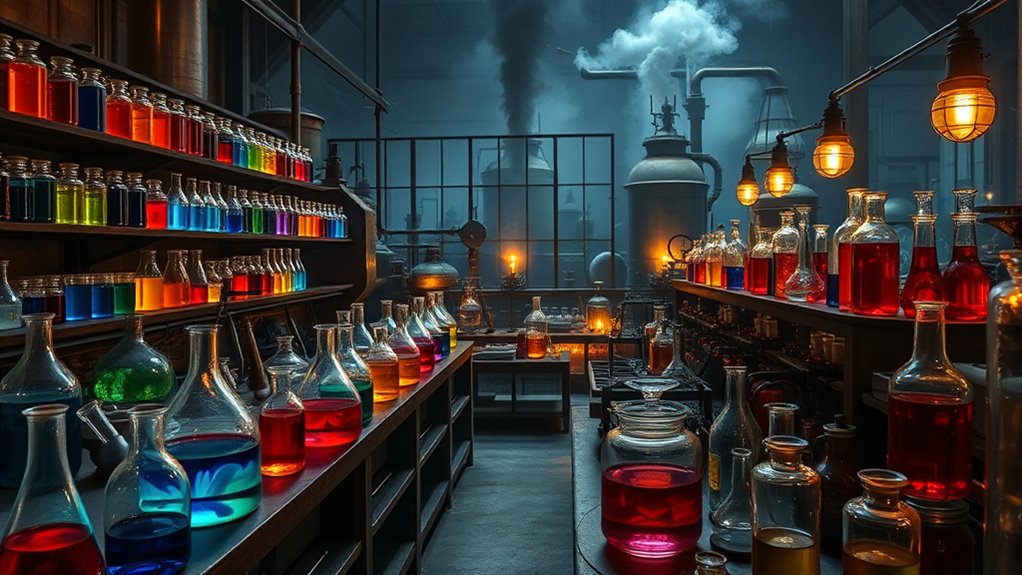

The journey from coal tar to dyes marks the rise of the modern chemical industry. You’ll see how early pioneers used coal tar, a byproduct of coal processing, to create vibrant and durable synthetic dyes. These breakthroughs transformed textiles, fashion, and medicine, fueling industrial growth. The development of synthetic dyes showcased the power of chemical innovation and set the stage for countless products we rely on today. If you want to uncover more about this fascinating history, keep exploring.
Key Takeaways
- Coal tar, a coal processing byproduct, became essential for synthesizing dyes and chemicals during the early chemical industry.
- The industrial revolution accelerated chemical innovations, enabling mass production of synthetic dyes from coal tar derivatives.
- Synthetic dyes replaced natural ones, offering brighter, more durable colors for textiles and revolutionizing the fashion industry.
- Advances in chemical science and molecular manipulation led to the development of a wide array of synthetic compounds.
- The use of coal tar marked the foundation of modern chemical manufacturing, shaping the global industry and societal impact.
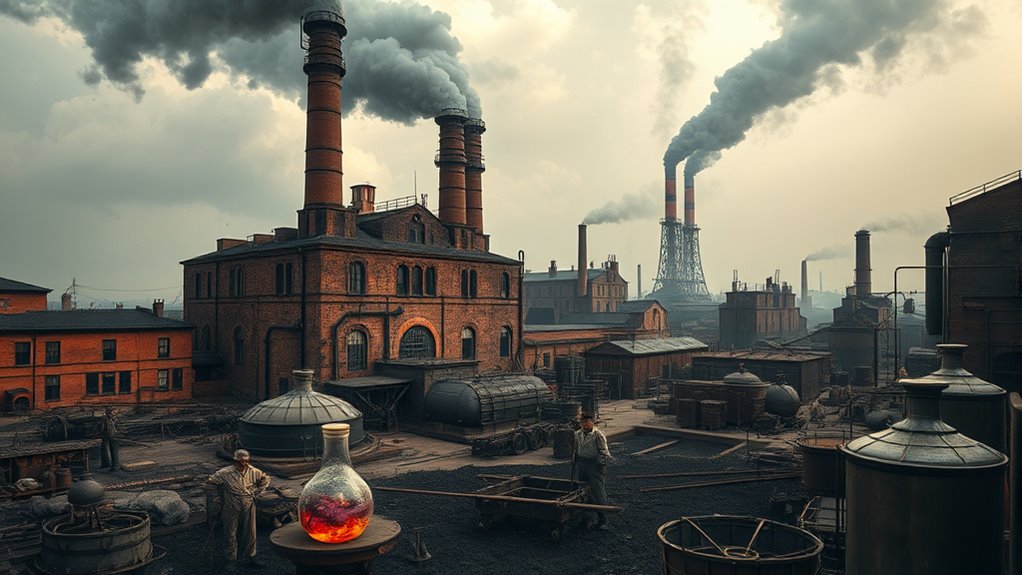
The chemical industry has a rich history that traces back to ancient civilizations, where early humans used natural substances for dyes, medicines, and tools. These early practices laid the groundwork for more sophisticated chemical processes that would emerge centuries later. As societies advanced, the demand for brighter dyes, more effective medicines, and durable materials grew, setting the stage for significant developments during the industrial revolution. This period marked a turning point when technological innovations transformed the way chemicals were produced and utilized. Factories began harnessing coal and other raw materials to create new substances, fueling rapid industrial growth. It was during this era that the foundation for modern chemical manufacturing was laid, driven by the pursuit of synthetic compounds that could replace natural resources or improve upon them.
The industrial revolution introduced groundbreaking methods like the chemical synthesis of dyes, which revolutionized textiles and fashion. Before this, natural dyes derived from plants and minerals were limited in color variety and stability. The advent of synthetic compounds changed everything by enabling the mass production of vibrant, long-lasting dyes. You now had access to a palette of colors that were previously impossible to achieve with natural ingredients. This shift not only boosted the textile industry but also demonstrated the transformative power of chemical innovation. As industries expanded, scientists and entrepreneurs focused on developing new synthetic compounds for medicines, plastics, and other materials. They experimented with coal tar, a byproduct of coal processing, which became a goldmine for creating dyes and chemicals. This resource unlocked an era of rapid discovery, as chemists learned how to manipulate molecular structures to produce a wide array of synthetic substances. Additionally, advances in fraud detection techniques helped ensure the safety and integrity of chemical products, building consumer trust.
The rise of the synthetic compounds industry didn’t just change manufacturing; it altered society’s relationship with chemicals. You can trace many modern products—medications, plastics, and even cleaning agents—back to these early innovations rooted in coal tar chemistry. As the industry grew, so did the understanding of chemical reactions and molecular design. This period saw the birth of specialty chemicals that served specific purposes, paving the way for a global industry driven by innovation and scientific discovery. The industrial revolution’s influence on the chemical industry was profound, setting the stage for the complex, interconnected global market we see today. Without this pivotal era, the development of synthetic compounds and the modern chemical industry would have taken a vastly different trajectory, shaping everything from healthcare to technology in ways early chemists could only imagine.

Rit Back to Black Dye Kit
- Restores faded clothing to black: Restores faded clothing to a rich black in a few easy steps
- Dyes any fabric color to black: Overdye clothing of any color to a vibrant black
- Suitable for various fabrics: Perfect for cotton, linen, silk, wool, rayon, ramie, or nylon
As an affiliate, we earn on qualifying purchases.
As an affiliate, we earn on qualifying purchases.
Frequently Asked Questions
How Did Coal Tar Discovery Influence Modern Chemical Processes?
Your discovery of coal tar derivatives revolutionized modern chemical processes by enabling the development of synthetic dyes. This breakthrough allowed you to create vibrant, lasting colors that were previously impossible with natural dyes. You now rely on coal tar derivatives to innovate in industries like textiles, pharmaceuticals, and plastics, making chemical manufacturing more efficient and versatile. This discovery truly laid the foundation for the expansive growth of the chemical industry today.
What Were the Environmental Impacts of Early Dye Manufacturing?
You’d be overwhelmed by the environmental pollution caused by early dye manufacturing, where chemical waste poured into rivers like an unstoppable flood. Toxic byproducts contaminated water, harming ecosystems and communities alike. The factories released hazardous chemicals into the air and water without regulations, creating a toxic landscape. This reckless disposal of chemical waste left scars on the environment, illustrating how industrial progress once prioritized profit over planetary health.
Who Were the Pioneering Scientists in the Chemical Industry?
You should know that industry pioneers like William Henry Perkin and Sir William Ramsay led the way in the chemical industry. Their scientists’ innovations revolutionized dye production and chemical research. You’ll find that these pioneers advanced synthetic dyes and discovered new elements, shaping modern chemistry. Their groundbreaking work made the chemical industry more efficient and influential, setting the stage for countless innovations you benefit from today.
How Did the Chemical Industry Evolve After the 19TH Century?
Imagine the industry as a river, flowing faster after the 19th century. You see, it branches into new currents like synthetic polymers and pharmaceutical innovations, transforming everyday life. You harnessed advances in chemistry, creating materials like plastics and life-saving medicines. This evolution propelled the industry into modernity, where continuous innovation keeps the flow dynamic, shaping a future filled with endless possibilities.
What Role Did Global Trade Play in Chemical Industry Expansion?
You see, global trade played a vital role in expanding the chemical industry by opening up international markets and establishing trade routes. As you access new markets, you gain opportunities to sell chemicals and dyes worldwide, fueling industry growth. Trade routes facilitate the movement of raw materials and finished products, making it easier for you to scale operations and innovate. This interconnectedness accelerates the industry’s development and spreads chemical advancements across nations.
Conclusion
So, you see, the journey from coal tar to dyes is a story of turning lemons into lemonade. While the early days of the chemical industry faced many hurdles, they laid a solid foundation for modern science and innovation. It’s a reminder that even in the darkest times, there’s always a spark of potential waiting to be ignited. Keep in mind, every great achievement begins with a single step—sometimes, from the unlikeliest of beginnings.