
Adopting a circular economy in plastics means shifting your approach from disposal to reuse, recycling, and sustainable design. You can help close the loop by choosing products made for durability and recyclability and supporting brands that prioritize eco-friendly practices. Advances in technology and collaborative efforts are making recycling more efficient and effective. Keep exploring to discover how these strategies can transform waste into valuable resources and create a more sustainable future.
Key Takeaways
- Transitioning from linear to circular plastics emphasizes reuse, recycling, and waste minimization to create closed-loop systems.
- Designing plastics for recyclability and durability facilitates easier recovery and reduces reliance on virgin materials.
- Consumer and industry collaboration drives demand for sustainable products and supports eco-friendly waste management policies.
- Technological innovations like chemical recycling enable high-quality reuse of complex plastic waste streams.
- Integrating smart design, recycling, and consumer behavior fosters a sustainable, resilient plastic economy for the future.
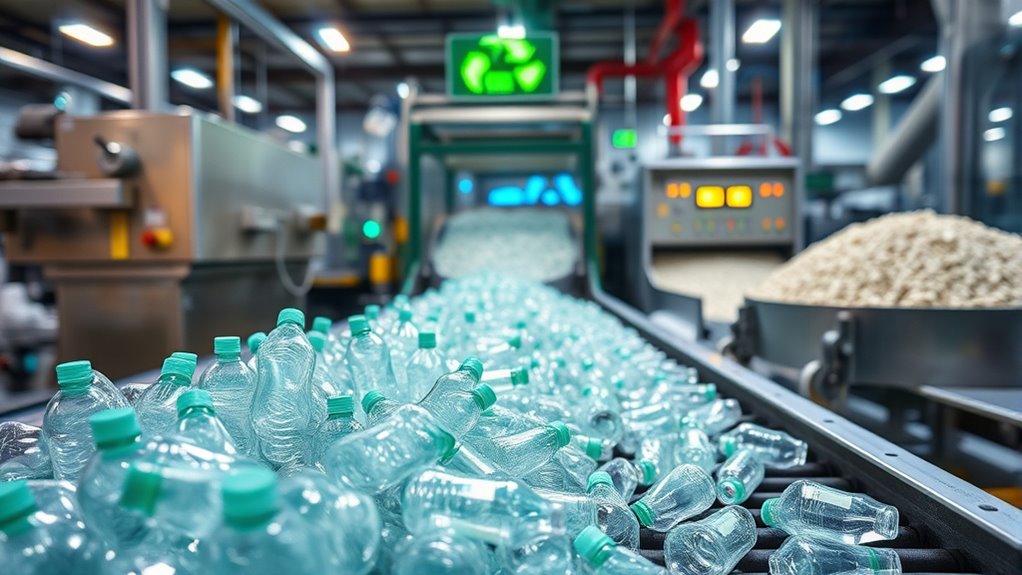
Have you ever wondered how we can reduce plastic waste while meeting the world’s demand for products? The answer lies in shifting from a linear economy to a circular one, where plastics are continuously reused, recycled, and repurposed. This transition hinges on effective plastic recycling and embracing sustainable design principles.
Instead of producing new plastics from raw materials, we can focus on turning used plastics into new products, minimizing waste and conserving resources. When you support or adopt practices that prioritize plastic recycling, you’re helping to close the loop, transforming what would be waste into valuable raw materials for future use.
Sustainable design plays a critical role in making this shift possible. It involves creating products with their entire lifecycle in mind, ensuring they’re easier to recycle or repurpose at the end of their useful life.
By designing plastics that are more compatible with recycling processes—such as using fewer mixed materials or avoiding complex combinations—you make it simpler to recover and reuse raw materials. This approach encourages manufacturers to produce items that aren’t only durable but also recyclable, reducing the need for virgin plastic production.
When you choose products made with sustainable design principles, you’re actively supporting a system that minimizes environmental impact and maximizes resource efficiency.
Implementing a circular economy in plastics requires collaboration across industries, governments, and consumers. Policies that incentivize plastic recycling and sustainable design can accelerate this shift.
For example, extended producer responsibility programs push companies to take responsibility for their products’ end-of-life, ensuring they’re designed for easier recycling.
As a consumer, your choices matter too. Opting for products made from recycled plastics and supporting brands that prioritize sustainable design helps create demand for circular solutions. Your purchasing decisions can influence manufacturers to rethink their product development and waste management strategies.
Technological advancements are also making a difference. Innovations in recycling processes, such as chemical recycling, allow plastics to be broken down into their basic building blocks, which can then be used to create new plastics of the same quality. Advanced recycling methods are crucial for processing complex plastic waste streams more efficiently.
These developments support a more efficient and sustainable system, where plastics are kept in circulation longer.
Recent research-driven innovations are paving the way for more effective recycling methods that can process complex plastic waste streams more efficiently.
These developments support a more efficient and sustainable system, where plastics are kept in circulation longer.
As you become more aware of these options, you can make informed choices that promote a circular economy.
Ultimately, shifting from linear waste to closed-loop systems requires a combination of smart design, effective recycling, and conscious consumer behavior.
By supporting initiatives and products that prioritize plastic recycling and sustainable design, you contribute to a more resilient and environmentally friendly future.
The move towards a circular economy isn’t just about waste reduction—it’s about rethinking how we produce, use, and reuse plastics for generations to come.
Frequently Asked Questions
How Can Consumers Contribute to the Circular Economy in Plastics?
You can help promote a circular economy in plastics by increasing your consumer awareness about sustainable choices.
Make sure to practice waste segregation, separating plastics correctly for recycling.
Opt for products with minimal or biodegradable packaging, and support brands committed to eco-friendly practices.
Your mindful actions reduce plastic waste, encourage responsible manufacturing, and close the loop, turning linear waste into valuable resources.
Small changes from you make a big difference in creating a sustainable future.
What Are the Main Challenges in Implementing Circular Plastic Systems Globally?
Implementing circular plastic systems worldwide faces major challenges like supply chain disruptions and technological barriers. You might encounter difficulties coordinating recycling efforts across borders or developing advanced sorting and processing technologies.
These issues hinder the creation of closed-loop systems, making it harder to reduce waste and reuse plastics efficiently. Overcoming these barriers requires global collaboration, innovation, and investments to make circular systems more accessible and sustainable for everyone.
How Does Recycling Quality Affect the Circular Economy in Plastics?
Imagine opening the true potential of plastics in a circular economy, but then facing a critical obstacle—recycling quality. When recycling standards falter, material purity declines, disrupting the seamless flow of closed loops.
Poor-quality recycling hampers reuse, makes products less durable, and undermines sustainability goals. You need high standards to guarantee recycled plastics meet purity requirements, preserving their value and enabling a resilient, efficient circular system that keeps plastics in use, not waste.
What Innovations Are Emerging to Enhance Plastic Reusability?
You’re exploring innovations that boost plastic reusability. Biodegradable plastics are emerging as eco-friendly options, breaking down more easily in the environment.
Chemical recycling is another breakthrough, allowing plastics to be broken down into their basic monomers for reuse, maintaining high quality.
These innovations help close the loop, reducing waste and supporting a more sustainable, circular economy in plastics.
How Do Policies Influence the Transition to a Circular Plastic Economy?
Policies play a pivotal role in shifting to a circular plastic economy. You’re influenced by policy incentives that encourage businesses to adopt sustainable practices and regulatory frameworks that set standards for plastic reuse and recycling.
These policies motivate innovation, reduce waste, and promote closed-loop systems. When governments prioritize these measures, you’ll find it easier to access sustainable materials, comply with regulations, and contribute to reducing environmental impact through more responsible plastic use.
Conclusion
So, here’s the scoop: if you think tossing plastics in the trash is eco-friendly, think again. Embracing a circular economy isn’t just trendy; it’s the only way to save our planet from turning into a giant plastic soup. Instead of playing the “throw it away” game, you can help close the loop—because, honestly, who wants to live in a world where plastic reigns supreme? Time to rethink, reuse, and recycle—before it’s too late.