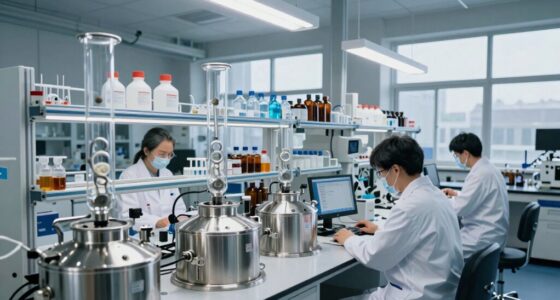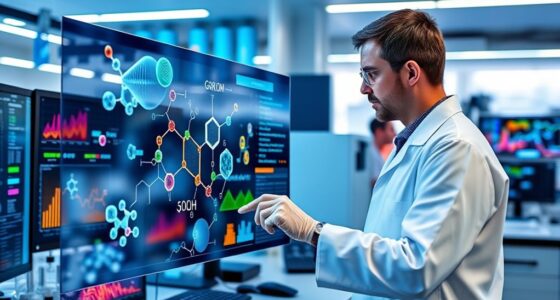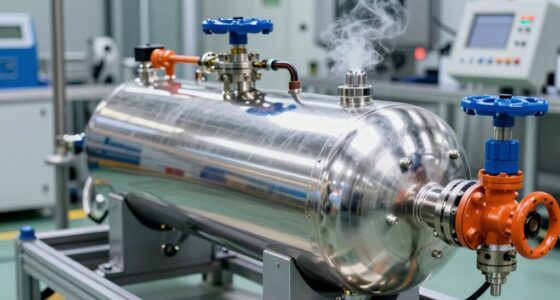
Digital twins are revolutionizing the chemical industry by giving you real-time insights into plant operations through virtual replicas. They help you simulate and optimize processes, predict equipment failures, and schedule maintenance proactively—cutting downtime and costs. By continuously gathering data, digital twins enable you to boost efficiency, safety, and innovation. As this technology becomes a key strategic asset, you’ll discover how it can transform your operations and keep you ahead in a competitive market.

Prime made for students and young adults
- Fast, free delivery for dorm and study essentials
- Prime Video and Amazon Music included
- Member-only deals
Key Takeaways
- Digital twins enable real-time plant monitoring and process simulation, improving efficiency and decision-making in chemical operations.
- They facilitate predictive maintenance, reducing downtime and extending equipment lifespan through early fault detection.
- Virtual plants allow testing process adjustments virtually, optimizing parameters before physical implementation.
- Continuous data integration enhances model accuracy, supporting innovation and long-term process improvements.
- Digital twins serve as strategic assets, boosting operational safety, competitiveness, and overall industry agility.
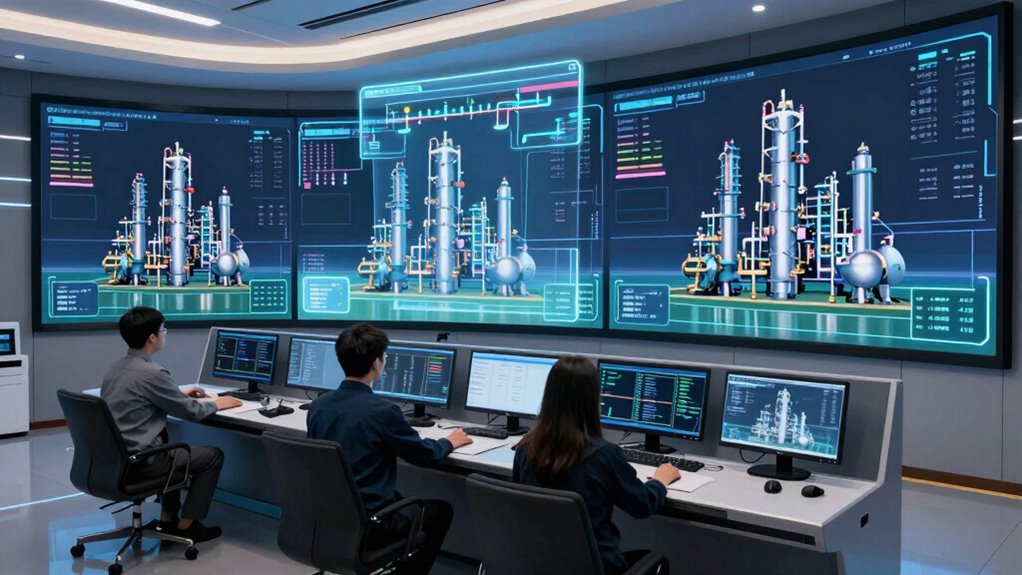
Digital twins are transforming the chemical industry by providing real-time, virtual replicas of physical assets and processes. These digital counterparts allow you to monitor, analyze, and simulate plant operations without disrupting actual workflows. These virtual models facilitate process simulation which helps in understanding complex chemical interactions more thoroughly. As a result, you can identify inefficiencies, optimize processes, and make informed decisions faster. The ability to visualize complex chemical processes virtually helps you pinpoint bottlenecks and streamline operations, leading to improved process efficiency and reduced waste. This proactive approach to managing your plant enhances overall productivity and safety.
One of the most significant advantages of digital twins is their impact on process optimization. By continuously mirroring your plant’s operations, they give you a detailed, real-time view of how different variables interact. You can experiment with adjustments in a virtual environment before applying them physically, minimizing risks and preventing costly downtime. For instance, you can tweak temperature, pressure, or flow rates in the digital model to see how these changes affect product quality or energy consumption. This iterative process guarantees your plant runs at peak efficiency, saving you time and resources. Additionally, incorporating real-time data from sensors enhances the accuracy of these virtual models, making predictions even more reliable.
Predictive maintenance is another game-changer made possible by digital twins. Instead of relying on scheduled checks or reactive repairs, you can use these virtual models to forecast equipment failures before they happen. Sensors feed live data into the digital twin, enabling you to detect subtle signs of wear or malfunction. This early warning system allows you to schedule maintenance precisely when needed, avoiding unexpected breakdowns that can halt production and incur high costs. Over time, predictive maintenance driven by digital twins reduces downtime, extends equipment lifespan, and cuts maintenance expenses.
Furthermore, digital twins foster a culture of continuous improvement. As you gather more data, the virtual models become increasingly accurate and insightful. This ongoing learning process helps you identify long-term trends, optimize energy consumption, and improve safety protocols. With a virtual plant always at your fingertips, you can simulate different scenarios—such as changes in raw materials or process parameters—without risking actual production. This flexibility empowers you to innovate and adapt swiftly in a competitive market. Additionally, advancements in digital twin technology are making these virtual models more sophisticated and accessible for chemical plants worldwide.
In essence, digital twins are no longer just a technological novelty—they’re a strategic asset that reshapes how you operate your chemical plant. By enhancing process optimization and enabling predictive maintenance, they help you reduce costs, boost efficiency, and stay ahead of industry challenges. As virtual plants become more sophisticated, their role in driving operational excellence becomes increasingly indispensable.
digital twin software for chemical plants
As an affiliate, we earn on qualifying purchases.
As an affiliate, we earn on qualifying purchases.
Frequently Asked Questions
How Do Digital Twins Improve Safety in Chemical Plants?
Digital twins improve safety in chemical plants by enabling virtual simulation and real-time monitoring of operations. You can identify potential hazards early, predict equipment failures, and test safety measures without risking actual plant conditions. This proactive approach helps you detect issues before they escalate, reduce accidents, and guarantee compliance. By continuously analyzing data, digital twins keep you informed and prepared, ultimately creating a safer working environment.
What Are the Main Challenges in Implementing Digital Twins?
You’ll face main challenges like ensuring data privacy, which requires robust security measures to protect sensitive information. Data integration can also be tricky, as you need to seamlessly combine diverse data sources for accurate digital twin modeling. Additionally, managing complex systems, high implementation costs, and updating models regularly pose hurdles. Overcoming these issues involves investing in secure, flexible data platforms and fostering collaboration across teams.
How Cost-Effective Are Digital Twin Solutions for Chemical Companies?
Digital twin solutions are highly cost-effective for chemical companies because they enable significant cost savings through improved process optimization and predictive maintenance. You’ll see faster investment returns by reducing downtime, minimizing waste, and enhancing safety measures. Although initial setup costs can be substantial, the long-term benefits—like enhanced efficiency and reduced operational expenses—make digital twins a smart, economical investment that pays off over time.
Can Digital Twins Predict Equipment Failures Accurately?
A stitch in time saves nine, and digital twins can often predict equipment failures accurately. By integrating sensors and harnessing data analytics, you can spot early warning signs of malfunction before they escalate. This proactive approach allows you to schedule maintenance efficiently and prevent costly downtime. With continuous sensor data, your digital twin becomes a reliable tool for predicting failures, keeping your plant running smoothly and avoiding unexpected breakdowns.
What Skills Are Required to Manage Digital Twin Technologies?
To manage digital twin technologies effectively, you need strong skills in data integration and analysis, ensuring seamless connectivity between physical assets and virtual models. You should develop expertise in software development, simulation, and real-time data processing. Additionally, honing problem-solving abilities and staying updated on emerging tools and trends are essential. This combination of technical knowledge and continuous skill development helps you optimize digital twin performance and drive strategic decision-making.
Conclusion
Embracing digital twins isn’t just a trend; it’s a gentle shift towards a smarter, more resilient future in chemicals. As virtual plants become more refined, you’ll find yourself steering operations with greater insight and confidence. This subtle transformation offers a quiet yet powerful edge, helping you optimize processes and reduce risks. In this evolving landscape, adopting digital twins gently guides you towards innovation, ensuring your strategies remain both efficient and resilient, quietly shaping a brighter tomorrow.
Fall Picks
fall essentials
As an affiliate, we earn on qualifying purchases.