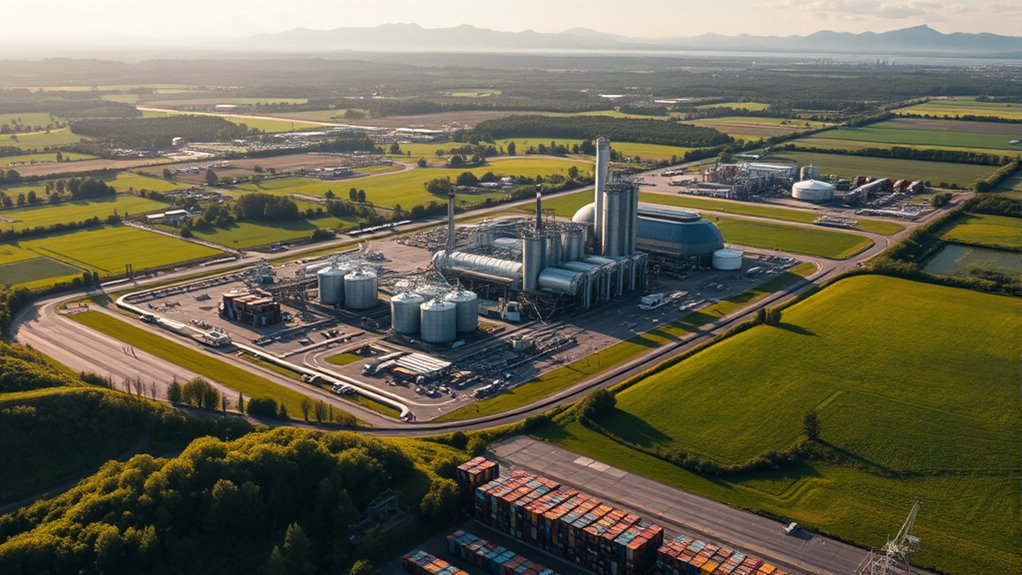

If you’re considering reshoring chemical supply chains, regionalization offers advantages like reducing dependency on distant suppliers and improving resilience to disruptions. While globalization provides access to broader markets and lower costs, it also exposes you to geopolitical risks and delays. A hybrid approach often balances both strategies, depending on your specific needs and risk appetite. If you’re interested in understanding how these options impact your supply chain, you’ll find valuable insights ahead.

Prime made for students and young adults
- Fast, free delivery for dorm and study essentials
- Prime Video and Amazon Music included
- Member-only deals
Key Takeaways
- Regionalization reduces supply chain risks by decreasing dependence on distant suppliers and improving responsiveness to local disruptions.
- Globalization offers cost efficiencies and access to broader markets but increases vulnerability to geopolitical and pandemic shocks.
- Reshoring chemical supply chains enhances control over quality, compliance, and delivery times while fostering local partnerships.
- Many companies adopt hybrid models combining global reach with regional resilience to balance cost and risk management.
- Strategic decision-making involves assessing specific needs, risk appetite, and long-term goals amid evolving international trade dynamics.

In today’s interconnected world, the debate between regionalization and globalization shapes how countries and businesses approach economic growth and cooperation. As companies navigate complex markets, one critical factor often comes into play: supply chain resilience. Whether you’re a manufacturer or a supplier, the ability to adapt quickly to disruptions can determine your success. Globalization has historically emphasized broad, interconnected supply networks that span continents, offering advantages like lower costs and access to diverse markets. However, recent events, such as geopolitical tensions and pandemics, have exposed vulnerabilities in these sprawling networks. When supply chains are overly globalized, trade barriers—like tariffs, customs delays, or restrictive regulations—can suddenly hinder operations. This prompts many businesses to reconsider their strategies, weighing the benefits of regionalization versus globalization.
Globalization offers cost benefits but exposes supply chains to geopolitical and pandemic threats, prompting a shift toward regional resilience strategies.
Regionalization advocates for bringing supply chains closer to home or within specific regions, aiming to bolster supply chain resilience. By reducing dependence on distant suppliers, you can better manage risks associated with trade barriers and geopolitical uncertainties. This shift allows you to respond more swiftly to local disruptions, such as natural disasters or policy changes, without waiting for international logistics to catch up. Reshoring initiatives, where you bring manufacturing or sourcing back to your country or nearby regions, are becoming increasingly popular for this reason. They help minimize delays caused by trade barriers and provide greater control over quality, compliance, and delivery times. Additionally, focusing on vertical storage solutions can streamline inventory management and improve overall logistics efficiency.
While globalization offers the allure of cost savings through economies of scale, it also introduces vulnerabilities. Disruptions in one part of the world can ripple across your entire supply chain, causing delays and increased costs. By regionalizing, you’re fundamentally creating a more resilient setup that can withstand shocks better. Additionally, regionalization can foster stronger partnerships and trust within your immediate network, simplifying communication and reducing misunderstandings. It also aligns with the push for more sustainable and ethical sourcing practices, as you can more easily monitor and ensure compliance with local regulations and standards.
Ultimately, the choice between regionalization and globalization depends on your specific needs, risk appetite, and strategic goals. If your priority is supply chain resilience, reducing trade barriers and limiting exposure to international disruptions might steer you toward regionalization. Conversely, if your focus is on maximizing market reach and cost efficiencies, globalization still holds appeal. Many businesses are now adopting a hybrid approach, balancing global efficiencies with regional resilience—an approach that recognizes the evolving landscape of international trade and supply chain management.
Frequently Asked Questions
How Does Regionalization Impact Chemical Safety Standards Worldwide?
Regionalization enhances chemical safety standards worldwide by encouraging regional cooperation and harmonizing safety regulations. When supply chains localize, you’ll see better communication between neighboring countries, leading to more consistent safety practices. This focus on regional cooperation helps prevent accidents, ensures compliance, and improves overall safety. By adopting unified safety regulations, you make the chemical industry safer, reducing risks associated with cross-border transportation and handling.
What Are the Environmental Implications of Reshoring Chemical Supply Chains?
You might think reshoring reduces environmental impact, but it’s not always straightforward. Reshoring can promote sustainable practices by enabling stricter local regulations and greener technologies. However, it could also increase the ecological footprint if facilities lack eco-friendly infrastructure or if transportation emissions rise within the new supply chain. Overall, reshoring’s environmental implications depend on how well companies integrate sustainable practices and minimize ecological footprints during the shift.
How Do Regional Policies Influence Chemical Manufacturing Costs?
Regional policies directly impact your chemical manufacturing costs by shaping regulations and incentives. When policies favor local production, you may face higher costs due to stricter regulatory compliance and local labor rates. However, these policies can also reduce transportation expenses and improve supply chain reliability, leading to overall cost reduction. Balancing regulatory compliance with regional incentives helps you optimize manufacturing costs and adapt to changing policy environments effectively.
What Role Does Technology Play in Facilitating Reshoring Efforts?
Technology plays a vital role in reshoring efforts by enabling automation integration, which streamlines production and reduces costs. You benefit from improved efficiency and precision, making local supply chains more competitive. Additionally, prioritizing data security guarantees sensitive information stays protected during digital transformation. These advancements help you adapt to changing market demands, shorten supply chains, and boost resilience, ultimately supporting your goal to bring manufacturing back home effectively.
How Do Regional Supply Chains Affect Global Chemical Innovation?
Think of regional supply chains as the heartbeat of local progress. They boost supply chain localization, making industries more agile and resilient. This shift encourages regional innovation by fostering collaboration among nearby companies, much like neighbors sharing ideas over fences. While it may limit some global exchanges, it strengthens local expertise and speeds up chemical breakthroughs, ultimately creating a more dynamic and self-sufficient industry landscape.
Conclusion
As you stand at the crossroads of reshoring, envision the chemical supply chain as a river. Regionalization narrows the flow, guiding it closer to home, like a gentle stream weaving through familiar landscapes. Globalization, on the other hand, is a mighty ocean, vast and interconnected, but fraught with storms. Ultimately, your choice shapes this river’s journey—whether it winds through nearby valleys or sails across distant seas—crafting a future that’s safer, more resilient, and uniquely yours.
Fall Picks
fall essentials
As an affiliate, we earn on qualifying purchases.