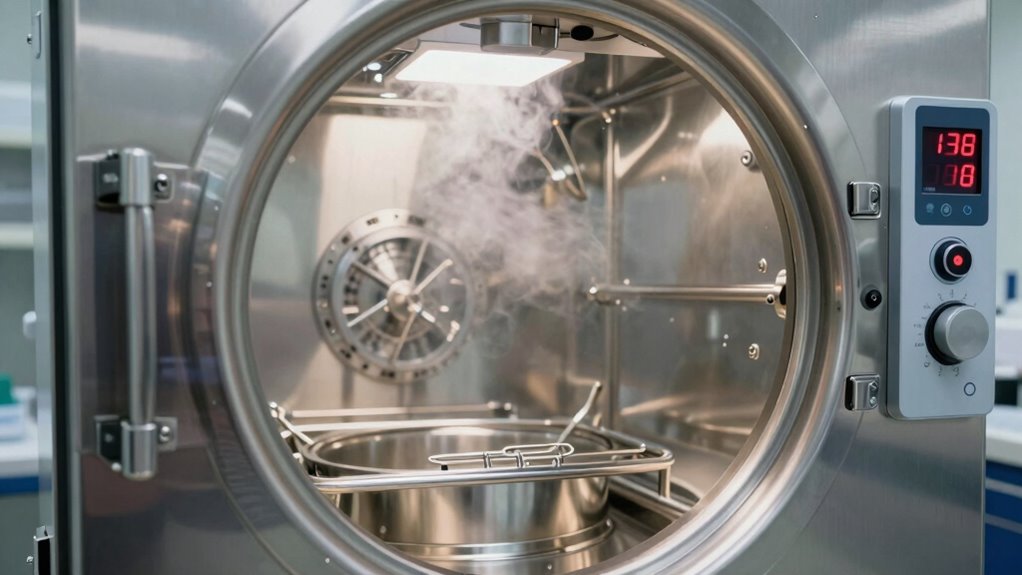

Hitting the correct temperature in an autoclave doesn’t guarantee sterilization. While temperature is essential, it’s only one part of the process. Without verifying that sterilization conditions are met — such as proper pressure, time, and the use of biological indicators — you can’t be sure the instruments are fully sterile. Relying solely on temperature can give false confidence. To ensure safety, it’s important to understand what truly confirms effective sterilization. Keep going to discover more.
Key Takeaways
- Achieving the correct temperature alone does not ensure complete sterilization; other factors like time and pressure are also critical.
- Biological indicators must be used regularly to verify that sterilization has actually occurred, not just relying on temperature readings.
- Gauges indicate device parameters, but they do not confirm microbial kill or sterilization success.
- Proper sterilization requires validation through biological testing, beyond just reaching the target temperature.
- Consistent verification and documentation are essential to confirm effective sterilization, preventing false assumptions based solely on temperature.

Many people believe that setting an autoclave to a specific temperature guarantees complete sterilization, but this is a common myth. While reaching the correct temperature is essential, it doesn’t automatically ensure that all microorganisms are destroyed. Temperature alone isn’t enough; proper sterilization depends on multiple factors working together. This is why sterilization verification is vital, and biological indicators play a key role in this process.
Biological indicators are specially designed strips or vials containing spores of highly resistant microorganisms. When you run an autoclave cycle, these indicators are included with the items being sterilized. After the cycle, you incubate the biological indicators to see if any spores survive. If no growth occurs, it confirms that the sterilization process was effective. This step is vital because it provides tangible proof that the conditions—temperature, pressure, and time—were sufficient to kill even the most resistant microbes. Relying solely on the autoclave’s display or internal gauges can be misleading, as they only measure parameters, not actual microbial kill.
Sterilization verification goes beyond just setting the right temperature. It guarantees that the entire process is effective and consistent. Without it, you risk false confidence in your sterilization method, which could lead to contaminated instruments and potential infections. Biological indicators are the gold standard for this verification because they objectively test whether the sterilization cycle has achieved its goal.
You should always run biological indicators regularly, especially after maintenance, repairs, or when new loads are sterilized. This practice confirms that your autoclave functions correctly over time. It’s also recommended to keep records of these results, as they demonstrate compliance with safety standards and help identify potential issues before they become serious problems. Additionally, proper sterilization procedures are crucial to ensure consistent outcomes and patient safety.
Frequently Asked Questions
Can Autoclaves Sterilize All Types of Microorganisms Effectively?
You can’t rely solely on autoclaves to sterilize all microorganisms effectively because of sterilization limitations and microbial resistance. Some spores and hardy microbes may withstand standard autoclave conditions, especially if the process isn’t properly monitored or maintained. To guarantee thorough sterilization, you need to follow validated protocols, regularly check equipment, and understand that certain microorganisms require specific conditions beyond just reaching the target temperature.
How Does Pressure Influence Sterilization Beyond Temperature?
Pressure acts like a conductor in the symphony of sterilization, guiding steam to penetrate deeply into every crevice. It enhances steam penetration, ensuring even the smallest microbes are reached. Higher pressure increases the boiling point, allowing hotter steam to effectively destroy microorganisms. Without sufficient pressure, steam struggles to reach all surfaces, leaving some microbes intact. So, pressure is the silent partner that guarantees thorough sterilization beyond just temperature.
What Role Do Sterilization Cycle Duration and Exposure Time Play?
You need to ensure sterilization cycle duration and exposure time because they ensure effective sterilization. Proper sterilization time and exposure duration allow heat and steam to penetrate thoroughly, killing all microorganisms. Rushing or shortening these steps can leave pathogens alive. To guarantee sterilization, follow the recommended cycle times precisely, ensuring the equipment remains at the required temperature and pressure long enough for complete sterilization.
Are There Materials That Cannot Withstand Autoclave Sterilization?
While autoclaves are highly effective, some materials have sterilization limitations due to their delicate nature. You should be cautious with items like plastics, rubber, or certain delicate instruments, as they may not withstand high temperatures and pressure. Always check material compatibility before sterilization to prevent damage. Ignoring these limitations can lead to compromised sterilization or material failure, so knowing specific sterilization requirements is essential for safe, effective sterilization practices.
How Is Sterilization Efficacy Verified After Autoclaving?
You verify sterilization efficacy by using biological indicators during your sterilization validation process. These indicators contain spores resistant to sterilization conditions, and if they are inactivated, it confirms effective sterilization. After autoclaving, you incubate the indicators to check for microbial growth. No growth means the process was successful, providing assurance that your sterilization cycle achieved its goal, regardless of whether the autoclave hit the target temperature.
Conclusion
Remember, reaching the right temperature alone doesn’t guarantee sterilization—you need proper pressure, time, and maintenance too. Think of it like cooking: a thermometer alone won’t ensure your food is safe; you need the right ingredients and method. Don’t fall for the myth that hitting the temperature is enough. Instead, follow all sterilization steps carefully. After all, a chain is only as strong as its weakest link—don’t let temperature be your weak point.