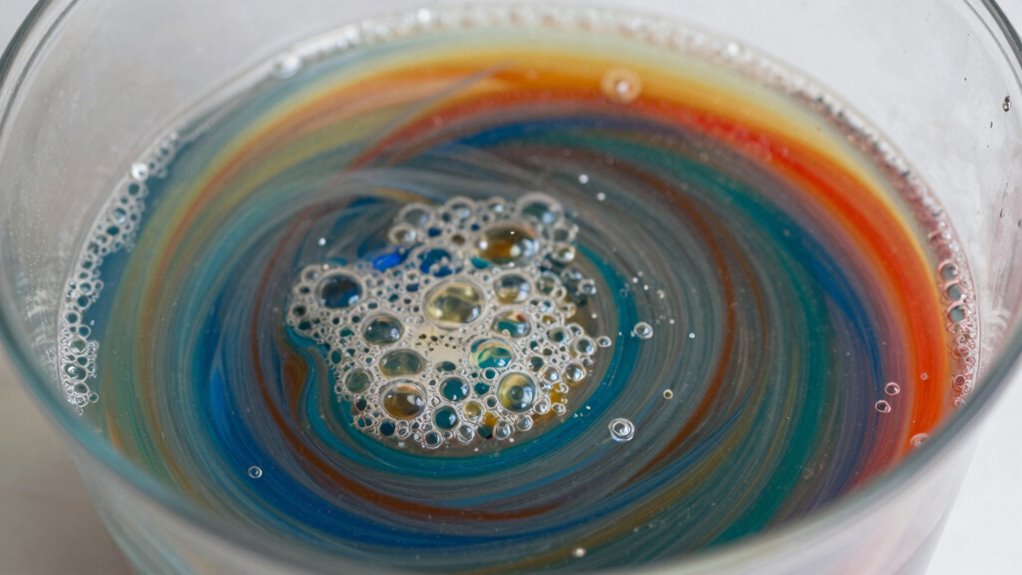

Believing that cranking up your mixer’s RPM always results in better blending is a misconception. While higher speeds increase shear forces, they don’t guarantee a thorough mix. Excessive RPM can cause turbulence, uneven flow, ingredient damage, and even equipment wear. Instead, ideal blending depends on understanding fluid dynamics and controlling shear forces. To get better results, consider how speed affects flow patterns and ingredient integrity—more isn’t always better, and there’s more to learn below.

Get school and study supplies delivered free — and shop member deals
- Fast, free delivery on millions of items
- Access to Prime Big Deal Days deals on October 6–7
- Prime Video, Amazon Music and more included
Key Takeaways
- Increasing RPM does not necessarily improve blending and can cause over-shearing or ingredient damage.
- Shear forces, not just speed, are critical for effective mixing; higher RPM may disrupt optimal flow patterns.
- Elevated speeds can create turbulence and vortices, leading to uneven mixing rather than uniformity.
- Excessive RPM increases equipment wear and energy use without guaranteed quality improvements.
- Proper mixing depends on understanding fluid dynamics and adjusting speed accordingly, not simply maximizing RPM.
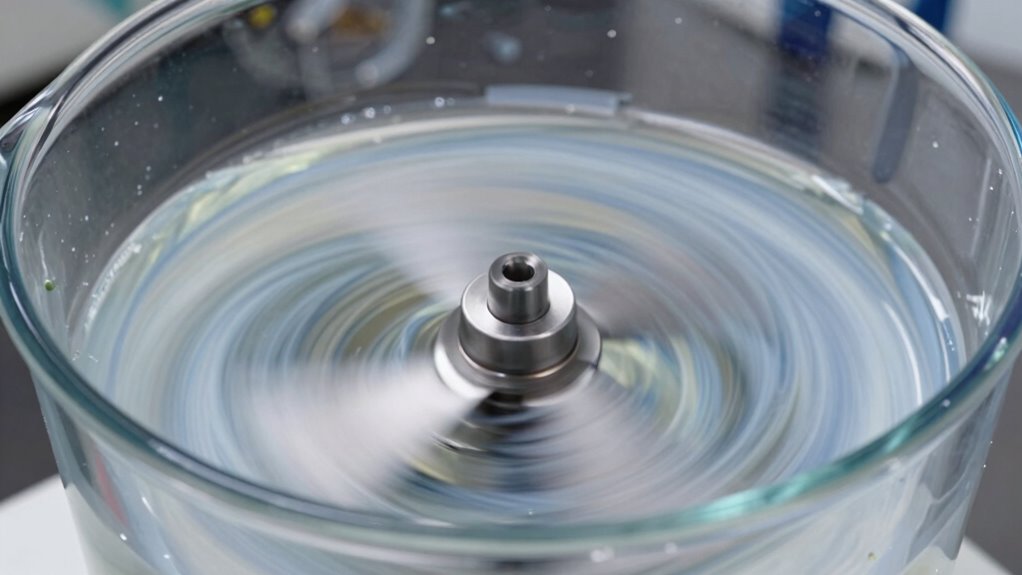
Many people assume that increasing the RPM of a mixer automatically leads to better blending, but that’s a misconception. While turning up the speed might seem like the obvious solution to achieve a smoother or more uniform mix, it overlooks the complex interplay of fluid dynamics and shear forces that actually govern how well ingredients combine. Faster isn’t always better when it comes to mixing; in fact, pushing your equipment to higher speeds can sometimes hinder the process or cause unintended issues.
Increasing mixer speed doesn’t always improve blending; understanding fluid dynamics and shear forces is key.
When you increase the RPM, you’re intensifying the shear forces acting within the mixture. Shear forces are the forces that cause different layers of fluid or semi-solid substances to slide past each other. These forces are vital for breaking down particles, dispersing ingredients, and creating a uniform texture. But, if the shear forces become too aggressive due to excessive speed, you risk over-shearing delicate components, which can lead to denaturation or degradation, especially in sensitive substances. Instead of improving the blend, you might be damaging the ingredients or creating unwanted textures.
Fluid dynamics plays a critical role here. It explains how liquids and semi-liquids move and interact under different conditions. When you increase RPM, you alter the flow patterns inside the mixing vessel, often creating turbulent flows. While turbulence can enhance mixing by promoting rapid movement and contact between particles, it can also create vortices and uneven flow zones. These irregularities might cause inconsistent mixing, with some areas over-mixed and others under-mixed. Simply turning up the speed doesn’t guarantee a more homogeneous result; it’s about understanding how fluid behavior responds to different shear rates and flow regimes.
Moreover, higher speeds can lead to inefficient energy use and increased wear on your equipment. An overly aggressive mixer might consume more power without delivering proportional improvements in the mixture’s quality. It can also cause splashing, foaming, or aeration, which are undesirable in many applications. The key isn’t just in turning the mixer faster but in adjusting your speed to optimize shear forces and fluid flow. That way, you harness the principles of fluid dynamics to achieve efficient, uniform mixing without risking damage or inefficiency. Proper calibration based on fluid behavior is essential for optimal results.
professional stand mixer with variable speed control
As an affiliate, we earn on qualifying purchases.
As an affiliate, we earn on qualifying purchases.
Frequently Asked Questions
How Does Viscosity Affect Optimal Mixing RPM?
Viscosity impacts your ideal mixing RPM because higher viscosity increases shear resistance, requiring lower RPMs to prevent over-shearing or damaging your mixture. Conversely, lower viscosity allows for higher shear rates at increased RPMs, improving mixing efficiency. You should adjust your RPM based on the viscosity to optimize shear rate, ensuring thorough blending without compromising the quality of your product. Always consider viscosity when setting your mixer speed for best results.
Can Low RPM Achieve Thorough Mixing in Dense Materials?
Low RPM can achieve thorough mixing in dense materials by optimizing airflow patterns and shear forces. While high speeds generate turbulence, slow speeds allow for controlled, consistent blending, reducing the risk of over-shearing. You find that adjusting RPM to match the material’s viscosity and density enhances mixing efficiency, ensuring even dispersion without damaging the product. This approach emphasizes quality over speed, leveraging airflow and shear forces for effective, gentle mixing.
What Role Does Blade Design Play in Mixing Efficiency?
Your blade design plays a vital role in mixing efficiency by influencing mixing uniformity. Proper blade geometry ensures even distribution and movement of materials, reducing dead zones and stagnation. When you choose blades with the right shape and angle, you optimize how the mixer handles dense materials, even at lower RPMs. This means better overall mixing performance without relying solely on high speeds, making your process more efficient and consistent.
Is There an RPM Threshold Where Mixing Quality Declines?
Ironically, there’s indeed an rpm threshold where mixing efficiency starts to decline. Pushing beyond this point doesn’t improve results; instead, it causes turbulence and shear forces that hinder proper blending. Recognize mixing thresholds and avoid excessive rpm, as higher speeds can create dead zones or over-mix, reducing overall quality. Striking the right balance ensures ideal mixing without sacrificing efficiency, proving more rpm isn’t always better.
How Do Temperature Changes Influence Mixing at Different RPMS?
Temperature changes considerably impact mixing at different RPMs due to thermal effects and shear heating. As you increase RPM, shear heating can raise the temperature, potentially causing thermal degradation or uneven mixing. Conversely, at lower RPMs, reduced shear heating helps maintain temperature stability. Balancing RPM is essential; too high can cause excessive heat, while too low might result in incomplete mixing. Always monitor temperature to optimize mixing efficiency.
Conclusion
Don’t fall for the myth that cranking up the RPM will turn your mixing into a smooth sailing ship. More isn’t always better—sometimes, it’s like trying to fit a square peg in a round hole. Instead, focus on the right speed for your specific mixture. Remember, choosing the ideal RPM is like finding the perfect key to open high-quality results—too high or low, and you risk ruining everything. Trust the science, not just the spin!
Fall Picks
fall essentials
As an affiliate, we earn on qualifying purchases.