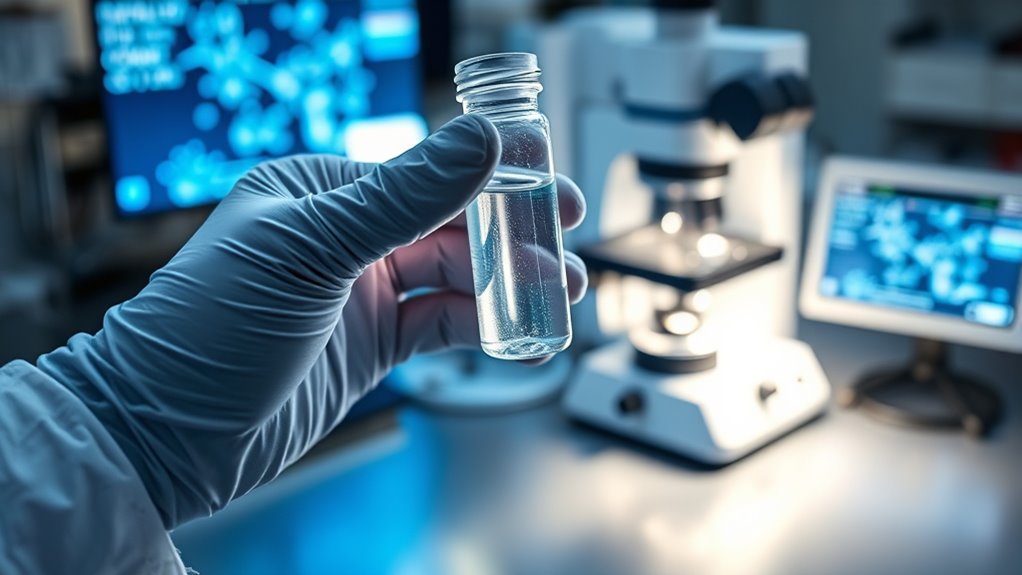

Yes, vaccines do contain trace amounts of formaldehyde, which is used during manufacturing to inactivate viruses and detoxify bacterial components. However, thorough purification processes remove most of it, leaving only tiny, safe residual levels that are well below health risk thresholds. Regulatory agencies monitor these levels rigorously through precise testing. If you want to understand how these small amounts are kept safe and regulated, there’s more to learn about the science behind vaccine safety.

Get school and study supplies delivered free — and shop member deals
- Fast, free delivery on millions of items
- Access to Prime Big Deal Days deals on October 6–7
- Prime Video, Amazon Music and more included
Key Takeaways
- Formaldehyde is used during vaccine manufacturing to inactivate viruses and detoxify components, then removed during purification.
- Vaccines contain only trace amounts of formaldehyde, far below safety thresholds established by health authorities.
- High-precision tests like HPLC confirm residual formaldehyde levels are minimal and safe.
- The formaldehyde in vaccines is much less than the amount naturally produced by the human body.
- Scientific research and regulatory agencies affirm that trace formaldehyde in vaccines poses no health risk.

Many vaccines contain small amounts of formaldehyde, a chemical used during manufacturing to inactivate viruses and detoxify bacterial components. While it might sound concerning, these trace levels are typically very low—far below the thresholds that could pose health risks. Understanding the safety concerns surrounding formaldehyde in vaccines starts with recognizing how it’s used and what scientific research shows. The primary worry people have revolves around chemical detection—how much formaldehyde actually ends up in the final vaccine product and whether those amounts are safe for use.
During vaccine production, formaldehyde plays a critical role. It helps inactivating viruses so they can’t cause disease and ensures the bacterial components are detoxified. After this process, the vaccine undergoes rigorous purification to remove excess chemicals, including formaldehyde. The residual amount remaining in the final product is minimal, often measured in parts per billion or trillion. Regulatory agencies like the CDC and WHO have set strict safety limits, confirming that the levels present in vaccines are well within safe ranges.
Formaldehyde in vaccines is thoroughly purified and present at safe, minimal levels well below health risk thresholds.
You might wonder how scientists determine the safety of these trace amounts. Chemical detection methods, such as high-performance liquid chromatography (HPLC), are used to precisely measure formaldehyde levels in vaccines. These advanced techniques allow researchers to detect even tiny quantities, ensuring that the amounts are consistent and within safe limits. Through extensive testing, health authorities can confidently state that the formaldehyde in vaccines does not pose a health threat to recipients, including pregnant women, infants, or immunocompromised individuals.
Concerns about safety often stem from misunderstandings about chemical exposure or misinformation about vaccine ingredients. It’s important to recognize that formaldehyde naturally exists in the human body as a byproduct of normal metabolic processes. The small amounts present in vaccines are negligible compared to what your body already produces and handles daily. Furthermore, the benefits of vaccination—preventing serious diseases—far outweigh the minuscule risks associated with trace formaldehyde exposure.
high-performance liquid chromatography HPLC kit
As an affiliate, we earn on qualifying purchases.
As an affiliate, we earn on qualifying purchases.
Frequently Asked Questions
Are There Any Health Risks From Trace Formaldehyde in Vaccines?
There are no significant health risks from trace formaldehyde in vaccines because regulatory standards limit its amount to safe levels. You’re unlikely to experience long-term effects, as these tiny amounts are well below any harmful threshold. Experts monitor and regulate vaccine ingredients carefully, ensuring safety. So, rest assured that the trace formaldehyde present in vaccines poses no real danger to your health or long-term well-being.
How Does Formaldehyde in Vaccines Compare to Natural Exposure Levels?
You’re exposed to formaldehyde daily through environmental sources like vehicle emissions and cigarette smoke, as well as dietary exposure from foods like fruits and vegetables. The small amount of formaldehyde in vaccines is much lower than these natural and environmental levels. Your body naturally produces formaldehyde during metabolism, so the trace amounts in vaccines are safe and insignificant compared to what you encounter regularly through everyday life.
Why Is Formaldehyde Used in Vaccine Manufacturing?
Imagine you’re in the days of alchemy—formaldehyde is used in vaccine manufacturing to serve as a chemical stabilizer, much like a potion’s preservative. It helps deactivate viruses and toxins, ensuring vaccine safety and effectiveness. Its preservative function prevents contamination, and the trace levels used are carefully controlled to keep the vaccine stable without causing harm. This process makes vaccines reliable and safe for public health.
Can Formaldehyde Cause Allergic Reactions in Vaccine Recipients?
Formaldehyde in vaccines rarely causes allergic reactions, but some individuals with immune sensitivity might experience mild responses. Your immune system could react if you’re allergic to formaldehyde, leading to symptoms like swelling or rash. However, such reactions are extremely uncommon because the trace levels used are very low and well within safety limits. If you’re worried, consult your healthcare provider to assess your allergy risks before vaccination.
Are There Vaccine Options Without Formaldehyde?
Yes, there are vaccine options without formaldehyde. If you’re concerned about exposure, you can ask your doctor about vaccine alternatives or formaldehyde-free options. Some vaccines are specifically manufactured without formaldehyde or have minimal levels that are considered safe. Always discuss your concerns with your healthcare provider to find the best vaccine choices for your needs, ensuring you stay protected without unnecessary exposure to trace chemicals.
Conclusion
You now know that trace levels of formaldehyde in vaccines are common and naturally occur in your body. These tiny amounts are safe and well within health guidelines. Remember, “A little knowledge is a dangerous thing”—so staying informed helps you make confident decisions about your health. Vaccines undergo rigorous testing, ensuring they’re safe for you and your loved ones. Trust in science and stay informed to keep yourself protected and healthy.
Halloween Picks
halloween
As an affiliate, we earn on qualifying purchases.