
No, nuclear waste isn’t all the same. It varies in type, radioactivity, and how it’s managed. High-level waste from spent fuel remains extremely radioactive and needs careful storage right after removal. Low-level waste, like contaminated clothes or tools, has less radiation and can often be disposed of more easily. Decay rates also differ, affecting how long waste must be stored safely. Discover more about the complexities behind nuclear waste and how it’s managed over time.
Key Takeaways
- Nuclear waste varies in radioactivity levels, types, and decay rates depending on its source and composition.
- High-level waste from spent fuel is more radioactive than low-level waste like contaminated tools or clothing.
- Different waste types require distinct storage and disposal methods to ensure safety over time.
- The decay process reduces hazard levels gradually, influencing long-term waste management strategies.
- Not all nuclear waste remains equally hazardous; its characteristics determine how it is handled and stored.
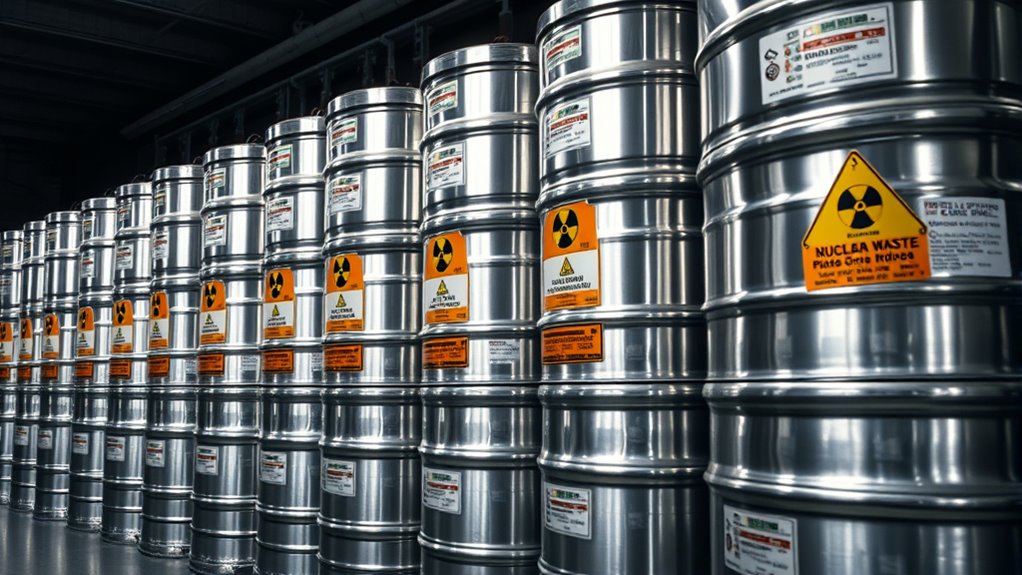
Have you ever wondered what happens to the waste produced by nuclear power plants? It’s a critical question because nuclear waste isn’t just any trash — it’s highly radioactive and requires careful handling. When nuclear fuel is used in a reactor, it becomes highly radioactive itself, and over time, it undergoes radioactive decay. This process involves unstable atoms releasing particles and energy to become more stable, reducing their radioactivity gradually. But this decay isn’t instantaneous; it can take years or even thousands of years for some isotopes to diminish enough to pose less risk. That’s where waste management becomes essential. Proper waste management involves isolating radioactive materials from people and the environment for as long as they remain hazardous. It requires specialized facilities designed to contain radiation and prevent leaks. You might think of waste management as a kind of high-tech storage, but it’s much more than that—it’s a complex system that involves secure containment, transportation, and long-term disposal. Additionally, understanding the radioactive decay process helps scientists develop effective storage strategies over time. Not all nuclear waste is the same, either. The waste generated from nuclear reactors varies in its level of radioactivity, which directly influences how it’s handled. For instance, high-level waste comes from the spent fuel itself and remains extremely radioactive for thousands of years. This waste needs to be cooled in water pools immediately after removal from the reactor and then stored in dry casks or repositories designed to contain radiation. In contrast, low-level waste includes items like contaminated clothing or tools, which are less radioactive and can be disposed of more easily, often in near-surface facilities. The differences in waste types mean that waste management strategies must be tailored to each kind’s specific risks and decay rates.
Understanding that radioactive decay reduces the hazard over time is key to managing nuclear waste effectively. Engineers and scientists work to predict how long it will take for waste to decay to safer levels and design storage solutions accordingly. This guarantees that the waste remains contained, reducing risks to public health and the environment. The challenge lies in balancing safety with practicality—finding secure, sustainable ways to store waste for the long haul. So, when you hear about nuclear waste, remember it’s not a one-size-fits-all problem. It’s a complex issue shaped by the nature of radioactive decay, the variety of waste, and the specialized waste management techniques that keep us safe from radiation hazards.
Frequently Asked Questions
How Long Does Nuclear Waste Remain Hazardous?
You should know that nuclear waste remains hazardous for different periods based on its waste classification. High-level waste can stay dangerous for thousands to hundreds of thousands of years, due to long decay timelines. Meanwhile, low-level waste becomes less hazardous in months or years. Proper storage and disposal are essential to protect people and the environment until the waste’s radioactivity diminishes to safe levels.
Are There Safer Alternatives to Traditional Nuclear Waste Storage?
Did you know that new alternative storage methods could reduce nuclear waste hazards by up to 90%? You can explore waste reprocessing, which recovers usable materials and minimizes dangerous leftovers. These safer alternatives to traditional storage help protect the environment and public health. By investing in innovative solutions like deep geological repositories and reprocessing technologies, you’re contributing to a more sustainable and secure nuclear future.
What Are the Environmental Impacts of Nuclear Waste Leaks?
If nuclear waste leaks, you risk serious environmental impacts like radioactive contamination of soil, water, and air. These leaks can harm wildlife and human health, making leak detection essential for early intervention. You should prioritize monitoring systems that identify leaks quickly, preventing widespread contamination. Addressing leaks promptly minimizes environmental damage and guarantees safer management of nuclear waste, protecting ecosystems and communities from long-term radioactive risks.
Can Nuclear Waste Be Recycled or Reused?
Yes, nuclear waste can be recycled or reused through waste reprocessing. You can extract useful materials like uranium and plutonium from spent fuel, reducing the amount of radioactive waste and extending fuel supply. This process relies on understanding radioactive decay to separate and process waste efficiently. Reusing these materials helps minimize environmental impacts and makes nuclear energy more sustainable, but it also requires strict safety measures.
How Do Different Countries Handle Nuclear Waste Management?
You’ll find that countries handle nuclear waste differently based on international protocols and cultural perceptions. For example, over 30 nations have established deep geological repositories, yet some nations, like Japan, face public resistance due to safety concerns. These differences shape policies, with some prioritizing recycling and others focusing on long-term storage solutions. Your awareness of these approaches highlights the importance of global cooperation and respecting local values in managing nuclear waste responsibly.
Conclusion
You might be surprised to learn that over 300,000 metric tons of nuclear waste have accumulated worldwide, and not all waste is the same. Some remains hazardous for thousands of years, while other types decay much faster. Understanding these differences helps you realize why managing nuclear waste is so complex. So next time you hear about nuclear energy, remember, not all waste is created equal—it’s a challenge that requires careful, tailored solutions to keep everyone safe.