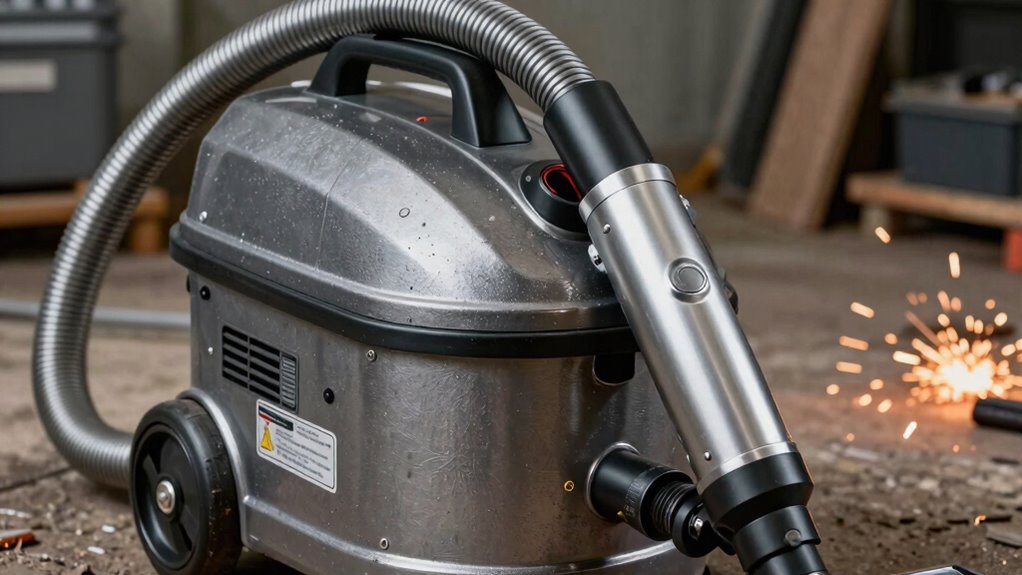

Standard shop vacuums can be risky in hazardous environments because they’re not designed to prevent sparks or static buildup. Their electrical components might spark when used with flammable dust, vapors, or gases. Plus, they don’t contain dust safely, increasing the chance of ignition or explosions. Using proper explosion-proof equipment is essential for safety and compliance. Keep going to learn more about how specialized vacuums protect you and your workspace.
Key Takeaways
- Standard shop vacuums can generate sparks, igniting flammable dust, vapors, or gases in hazardous environments.
- They lack explosion-resistant construction and sealed motors necessary for safe operation around combustible materials.
- Fine dust particles can become airborne and ignite if static electricity or sparks are present.
- Regular vacuums do not contain dust effectively, increasing the risk of dust explosions.
- Using non-explosion-proof vacuums violates safety standards like OSHA and NFPA, risking accidents and regulatory penalties.
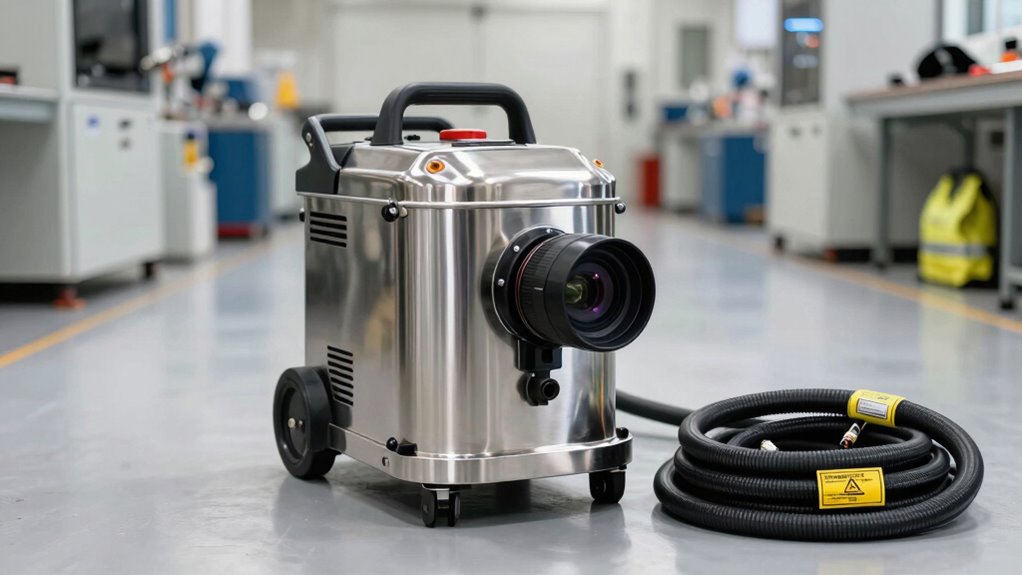
If you’re working in environments with flammable dust, vapors, or gases, using a standard vacuum can pose serious safety risks. Regular shop vacuums are designed for general cleanup, but they lack the specialized features needed to handle hazardous materials safely. When dust, vapors, or gases are present, these vacuums can generate sparks or static electricity, which might ignite the surrounding atmosphere. That’s why dust containment and adherence to strict safety standards are essential. Explosion-proof vacuums are built specifically to contain dust and prevent ignition sources, making them indispensable for maintaining a safe workspace.
Standard vacuums pose safety risks with flammable dust; explosion-proof models prevent ignition and ensure safe cleanup.
Standard vacuums aren’t engineered to handle combustible dust safely. They often have motors and electrical components that can spark under operating conditions. These sparks, combined with fine dust particles in the air, create a lethal combination. Explosion-proof vacuums, on the other hand, are constructed with explosion-resistant materials and sealed motors to eliminate the risk of sparks. They contain dust within a safe environment, preventing it from escaping into the workspace and reducing the chance of an explosion. This focus on dust containment aligns with safety standards designed for hazardous environments, ensuring compliance and safety for workers. Proper dust containment is critical in preventing accidents and maintaining regulatory compliance.
You should consider an explosion-proof vacuum if your work involves handling flammable dust, vapors, or gases regularly. These vacuums meet rigorous safety standards established by agencies like OSHA and NFPA, which specify how equipment should be designed and used in hazardous conditions. Using the right equipment not only keeps you safe but also protects your team and equipment from potential disaster. The sealed motors and explosion-proof casings are designed to prevent ignition sources, and the grounding systems reduce static buildup, further minimizing risk. Additionally, proper electrical safety measures are essential to ensure all components function safely in hazardous environments. Regular inspections and adherence to safety standards are vital to maintaining this protection.
Investing in explosion-proof vacuums demonstrates your commitment to safety and compliance. They’re engineered to contain dust effectively, preventing it from escaping and reducing airborne concentrations. This dust containment is essential in environments where even a small spark can lead to catastrophic consequences. Furthermore, these vacuums often come with proper filtration systems that trap even the finest particles, ensuring cleaner air and better health for everyone involved. Regular maintenance and proper operation of explosion-proof equipment are crucial to maintaining safety standards.
As an affiliate, we earn on qualifying purchases.
Frequently Asked Questions
Are Explosion-Proof Vacuums More Expensive Than Regular Shop Vacs?
Yes, explosion-proof vacuums are generally more expensive than regular shop vacs. The cost comparison reflects their specialized design, which meets strict safety regulations, especially for hazardous environments. You pay a premium for features like explosion-proof motors and materials that prevent ignition. While they cost more upfront, investing in an explosion-proof vacuum enhances safety and compliance, making them a wise choice for workplaces handling flammable or combustible materials.
How Often Should Explosion-Proof Vacuums Be Inspected or Maintained?
A stitch in time saves nine, so you should inspect and maintain your explosion-proof vacuum regularly. Follow the manufacturer’s recommended maintenance frequency and inspection protocols, typically every three to six months, depending on usage. Regular checks guarantee safety and peak performance, preventing potential hazards. Stay vigilant—routine maintenance keeps your equipment safe, reliable, and compliant with safety standards, giving you peace of mind while working in hazardous environments.
Can Standard Shop Vacs Be Converted Into Explosion-Proof Units?
You can’t safely convert standard shop vacs into explosion-proof units. Flammable dust buildup and electrical safety risks make modifications dangerous. Standard vacs lack the necessary explosion-proof components, like spark-proof motors and grounding features, essential for handling hazardous materials. Attempting to convert them poses serious safety hazards, increasing the risk of fires or explosions. Instead, invest in certified explosion-proof vacuums designed specifically for hazardous environments to guarantee safety.
What Certifications Should an Explosion-Proof Vacuum Have?
You should look for an explosion-proof vacuum certified by standards like NFPA 70 (NEC), ATEX, or IECEx for hazardous environments involving combustible dust. These certifications guarantee the vacuum meets strict safety measures, preventing sparks or static buildup that could ignite dust clouds. An explosion-proof vacuum also features grounding, explosion vents, and spark-resistant components, making it safe for use where combustible dust poses a significant risk.
Are Explosion-Proof Vacuums Suitable for Residential Use?
Explosion-proof vacuums are generally not suitable for residential use because they’re designed for specialized environments. Think of them as tailored suits for safety, not everyday wear. Using them at home could compromise residential safety and increase fire hazards, especially if you’re cleaning materials that produce static or flammable dust. Stick with standard vacuums for home chores, and reserve explosion-proof models for industrial or hazardous settings.
Conclusion
When you’re dealing with potentially explosive dust or fumes, don’t settle for a standard shop vac; it’s like bringing a peashooter to a gunfight. Explosion-proof vacuums are your safest bet, ensuring you don’t turn your workspace into a scene from a mad scientist’s lab. Think of it as having your own personal BFG—Big Friendly Guard—protecting you from disaster. Stay safe, stay smart, and remember, a wise craftsman always chooses the right tool for the job.