Educational science board games can make topics like chemistry, biology, genetics, and space easier to explore through play. I rank Periodic: A Game of the Elements as the best overall for connecting chemistry concepts to strategic choices, while Cytosis stands out for detailed cell biology and Guess in 10: NASA Space for quick, accessible space-themed rounds. The main tradeoff is between games that teach concepts in depth and lighter games that are easier to learn and replay with younger players. Subject fit, reading demands, and game length also shape which option works best. Read on for the full comparison, selection criteria, and guidance on choosing a game for your players.

Prime made for students and young adults
- Fast, free delivery for dorm and study essentials
- Prime Video and Amazon Music included
- Member-only deals
Key Takeaways
- Periodic and Subatomic put chemistry concepts into strategic play, while Valence offers a card-game approach that may suit families seeking a lighter format.
- Cytosis and Genotype focus on specific biology topics, making them better matches for learners who want more than a broad science theme.
- Guess in 10: NASA Space and QUOKKA Travel Space emphasize space-themed accessibility, but their card and travel formats prioritize portability over deeper board-game systems.
- Ecosystem connects play to ecological relationships, whereas Organ Attack and Somebody Human Anatomy focus on the human body through very different levels of game complexity.
- The strongest choice depends on the players’ ages, appetite for science vocabulary, and tolerance for rules; a more detailed science model is not automatically the best family fit.
| Periodic: A Game of the Elements |  | Best for Strategic Chemistry Learning | Brand: Genius Games | Genre: Strategy | Players: 2–6 | VIEW LATEST PRICE | See Our Full Breakdown |
| Valence Chemistry Card Game for Kids | 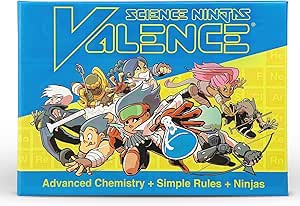 | Best for Chemistry Beginners | Brand: Science Ninjas | Game type: Card game | Included components: Cards | VIEW LATEST PRICE | See Our Full Breakdown |
| Cytosis: A Cell Biology Board Game |  | Best for Cell Biology | Brand: Genius Games | Genre: Educational, Family | Players: 2, 3, 4 or 10+ | VIEW LATEST PRICE | See Our Full Breakdown |
| Skillmatics Guess in 10: NASA Space Card Game |  | Best for Quick Space-Themed Play | Brand: Skillmatics | Age range: 8 years and up | Players: 2–6 | VIEW LATEST PRICE | See Our Full Breakdown |
| Genotype: A Mendelian Genetics Board Game |  | Best for Advanced Genetics Strategy | Manufacturer: Genius Games | Model number: GOT1011 | Player count: 1–5 | VIEW LATEST PRICE | See Our Full Breakdown |
| QUOKKA Travel Space Board Game for Kids and Families |  | Best for Space-Curious Families | Age range: 8 years and up | Players: 2–6 | Playing time: 20–60 minutes | VIEW LATEST PRICE | See Our Full Breakdown |
| Ecosystem Family Card Game |  | Best for Ecology and Biodiversity | Brand: Genius Games | Game type: Card drafting game | Players: 2–6 | VIEW LATEST PRICE | See Our Full Breakdown |
| Somebody Human Anatomy 5-in-1 Educational Board Game |  | Best for Younger Anatomy Learners | Brand: TaliCor | Recommended age: 6–10 years | Players: 2–4 | VIEW LATEST PRICE | See Our Full Breakdown |
| The Awkward Yeti Organ Attack Card Game |  | Best for Humorous Anatomy Play | Players: 2–6 | Recommended age: 8 years and up | Playing time: 30 minutes | VIEW LATEST PRICE | See Our Full Breakdown |
| Subatomic: An Atom Building Game (2nd Edition) |  | Best for Advanced Chemistry Learning | Age range: 14 years and up | Brand: Genius Games | Model year: 2019 | VIEW LATEST PRICE | See Our Full Breakdown |
| educational science board game | Brand | Players | Included components | Recommended age |
|---|---|---|---|---|
| Periodic: A Game of the Elemen | Genius Games | 2–6 | Game | 10 years and up |
| Valence Chemistry Card Game fo | Science Ninjas | — | Cards | 8 years and up |
| Cytosis: A Cell Biology Board | Genius Games | 2, 3, 4 or 10+ | Cytosis: A Cell Biology Game | — |
| Skillmatics Guess in 10: NASA | Skillmatics | 2–6 | 50 game cards, 6 clue cards, portable box, instruction manual | — |
| Genotype: A Mendelian Genetics | — | — | — | 8 years and up |
| QUOKKA Travel Space Board Game | — | 2–6 | 50 space cards, 6 astronaut tokens, 1 illustrated game board | — |
| Ecosystem Family Card Game | Genius Games | 2–6 | Game | 12 years and up |
| Somebody Human Anatomy 5-in-1 | TaliCor | 2–4 | — | 6–10 years |
| The Awkward Yeti Organ Attack | — | 2–6 | Cards | 8 years and up |
| Subatomic: An Atom Building Ga | Genius Games | — | — | — |
More Details on Our Top Picks
Periodic: A Game of the Elements
Periodic is my pick for players who want chemistry to shape their decisions, rather than sit beside the game as background reading. Players move across the periodic table using periodic trends, discover elements, and score through tactical choices and set collection. That gives the table a practical role in play, making it a stronger fit for science-minded families and classrooms than Valence, which introduces chemistry through a card-game format. The tradeoff is that this is not a casual science quiz: players need to engage with chemistry concepts, and the recommended age starts at 10. Its strategy focus gives older kids and adults more to weigh from turn to turn, but may feel like work for anyone seeking a quick, low-explanation game.
Pros:- Uses periodic trends and element discovery as active parts of play
- Combines tactical movement, action economy, and set collection
- Designed for classroom, family, and game-night settings
- Lists STEM and NGSS standards alignment
Cons:- Chemistry concepts are central, which may frustrate players who want a theme-only game
- Recommended for ages 10 and up, limiting its fit for younger learners
- Its strategic demands may be heavier than a simple introductory card game
Best for: Families, science clubs, and teachers seeking a strategy game that makes periodic-table structure and chemistry concepts part of players’ decisions.
Not ideal for: Younger children or groups looking for a quick, light introduction that does not ask players to engage with chemistry.
- Brand:Genius Games
- Genre:Strategy
- Players:2–6
- Recommended age:10 years and up
- Edition:Standard Edition
- Included components:Game
- Standards:STEM and NGSS
Our verdict“Choose Periodic for older kids and adults who want chemistry concepts embedded in a tactical strategy game.”
Valence Chemistry Card Game for Kids
Valence is the most approachable chemistry entry in this group: its card-game format offers a hands-on way to introduce the periodic table and basic chemistry, without the longer strategic commitment of Cytosis or Genotype. That makes it a practical choice for a first science game at home or in a classroom, especially when learners are not ready for a full board-game system. Its linen-finish cards are described as durable, a useful fit for repeat handling by kids. The available details do not specify a player count, playtime, or the exact learning mechanics, so I would not choose it when those logistics or a deeper strategy experience are deciding factors. Its strength is accessibility, not the broad strategic arc offered by the larger games.
Pros:- Introduces basic chemistry and periodic-table ideas through play
- Card format suits home or classroom use
- Linen-finish cards are designed for durable handling
- Created by PhD chemical engineers
Cons:- The provided product details do not state player count or expected playtime
- The described learning scope is more introductory than the strategic science in Cytosis or Genotype
Best for: Parents and teachers introducing children ages 8 and up to basic chemistry and the periodic table through a portable card game.
Not ideal for: Players seeking a detailed strategy game, a specified playtime, or clear player-count guidance before choosing a game for a group.
- Brand:Science Ninjas
- Game type:Card game
- Included components:Cards
- Recommended age:8 years and up
- Set name:Valence
- Unit count:1 count
- Manufacturer:Science Ninjas
Our verdict“Pick Valence as a straightforward first chemistry game for kids, rather than as a deeper strategy experience.”
Cytosis: A Cell Biology Board Game
Cytosis gives cell biology a clear place at the table: players collect resources inside a human cell and use them to build enzymes, hormones, and receptors. Its worker-placement structure means players make strategic choices while encountering the subject, while the included peer-reviewed science booklet adds explanation beyond the game itself. Compared with Periodic, which focuses on chemistry and the periodic table, Cytosis is the better match for learners interested in how cell components and processes fit together. The main cost is time: the listed playtime is 90 minutes, a substantial commitment for a family session or class period. The product also lists its player count as “2, 3, 4 or 10+,” an unusual format that leaves group planning less clear than the straightforward 2–6 range listed for Periodic.
Pros:- Connects resource collection to cell structures and biological products
- Worker placement adds meaningful strategic choices to the science theme
- Includes a peer-reviewed booklet explaining the science
- Designed for family and classroom play
Cons:- Listed playtime of 90 minutes may be too long for casual or short sessions
- The listed player count, “2, 3, 4 or 10+,” is unclear for many group sizes
Best for: Families, biology teachers, and older children who want a substantial worker-placement game about cell biology and can set aside a longer session.
Not ideal for: Groups needing a short classroom activity or buyers who need an unambiguous player-count range before planning.
- Brand:Genius Games
- Genre:Educational, Family
- Players:2, 3, 4 or 10+
- Playing time:90 minutes
- Minimum age:10 years
- Included components:Cytosis: A Cell Biology Game
- Model number:GOT1006
Our verdict“Choose Cytosis when cell biology and a longer strategic session matter more than quick setup and play.”
Skillmatics Guess in 10: NASA Space Card Game
Guess in 10: NASA Space is the quickest, most portable option here: players use questions, clues, and bonus questions to identify what is shown on a card, with NASA images supplying the space theme. At around 20 minutes per round and for 2–6 players, it suits a short family activity or travel session better than Cytosis, whose listed playtime is 90 minutes. The educational angle is broad—space content, communication, and problem-solving—rather than a structured study of a scientific system like Periodic or Genotype. That makes it accessible for ages 8 and up, but buyers seeking a strategy game with explicit science mechanics may find the guessing format too light. The product data also lists no warranty.
Pros:- NASA imagery gives the cards a clear space theme
- Question-and-clue play encourages communication and problem-solving
- Portable box suits travel and quick game sessions
- Supports 2–6 players with a listed average playtime of 20 minutes per round
Cons:- Guessing and general thinking skills are more central than a detailed science curriculum
- Less strategic and subject-focused than Periodic or Genotype
- Product details list no warranty
Best for: Families with children ages 8 and up who want a portable, short space-themed guessing game for travel or casual group play.
Not ideal for: Science-game buyers seeking sustained strategy or detailed instruction in a specific field such as genetics, cell biology, or chemistry.
- Brand:Skillmatics
- Age range:8 years and up
- Players:2–6
- Average playtime:20 minutes per round
- Included components:50 game cards, 6 clue cards, portable box, instruction manual
- Material:Paper
- Model number:SKILL579GNS
Our verdict“Choose Guess in 10: NASA Space for short, portable space-themed play, not for deep science strategy.”
Genotype: A Mendelian Genetics Board Game
Genotype is the strongest fit for players who want Mendelian genetics paired with a substantial strategy game. Its worker-placement and dice-drafting mechanics frame players as scientists investigating Mendel’s pea-plant experiments, and a science booklet supports the theme with additional explanation. Compared with Guess in 10: NASA Space, which uses short rounds of clue-based identification, Genotype asks for sustained planning across a 45–75-minute session. Solo play and a 1–5 player range also give it more flexibility than Cytosis’s unusually listed player count. The tradeoff is a steeper learning curve: new players may need time to grasp the mechanics, and the session length is a poor match for casual groups looking for a quick activity. Its genetics focus is specific, not a general survey of science.
Pros:- Worker placement and dice drafting give the genetics theme strategic depth
- Explores Mendel’s pea-plant experiments and includes a science booklet
- Supports solo play as well as groups of up to five
- Recommended age begins at 8 years
Cons:- The 45–75-minute playtime is a lengthy commitment for casual sessions
- Mechanics may create a steep learning curve for beginners
- Focuses on Mendelian genetics rather than a broad range of science topics
Best for: Strategy-game fans, genetics learners, and science teachers who want a detailed Mendelian genetics game with solo and small-group options.
Not ideal for: Casual players, younger children needing simple rules, or groups that cannot set aside 45–75 minutes to play.
- Manufacturer:Genius Games
- Model number:GOT1011
- Player count:1–5
- Playtime:45–75 minutes
- Recommended age:8 years and up
- Material type:Cardboard
- UPC:653341737809
Our verdict“Choose Genotype for a strategic, genetics-focused session when your group is ready to learn its mechanics and commit the time.”
QUOKKA Travel Space Board Game for Kids and Families
Space facts meet a clue-and-movement game in this family option for ages 8 and up. Players use clues to identify planets, moons, and other objects, then move astronaut tokens across a galaxy board, so the learning is woven into turns rather than presented as a standalone lesson. Its three difficulty levels give families room to adjust the challenge, while support for up to six players suits a group better than the smaller-table Subatomic. The 20–60-minute range is flexible, but the longer end may test younger players’ attention. Compared with Skillmatics Guess in 10: NASA Space Card Game, QUOKKA adds a board and movement; that gives play more structure, though it also means more setup and a less compact session.
Pros:- Clue-based turns connect play with facts about planets, moons, and other space objects.
- Three difficulty levels let players adjust the challenge.
- Supports 2–6 players, making it suitable for family and group play.
- Includes a galaxy board, astronaut tokens, and 50 space cards.
Cons:- Play can last up to 60 minutes, which may be a long session for younger children.
- The board and tokens require more setup and table space than a card-only space game.
Best for: Families with children aged 8 and older who want introductory space learning, adjustable clue difficulty, and a board game for up to six players.
Not ideal for: Buyers seeking a very short, card-only space activity or a game for children under 8; sessions may run up to an hour.
- Age range:8 years and up
- Players:2–6
- Playing time:20–60 minutes
- Included components:50 space cards, 6 astronaut tokens, 1 illustrated game board
- Educational objective:Learn about space and its objects
- Material:Cardboard
- Language:English
- Board dimensions:8.66 × 8.66 × 0.04 inches
Our verdict“Choose QUOKKA for adjustable, board-based space trivia with a family-sized player count, but skip it if you need a brief card game.”
Ecosystem Family Card Game
Ecosystem turns ecological relationships into drafting decisions: players collect animal and habitat cards, then arrange them to build an ecosystem where biodiversity matters and monocultures are penalized. That makes it a more systems-focused science game than QUOKKA, which centers on identifying space objects through clues. Its 15–20-minute playtime makes it easier to fit into a lesson or family game night, and the drafting adds strategic choices without requiring a long session. The main limit is its recommended age of 12 and up; younger children may need help with the ecological concepts or strategy. It also seats no more than six, so larger classes will need another activity or multiple copies.
Pros:- Drafting and arranging cards gives players a direct way to think about habitat relationships.
- Rewards biodiversity and penalizes monocultures, reinforcing ecological themes through play.
- The 15–20-minute session length suits short family or classroom activities.
- Combines accessible rules with strategic choices.
Cons:- Recommended for ages 12 and up, limiting its fit for younger children.
- The 2–6 player limit may require multiple groups in a larger class.
- Card drafting is less suited to buyers who want a board, tokens, or a more hands-on puzzle format.
Best for: Families, science teachers, and small groups with players aged 12 and older who want a short game about biodiversity, habitats, and ecological connections.
Not ideal for: Buyers seeking an elementary-age introduction to science or a game for a large classroom group; it is recommended for ages 12 and up and supports at most six players.
- Brand:Genius Games
- Game type:Card drafting game
- Players:2–6
- Playing time:15–20 minutes
- Recommended age:12 years and up
- Material:Cardboard
- Included components:Game
- Model year:2019
Our verdict“Pick Ecosystem for a quick, strategy-led ecology lesson for teens and adults, rather than a younger child’s first science game.”
Somebody Human Anatomy 5-in-1 Educational Board Game
Five game formats make anatomy approachable for children aged 6–10, including puzzle play for younger players and activities about organs and body systems for older ones. That age range gives it a different role from Organ Attack, whose humorous attacks and defenses suit players from age 8, or Subatomic, aimed at older teens. The mix can help families return to body-science topics in different ways instead of repeating a single activity. However, the product data does not identify the five games’ specific mechanics, so buyers have less detail about what each activity teaches before opening the box. Its 2–4 player limit is also narrower than QUOKKA or Ecosystem, and small parts call for adult supervision around young children.
Pros:- Five included games provide more than one way to approach anatomy learning.
- Puzzle play offers an entry point for younger children.
- Activities extend to organs and body systems for older children in the age range.
- No batteries are required.
Cons:- Small parts may pose a choking hazard and require supervision.
- Supports only 2–4 players, fewer than QUOKKA or Ecosystem.
- The available product details do not specify the mechanics of each of the five games.
Best for: Families with children aged 6–10 who want several anatomy-focused activities for a small group and can supervise play around small parts.
Not ideal for: Large families, classrooms needing more than four players at one table, or homes where small parts pose a safety concern.
- Brand:TaliCor
- Recommended age:6–10 years
- Players:2–4
- Included games:Five
- Educational objective:STEM
- Batteries:Not required
- Weight:1.3 pounds
- Dimensions:14.75 × 1.75 × 10.75 inches
- Material:Plastic
Our verdict“Choose this set for varied, younger-child anatomy activities if a four-player limit and small parts are manageable.”
The Awkward Yeti Organ Attack Card Game
Organ Attack teaches anatomy through take-that card play: players use afflictions and immunity cards to attack or protect organs, with the last player holding an organ winning. The humor and direct player interaction set it apart from Somebody Human Anatomy, which offers multiple activities for younger learners, and from Subatomic’s more technical focus on chemistry. Organ Attack is aimed at ages 8 and up and plays in about 30 minutes, giving older children and adults a compact way to engage with body-related vocabulary. The tone will not suit every household: the central joke is attacking opponents with afflictions, and the game requires at least two players. Its book-style case helps with storage and portability, but the gameplay remains card-focused rather than a detailed anatomy lesson.
Pros:- Uses anatomy as the theme for interactive strategy and humor.
- Works for children and adults aged 8 and older.
- About 30 minutes of play fits a shorter game session.
- Hardcover book-style case makes the cards easier to store and carry.
Cons:- Requires at least two players and does not support solo play.
- Attacking opponents with afflictions may not suit every family or classroom.
- Card-based humor offers less structured anatomy instruction than the five activities in Somebody Human Anatomy.
Best for: Families or friends with players aged 8 and older who enjoy humorous, competitive card games and want anatomy as a theme.
Not ideal for: Buyers looking for a gentle cooperative science activity, a solo game, or a detailed lesson on body systems; the core play revolves around attacking opponents.
- Players:2–6
- Recommended age:8 years and up
- Playing time:30 minutes
- Material:Paper
- Included components:Cards
- Theme:Humor and human anatomy
- Package dimensions:8 × 6 inches
- Item weight:440 g
- Storage:Hardcover book-style case
Our verdict“Choose Organ Attack for a portable, competitive anatomy-themed game with a comic tone, not for a formal body-science lesson.”
Subatomic: An Atom Building Game (2nd Edition)
Subatomic is the most chemistry-focused option in this group, using deck-building as players draft particle cards, construct atoms, and score points. A science booklet supports classroom use, giving the game more explicit instructional grounding than Organ Attack’s anatomy-themed humor. Its age recommendation of 14 and up and 40–60-minute playtime make it a better fit for teens, adults, or a planned lesson than for a quick family activity. The deck-building is described as accessible to beginners while leaving room for strategic decisions, but the subject and session length still ask for more attention than QUOKKA’s adjustable space clues. The 2–4 player limit also makes it less suitable for larger groups, even if its chemistry depth is the strongest reason to choose it.
Pros:- Particle-card drafting connects game decisions to atom-building concepts.
- Includes a science booklet for added classroom context.
- Deck-building offers strategic choices alongside the science theme.
- Designed around chemistry concepts, giving it a more focused subject than the anatomy-themed Organ Attack.
Cons:- Recommended for ages 14 and up, so it is not aimed at younger children.
- Supports only 2–4 players, limiting use with larger groups.
- A 40–60-minute session may be too long for casual or short classroom play.
Best for: Chemistry teachers, teens aged 14 and older, and strategy-game players who want a longer session built around particle and atom concepts.
Not ideal for: Families with younger children, large classrooms, or anyone seeking a brief science game; it is rated for ages 14 and up, supports four players at most, and can take an hour.
- Age range:14 years and up
- Brand:Genius Games
- Model year:2019
- Number of players:2–4
- Play time:40–60 minutes
- Game type:Deck-building atom-building game
- UPC:653341737502
- GTIN:00653341737502
Our verdict“Choose Subatomic for older learners who want a substantial chemistry strategy game and have time for a longer session.”
How We Picked
I compared these games by how directly their play connects to a science subject, how much conceptual learning the rules can support, and how readily a new group can begin playing. I also weighed format and audience fit: a quick question card game serves a different need from a strategy board game built around biology or chemistry. Subject accuracy and specificity mattered alongside replay potential, since a science label alone does not make a game educational.
The ranking favors games that combine a clear learning connection with engaging, usable play for their intended audience. That places Periodic first for its balance of chemistry theme and strategic decisions, with Cytosis and Genotype appealing to players seeking focused biology. Lighter, portable options rank well for ease and convenience, but lower when their format offers less room for deeper systems; more specialized games may also be a weaker fit for casual or younger groups.
| educational science board game | Brand | Material |
|---|---|---|
| Periodic: A Game of the Elemen | Genius Games | — |
| Valence Chemistry Card Game fo | Science Ninjas | — |
| Cytosis: A Cell Biology Board | Genius Games | — |
| Skillmatics Guess in 10: NASA | Skillmatics | Paper |
| Genotype: A Mendelian Genetics | — | — |
| QUOKKA Travel Space Board Game | — | Cardboard |
| Ecosystem Family Card Game | Genius Games | Cardboard |
| Somebody Human Anatomy 5-in-1 | TaliCor | Plastic |
| The Awkward Yeti Organ Attack | — | Paper |
| Subatomic: An Atom Building Ga | Genius Games | — |
Factors to Consider When Choosing Educational Science Board Games
Before choosing a game, I would match the learning goal to the people who will actually play it. A title can be scientifically specific yet feel like homework if the vocabulary or rules are a poor fit. These broader checks help separate a fun science-themed activity from a game that supports the kind of learning and play your group wants.
Choose a Learning Goal, Not Just a Science Theme
Start by asking what you want players to learn or revisit: scientific vocabulary, relationships between systems, or a particular topic such as genetics. A broad theme can make a game inviting, but it may not teach a concept in much detail. A focused game can offer richer subject connections while narrowing its appeal to players interested in that area. A common mistake is buying around a child’s current favorite subject without checking whether the game mechanics actually use that subject. Look for rules and player actions that depend on scientific ideas, rather than relying on illustrations or trivia alone. If the goal is classroom reinforcement, match the game’s topic to what learners are studying.
Match Complexity to the Group’s Patience
Age recommendations are only a starting point; reading confidence, comfort with strategy, and experience with board games can matter just as much. A game with scientific terms may be accessible when players can discuss them together, but difficult when every turn requires independent reading. For mixed-age groups, consider whether older players can help without taking over. Avoid choosing the most detailed rules simply because they sound more educational: repeated play is more likely when players can understand their choices. If your group prefers quick turns, a compact card format may work better than a layered strategy game. For older learners who enjoy planning, greater complexity can add replay value rather than friction.
Decide How Much Teaching Support You Want
Some games work best when players already know basic terms, while others can introduce a topic through examples and repeated choices. Think about whether an adult, teacher, or older sibling will be available to explain unfamiliar ideas. A game that assumes background knowledge can still be useful, but it may need a short conversation before or after play to make the science connections clear. Check whether the instructions explain why an action matters, not only how to score it. If you want independent play, prioritize clear rules and low reliance on outside explanation. For a guided learning activity, a more demanding game can prompt worthwhile discussion.
Balance Portability Against Table Space and Components
Travel-friendly card games are easy to bring along and often need less setup, but they may offer less room for an evolving strategy or visual system. Larger board games can make relationships between scientific elements easier to see, though they require a suitable surface and more time to set up. Consider where the game will be played most often, not just where it might be taken occasionally. Small pieces can also be harder for younger children to handle and easier to lose. Before buying, check the format and component demands against your storage space and the players’ ages. A convenient game is a better fit only if its play style matches your learning goal.
Look for Replay Beyond the First Lesson
A game may explain a concept well on the first play yet lose appeal if each session follows the same path. Replay can come from changing strategies, different questions, varied player interactions, or a broad set of possible combinations. Ask whether players will want to return once they know the rules and science terms. A fixed quiz can still be a good choice for short practice sessions, but it may not satisfy a group seeking a long-term strategy game. Do not treat content volume as the only measure of replay; meaningful decisions can matter more than a large stack of cards. Choose the format that fits how often and how long your group expects to play.
Treat Value as Fit, Not Feature Count
More components, a larger box, or a broader age range do not automatically make a game a better buy for your group. Value comes from whether the game gets played, supports the intended learning goal, and suits the number and ages of players. A specialized title can be worthwhile for a science-focused household or classroom, while a simpler game may see more use in a family that prefers short sessions. Check player-count requirements and expected play length before making a decision. One frequent mistake is choosing a game for its educational promise without considering whether the group enjoys its core activity. Prioritize fit and repeated use over an impressive-sounding feature list.
Frequently Asked Questions
Which game should I choose if my players have very different ages?
I would prioritize games with straightforward turns and opportunities for players to contribute at different knowledge levels. A highly specialized strategy game can reward experienced players while leaving younger participants dependent on help, so check rules and vocabulary rather than relying on age labels alone. Card-based formats may be easier to adapt for short mixed-age sessions, though they may offer less strategic depth. Before buying, consider whether adults are willing to explain terms or team up with younger players. If independent play matters, choose simpler mechanics over a more advanced science topic.
Are these games suitable for classroom learning?
Several formats can support classroom use, but the right choice depends on group size, lesson goals, and time available. A game focused on a single field may reinforce a unit more directly than a broad science-themed activity. Check how many players can participate at once and whether the rules are easy to teach to multiple groups. A game can prompt useful discussion without replacing instruction, so plan time for students to explain the choices they made. For a short lesson, setup and turn length may matter as much as subject detail.
Will a science game teach a topic to players who are new to it?
Some games can introduce ideas through play, but many work better as reinforcement than as a complete lesson. Look for rules that connect actions to scientific concepts and give players a chance to see those ideas recur. If the game uses unfamiliar vocabulary, a short explanation before play can prevent confusion from overwhelming the activity. You can also pause to ask why a move makes sense within the game’s science model. For a learner with no background, favor clarity and discussion over the most advanced topic.
Should I choose a science-themed card game or a board game?
Choose by how your group prefers to play, not by format alone. Card games often work well for shorter sessions, travel, or quick rounds, while board games may support a more visible system and longer strategic decisions. Neither format guarantees stronger learning; the key is whether the science affects what players do. Check setup time, table space, and how comfortable your players are with rules. If convenience drives the purchase, cards may fit better; if your group enjoys planning, a board game may hold attention longer.
Is a more complex game always more educational?
No. Complexity can support deeper decisions, but it can also distract players from the science if they spend most of the session working out the rules. A simpler game may be a stronger learning tool when it keeps attention on vocabulary, recall, or discussion. Consider whether the players will enjoy enough repeat sessions to build familiarity with the topic. For experienced players, extra strategic layers can make a science concept more engaging. The best level is the one that invites participation without making the learning feel like a rule test.
Conclusion
For the broadest balance of science connection and strategic play, I recommend Periodic as the best overall choice. Valence is my best-value-style pick for families wanting a more approachable chemistry card game, while Cytosis is the stronger premium-style choice for players drawn to detailed cell biology and longer strategic play. Beginners may prefer Guess in 10: NASA Space for accessible, short rounds; choose Genotype for genetics, Ecosystem for ecological relationships, or Somebody Human Anatomy for body-focused learning. For travel, compare QUOKKA Travel Space with the NASA card game, while Organ Attack and Subatomic suit groups seeking, respectively, a playful anatomy theme or deeper atom-building strategy. Pick the subject your players care about, then make sure the rules and session style fit the way they like to learn.
Halloween Picks

Pumpkin Halloween Fog Machine with 12-Color LED Lights, Bluetooth Speaker, and Remote

JOYIN 5-Foot Halloween Animatronic Drinking Skeleton

Gemmy 6-Foot Leatherface Animatronic Halloween Decoration
As an affiliate, we earn on qualifying purchases.