

The right educational science kit for a student depends less on experiment count and more on whether the kit matches the child’s age, the subject they’re studying, and how much independence they have. After comparing these 11 options side by side, the National Geographic Amazing Chemistry Set earned the top spot for its balance of real chemistry concepts, safety, and repeatable experiments. The Thames & Kosmos Structural Engineering Kit is the standout for older students who learn by building, while the UNGILINGA 150 Experiments kit delivers the best value for budget-conscious households. The main tradeoff in this category is breadth versus depth: big multi-experiment kits keep younger kids engaged, while focused kits like the EUDAX electricity lab and LINKTOR molecular model set teach specific curriculum topics far better. Keep reading for the full breakdown, including which kits to skip and who each one actually suits.

Prime made for students and young adults
- Fast, free delivery for dorm and study essentials
- Prime Video and Amazon Music included
- Member-only deals
Key Takeaways
- Chemistry dominates this category, but the three chemistry-focused NatGeo and UNGILINGA kits differ sharply: the Amazing Chemistry Set teaches genuine reactions, while the Science Magic Kit leans on presentation over substance.
- Two of the eleven products aren’t experiment kits at all — the LINKTOR and 240-piece molecular model sets — and they’re the only options here that map directly to middle and high school chemistry curriculum.
- Both microscopes in the lineup target different ages: the 58-piece metal-body kit suits ages 5-12 with heavy magnification claims, while the NatGeo 400x model is more realistic and better for ages 8 and up.
- The Thames & Kosmos engineering kit and EUDAX electricity lab are the only picks that hold a teenager’s attention — nearly every other option tops out around age 12.
- Refill cost was the hidden differentiator: kits with single-use chemical sachets (all three NatGeo sets) cost more long-term than reusable builds like the bridge kit and molecular models.
| Thames & Kosmos Structural Engineering: Bridges & Skyscrapers Science & Engineering Kit |  | Best for Engineering-Minded Builders | Number of models: 20 | Building pieces: 285+ | Manual: 36-page illustrated | VIEW LATEST PRICE | See Our Full Breakdown |
| EUDAX School Physics Labs Basic Electricity and Magnetism Experiment Kit |  | Best for High School Physics | Brand: EUDAX | Age range: 8-18 years (designed for grades 9-11) | Number of items: 79 | VIEW LATEST PRICE | See Our Full Breakdown |
| National Geographic Junior Chemistry Set with 50 Experiments for Kids |  | Best for Preschool Scientists | Ages: 4 and up | Number of experiments: 50 | Tools included: 20+ | VIEW LATEST PRICE | See Our Full Breakdown |
| National Geographic Science Magic Kit – 100+ Experiments & Magic Tricks for Kids |  | Best for Reluctant Scientists | Brand: Blue Marble (National Geographic) | Age range: 8 years and up | Included experiments: 20 magic experiments | VIEW LATEST PRICE | See Our Full Breakdown |
| 58-Piece Kids Microscope Kit – 100X-1200X Magnification, Metal Body, LED Light, Carrying Box |  | Best Beginner Microscope Value | Magnification: 100X-1200X | Number of pieces: 58 | Body material: Metal | VIEW LATEST PRICE | See Our Full Breakdown |
| LINKTOR Chemistry Molecular Model Kit (444 Pieces) for Organic and Inorganic Chemistry Learning |  | Best for Advanced Chemistry Students | Number of Pieces: 444 | Atoms: 136 | Bonds: 158 | VIEW LATEST PRICE | See Our Full Breakdown |
| Molecular Model Kit (240 Pieces) for Organic and Inorganic Chemistry Learning |  | Best Value Molecular Model Kit | Number of Pieces: 240 | Material: Food-grade, eco-friendly plastics | Model Number: XYHTYBD-07 | VIEW LATEST PRICE | See Our Full Breakdown |
| UNGILINGA 150 Experiments Science Kits for Kids Chemistry Lab STEM Toys |  | Best Variety for Young Explorers | Number of Experiments: 150 | Topics Covered: Earth science, surface tension, chemistry, physics | Includes: Tools, materials, and goggles | VIEW LATEST PRICE | See Our Full Breakdown |
| National Geographic Amazing Chemistry Set with 100+ Experiments for Ages 8-12 |  | Best Overall for Chemistry | Brand: Blue Marble / National Geographic | Age Range: 8 years and up | Number of Experiments: 100+ in box, 85 bonus with household items | VIEW LATEST PRICE | See Our Full Breakdown |
| National Geographic Microscope for Kids with Up to 400x Magnification |  | Best Beginner Microscope Experience | Magnification: Up to 400x | Included Specimens: 6 plant slides, 6 rocks and minerals, 6 blank slides | Accessories: Pipette, specimen dish, tweezers, lab guide, stickers | VIEW LATEST PRICE | See Our Full Breakdown |
| National Geographic Earth Science Kit with 100+ Activities for Kids 8-12 | 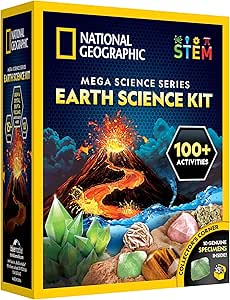 | Best Variety Pick | Brand: National Geographic (Blue Marble) | Recommended Age: 8-12 years | Number of Activities: 100+ experiments and activities | VIEW LATEST PRICE | See Our Full Breakdown |
More Details on Our Top Picks
Thames & Kosmos Structural Engineering: Bridges & Skyscrapers Science & Engineering Kit
Most kits in this roundup demonstrate a single scientific discipline through one-off experiments, but this one takes a different approach: progressive model building. Students construct 20 working structures, from bridges to skyscrapers, and in doing so absorb concepts like compression, tension, and load distribution through their hands rather than a worksheet. The 285+ pieces and 36-page manual give it real depth compared with the National Geographic Science Magic Kit, which prioritizes quick wow-factor demos over sustained building projects. The tradeoff is patience: assembly is slow, and the skill floor sits at intermediate level. Where the EUDAX electricity kit suits a ninth-grader following lab procedures, this pick rewards a student who likes finishing something structural and showing it off.
Pros:- 20 progressively complex models provide long-term engagement, not a single afternoon of use
- Teaches genuine structural engineering principles like force, load, compression, and tension
- Parents’ Choice Gold Award recognition signals strong educational quality
- 285+ pieces allow rebuilding and custom structure designs beyond the manual
Cons:- Requires an intermediate skill level that leaves younger students behind
- Assembly is time-consuming, which frustrates kids who expect immediate results
- No stated age range, making it harder for buyers to judge fit
Best for: Middle and high school students who enjoy building projects and want a deep, multi-week engineering challenge rather than quick demonstrations
Not ideal for: Younger kids or families wanting fast, five-minute experiments — models take real time and prior building comfort to complete
- Number of models:20
- Building pieces:285+
- Manual:36-page illustrated
- Discipline:Structural engineering
- Skill level:Intermediate
- Award:Parents’ Choice Gold Award
Our verdict“Choose this if your student learns best by building ambitious, lasting projects; skip it if quick experiments are the goal.”
EUDAX School Physics Labs Basic Electricity and Magnetism Experiment Kit
This is the rare kit in this lineup aimed squarely at high school coursework. While the National Geographic Junior Chemistry Set targets preschool-aged curiosity, EUDAX covers circuits, electromagnets, and generators — the same topics a grades 9-11 physics class actually teaches. With 79 components and a color manual, it works as home reinforcement for classroom labs, and the included storage bag keeps small parts from disappearing between sessions. The scope is narrow by design: it does electricity and magnetism well, but offers nothing outside that lane, unlike broader sets like the UNGILINGA 150-experiments kit. Add the hidden cost of three AA batteries and some assembly work per experiment, and this becomes a focused tool for a specific student rather than an all-purpose gift.
Pros:- 79-item component set supports a wide range of circuit, electromagnet, and generator builds
- Directly maps to grades 9-11 physics curricula, unlike most toy-level kits
- Color manual and storage bag make repeat use practical
- Genuine lab equipment feel prepares students for real science coursework
Cons:- Batteries not included, adding an extra purchase before the first experiment
- Limited strictly to electricity and magnetism — no chemistry, biology, or earth science content
- Each experiment requires assembly, which slows down younger or impatient users
Best for: High school students in grades 9-11 who need hands-on practice with electricity and magnetism concepts outside the classroom lab
Not ideal for: Elementary-age kids or buyers wanting a general-purpose science kit — the subject matter and procedures are too narrow and advanced
- Brand:EUDAX
- Age range:8-18 years (designed for grades 9-11)
- Number of items:79
- Includes:Color manual, storage bag
- Batteries needed:3 AA batteries
- Batteries included:No
- Subjects:Electricity and magnetism
Our verdict“A curriculum-aligned lab kit worth buying for a high school physics student, but too specialized to serve as a child’s only science kit.”
National Geographic Junior Chemistry Set with 50 Experiments for Kids
Almost every other kit here starts at age 8; this one starts at age 4, and that gap defines its value. Fifty experiments with 20+ child-safe tools introduce chemistry vocabulary and observation habits years before formal science class. Compared with the National Geographic Science Magic Kit, which skews older with trick-based STEM demonstrations, this set keeps instructions simple and illustrated so pre-readers can follow along with a parent. The safety-first approach has a cost: experiments lean heavily on common household items, so the chemistry itself is basic, and results are more sensory than scientific. Supervision is non-negotiable at this age. Still, for building early enthusiasm, nothing else in this lineup competes at the preschool level.
Pros:- One of the only real science kits designed for children as young as 4
- 50 experiments deliver exceptional variety for an entry-level set
- Child-safe tools and illustrated instructions make parental guidance easy
- Uses common household items, so experiments can be repeated cheaply
Cons:- Constant adult supervision required given the target age
- Reliance on household items limits how genuinely chemical the experiments feel
- Content depth is shallow for any child past early elementary school
Best for: Parents of children ages 4-7 who want a safe, supervised first introduction to hands-on science
Not ideal for: Kids 8 and up — the experiments will feel babyish next to the Amazing Chemistry Set or Earth Science Kit from the same brand
- Ages:4 and up
- Number of experiments:50
- Tools included:20+
- Instruction format:Illustrated, easy-to-follow
- Materials:Common household items
- Availability:Exclusive to Amazon
Our verdict“The clear first-science-kit choice for preschoolers, provided a parent is ready to participate in every session.”
National Geographic Science Magic Kit – 100+ Experiments & Magic Tricks for Kids
This kit’s real innovation is motivation design: it wraps science demonstrations in magic tricks, targeting kids who resist traditional educational toys. The included materials cover 20 magic experiments, and a bonus booklet pushes the total past 100 activities — more raw content than the Junior Chemistry Set, though many bonus items require sourcing your own household materials. Compared with the straightforward National Geographic Amazing Chemistry Set, the payoff here is performance: a child explains the trick to the audience, which sneakily builds scientific communication skills. The flip side is that science takes a backseat to spectacle — depth per experiment is thinner than the EUDAX physics kit, and there’s no expansion path once the tricks are mastered. Younger users will need adult help with setup.
Pros:- 100+ combined experiments and tricks offer enormous total content
- Performance angle builds confidence and science communication, not just observation
- Bonus booklet with 85+ extra experiments extends value well past the box contents
- Strong fit for ages 8+ working more independently than preschool kits allow
Cons:- Many bonus experiments require additional household items not in the box
- Younger children still need adult supervision for trick setups
- No expansion sets exist, so motivated kids eventually outgrow it
Best for: Kids ages 8 and up who show little interest in science but love performing, entertaining, and showing off tricks
Not ideal for: Serious students wanting rigorous experiments — the emphasis on presentation means less actual scientific depth per activity
- Brand:Blue Marble (National Geographic)
- Age range:8 years and up
- Included experiments:20 magic experiments
- Bonus content:Booklet with 85+ additional experiments
- Total activities:100+
- Model number:NGMEGAMAGIC
- Category:STEM + magic performance
Our verdict“The smartest pick for converting a magic-obsessed kid into a curious one, as long as you accept style over scientific depth.”
58-Piece Kids Microscope Kit – 100X-1200X Magnification, Metal Body, LED Light, Carrying Box
Against the National Geographic Microscope for Kids, this kit competes on two things: piece count and portability. With 58 pieces including prepared specimens, blank slides, and lab tools, a curious child can start observing the moment the box opens — no separate slide purchases needed. The carrying case makes it genuinely usable for classroom show-and-tell or field trips, which bench-bound sets can’t match. The metal body feels sturdier than typical plastic toy microscopes at this price. The compromises are real, though: the claimed 100X-1200X magnification range gets blurry near the top end, two AA batteries aren’t included, and optical quality falls short of a dedicated instrument. As an affordable spark for ages 5-12, it does its job; as a lasting scientific tool, it has a ceiling.
Pros:- 58 pieces including prepared specimens and slides mean immediate use with no extra purchases
- Metal body construction outlasts all-plastic toy microscopes in the same price tier
- Carrying box makes it portable for classrooms, trips, and gifts
- Broad 5-12 age range suits households with multiple children
Cons:- Magnification claims look impressive but images blur near 1200X
- Requires 2 AA batteries that are not included
- Younger children need adult supervision to handle slides and focus properly
Best for: Budget-conscious families and classrooms buying for kids ages 5-12 who want a complete, portable first microscope under modest budgets
Not ideal for: Older students or hobbyists needing crisp high-magnification optics — image quality degrades at upper magnification levels
- Magnification:100X-1200X
- Number of pieces:58
- Body material:Metal
- Illumination:LED light
- Dimensions:4.7″L x 2.75″W x 8.15″H
- Includes:Prepared specimens, slides, lab tools, carrying box
- Batteries:2 AA (not included)
- Recommended ages:5-12
Our verdict“A strong value-first microscope that gets kids observing immediately, as long as expectations for optical precision stay modest.”
LINKTOR Chemistry Molecular Model Kit (444 Pieces) for Organic and Inorganic Chemistry Learning
This is the deepest molecular modeling set in the lineup, and that depth is exactly why it earns the advanced slot. With 444 pieces — including 150 parts for building Fullerene C-60 — it handles stereochemistry and complex organic structures that the smaller Molecular Model Kit (240 Pieces) simply can’t complete in one build. Compared with the UNGILINGA 150 Experiments kit, which prioritizes breadth of casual experiments, the LINKTOR set focuses on one discipline done properly: visualizing 3D molecular geometry from grade 7 through graduate coursework. The tradeoff is real, though. Beginners will find the sheer part count overwhelming, and the listed age guidance is confusingly broad. This pick makes the most sense for a student already committed to chemistry who needs a tool that grows with them, not a toy.
Pros:- 444 pieces handle complex graduate-level structures, not just basics
- Supports both ball-and-stick and space-filling modeling styles
- Includes 150 dedicated Fullerene C-60 parts found in almost no competing kit
- Durable pieces that disassemble cleanly for repeated builds
Cons:- Piece count is overwhelming for beginners with no chemistry background
- Age labeling is confusingly broad, giving buyers little guidance
- No experiments included — it models molecules but teaches nothing on its own
Best for: High school and college chemistry students who need to model complex organic, inorganic, and stereochemical structures
Not ideal for: Elementary-aged kids or casual learners — the piece count and abstract subject matter will overwhelm them without a curriculum behind it
- Number of Pieces:444
- Atoms:136
- Bonds:158
- Fullerene Parts:150
- Model Styles:3D ball-and-stick and space-filling
- Educational Level:Grade 7 to graduate
Our verdict“Buy this if you have a serious chemistry student in the house; skip it if the learner still needs experiments to stay engaged.”
Molecular Model Kit (240 Pieces) for Organic and Inorganic Chemistry Learning
This 240-piece set is the practical middle ground of the molecular modeling options. It covers the same core chemistry concepts as the LINKTOR 444-piece kit — 3D geometry, bonding, stereochemistry — at a friendlier price and with less clutter, making it far less intimidating for a first-time builder. The food-grade, eco-friendly plastics also make it a safer choice for households with younger siblings who might get their hands on stray pieces. The compromises show up at the extremes: advanced students will run out of pieces mid-build when tackling large structures, and unlike the National Geographic Chemistry Set, there’s no instruction guide for building specific molecules, so you’ll need a textbook or teacher to direct the learning. This option stands out for budget-conscious families buying for a middle or high school class requirement.
Pros:- More affordable entry point into molecular modeling than larger kits
- Food-grade, eco-friendly plastic is safe around younger children
- Covers both organic and inorganic structures for standard coursework
- Simpler piece inventory is easier for beginners to manage
Cons:- No instructions or guide for building specific molecules
- Piece count runs out when constructing large advanced models
- Strictly educational — useless for anyone wanting experiments or lab-style activities
Best for: Budget-minded parents and teachers buying for middle or high school students who need a class-ready modeling set
Not ideal for: College organic chemistry students — the piece count limits larger advanced builds the LINKTOR kit handles easily
- Number of Pieces:240
- Material:Food-grade, eco-friendly plastics
- Model Number:XYHTYBD-07
- Subjects:Organic and inorganic chemistry, stereochemistry
- Educational Level:Middle school to graduate
- Includes:Atoms and bonds only, no guide
Our verdict“A sensible budget pick for standard coursework, but serious chemistry students should pay up for the larger LINKTOR set.”
UNGILINGA 150 Experiments Science Kits for Kids Chemistry Lab STEM Toys
Where the National Geographic Amazing Chemistry Set stays inside one discipline, the UNGILINGA kit goes wide: 150 experiments across chemistry, physics, earth science, and surface tension. That breadth makes it the strongest pick here for a child who hasn’t figured out which branch of science excites them yet — you’re effectively buying four subjects in one box. The included goggles and kid-friendly tools also give it an edge over cheaper generic kits that ship nothing for safety. The cost of that variety is depth: none of the 150 experiments go as far as the crystal-growing and reaction work in the Nat Geo set, and parents should expect to supply household items and supervise closely, since several activities aren’t self-directed. Compared with the National Geographic Microscope, it trades focused observation for broad sampling — a fair trade for explorers under ten.
Pros:- 150 experiments span four science disciplines, not just chemistry
- Includes goggles and quality kid-sized tools for safety
- Easy-to-follow instructions keep young learners on track
- Strong value per experiment compared with single-subject kits
Cons:- Requires constant adult supervision for safety
- Some experiments need additional household items not in the box
- Breadth comes at the cost of depth — activities are simpler than dedicated kits
Best for: Parents of curious kids aged roughly 6-10 who want to sample multiple science branches before committing to one
Not ideal for: Families seeking a self-directed activity — most experiments need adult supervision and some household supplies
- Number of Experiments:150
- Topics Covered:Earth science, surface tension, chemistry, physics
- Includes:Tools, materials, and goggles
- Target Audience:Kids, home or school use
- Instruction Style:Easy-to-follow printed guides
- Supervision:Adult supervision required
Our verdict“The best choice for a young generalist who wants to touch every branch of science, provided a parent is willing to participate.”
National Geographic Amazing Chemistry Set with 100+ Experiments for Ages 8-12
This is the most complete single-subject kit in the roundup, and it earns the top chemistry spot on execution. Unlike the UNGILINGA kit, which spreads itself across four disciplines, the Nat Geo set delivers 100+ focused chemistry experiments — crystal growing, color-changing solutions, glowing test tubes — with real lab tools like test tubes, beakers, and pipettes, so kids actually practice scientific technique rather than just watching reactions. The bonus guide with 85 extra experiments using household items roughly doubles the value after the boxed materials run out. Tradeoffs are typical of the category: younger children need adult supervision, some activities require pantry staples, and it’s strictly chemistry — a kid drawn to physics or circuits would be better served by the EUDAX electricity kit. Compared with the National Geographic Junior Chemistry Set‘s 50 experiments, this is the clear upgrade.
Pros:- 100+ chemistry experiments with real tools including test tubes, beakers, and pipettes
- Bonus guide adds 85 more experiments using household items
- Award-winning design that balances education with genuine fun
- Brand-backed warranty and customer support rare at this price
Cons:- Several experiments require additional household items
- Chemistry only — no electronics or physics content
- Younger children need adult supervision throughout
Best for: Kids aged 8-12 who have shown genuine interest in chemistry and want real lab equipment, not just toys
Not ideal for: Households without an involved adult — supervision is expected, and several experiments need household items
- Brand:Blue Marble / National Geographic
- Age Range:8 years and up
- Number of Experiments:100+ in box, 85 bonus with household items
- Model Number:NGMEGACHEMAR
- Highlights:Crystal growing, chemical reactions, glowing test tubes
- Included Tools:Test tubes, beakers, pipettes
- Warranty:Backed by manufacturer quality standards and support
Our verdict“If a child specifically loves chemistry, this is the kit to buy — nothing else in the lineup does one subject this thoroughly.”
National Geographic Microscope for Kids with Up to 400x Magnification
Among the observation-focused options, this kit wins on usability over raw power. Its large focus knobs, soft-touch eyepiece, and adjustable platform are designed so an eight-year-old can actually find and hold a specimen in view — the single biggest frustration with kids’ microscopes. It also ships ready to learn, with 6 prepared plant slides, 6 rocks and minerals, and 6 blank slides, plus a lab guide with games and activities that the more clinical 58-Piece Kids Microscope Kit doesn’t match in approachability. The honest tradeoff is magnification: capped at 400x, it will never reveal bacteria or cell nuclei the way the 1200x metal-body competitor can. And like the National Geographic Chemistry Set, it’s a one-track tool — a child wanting variety belongs with the UNGILINGA 150-experiment kit instead. This model is better suited to sparking an interest in microscopy than sustaining one through high school.
Pros:- Large focus knobs and adjustable platform make independent use realistic for kids
- 18 included specimens and slides mean usable out of the box
- Lab guide pairs viewing with experiments and games that sustain interest
- Built-in lights and soft eyepiece designed for small users
Cons:- 400x maximum magnification can’t resolve cells or microorganisms in detail
- Prepared specimen selection is limited and exhausts quickly
- Plastic build won’t survive rough handling or serve advanced coursework
Best for: Young first-time scientists aged 6-10 who need an easy-to-operate scope with everything included for day one
Not ideal for: Older students or STEM-club members — the 400x ceiling and plastic construction limit serious biological work
- Magnification:Up to 400x
- Included Specimens:6 plant slides, 6 rocks and minerals, 6 blank slides
- Accessories:Pipette, specimen dish, tweezers, lab guide, stickers
- Illumination:Built-in lights
- Focus System:Large focus knobs with adjustable platform
- Educational Content:Experiments, viewing activities, and games
Our verdict“The friendliest on-ramp to microscopy for elementary kids, though serious young biologists will outgrow it within a couple of years.”
National Geographic Earth Science Kit with 100+ Activities for Kids 8-12
Most kits in this roundup go deep on one subject — the LINKTOR Chemistry Molecular Model Kit covers molecular structures, and the Thames & Kosmos Structural Engineering Kit focuses entirely on building — but this option takes the opposite approach: breadth over depth. With more than 100 activities spanning volcanoes, crystal growing, and geologic digs, it functions less like a single kit and more like a rotating science curriculum for the 8-to-12 range, which is why it earns the variety slot. Compared with the National Geographic Junior Chemistry Set, which keeps everything in one discipline, this spreads engagement across weeks of use, reducing the chance a student burns out after a weekend. The tradeoff is honest: some experiments are one-and-done demonstrations rather than repeatable investigations, and a few demand adult supervision, so it is not a hand-it-over-and-walk-away purchase.
Pros:- Over 100 activities spanning multiple Earth science topics for weeks of varied use
- Detailed, easy-to-follow instruction guides that let kids work independently on many projects
- Blends fun hooks like volcano eruptions with genuine geology concepts such as crystal growth and digs
- Award-winning kit from Blue Marble with responsive customer service backing
Cons:- Some experiments require adult supervision, so it is not fully self-directed for younger users
- Breadth means less depth per topic than single-discipline kits like the LINKTOR or EUDAX sets
- Consumable materials run out, making some activities non-repeatable
Best for: Parents and teachers who want a long-lasting, multi-topic kit that keeps an 8-12 year old engaged across many weeks without buying separate subject kits
Not ideal for: High school students or kids focused on a single discipline like chemistry or electricity — narrower kits like the EUDAX physics lab or the LINKTOR molecular model set serve that far better
- Brand:National Geographic (Blue Marble)
- Recommended Age:8-12 years
- Number of Activities:100+ experiments and activities
- Subjects Covered:Volcanoes, crystal growing, geologic digs, Earth science
- Learning Objective:STEM / Earth Science
- Instruction Materials:Detailed illustrated guides included
- Manufacturer:JMW Sales, Inc.
- Support:Backed by quality service warranty
Our verdict“Buy this if you want the widest range of hands-on science per dollar for an 8-12 year old; skip it if the student needs focused depth in one subject.”

How We Picked
My ranking logic starts with learning depth: does the kit teach a concept a student would encounter in an actual science class, or does it just produce a visual wow? Kits that connect experiments to curriculum topics — chemical reactions, circuit principles, molecular geometry, structural load — ranked higher than kits built around spectacle. The second filter was age-appropriate independence, meaning whether a student can realistically run the activities alone or whether a parent needs to supervise nearly every step. Supervision requirements are rarely printed on the box, so I weighed the manual quality, safety materials, and how self-directed each activity actually is.
From there, I scored each kit on cost per repeatable activity, since single-use chemistry sachets run out fast while model kits and microscopes get reused for years. Build quality mattered for anything meant to last — the metal microscope body and reusable engineering components scored well, flimsy plastic tools dragged scores down. Finally, I factored in subject coverage, because a student prepping for a physics unit needs something entirely different from a second-grader who just wants color-changing reactions. That’s why the final list deliberately spans chemistry, physics, engineering, earth science, and biology rather than ranking eleven interchangeable chemistry sets.
Factors to Consider When Choosing Educational Science Kits For Students
Choosing between these kits gets much easier once you move past experiment counts and marketing numbers. Here are the factors that actually determine whether a kit gets used for months or abandoned after one weekend.Match the Kit to What the Student Is Actually Studying
The most common buying mistake is grabbing a general-purpose kit when the student has a specific need. A middle schooler starting organic chemistry gets almost nothing from a magic-trick science kit, but a 444-piece molecular model set becomes a reference tool they use all year. Conversely, elementary students need broad, playful exposure — a curriculum-precise kit like the EUDAX electricity lab would frustrate a 7-year-old who just wants to see something fizz and change color. Check the student’s current or upcoming science units before buying, because the overlap between kit content and coursework is the single biggest predictor of sustained use. General kits win for gifts; targeted kits win for academic support.
Real Age Range Versus the Age on the Box
Manufacturers tend to stretch age labels in both directions to widen the market. In this lineup, kits labeled for ages 8-12 often frustrate 8-year-olds working alone but bore 12-year-olds who’ve outgrown color-changing liquids. A more reliable approach is to judge whether the student reads comfortably, can follow multi-step instructions, and has the patience for setup and cleanup. Younger children in the labeled range almost always need an adult nearby, especially for anything involving chemicals or magnification. If the box says ages 5-12, as the 58-piece microscope kit does, assume the sweet spot sits in the middle of that range, not at either end.
Consumable Costs and What Happens When the Chemicals Run Out
Chemistry kits are the traps of this category because their headline experiment count is really a countdown. Once the powder sachets are empty, the kit is essentially finished unless the brand sells refills — and many don’t. Compare that with structural engineering kits, molecular model sets, and microscopes, which are fully reusable and often get handed down to siblings. Before buying a consumable-heavy kit, check whether refill packs exist and what they cost, because the true price of 100 experiments can double after the first month. A rough rule: reusable kits justify higher upfront prices, while consumable kits should be cheap enough to treat as a temporary experience.
Magnification Claims on Microscopes Are Often Misleading
Any kids’ microscope advertising 1000x or 1200x magnification is almost certainly overselling what a child will actually see. High magnification is useless without proper optics, stable focus, and well-prepared slides — cheap lenses at 1200x produce a blurry smudge, not a detailed cell. For elementary students, 40x to 400x with crisp optics and easy focusing delivers a far better experience than inflated numbers. Beyond optics, look at what comes with the scope: prepared slides let a child see results immediately, while blank slides and tools reward older kids who want to prepare their own specimens. Judge microscopes by image clarity and accessories, never by the magnification number on the box.
Supervision Requirements and Household Reality
Some kits are genuine independent activities; others quietly require an adult for every experiment. Electricity kits with exposed wiring, chemistry sets involving heat or reactions, and any activity producing gas or splashes all fall into the supervised category. If the intended use is keeping a student busy while a parent works, a molecular model kit, an engineering build, or a self-contained microscope activity is the honest choice. Be skeptical of kits marketed as independent that include chemicals — read the manual’s safety section, not just the front of the box. Matching supervision needs to your household schedule prevents the kit from sitting unopened because no adult is free.
Depth Versus Breadth: Which Failure Mode Can You Live With?
Every kit in this category fails in one of two directions. Breadth-focused kits with 100+ activities offer variety but usually spend five minutes per experiment with thin explanation of the science behind it. Depth-focused kits like the bridge builder or the molecular model set cover one domain thoroughly but risk losing a student who isn’t interested in that single subject. Younger kids and gift-givers generally do better with breadth; students with a known interest or an upcoming exam do better with depth. There’s no kit that does both well at this price range, so decide which compromise fits the student before comparing experiment counts.
Frequently Asked Questions
Which kit in this roundup is best for a student who needs help with actual school science?
For direct curriculum support, the LINKTOR Chemistry Molecular Model Kit and the EUDAX electricity and magnetism kit are the clear picks, because both mirror what middle and high school students are tested on. The molecular model set helps students visualize bonding, isomerism, and molecular geometry — concepts that are genuinely hard to grasp from a textbook alone. The EUDAX kit lets a student build the circuits and electromagnetic demonstrations they’ll see in physics class, which cements abstract theory through hands-on repetition. The experiment-count kits like the UNGILINGA or NatGeo sets are fun, but their content is enrichment rather than academic reinforcement. If grades are the goal, buy the kit that matches the subject on the report card.
Are the National Geographic chemistry sets worth it, or are they mostly marketing?
They’re split. The Amazing Chemistry Set is the strongest of the three because its experiments involve real chemical reactions — pH changes, crystal growth, gas production — with explanations a student can actually learn from. The Junior Chemistry Set is a reasonable scaled-down version for younger kids. The Science Magic Kit is the weakest academically: it’s built around performance, so the science explanation is secondary to the reveal, making it better as an entertainment product than a learning tool. All three share the same weakness — single-use chemical sachets that run out and aren’t cheap to replace. Buy NatGeo for engagement quality, but don’t expect any of them to last beyond the consumables.
Should I buy the 58-piece microscope kit or the National Geographic microscope?
It comes down to the child’s age and your tolerance for fiddly equipment. The 58-piece kit includes far more accessories and a sturdy metal body, which sounds better on paper, but its 1200x magnification claim exceeds what its optics can genuinely deliver, and younger children will need help focusing at higher powers. The NatGeo microscope tops out at a more honest 400x, which is plenty for viewing cells, fibers, and prepared slides with sharp clarity, and its simpler operation suits independent use by ages 8 and up. For a 5-to-8-year-old with a parent involved, the 58-piece kit’s accessory haul wins. For an older student who will use it alone, the NatGeo’s realistic performance and easier handling make it the smarter buy.
Is the LINKTOR 444-piece model kit worth the premium over the 240-piece version?
Only if the student will use it past a first-year chemistry course. The 444-piece kit can build larger, more complex structures — things like fullerene models, coordination complexes, and multi-ring organic molecules that the 240-piece set can’t complete without running out of atoms. For a student in a single semester of general chemistry, the 240-piece kit handles nearly everything on the syllabus at a noticeably lower price. The bigger set earns its cost for AP chemistry, pre-med students, or anyone who will keep it as a desk reference through multiple courses. My suggestion: start with the smaller set unless the student has committed to a chemistry-heavy track.
What’s the best budget option if I’m not sure the student will even like science kits?
The UNGILINGA 150 Experiments kit is the lowest-risk entry point in this lineup. Its per-experiment cost is the cheapest here, so if the student loses interest after ten activities, you haven’t sunk much money. It also spreads across multiple science topics — chemistry, physics, and earth science basics — so a student who dislikes one subject still finds something engaging, unlike a deep single-subject kit like the bridge builder. The tradeoff is that individual experiments are shorter and shallower than the NatGeo sets, with more filler activities padded into the 150 count. For testing the waters affordably, that tradeoff is acceptable; if the student gets hooked, upgrade to a focused kit afterward.
Conclusion
After comparing all eleven kits, the recommendations break down cleanly by buyer type. For best overall, the National Geographic Amazing Chemistry Set offers the strongest mix of genuine science, age-appropriate independence, and engagement for the typical 8-to-12-year-old student. The best value pick is the UNGILINGA 150 Experiments kit, which buys the most experimentation per dollar and works well as a low-risk first kit. For best premium, the Thames & Kosmos Structural Engineering Kit rewards the higher price with a durable, reusable build that teaches real engineering principles — and holds resale and hand-me-down value no consumable kit can match.
For beginners and younger students, the National Geographic Junior Chemistry Set scales the experience down appropriately, while the NatGeo 400x microscope is the better beginner biology tool. Buyers with specific needs should go targeted: the EUDAX electricity kit for a physics student, the LINKTOR 444-piece model set for serious chemistry coursework (or the 240-piece version for a lighter budget), the NatGeo Earth Science Kit for a geology-obsessed kid, and the Science Magic Kit purely for entertainment value. Skip anything whose subject doesn’t match the student in front of you — in this category, the right niche kit beats the biggest general one every time.
Halloween Picks
halloween
As an affiliate, we earn on qualifying purchases.