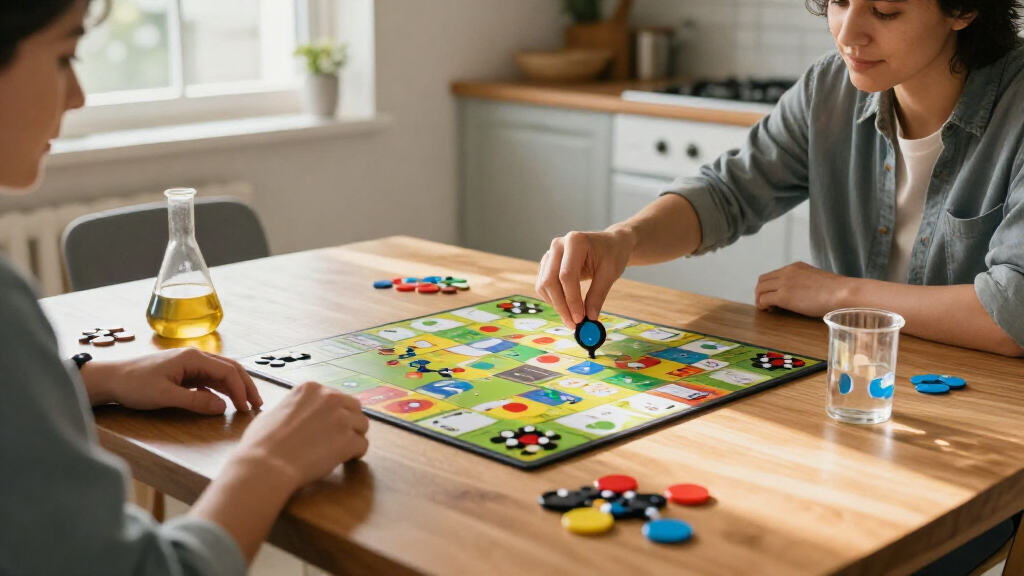

Compounded: The Peer-Reviewed Edition is my best overall pick among chemistry board games because it puts chemistry into a strategy game rather than treating it as a quiz. Subatomic: An Atom Building Game stands out for players who want a more direct model of atomic structure, while Valence makes a simpler entry point for younger learners. These games differ in how much science they teach, how much rules learning they ask of players, and whether they feel more like a classroom aid or a game-night choice. A title with more chemistry terminology may suit curious teens and adults, but can be a poor fit for a casual group seeking quick turns. Read on for the full breakdown and help matching a game to your players.

Prime made for students and young adults
- Fast, free delivery for dorm and study essentials
- Prime Video and Amazon Music included
- Member-only deals
Key Takeaways
- Compounded leads for groups seeking chemistry-themed strategy; its appeal depends more on game decisions than on memorizing element facts.
- Subatomic makes atomic structure its central play idea, giving it a closer link between scientific concepts and player actions than the lighter card-game options.
- Valence is the most approachable starting point for kids, while Ion is a better fit when players are ready to build compounds and think about charges.
- Periodic and Ion put the periodic table and chemical relationships nearer the center of play, which can suit learners who want chemistry content to guide their choices.
- Chemistry Fluxx favors changing rules and casual card play over a structured chemistry lesson, so it suits groups that value flexibility more than focused instruction.
| Compounded: The Peer-Reviewed Edition — Chemistry Strategy Board Game |  | Best Overall for Strategic Chemistry Play | Players: 2–5 | Playing time: About 45 minutes | Recommended age: 14 years and up | VIEW LATEST PRICE | See Our Full Breakdown |
| Periodic: A Game of the Elements |  | Best for Learning Periodic Trends | Players: 2–6 | Recommended age: 10 years and up | Edition: Standard Edition | VIEW LATEST PRICE | See Our Full Breakdown |
| Looney Labs Chemistry Fluxx Card Game |  | Best Compact Chemistry Game | Recommended age: 8 years and up | Brand: Looney Labs | Edition: Base Edition | VIEW LATEST PRICE | See Our Full Breakdown |
| Subatomic: An Atom Building Game (2nd Edition) |  | Best for Building Atoms | Players: 2–4 | Playing time: 40–60 minutes | Recommended age: 14 years and up | VIEW LATEST PRICE | See Our Full Breakdown |
| Valence Periodic Table Chemistry Card Game for Kids | 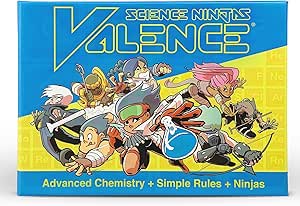 | Best for Younger Learners | Product type: Chemistry card game | Recommended age: Kids ages 8–12 | Materials: Durable cards with a linen finish | VIEW LATEST PRICE | See Our Full Breakdown |
| Ion: A Compound Building Game (2nd Edition) |  | Best for Learning Ionic Bonding | Brand: Genius Games | Players: 2–7 | Playing time: 20–30 minutes | VIEW LATEST PRICE | See Our Full Breakdown |
| chemistry board game | Recommended age | Edition | Brand | Players |
|---|---|---|---|---|
| Compounded: The Peer-Reviewed | 14 years and up | The Peer-Reviewed Edition | Greater Than Games | 2–5 |
| Periodic: A Game of the Elemen | 10 years and up | Standard Edition | Genius Games | 2–6 |
| Looney Labs Chemistry Fluxx Ca | 8 years and up | Base Edition | Looney Labs | — |
| Subatomic: An Atom Building Ga | 14 years and up | 2nd Edition | Genius Games | 2–4 |
| Valence Periodic Table Chemist | Kids ages 8–12 | — | — | — |
| Ion: A Compound Building Game | 8 years and up | 2nd Edition | Genius Games | 2–7 |
More Details on Our Top Picks
Compounded: The Peer-Reviewed Edition — Chemistry Strategy Board Game
Compounded earns my overall pick by making lab management and compound building the heart of a full strategy game. Players collect and trade elements, then decide when to complete compounds for points; its hand management and worker placement give choices more weight than the lighter, changing-goal play of Chemistry Fluxx. Trading adds a social angle, while press-your-luck tension can put completed compounds at risk, so cautious players may find some turns stressful rather than satisfying. The updated rules and larger components support a more substantial table experience, but the game asks players to track timing and scoring carefully. Compared with Periodic: A Game of the Elements, this is the stronger fit for players who want lab-building decisions and negotiation, not just movement across the periodic table.
Pros:- Combines element collection and compound building with trading between players.
- Hand management and worker placement offer strategic choices beyond basic set collection.
- Chemistry concepts are integrated into the scoring and lab-management play.
- Updated rules and larger components distinguish this edition.
Cons:- Press-your-luck mechanics can put completed compounds at risk.
- Scoring and timing can take attention away from casual conversation.
Best for: Players aged 14 and up who want a chemistry-themed strategy game with trading, compound construction, and meaningful risk-taking.
Not ideal for: Younger children or groups seeking a simple, low-pressure introduction to chemistry; the strategic timing and press-your-luck risk may be frustrating.
- Players:2–5
- Playing time:About 45 minutes
- Recommended age:14 years and up
- Edition:The Peer-Reviewed Edition
- Brand:Greater Than Games
- Language:English
- Game mechanics:Hand management, trading, worker placement
- Educational objective:Learning about chemistry
Our verdict“Choose Compounded if your group wants the most layered mix of chemistry, trading, and calculated risk in this lineup.”
Periodic: A Game of the Elements
Periodic: A Game of the Elements makes the table itself the main puzzle: players use periodic trends to move, discover elements, and score. That focus gives it a clearer link to the structure of chemistry than Subatomic: An Atom Building Game, which centers on assembling atoms through deck-building. Its tactical movement and set collection suit families, classrooms, and groups that want chemistry content inside a competitive game rather than a separate lesson. The tradeoff is a more deliberate pace; the strategy calls for patience, and younger players may need time to understand why movement choices matter. With room for up to six players and an age recommendation starting at 10, it accommodates larger mixed-age groups better than the more mature, longer-playing Compounded.
Pros:- Uses periodic trends as part of the movement and scoring decisions.
- Combines tactical movement with set collection.
- Supports up to six players, making it suitable for larger groups.
- Designed for classroom and family play from age 10.
Cons:- Strategy-focused play can feel slow to players who prefer quick turns.
- The supplied product details do not specify playing time or included components beyond the game.
Best for: Families, science teachers, and game groups with players aged 10 and up who want to connect tactical play with periodic-table patterns.
Not ideal for: Groups looking for a quick, spontaneous card game or players who dislike pausing to plan movement and scoring.
- Players:2–6
- Recommended age:10 years and up
- Edition:Standard Edition
- Brand:Genius Games
- Genre:Strategy
- Model number:GOT1008
- Included components:Game
Our verdict“Pick Periodic when learning how the periodic table is organized matters more than building a laboratory or an atom.”
Looney Labs Chemistry Fluxx Card Game
Chemistry Fluxx is my compact pick for groups that want element-themed play without setting aside a long game session. Players use element and laboratory-tool cards to meet goals that change as new rules enter play, making it more unpredictable and easier to bring along than the board-based Periodic: A Game of the Elements. Element cards add atomic numbers and Bohr models, so the chemistry connection is visible even when the winning objective shifts. That same rule-changing structure is the main compromise: it can take a few rounds to get comfortable with how the current goal and rules interact, and the game offers less sustained strategic planning than Compounded. Its age recommendation of 8 and up makes it an accessible family option, though it is better for informal learning than a focused chemistry lesson.
Pros:- Element cards display atomic numbers and Bohr models.
- Changing goals and rules make each round unpredictable.
- A compact card deck is convenient for travel.
- The age recommendation suits mixed-age family play.
Cons:- Changing rules can take time for new players to follow.
- Its shifting objectives offer less sustained strategy than Compounded or Periodic.
Best for: Families with children aged 8 and up who want a portable, casual chemistry-themed card game for trips or short game sessions.
Not ideal for: Players who want a stable ruleset, sustained strategic planning, or a detailed chemistry lesson rather than changing goals and light play.
- Recommended age:8 years and up
- Brand:Looney Labs
- Edition:Base Edition
- Material:Cardstock
- Included component:Chemistry Fluxx
- Unit count:1
- Warranty:No warranty
Our verdict“Choose Chemistry Fluxx for portable, flexible family play, not for the lineup’s most structured chemistry strategy.”
Subatomic: An Atom Building Game (2nd Edition)
Subatomic: An Atom Building Game turns atomic structure into the central strategy: players build a deck with particle and scientist cards, then compete to claim elements. Its included science booklet gives curious players material to read beyond the game, a more direct learning add-on than Periodic: A Game of the Elements provides through its movement-and-set-collection focus. Deck upgrades also let players shape different approaches, which makes Subatomic a better match for people who enjoy card-engine decisions. The tradeoff is a narrower age range and a longer session: it is recommended for ages 14 and up and takes about 40–60 minutes. Compared with the quicker, more casual Chemistry Fluxx, this asks for more focus and rewards players willing to plan their deck.
Pros:- Deck-building choices connect particle cards to atom construction.
- Scientist cards and upgrades allow different strategic approaches.
- Includes a booklet explaining the science behind the game.
- Offers a longer strategy experience than Chemistry Fluxx.
Cons:- Recommended for ages 14 and up, limiting its fit for younger family groups.
- A 40–60-minute session is a larger time commitment than a compact card game.
Best for: Teenagers and adults who enjoy deck-building and want a chemistry game focused on atomic particles, element claims, and supporting science material.
Not ideal for: Younger children or casual groups seeking a short, easy-to-teach card game; its age recommendation and 40–60-minute play time ask for more commitment.
- Players:2–4
- Playing time:40–60 minutes
- Recommended age:14 years and up
- Edition:2nd Edition
- Brand:Genius Games
- Material:Cardboard
- Model number:GOT1012
- Included educational material:Booklet explaining the science behind the game
Our verdict“Choose Subatomic if your group wants deck-building strategy and a focused introduction to how atoms are assembled.”
Valence Periodic Table Chemistry Card Game for Kids
Valence is the lineup’s clearest fit for younger children: it presents chemistry and periodic-table ideas through hands-on card play and is aimed at ages 8–12. Its durable linen-finish cards suit repeated use at home or in classrooms, while the design by PhD chemical engineers gives it an educational focus. Compared with Chemistry Fluxx, which also welcomes younger players but gets much of its variety from changing rules, Valence is positioned more directly as a children’s learning game. The available details are less complete, though: they give no player count or session length, and the age guidance varies in the product description. That makes it harder to judge whether it fits a specific class period or family group than Periodic, which lists its player range.
Pros:- Introduces chemistry and periodic-table concepts through play.
- Designed for home and classroom use.
- Linen-finish cards are described as durable.
- Created by PhD chemical engineers.
Cons:- No player count is provided in the supplied product details.
- No game duration is listed, making session planning difficult.
- Age guidance varies in the product description.
Best for: Parents and elementary-school teachers seeking a chemistry card game for children around ages 8–12, especially for repeated home or classroom use.
Not ideal for: Buyers who need a confirmed player count or play time before choosing, or groups wanting the more explicit strategy and gameplay details of Periodic.
- Product type:Chemistry card game
- Recommended age:Kids ages 8–12
- Materials:Durable cards with a linen finish
- Designed by:PhD chemical engineers
- Intended use:Home and classroom use
- Educational focus:Chemistry and periodic-table concepts
Our verdict“Choose Valence for a child-focused chemistry learning game when you can confirm its group and session fit from the product listing.”
Ion: A Compound Building Game (2nd Edition)
Ion makes ionic bonding the central puzzle: players draft cards and pair positive and negative ions to build neutral compounds and score points. That direct match between action and chemistry gives it a clearer focus on ionic compounds than Periodic: A Game of the Elements, which centers play on element-themed cards. A Science Behind booklet helps connect the game’s decisions to the underlying science, making Ion a strong fit for families or classrooms that want more than chemistry-themed artwork.
At 20–30 minutes and for groups of two to seven, it is easier to fit into a short lesson or game night than a longer strategy session. The tradeoff is that its advanced radioactivity mode is recommended for experienced players and groups of four or more, so smaller or newer groups may stick to the core game. Choose Ion for compound-building practice; pick Subatomic if you want atom construction instead.
Pros:- Card drafting turns matching positive and negative ions into a hands-on lesson in ionic bonding.
- Science Behind booklet explains the chemistry connected to play.
- Advanced radioactivity mode offers an added challenge for experienced groups.
- Supports two to seven players and fits a short 20–30-minute session.
Cons:- The advanced radioactivity mode is recommended for experienced players, which can limit its appeal to beginners.
- That advanced mode is recommended for groups of four or more, so small groups may not use all the content.
- Its emphasis on ionic compounds is narrower than games that cover a broader range of chemistry topics.
Best for: Families, science teachers, and groups of two to seven looking for a short game that gives ionic bonding and compound formation a practical focus.
Not ideal for: Newer players seeking to use the advanced radioactivity mode, especially groups with fewer than four players; also a weaker fit for buyers who want atom-building rather than compound-building gameplay.
- Brand:Genius Games
- Players:2–7
- Playing time:20–30 minutes
- Recommended age:8 years and up
- Edition:2nd Edition
- Included component:Science Behind booklet
- Material:Paper
- Model year:2022
Our verdict“Choose Ion if you want a short, group-friendly game built around ionic bonding, and skip it if atom construction or beginner-ready advanced play is your priority.”

How We Picked
I compared these six games by asking what kind of chemistry experience each gives a buyer: whether the science is central to the play, whether the rules are approachable for the intended group, and whether the game offers strategic choices beyond recalling terms. I also weighed audience fit, the likely usefulness for learning or discussion, and how easily a game could work at a family table or among hobby gamers. Those factors matter more here than a theme on the box alone; a chemistry game should either make scientific ideas part of play or be clear about offering a lighter, more social experience.
Compounded ranks first for its balance of strategy and chemistry theme. Subatomic follows for its focused atom-building concept, while Periodic and Ion serve players drawn to element and compound relationships. Valence earns its place as an accessible kids’ option, and Chemistry Fluxx ranks lower for buyers seeking concentrated science learning because its changing-rule card-game format gives priority to social unpredictability. The order reflects fit for the broadest range of chemistry-game shoppers, not a claim that one style suits every age or group.
| chemistry board game | Brand | Material |
|---|---|---|
| Compounded: The Peer-Reviewed | Greater Than Games | — |
| Periodic: A Game of the Elemen | Genius Games | — |
| Looney Labs Chemistry Fluxx Ca | Looney Labs | Cardstock |
| Subatomic: An Atom Building Ga | Genius Games | Cardboard |
| Valence Periodic Table Chemist | — | — |
| Ion: A Compound Building Game | Genius Games | Paper |
Factors to Consider When Choosing Chemistry Board Games
Before choosing, decide what you want the game to do: reinforce a lesson, spark interest, or simply add a science theme to game night. Chemistry games vary widely in how much terminology they expect players to handle and how directly their rules model scientific ideas. These factors can help you avoid buying a game that is either too instructional for your group or too light for the learning goal.
Choose the Learning Goal Before the Game Style
Some buyers want players to practice concepts such as atoms, elements, or compounds; others want a fun game that happens to use chemistry as its theme. Those are different goals, and a title that excels at one may not satisfy the other. Look for a clear connection between the science and the actions players take, rather than assuming chemistry words on cards create a lesson. For classroom or home-study use, consider whether the game can prompt discussion after a turn or round. For a relaxed game night, prioritize enjoyable choices and pacing over the number of facts presented. A common mistake is treating educational density as the same thing as educational value.
Match the Rules to Players’ Existing Science Knowledge
Age recommendations are only a starting point: familiarity with basic chemistry can matter as much as reading ability. Younger players may enjoy accessible matching or card play without knowing the periodic table, while older learners may want to reason about structure or chemical relationships. If players are new to the subject, check whether the game teaches concepts through play or expects them to arrive with prior knowledge. A mismatch can make a game feel like homework or leave players guessing without learning. When the group has mixed experience, favor titles that let beginners follow the core rules while more knowledgeable players can still make informed choices. Plan to explain unfamiliar terms before play if the game does not introduce them gradually.
Decide How Much Strategy Your Group Wants
Chemistry games span from casual card play to more involved strategic decisions, so consider the group’s usual tolerance for planning and rules. Players who enjoy weighing options may prefer a game where chemistry concepts shape resource choices or engine-building. A quick, social group may have more fun with changing rules and lighter turns, even if the science is less concentrated. Don’t assume a more complex game will teach more; complexity can instead make the scientific idea harder to notice. Check whether the appeal comes from tactical decisions, a shared puzzle, or unpredictable interaction. That distinction helps you select a game people will want to play repeatedly.
Think About Teaching Versus Independent Play
A game used by a parent, teacher, or science club leader can work differently from one that must teach itself at the table. If an adult will guide play, a concept-rich title may support extra explanations and follow-up questions. For independent family play, concise rules and clear turns may matter more than curriculum depth. Check whether players can understand why a move works, not just whether it earns a point or advances a card. A useful teaching game should leave room for questions without requiring the facilitator to stop every turn. Consider who will be present to explain terminology before choosing a title with a steeper learning curve.
Set Expectations for Replayability and Table Fit
Replayability comes from more than a large deck or a changing setup: players need meaningful choices that feel different from session to session. Games with flexible rules can create variety through unexpected combinations, while focused science games may offer a more consistent learning experience. Think about your usual group size, available table space, and how long players are willing to stay engaged, then check the product details for those practical requirements. A compact card game can be easier to bring to a classroom or trip, but may not offer the same strategic presence as a larger tabletop game. Avoid choosing based on portability alone if the main goal is a shared, sustained game-night experience.
Frequently Asked Questions
Which chemistry board game is best if my group has never studied chemistry?
Valence is the clearest starting point in this lineup for younger or less experienced players, while Chemistry Fluxx suits groups that want casual card play more than a structured lesson. The better choice depends on whether you want chemistry concepts to guide play or mainly want a light social game with a science theme. Check the rules and age guidance for the edition you plan to buy, since comfort with reading and turn-taking can shape the experience. If you are teaching a mixed-age group, introduce unfamiliar words before play and keep the first session focused on learning the mechanics. That helps players enjoy the game before worrying about getting every scientific idea right.
Which option is strongest for teaching how atoms and compounds work?
Subatomic is the most direct choice for buyers interested in atom building, while Ion is the better match when compound building and chemical relationships are the focus. Neither should replace an explanation or lesson if players need formal instruction; a game can make an idea memorable without covering a full unit. Decide which concept you want players to encounter, then read the rules or learning materials to confirm the fit. For a class or study group, plan a short discussion after play that connects game actions to real chemistry. That follow-up can turn play into a more useful learning activity.
Is Chemistry Fluxx a good choice for a chemistry lesson?
Chemistry Fluxx is a stronger fit for casual group play than for focused chemistry instruction because its changing rules drive much of the experience. It can still introduce chemistry terms or provide a themed break, but buyers seeking repeated practice with a specific concept may prefer a more directly structured game. Think about whether the goal is engagement with a science theme or practice with scientific relationships. A teacher could use it as an activity alongside a lesson, rather than relying on it to teach the lesson by itself. If players enjoy unpredictable card games, its lighter approach may be a welcome change from more strategy-led options.
Should I choose a more strategic game or a simpler card game for family play?
Choose based on the youngest player’s comfort with rules and the group’s appetite for planning, not just on the adults’ interest in chemistry. Compounded offers a more strategy-oriented experience, while Valence and Chemistry Fluxx provide different lighter entry points. A simple game is not automatically better for children if they enjoy thoughtful choices, and a strategic game can work well if an adult helps with the first round. For mixed-age families, try to find a balance between accessible turns and decisions that keep older players engaged. The best fit is the one your group will choose to play again.
What should I check before buying a chemistry game as a classroom resource?
Start by matching the game’s subject matter to the exact concept or unit you plan to support; chemistry-themed play may not cover the topic your students need. Review the age guidance, player count, setup demands, and rule complexity against your class size and available session time. Also check whether the game explains key terms or assumes prior knowledge, since that affects how much preparation you need to provide. Consider how students will take turns and whether the format keeps a larger group involved or works best in small groups. A short trial with a few players can reveal teaching needs before you use it with a full class.
Conclusion
For most shoppers, I recommend Compounded as the best overall because it balances chemistry theme and strategic play. Best value depends on your priorities: choose Valence for an approachable kids’ game, or Chemistry Fluxx if your group values casual, changeable card play over concentrated instruction. Subatomic is my pick for players who want atom-building at the center, while Periodic and Ion suit groups interested in elements and compound relationships. For beginners, start with Valence; for the strongest science-focused experience, compare Subatomic and Ion by the concepts you want to explore. I’d reserve a premium-style choice for buyers who specifically want a more involved strategy experience, rather than paying for complexity that their group won’t enjoy.
Halloween Picks
halloween
As an affiliate, we earn on qualifying purchases.