

Inhalation drug delivery involves using specialized devices that release medication as tiny particles, ensuring it reaches your lungs effectively. Propellants help propel these particles out of inhalers, while device design influences how well you can use them comfortably and accurately. Optimized particle size and proper device function maximize lung deposition, improving treatment outcomes. When you explore further, you’ll discover how these factors work together to make inhalation therapy safe and efficient for respiratory conditions.
Key Takeaways
- Propellants in inhalers generate the force needed to aerosolize medication for deep lung delivery.
- Particle size (1-5 micrometers) influences deposition efficiency within different regions of the respiratory tract.
- Device design—including ergonomics and feedback mechanisms—enhances correct inhalation technique and drug delivery.
- Proper coordination of inhalation and actuation ensures maximum medication reaches the lungs.
- Understanding vibrational energy and device mechanics can optimize aerosol performance and treatment outcomes.
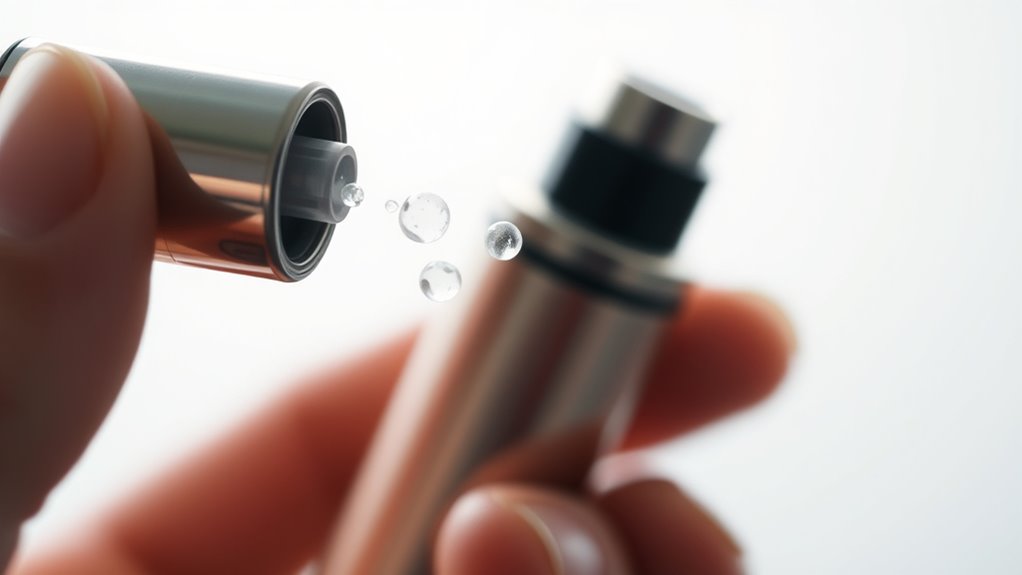
Inhalation drug delivery offers a targeted and efficient way to administer medications directly to the lungs, making it especially effective for respiratory conditions like asthma and COPD. When you use inhalers or other delivery devices, your primary goal is to guarantee the medication reaches the lungs where it can have the most therapeutic effect. Lung deposition refers to the amount of drug that actually settles in the respiratory tract, making it a critical factor in treatment success. Achieving ideal lung deposition requires not only the right medication but also the proper use of your inhalation device. If the device isn’t used correctly, much of the medication may end up in your mouth or throat, reducing its effectiveness and increasing side effects.
Device ergonomics play an essential role in guaranteeing that you can use inhalers comfortably and effectively. A device with good ergonomics is designed to fit well in your hand, be easy to operate, and require minimal effort, which helps you maintain proper technique every time you inhale. For example, inhalers that are lightweight and have intuitive actuation mechanisms reduce the chance of misdosing. Proper ergonomics also mean the device aligns well with your breathing pattern, making it easier to coordinate inhalation with device activation. If a device is awkward to handle or difficult to operate, you might inhale too quickly or too slowly, impairing lung deposition. Modern inhalers often feature ergonomic designs that accommodate different hand sizes and strengths, ensuring you can use them confidently and correctly. Additionally, understanding vibrational energy and its influence on medication delivery can help optimize inhaler performance. Your inhalation technique directly influences lung deposition. A slow, deep inhalation allows the medication particles to travel deeper into the lungs, maximising treatment. Many devices are designed with ergonomics in mind to support this, providing resistance or feedback mechanisms that guide your inhalation effort. Additionally, some devices incorporate visual or audible cues to help you coordinate inhalation and actuation. When you understand and utilize device ergonomics properly, you amplify lung deposition, getting the most benefit from your medication. Conversely, poor device design can lead to inconsistent dosing and reduced drug delivery, potentially compromising your health.

Inhaler Assistive Device for Ventolin, Easy-Grip Respiratory Aid, Ergonomic Handle for Standard MDI Canisters, Hand Mobility Support Tool (White)
Compatible with Standard Inhalers: Designed to fit for Ventolin and most standard metered-dose inhaler (MDI) canisters commonly prescribed…
As an affiliate, we earn on qualifying purchases.
As an affiliate, we earn on qualifying purchases.
Frequently Asked Questions
How Do Individual Patient Differences Affect Inhalation Therapy?
Your individual differences profoundly impact inhalation therapy effectiveness. Patient variability, such as age, lung capacity, and coordination, influences how well you can perform inhalation techniques. If you don’t use the device correctly, medication delivery suffers. To guarantee ideal results, it’s vital that you understand your specific needs, practice proper inhalation technique, and communicate with healthcare providers to tailor therapy effectively.
What Are the Environmental Impacts of Inhalation Propellants?
Imagine a tiny cloud of medicine, but lurking behind it are invisible villains—ozone depletion and greenhouse gases—that harm our environment. Your inhalation propellants contribute to these issues by releasing chemicals that weaken Earth’s protective ozone layer and trap heat as greenhouse gases. Choosing eco-friendly inhalers helps reduce this impact, preserving the planet’s delicate balance and ensuring cleaner air for everyone.
How Can Device Design Improve Drug Delivery Efficiency?
You can improve drug delivery efficiency by focusing on innovative device features and ergonomic design. Incorporate features like breath-actuated mechanisms and precise dose counters to enhance accuracy. An ergonomic design guarantees comfort and ease of use, encouraging proper technique. These improvements help deliver the correct dose more consistently, reduce user errors, and optimize therapeutic outcomes, making inhalation therapy more effective and user-friendly.
Are There Long-Term Health Effects From Inhalation Device Use?
Long-term safety concerns from inhalation device use are generally minimal if you follow proper usage guidelines. However, prolonged or improper use might affect your respiratory health, causing irritation or other issues. Regular check-ups help monitor your respiratory health, ensuring your inhaler remains safe over time. Be aware of any persistent symptoms, and consult your healthcare provider to maintain ideal respiratory health and prevent potential long-term effects.
How Does Particle Size Influence Drug Absorption in the Lungs?
You should know that smaller particles, typically less than 5 micrometers, enhance drug absorption by increasing particle deposition deep in the lungs. This is due to favorable aerosol dynamics that allow these particles to reach the alveoli efficiently. Larger particles tend to deposit in the upper airways, reducing absorption. By optimizing particle size, you improve drug delivery effectiveness, ensuring better absorption and therapeutic outcomes in lung tissues.

AEROHIPPUS Equine Aerosol Chamber with Flow-Vu IFI Horse Inhaler for Respiratory Disease
The #1 Vet recommended easy-to-use AeroHippus* inhaler spacer for horses comes with one (1) large bell shaped mask…
As an affiliate, we earn on qualifying purchases.
As an affiliate, we earn on qualifying purchases.
Conclusion
Understanding inhalation drug delivery means balancing precision with simplicity. While propellants and particles are complex, effective devices make inhalation straightforward. You harness both science and practicality—where advanced formulations meet user-friendly design. This juxtaposition highlights that, despite sophisticated technology, success ultimately depends on ease of use. Embrace this harmony, and you’ll optimize treatment outcomes, turning intricate science into accessible, effective care that truly makes a difference in your health journey.

Ramixi Inhaler Spacer for Adult and Kids NESSI OTC SPACER (Blue/Adult)
Compact and lightweight so that you can take it with you while on the go
As an affiliate, we earn on qualifying purchases.
As an affiliate, we earn on qualifying purchases.

Oxygen Therapy Cage for Pets – Veterinary Oxygen & Nebulizer Chamber for Dogs, Cats, Puppies, Sheep – Portable Oxygen Concentrator with Tubing Kit, Soft Mat, Venturi Adapters, Nebulizer, T-Fitting
Collapsible Oxygen Cage for Easy Transport & Storage – Portable oxygen and nebulizer chamber designed for pets (dogs,…
As an affiliate, we earn on qualifying purchases.
As an affiliate, we earn on qualifying purchases.