
Renewable surfactants made from sugars and oils are eco-friendly alternatives to traditional chemicals. They come from natural sources like plants, making them biodegradable and better for the environment. Using these surfactants helps reduce pollution in waterways and supports sustainable cleaning products. While producing them can be challenging and costlier, advancements are making them more practical. If you’re interested, you’ll discover how ongoing innovations are paving the way for wider adoption.
Key Takeaways
- Renewable surfactants are derived from natural sugars and oils, offering eco-friendly alternatives to petrochemical-based chemicals.
- They are biodegradable, reducing environmental pollution and supporting sustainable cleaning and personal care products.
- Production involves sourcing raw materials sustainably, with ongoing research to improve extraction and purification methods.
- These surfactants must meet performance standards comparable to traditional options to ensure effective cleaning and safety.
- Industry trends show increasing investment and technological advances, enhancing scalability and market acceptance of sugar- and oil-based surfactants.
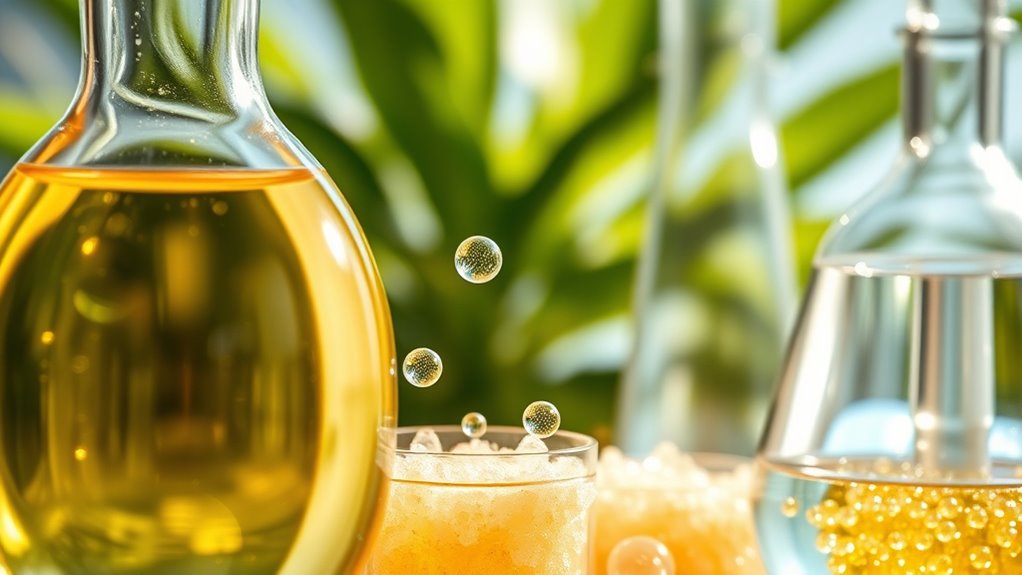
Renewable surfactants are transforming the cleaning and personal care industries by offering eco-friendly alternatives to traditional chemicals. These surfactants are derived from natural sources such as sugars and oils, making them a sustainable choice that reduces environmental impact. One of their key advantages is their biodegradability benefits, meaning they break down more easily in the environment and minimize pollution. This trait appeals not only to eco-conscious consumers but also to companies aiming to meet stricter regulations on chemical discharge. When surfactants degrade quickly and safely, they help protect waterways, wildlife, and ecosystems from long-lasting chemical residues. As a result, renewable surfactants are increasingly seen as a responsible solution for formulations in detergents, shampoos, and cleaning products.
Renewable surfactants offer eco-friendly, biodegradable cleaning solutions that protect waterways and meet strict environmental regulations.
However, developing and scaling up the commercial production of renewable surfactants isn’t without challenges. One major hurdle is the complexity of sourcing raw materials consistently and sustainably. While sugars and oils are renewable, their extraction and purification processes can be resource-intensive, sometimes competing with food supply chains or leading to land use concerns. Additionally, achieving cost-effective production remains difficult. Traditional surfactants, made from petrochemicals, benefit from decades of established manufacturing infrastructure and economies of scale. In contrast, renewable surfactants often require new facilities, specialized equipment, or innovative fermentation techniques, which can drive up costs and slow market adoption. Balancing sustainability with affordability becomes a delicate act for manufacturers.
Moreover, ensuring that these bio-based surfactants perform on par with or better than conventional options adds another layer of complexity. Consumers expect cleaning products to be effective, and formulators need surfactants that deliver strong cleaning power without compromising biodegradability benefits. This often involves extensive research and development, which can be costly and time-consuming. Regulatory hurdles can also pose challenges, as new ingredients must meet safety standards before they reach store shelves. Despite these obstacles, industry players are investing in research and partnerships to overcome commercial production challenges, recognizing the long-term environmental and market benefits of renewable surfactants.
In the end, while there are hurdles to overcome, the push toward renewable surfactants from sugars and oils is driven by a clear desire for sustainable, biodegradable, and high-performing cleaning solutions. As technology advances and production methods improve, you’ll likely see these eco-friendly alternatives become mainstream, transforming how products are made and consumed. The shift may be gradual, but the environmental benefits make it a worthwhile pursuit for a cleaner, greener future. Additionally, advances in bio-based manufacturing processes are helping to improve the efficiency and scalability of renewable surfactant production, making them more accessible to the market.

32oz 4X Non Ionic Surfactant – Makes 250+ Gallons – Nonionic Wetting Agent & Concentrated Surfactant Spray for Increased Product Efficacy, Ideal Spreader Sticker, No Foam Wetting Agent
- Concentrated Power: Makes 250+ gallons from 1 quart
- Enhances Effectiveness: Improves penetration and coverage
- Better Coverage: Ensures even spray application
As an affiliate, we earn on qualifying purchases.
As an affiliate, we earn on qualifying purchases.
Frequently Asked Questions
How Do Renewable Surfactants Compare in Cost to Traditional Surfactants?
Renewable surfactants generally cost more than traditional ones because of limited market adoption and production scale. You might notice higher prices, but consumer perception increasingly favors eco-friendly products, which can boost demand over time. As adoption grows and production becomes more efficient, costs are expected to decrease, making renewable surfactants more competitive. Your choice to support sustainable options can help accelerate this shift, benefiting both the environment and your purchasing decisions.
What Are the Environmental Impacts of Producing Sugar- and Oil-Based Surfactants?
You should know that producing sugar- and oil-based surfactants generally has lower environmental impacts, but biodegradability concerns remain. These renewable surfactants tend to break down more easily, reducing pollution, yet their land use implications can be significant, especially if crop cultivation leads to deforestation or habitat loss. Overall, they offer eco-friendly benefits but require careful management of land resources to minimize environmental harm.
Are Renewable Surfactants Compatible With All Cleaning Applications?
You might worry renewable surfactants aren’t suitable for all cleaning tasks, but they’re highly versatile. They excel in biodegradable considerations and are compatible with sensitive surfaces, making them ideal for delicate materials. While some applications may require specific formulations, overall, renewable surfactants adapt well across most cleaning needs, providing effective results without harming the environment or delicate surfaces. So, yes, they can suit many cleaning applications.
How Long Do Renewable Surfactants Typically Last in Storage?
Renewable surfactants typically last 6 to 12 months in storage, depending on shelf stability and storage conditions. To maximize their lifespan, keep them in a cool, dry place away from direct sunlight and extreme temperatures. Proper storage conditions prevent degradation and maintain their effectiveness. Always check the manufacturer’s guidelines for specific shelf life information, as poor storage can shorten their usability and compromise cleaning performance over time.
What Are the Challenges in Scaling up Renewable Surfactant Production?
You face significant challenges when scaling up renewable surfactant production. For instance, the supply chain often struggles to meet increasing demand due to limited raw material availability and logistical complexities. Additionally, regulatory hurdles can delay commercialization, as new biobased products must meet strict environmental standards. Overcoming these obstacles requires streamlining sourcing, improving process efficiency, and charting evolving regulations to ensure sustainable, large-scale production.
Conclusion
Imagine turning everyday sugars and oils into powerful, eco-friendly surfactants, like planting seeds for a greener future. Just as a single drop of oil can ripple through water, your choice to use renewable surfactants can create waves of positive change. By embracing these sustainable options, you’re helping protect our planet’s delicate balance—transforming simple ingredients into a force for good. Together, we can surf toward a cleaner, brighter tomorrow.