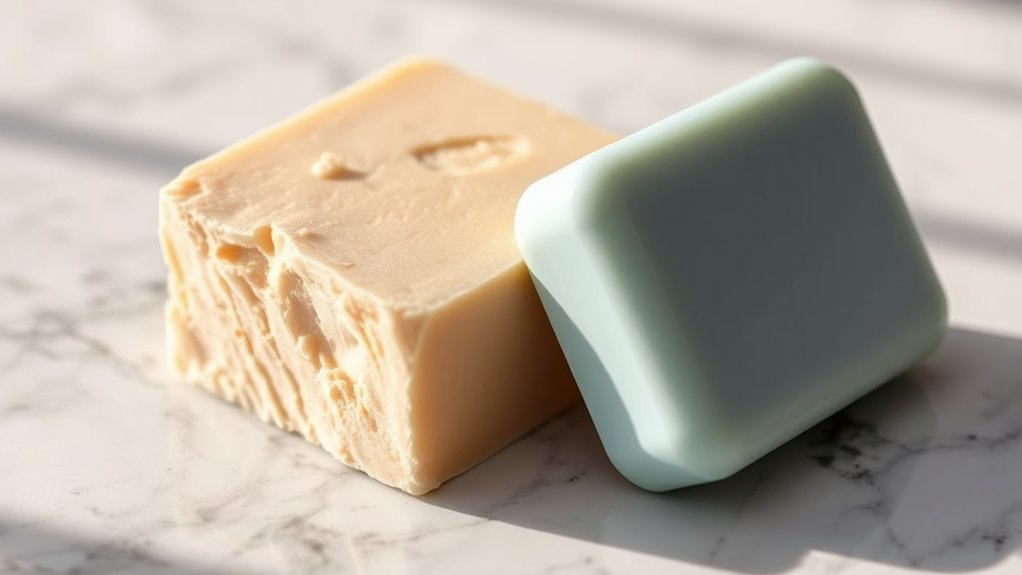
Soap and syndet bars differ mainly in ingredients and pH levels. Traditional soap is made with natural oils and lye, creating a high pH that can dry out or irritate sensitive skin. Syndet bars contain synthetic surfactants, have a lower pH closer to your skin, and are gentler, especially if you have skin conditions. Understanding these differences can help you choose the best option for your skin, and there’s more to uncover if you keep exploring.
Open a free Amazon Business account
Business pricing, bulk buying and tax-exempt orders.
As an affiliate, we earn on qualifying purchases.
Key Takeaways
- Traditional soap is made via saponification with natural oils and has a high pH, while syndet bars use synthetic detergents with a pH around 5.5.
- Syndet bars are gentler, less likely to strip skin’s natural oils, and suitable for sensitive or irritated skin.
- Traditional soap can contain natural ingredients but may still cause dryness or irritation, especially for delicate skin types.
- Syndet bars often include nourishing ingredients like glycerin and fewer artificial irritants, making them more skin-friendly.
- Choice depends on skin type and preferences; syndet bars are generally better for sensitive or compromised skin.
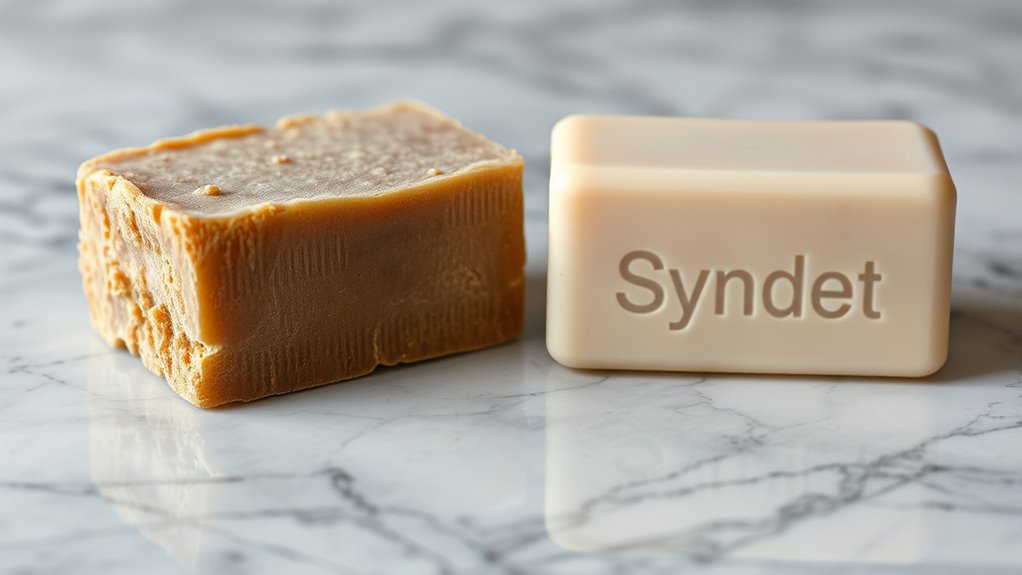
When it comes to choosing a cleansing bar, you might wonder whether traditional soap or syndet bars are better for your skin. The key difference lies in how each is made and their ingredients. Traditional soap is typically crafted through a process called saponification, which involves mixing natural ingredients like oils and lye. These soaps often contain natural ingredients, which can be appealing if you prefer products with fewer synthetic additives. However, because traditional soap has a high pH level, it can sometimes disrupt your skin’s natural acid mantle. This disruption may lead to dryness or irritation, especially if you have sensitive skin or skin sensitivity issues. If your skin reacts easily to certain chemicals or fragrances, choosing a soap with natural ingredients might seem like a safer option, but it’s not always guaranteed. Natural ingredients can still be irritants for some, and the pH imbalance remains a concern for those with delicate skin.
On the other hand, syndet bars—short for synthetic detergent bars—are made using synthetic surfactants instead of natural oils and lye. These bars are formulated to have a lower, more skin-friendly pH, usually close to your skin’s natural level of around 5.5. This makes syndet bars gentler and less likely to strip your skin of its natural oils, which is particularly beneficial if you have skin sensitivity or conditions like eczema or psoriasis. Because they’re designed to be milder, syndet bars often contain fewer irritants and are less likely to cause allergic reactions. They are also usually free from harsh detergents, artificial fragrances, and preservatives, making them a good choice if you want a product that’s gentle yet effective. Additionally, some syndet bars incorporate nourishing ingredients like glycerin or moisturizers, which help maintain your skin’s hydration.
Ultimately, your choice depends on your skin’s needs and sensitivities. If you prefer natural ingredients and have resilient skin, traditional soap may suit you, but be aware of its higher pH level. If you need a gentle, skin-friendly option that minimizes irritation, syndet bars are often the better choice. They are specifically designed for sensitive skin, providing a cleansing experience that respects your skin’s natural barrier. Remember, reading ingredient labels is vital, regardless of your choice, to make sure you’re avoiding components that could trigger sensitivities. Both types can cleanse effectively, but understanding their differences helps you pick the right one for your unique skin.
As an affiliate, we earn on qualifying purchases.
Frequently Asked Questions
Are Syndet Bars Suitable for All Skin Types?
Yes, syndet bars are suitable for most skin types because they’re formulated to maintain your skin’s natural pH balance. They’re gentle and less likely to cause irritation, making them a good choice for sensitive or problematic skin. You’ll find that syndet bars support skin compatibility by cleansing effectively without stripping away moisture, so they work well whether you have dry, oily, or sensitive skin.
How Long Do Soap and Syndet Bars Typically Last?
Typically, soap bars last around 4 to 6 weeks, while syndet bars can linger up to 8 weeks or more. To extend their lifespan, keep them dry and store them in a well-ventilated area. A quick shelf life comparison shows syndet bars tend to endure longer due to their gentler, less porous formulation. Proper storage tips guarantee your favorite cleansing companion remains effective and fresh for as long as possible.
Can Syndet Bars Cause Skin Dryness or Irritation?
Syndet bars can sometimes cause dryness or irritation, especially if you have sensitive skin, because they may lack moisturizing benefits found in other products. However, many syndet bars are formulated to be gentle and help maintain your skin’s natural moisture. If you notice dryness or irritation, look for options with added moisturizers or ingredients that suit your skin sensitivity, and avoid harsh formulas to keep your skin balanced and comfortable.
Do Syndet Bars Contain Artificial Fragrances or Dyes?
Did you know that around 30% of people with skin sensitivities avoid artificial fragrances and dyes? Syndet bars may contain these additives, which can trigger irritation for sensitive skin types. If you’re concerned about artificial fragrances or dyes, always check the label before purchasing. Many brands now offer fragrance-free and dye-free syndet options, making it easier for you to protect your skin while enjoying a gentle cleanse.
Are Soap and Syndet Bars Eco-Friendly Options?
Yes, soap and syndet bars can be eco-friendly options. You’ll find that some soaps are made from natural, biodegradable ingredients, reducing their environmental impact, while others may contain synthetic components. Syndet bars often use milder, synthetic surfactants that are designed to be biodegradable, making them a better choice if you’re concerned about environmental impact. Always check labels for eco-friendly certifications to ascertain your bar is truly sustainable.
Conclusion
In the end, choosing between soap and syndet bars depends on your skin type and needs. Remember, “you are what you use,” so pick what suits you best. If you have sensitive skin, syndets might be gentler, while traditional soap works well for others. Listen to your skin’s signals and don’t just follow trends. After all, the best skincare is the one that keeps your skin healthy and happy—trust your instincts and choose wisely.
Fall Picks
fall essentials
As an affiliate, we earn on qualifying purchases.