TL;DR

Prime made for students and young adults
- Fast, free delivery for dorm and study essentials
- Prime Video and Amazon Music included
- Member-only deals
A 2024 National Academies of Sciences, Engineering, and Medicine report concluded that long-term zinc creep in cable sockets caused the Arecibo telescope’s 2020 collapse. It says Hurricane Maria preceded visible, progressive cable pullout, while a possible role for electromagnetic effects remains a hypothesis. The report recommends stronger condition monitoring and maintenance planning for research facilities.
A 2024 National Academies report concluded that long-term zinc creep in the cable sockets supporting the Arecibo Observatory telescope caused its suspended platform to fall into the reflector dish in 2020. The report says this failure mode had not previously been documented in more than a century of use of this type of socket and identifies monitoring considerations for aging, custom-built research facilities.
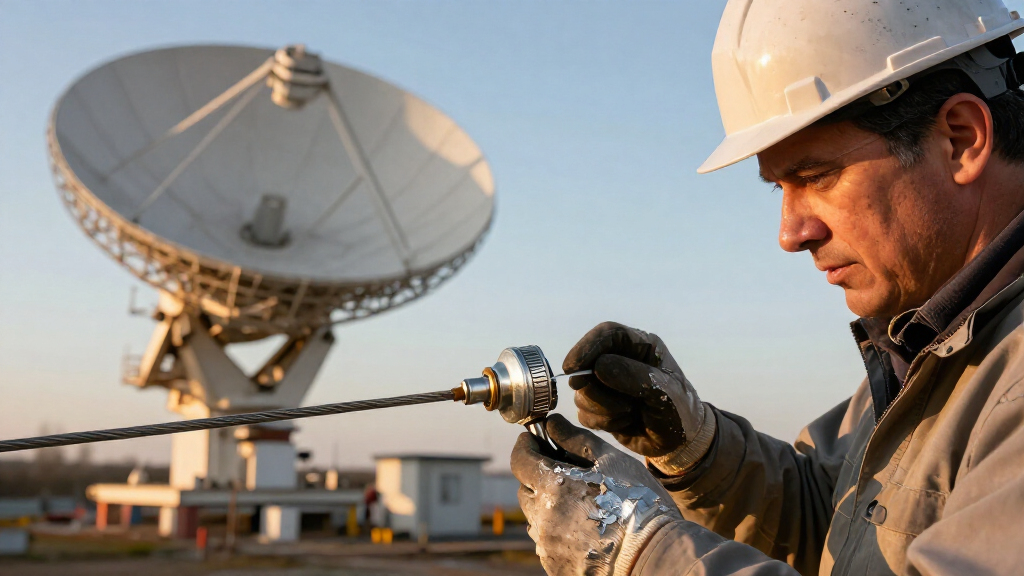
The 305-metre telescope’s main platform was suspended by cables, each secured at its end in a socket filled with zinc. The report says the zinc gradually lost its grip, allowing cables to pull out; the resulting support failures led to the platform’s collapse into the dish. The report’s conclusion draws on forensic investigations, engineering and inspection records, photographs, structural analyses, repair proposals, and information from observatory employees.
The report traces the failure sequence to Hurricane Maria, which struck Puerto Rico more than three years before the collapse. Before the storm, signs of cable pullout were minimal. Afterwards, visual inspections showed large and progressive pullouts, according to the report. It says those observations should have prompted remedial action. Calculations made after an earlier cable failure did not account for the accelerated, time-dependent material process that ultimately allowed the zinc to release the cables.
The National Academies described the event as the first documented case of long-term zinc-induced creep failure in these sockets, despite their use for more than a century. That statement refers to the documented failure mode; it does not mean the report found that all zinc-filled sockets are unsafe. The report recommends that the National Science Foundation make the remaining socket and cable sections available for further research.
Lessons for Aging Research Facilities
The report’s findings are relevant beyond Arecibo because the telescope was a unique, custom-designed facility whose structural condition could not be assessed solely by relying on familiar failure patterns or past experience. The committee notes that complex facilities can experience failure modes that have not been anticipated, even when components have a long history of use. This supports careful monitoring as infrastructure ages, particularly where support failure could have serious consequences.
The report also links the technical failure to maintenance and funding practices. It recommends explicit funding for detailed, ongoing condition monitoring, as well as improvements to operations and maintenance manuals, inspection regimes and independent audits. Detecting gradual deterioration requires sustained observation and resources, rather than relying only on calculations made after a component has failed.
The collapse resulted in the loss of a major scientific instrument. The report’s broader purpose is to inform organizations responsible for other facilities. Its recommendations do not establish that the same mechanism has occurred elsewhere; they encourage operators to assess deterioration and potential failure modes rather than assume that past designs provide complete protection.
Popular right now

KitchenAid Artisan 5-Qt Tilt-Head Stand Mixer – Dried Rose (KSM150PS)

Shark PowerPro Reveal Plus Cordless Vacuum Cleaner, Charcoal, IZ376H

De'Longhi Magnifica Evo Fully Automatic Espresso Machine with Manual Milk Frother, Silver
As an affiliate, we earn on qualifying purchases.
From Hurricane Maria to Collapse
The Arecibo Observatory in Puerto Rico operated the 305-metre telescope, whose suspended platform sat above a large reflector dish. The National Science Foundation supported research operations there through the National Astronomy and Ionosphere Center. The telescope collapsed in December 2020, after cable problems had become visible following Hurricane Maria in 2017.
The National Academies committee reviewed forensic work commissioned by the University of Central Florida and the NSF, alongside relevant research and records from the observatory. Its consensus study report, Failure Analysis of the Arecibo Observatory 305-Meter Telescope Collapse, was released in 2024. The committee’s assessment therefore came after investigations into the collapse, rather than as an immediate finding issued at the time of the accident.
The report also discusses a possible explanation for why zinc creep accelerated. It says long-term, low-current electroplasticity, potentially induced by electromagnetic waves from the telescope, may have contributed. The report presents this as a possible mechanism, not a confirmed cause independent of the broader finding that zinc creep led to cable pullout.
What the Investigation Leaves Open
The report identifies zinc creep as the root cause of the cable pullout, but it does not establish why the process accelerated in this instance. The proposed role of electromagnetic waves and low-current electroplasticity is explicitly a possible explanation, not a settled finding. Further examination of the remaining cable and socket material could help researchers test that hypothesis.
The source material does not specify whether every recommendation has been adopted or provide a complete accounting of any follow-up inspections at other facilities. It also does not establish that zinc-filled sockets in other structures face the same risk. The report calls for research and better monitoring, but the scale and results of any resulting work remain unclear.
Further Study and Maintenance Plans
The report recommends that the NSF make remaining socket and cable sections available to researchers for study. That work could help clarify the material process behind the failure, including whether electromagnetic effects played a role. No specific research schedule or findings from such follow-up are provided in the source material.
For facility operators, the report’s recommended next steps include ongoing condition monitoring, detailed maintenance provisions, clearer operations manuals, stronger inspection regimes and independent audits. Whether and how the NSF or other operators implement each recommendation is not specified in the report summary available here. Future assessments can consider whether inspection and maintenance plans are capable of detecting gradual deterioration before it compromises critical supports.
Key Questions
What caused the Arecibo telescope to collapse?
The National Academies report concluded that long-term zinc creep in cable sockets caused the zinc to lose its hold on the supporting cables, allowing them to pull out and the platform to fall.
What role did Hurricane Maria play?
The report says visible cable pullout increased after Hurricane Maria in 2017. It describes the storm as part of the failure sequence and says the progressive signs seen afterwards should have prompted remedial action.
Did electromagnetic waves cause the zinc to creep?
The report raises long-term, low-current electroplasticity induced by the telescope’s electromagnetic waves as a possible explanation for accelerated creep. It does not establish that hypothesis as confirmed.
Does the report say other zinc-filled sockets are unsafe?
No. It documents an unusual failure in Arecibo’s cable sockets and recommends further study and stronger monitoring. The report does not conclude that all zinc-filled sockets are unsafe.
What does the report recommend?
Recommendations include studying the remaining cable and socket sections, funding ongoing condition monitoring, and improving maintenance manuals, inspections and independent audits for research facilities.
Source: maketecheasier.com