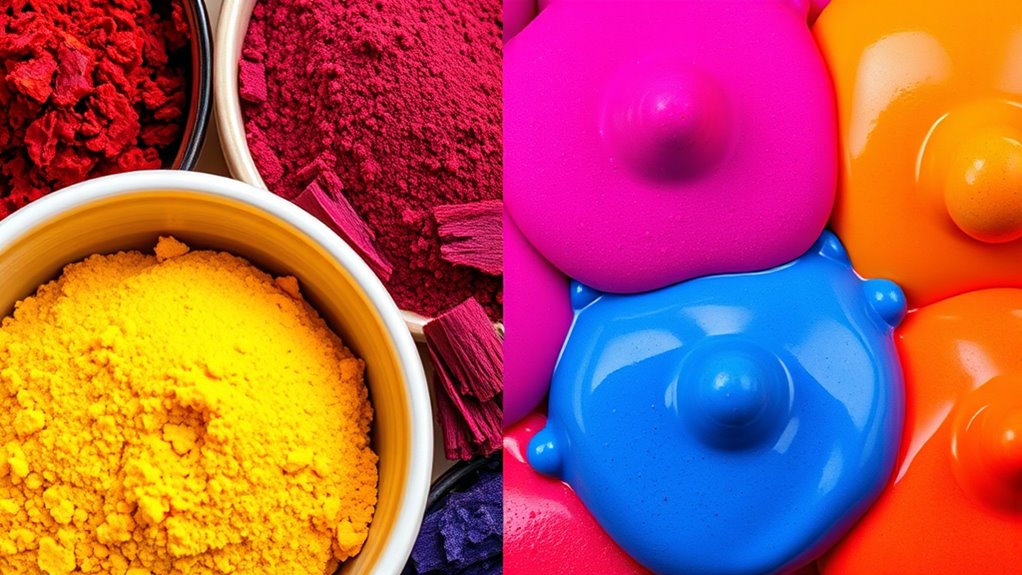

When choosing between natural and synthetic food colorants, you should consider their history, safety, and regulatory aspects. Natural options, like beetroot or turmeric, are seen as safer and traditional, but may be less vibrant and more expensive. Synthetic dyes, often derived from petroleum, offer bright, consistent colors and affordability, yet some raise health concerns. Want to discover how to pick the best options for your needs? Keep exploring to learn more about their advantages and risks.
Key Takeaways
- Natural colorants originate from plant sources like saffron and turmeric, offering a traditional, perceived safer option.
- Synthetic colorants are derived from petroleum or coal tar, providing vibrant, consistent hues at lower costs.
- Natural dyes often face stability and color intensity challenges compared to synthetic options.
- Regulations ensure the safety of both natural and synthetic colorants, with some synthetics banned due to health concerns.
- Consumer preference shifts toward natural dyes for health reasons, but synthetic dyes remain popular for their affordability and brightness.
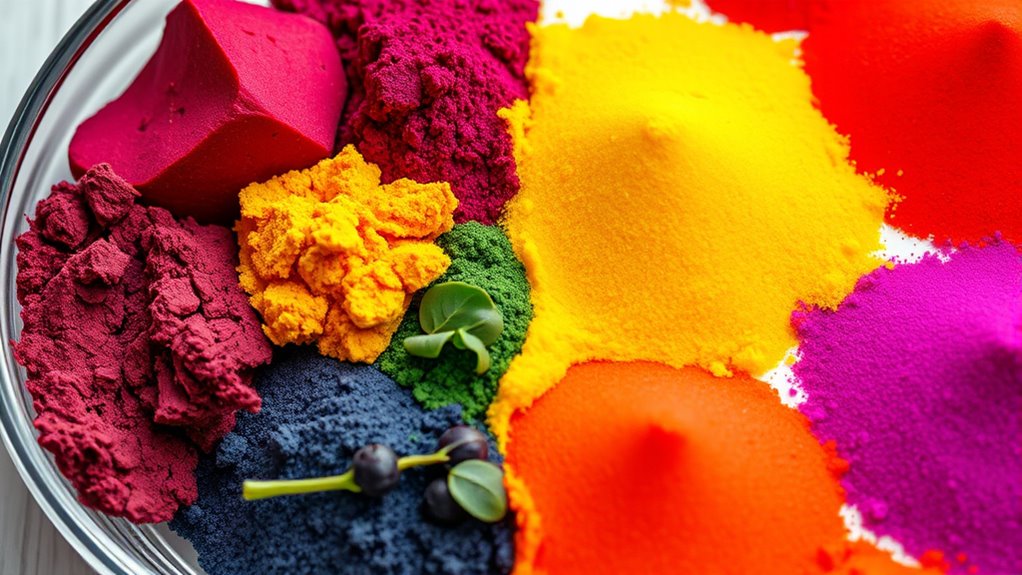
Food colorants are substances added to enhance the appearance of your favorite dishes and beverages. They make food more appealing, vibrant, and sometimes even more appetizing, influencing how you perceive taste and quality. Throughout history, people have used different methods to add color to their food. In ancient Egypt and China, natural ingredients like saffron, turmeric, and beetroot juice served as early colorants, valued not just for their hue but also for their medicinal properties. Over time, these natural dyes became integrated into culinary traditions, with many cultures relying on plant-based sources for centuries. However, as the demand for consistent, bright colors increased during the industrial revolution, synthetic colorants emerged, offering cheaper and more stable alternatives. These synthetic dyes, often derived from petroleum or coal tar sources, revolutionized food production, enabling manufacturers to produce vividly colored products on a large scale. Advances in food science have also contributed to improving the stability and range of natural dyes, making them more practical for commercial use.
Yet, the use of food colorants—both natural and synthetic—has not been without controversy. Regulatory challenges have continually shaped the landscape of food coloring safety and approval. Governments and health agencies worldwide have had to grapple with the potential health risks associated with certain synthetic dyes, some of which were linked to allergic reactions, hyperactivity in children, or even carcinogenic effects. As a result, regulations have become stricter. In many countries, specific synthetic colorants are now banned or require clear labeling, and new safety assessments are regularly conducted. These regulatory challenges push manufacturers to seek safer alternatives, often turning back to natural sources, which are generally perceived as healthier options. While natural colorants are favored for their perceived safety and minimal health risks, they also pose challenges, such as limited stability, less vibrant hues, and higher costs.
Despite these hurdles, both natural and synthetic colorants continue to evolve. Advances in food science have improved the stability and range of natural dyes, making them more viable for commercial use. Meanwhile, synthetic dyes remain popular for their affordability and brilliant shades, although consumers are increasingly demanding transparency and safer options. As you choose products, understanding these historical uses and regulatory challenges can help you make more informed decisions. Whether you prefer the traditional appeal of natural dyes or the boldness of synthetic options, knowing the background and safety considerations behind food colorants empowers you to enjoy your favorite foods with confidence.

Natural Food Coloring Gel – 16 Colors Plant Based Dye Free Food Coloring
- Plant-Based Ingredients: Derived from fruits, vegetables, and plants
- 16 Vibrant Colors: Includes shades from red to purple
- Dye-Free and Natural: No artificial dyes or additives
As an affiliate, we earn on qualifying purchases.
As an affiliate, we earn on qualifying purchases.
Frequently Asked Questions
Are Natural Colorants Safer Than Synthetic Ones?
You might think natural colorants are safer because they come from natural extraction methods, but that’s not always the case. Natural dyes can cause allergies or reactions in some people. Synthetic colorants, on the other hand, offer better synthetic stability, making them less likely to break down or change color over time. Ultimately, safety depends on individual sensitivities and how each colorant is processed, not just whether it’s natural or synthetic.
How Long Do Natural Colorants Last in Food?
Natural colorants typically last between a few days to several weeks, depending on their shelf life and storage conditions. You should store them in airtight containers, keep them away from direct sunlight, and maintain cool, dark environments. Proper storage helps extend their vibrancy and freshness. Always check the expiration date and observe any changes in color or smell, which can indicate spoilage and reduced effectiveness.
Can Synthetic Colorants Cause Allergies?
Yes, synthetic colorants can cause allergies. You might experience allergenic reactions or immune responses after consuming foods with these additives, especially if you’re sensitive. Some synthetic dyes contain chemicals that can trigger symptoms like hives, swelling, or respiratory issues. It’s important to check labels carefully and be aware of any adverse reactions, as your immune system may respond negatively to certain synthetic colorants.
Are There Regulations on Natural Vs Synthetic Colorants?
Think of food colorants as vibrant storytellers on your plate. Regulations act like strict editors, ensuring natural and synthetic dyes follow food labeling and manufacturing standards. Authorities like the FDA set clear rules to protect consumers, requiring transparency about ingredients. This means you can trust labels to reveal whether colorants are natural or synthetic, helping you make informed choices and enjoy your food’s colorful narrative without worry.
Do Natural Colorants Alter Food Taste?
Natural colorants generally don’t substantially alter food taste, so you won’t notice much difference in flavor impact. However, they enhance visual appeal, making your food look more appealing without adding artificial flavors. Sometimes, natural dyes can have subtle earthy or botanical notes, but these are usually mild. Overall, natural colorants boost visual appeal while keeping the flavor profile intact, providing a more natural eating experience.
Conclusion
Ultimately, choosing between natural and synthetic colorants is like picking between a vibrant garden and a neon cityscape. Natural hues whisper of purity and tradition, while synthetic shades burst with boldness and consistency. Your palate and values paint the canvas of your choices—each color telling its own story. So, whether you prefer the gentle blush of nature or the eye-catching pop of innovation, remember, every dish becomes a masterpiece when you select colors that truly speak to your soul.