
To soften water at home using ion exchange, you need a water softening system with resin beads. These beads attract calcium and magnesium ions, swapping them for sodium or potassium ions, which makes the water gentler. This process prevents mineral buildup in your pipes and appliances, extends their lifespan, and improves soap performance. Proper installation and maintenance are key, so if you’re curious about how to set up or care for your system, there’s more to explore.
Key Takeaways
- Water softening via ion exchange replaces calcium and magnesium ions with sodium or potassium ions.
- Properly sized systems are essential based on household water usage to ensure effectiveness.
- Resin beads in the softener facilitate ion exchange and require periodic regeneration with salt solutions.
- Regular maintenance of the water softener extends its lifespan and maintains optimal water quality.
- Softened water reduces mineral buildup, improves appliance efficiency, and enhances soap lather at home.
Have you ever noticed how hard water leaves spots on your glassware or makes your skin feel dry after a shower? That’s a common sign of hard water, which contains high levels of dissolved minerals like calcium and magnesium. Over time, these minerals don’t just stay in your water—they cling to your fixtures, appliances, and pipes, creating stubborn mineral buildup that can be hard to remove. This buildup can clog pipes, reduce appliance efficiency, and even damage your plumbing, leading to costly repairs. Understanding how to treat hard water at home can save you money and improve your quality of life.
Hard water causes spots, dry skin, and mineral buildup in pipes and appliances.
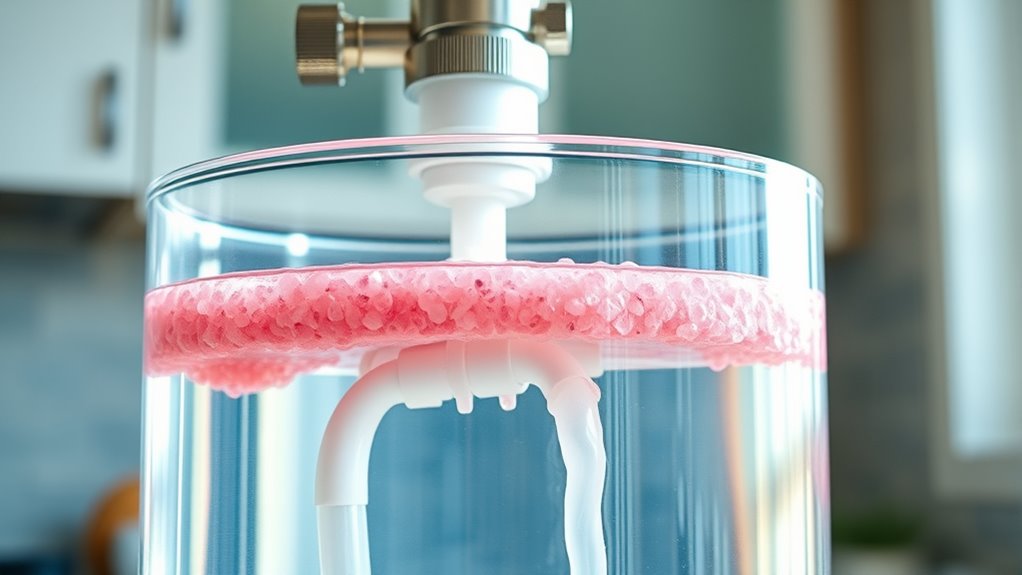
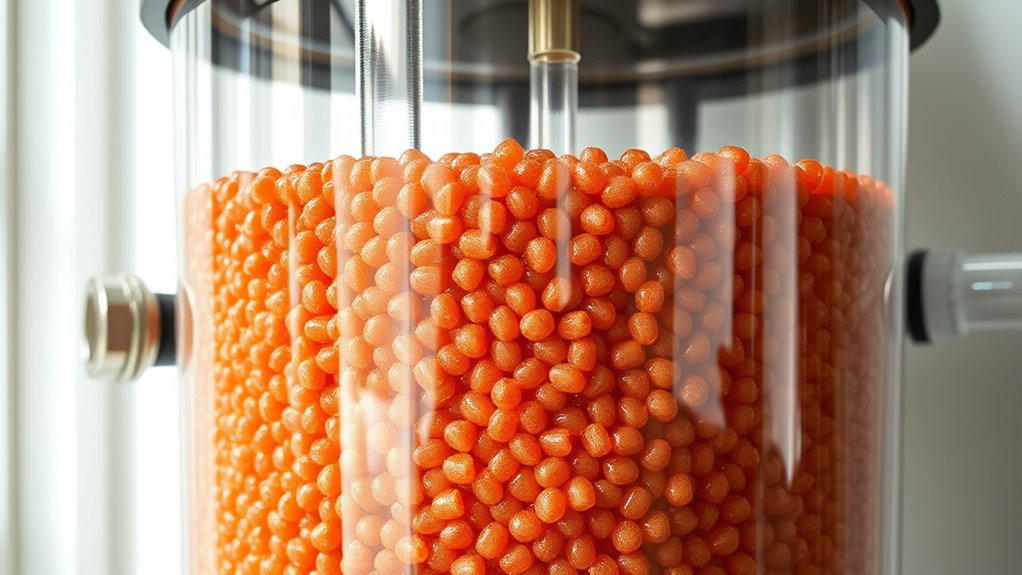
One of the most effective ways to combat hard water is through ion exchange water softening systems. These systems work by replacing the calcium and magnesium ions responsible for mineral buildup with sodium or potassium ions, which don’t cause scaling. When water flows through a resin bed inside the softener, the calcium and magnesium ions are attracted to the resin beads and exchanged for sodium or potassium ions. This process effectively neutralizes the minerals that cause hardness, leaving you with soft water that’s gentler on your skin, laundry, and appliances.
Installing a water softener is straightforward, but it’s important to choose the right size for your household needs. A small unit works well for a couple or small family, while larger models are better suited for bigger households or homes with high water usage. Once installed, you’ll need to periodically regenerate the resin bed, typically with a salt solution, to restore its ability to exchange ions. Modern systems often come with automatic regeneration cycles, making maintenance simple and hassle-free.
Using a water softener doesn’t just improve water quality; it also helps prevent mineral buildup in your plumbing and appliances. Without softening, mineral deposits can accumulate inside your water heater, dishwasher, and pipes, reducing their lifespan and efficiency. Soft water also helps soap lather better, so you’ll use less soap and detergent, saving money over time. Plus, it reduces soap scum and residue on your fixtures and glassware, leaving everything cleaner and streak-free. Regular maintenance and understanding the ion exchange process can ensure your system operates efficiently for years to come.
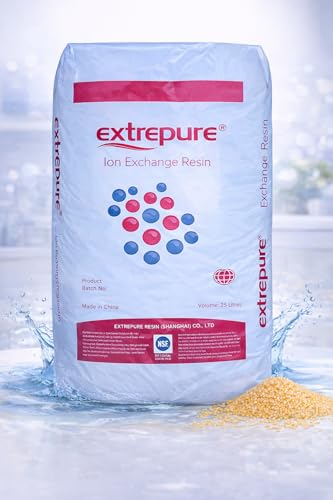
Water Softener Resin 1 Cu Ft – 32K Grain High-Capacity 7% Cross-linked
- High-Performance Cross-Linked Resin: Rapid ion exchange and durability
- High Capacity Softening: Effectively removes minerals and prevents scale
- Long-Lasting & Easy to Install: Reliable beads compatible with standard systems
As an affiliate, we earn on qualifying purchases.
As an affiliate, we earn on qualifying purchases.
Frequently Asked Questions
How Often Should I Replace the Resin in My Water Softener?
You should replace the resin in your water softener when it reaches the end of its resin lifespan, typically every 10 to 15 years. Follow your replacement schedule based on water hardness and usage, and watch for signs like reduced softening efficiency or increased soap usage. Regular maintenance and monitoring help make certain your resin performs well, so stay attentive and plan for replacement accordingly.
Can I Soften Well Water With a Standard Home Softener?
Yes, you can soften well water with a standard home softener, but keep in mind that well water often contains higher mineral levels like iron and manganese. Your softener will remove many minerals, enhancing water quality and preventing scale buildup. However, for extensive mineral removal, especially iron, you might need additional treatments or a specialized system to guarantee your well water is properly softened and safe for use.
Do Softeners Remove All Types of Minerals From Water?
Did you know that standard water softeners remove about 85% of calcium and magnesium minerals? They primarily target hardness-causing minerals like calcium and magnesium, but don’t remove all types of minerals. Mineral removal depends on water composition; some contaminants like iron or manganese may need additional treatment. So, while softeners effectively reduce hardness, they don’t eliminate every mineral, leaving some impurities that might require different solutions.
Is Salt-Free Water Softening an Effective Alternative?
Salt-free water softening is a viable alternative solution, especially if you’re looking to reduce mineral buildup without using salt. It works by conditioning the water rather than removing minerals like calcium and magnesium. While it doesn’t soften water in the traditional sense, it prevents scale formation effectively. So, if you’re seeking an eco-friendly, low-maintenance option that still protects your plumbing, salt-free systems can be a good choice.
What Maintenance Is Required to Keep My Softener Working Efficiently?
Did you know that proper maintenance can extend your softener’s resin lifespan by up to 50%? To keep your softener working efficiently, follow a regular maintenance schedule, including resin cleaning and salt refilling. Check the system monthly for salt levels and salt bridge formation. Additionally, periodically flush the resin bed to remove accumulated minerals, ensuring ideal performance and prolonging your softener’s longevity.
Conclusion
With water softening, you’ll find fresh, friction-free fixtures and fantastic, flaw-free finishes. By embracing easy ion exchange methods at home, you prevent pesky mineral buildup, protect appliances, and promote pure, pristine plumbing. Take charge of your water’s quality, and enjoy the benefits of a beautifully balanced, bubbly bath every time. Simple steps lead to sparkling, soft water, so start softening today and savor the stunning, streak-free results!