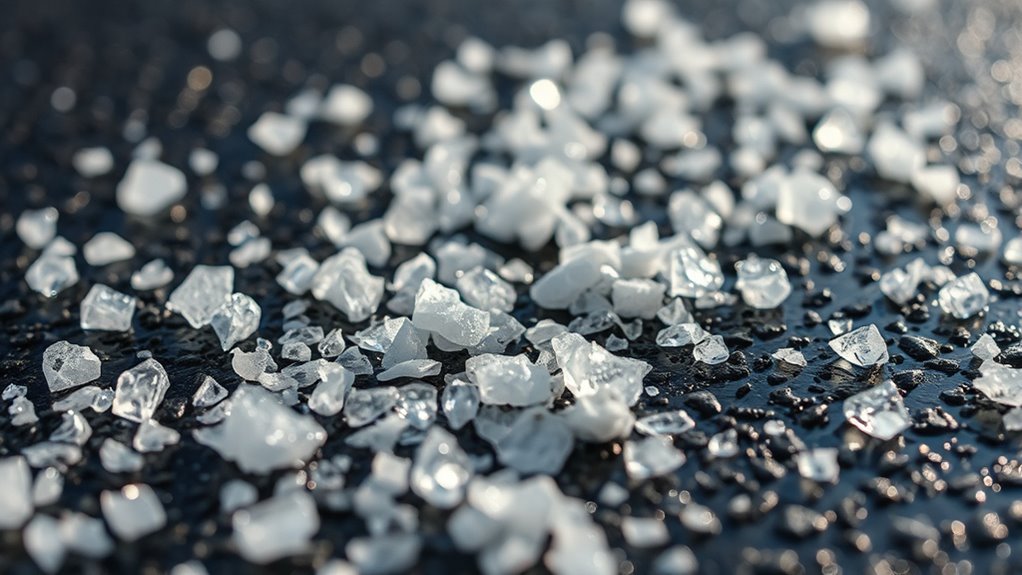

Road salt and deicers work by lowering the freezing point of water on roads, helping snow and ice melt quickly. They dissolve into thin water films, creating a brine that weakens the bond between ice and pavement. This process makes winter roads safer and easier to clear. If you keep exploring, you’ll discover how different deicers function and what environmental impacts they may have.
Key Takeaways
- Salt and deicers lower the water’s freezing point, preventing ice from forming on roads.
- They dissolve into water, creating brine, which helps melt existing ice at sub-freezing temperatures.
- The chemicals weaken the bond between ice and pavement, easing snow and ice removal.
- Application before or during storms enhances safety by maintaining clearer, less icy roads.
- Eco-friendly alternatives, like beet juice and calcium magnesium acetate, are being developed to reduce environmental impact.

Have you ever wondered how roads stay clear and safe during winter storms? It’s largely thanks to the strategic use of road salt and deicers, which help melt snow and ice quickly. When temperatures drop, ice and snow can make driving hazardous, causing accidents and delays. To combat this, authorities spread salt and chemical deicers on roads before or during storms. These substances lower the freezing point of water, causing ice to melt even when temperatures are below freezing. The process is straightforward: the salt dissolves into the thin film of water on the ice, creating a brine that weakens the bond between the ice and the pavement. As a result, vehicles can drive more safely, and snow can be cleared more efficiently. Additionally, active research into environmentally friendly deicing methods aims to reduce ecological impact while maintaining road safety.
But while salt and deicers are effective, they come with significant environmental concerns. The environmental impact of using these substances isn’t negligible. Excess salt can seep into soil and waterways, affecting plant life, aquatic ecosystems, and groundwater quality. High salt concentrations can kill vegetation along roadways and harm fish and other aquatic creatures by disrupting their osmoregulation. Over time, salt can accumulate in the soil, making it less fertile and altering the natural landscape. This environmental footprint has led many communities to explore alternative solutions. Some are turning to sand or gravel to provide traction without chemical impacts, although these don’t melt ice. Others experiment with beet juice, cheese brine, or calcium magnesium acetate, which are less harmful to the environment and still aid in melting snow. These alternatives aim to strike a balance between safety and ecological responsibility. Furthermore, sustainable deicing strategies are increasingly being adopted to minimize environmental harm while ensuring road safety.
The search for better solutions continues because the environmental impact of traditional road salt prompts many to seek more sustainable options. For example, using more targeted application methods can reduce the amount of salt needed, limiting runoff and soil contamination. Additionally, advances in technology have led to the development of pre-wetted salt, which requires less material to be effective, or the use of heated pavement systems that melt snow without chemicals altogether. These innovative strategies are gaining ground as they offer safer roads while minimizing harm to the environment. Ultimately, understanding how road salt and deicers work helps you appreciate both their benefits and their drawbacks. As the search for greener alternatives progresses, it’s clear that balancing safety and environmental health remains a critical goal for winter road maintenance.

Northern Salt Heat Negative 30 Degree Melter Calcium Chloride Blend 25 lb Resealable Ice Melt Bag Fast Acting Deicer Ice Melt for Driveways, Sidewalks, Parking Lots
- Extreme Melting Temperature: Melts to -30°F for harsh winters
- Calcium Chloride Infused: Fast-acting, high-performance de-icer
- Minimal Residue & Tracking: No mess, naturally pink color
As an affiliate, we earn on qualifying purchases.
As an affiliate, we earn on qualifying purchases.
Frequently Asked Questions
Are There Environmentally Friendly Alternatives to Traditional Road Salt?
Yes, there are eco-friendly alternatives to traditional road salt. You can consider biodegradable deicers made from natural ingredients like calcium magnesium acetate or potassium acetate, which are less harmful to the environment. These eco-friendly options work effectively at melting ice while reducing corrosion and pollution. By choosing biodegradable deicers, you help protect water quality and wildlife, making your winter road maintenance more sustainable and environmentally responsible.
How Does Temperature Affect the Efficiency of Different Deicers?
You’ll notice that temperature markedly impacts the chemical effectiveness of deicers. When temperatures drop below specific thresholds, traditional salts like sodium chloride become less effective, often needing alternative options like calcium magnesium acetate or potassium chloride. These deicers are designed to work in colder conditions, but understanding temperature thresholds helps you choose the right product for safety and efficiency. Always check the product’s recommended temperature range to guarantee ideal performance.
What Are the Health Risks Associated With Handling Deicers?
Handling deicers poses health risks like skin contact hazards, respiratory issues, and eye irritation. You must wear personal protective equipment such as gloves, goggles, and masks to prevent these dangers. Never underestimate the risks, stay cautious, and prioritize safety. Protect your skin, eyes, and lungs by following proper procedures, because neglecting safety measures can lead to painful burns, allergic reactions, or respiratory problems. Stay alert, stay safe.
Can Deicers Damage Concrete or Asphalt Surfaces Long-Term?
Yes, deicers can cause long-term damage to concrete and asphalt surfaces. You might notice concrete damage, like cracking or spalling, as the salts seep in and weaken the material. Asphalt deterioration can also occur, leading to potholes and crumbling. To protect your surfaces, consider using alternative deicing methods or applying protective sealants. Regular maintenance and proper application help minimize long-term damage caused by deicers.
How Can I Safely Store and Dispose of Road Salt and Deicers?
Imagine spilling road salt in your garage; you’d want proper storage to prevent corrosion or leaks. To safely store deicers, keep them in a sealed, labeled container away from children and pets. For disposal, follow local regulations—many communities have designated disposal sites. Always use proper storage and disposal methods to prevent environmental contamination and damage, ensuring you’re responsible and safe while handling these materials.
Conclusion
As you navigate winter’s icy embrace, remember that road salt and deicers are like gentle guides, softly easing your path. They work quietly behind the scenes, helping you stay safe without much fuss. While they may leave subtle traces, their true purpose is to keep your journey smooth and secure. So, trust in their quiet effort—and with a little patience, you’ll find winter’s challenges softened, guiding you forward with a gentle hand.