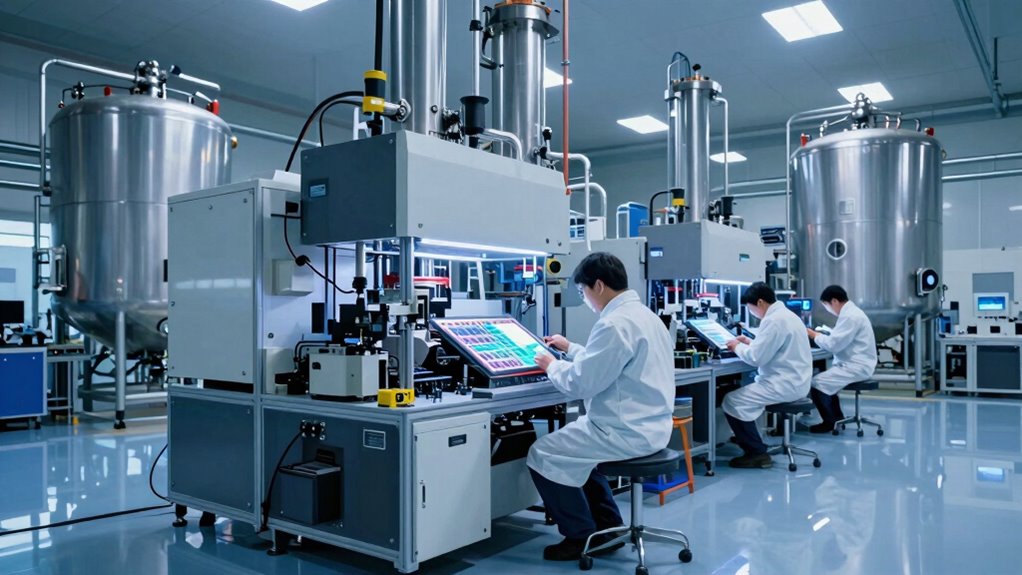

As reshoring boosts domestic semiconductor manufacturing, you have a unique chance to meet rising chemical demand by offering specialized materials like photoresists, etchants, and cleaning agents. Building strong partnerships with chipmakers and developing customized solutions can help you stay ahead. Emphasizing innovation and collaboration will position you as a trusted industry player. To discover how you can leverage these opportunities and stay competitive, explore the full scope of strategies ahead.

Prime made for students and young adults
- Fast, free delivery for dorm and study essentials
- Prime Video and Amazon Music included
- Member-only deals
Key Takeaways
- Reshoring increases demand for specialized chemicals, prompting suppliers to scale production and develop tailored solutions.
- Localized manufacturing enhances supply chain resilience, reducing reliance on complex international logistics.
- Chemical suppliers can build strategic partnerships with chipmakers to co-develop innovative, process-optimized chemistries.
- Diversifying sourcing and investing in advanced manufacturing improves supply stability amid industry disruptions.
- Continuous innovation and compliance ensure chemicals meet evolving semiconductor process requirements and sustainability standards.
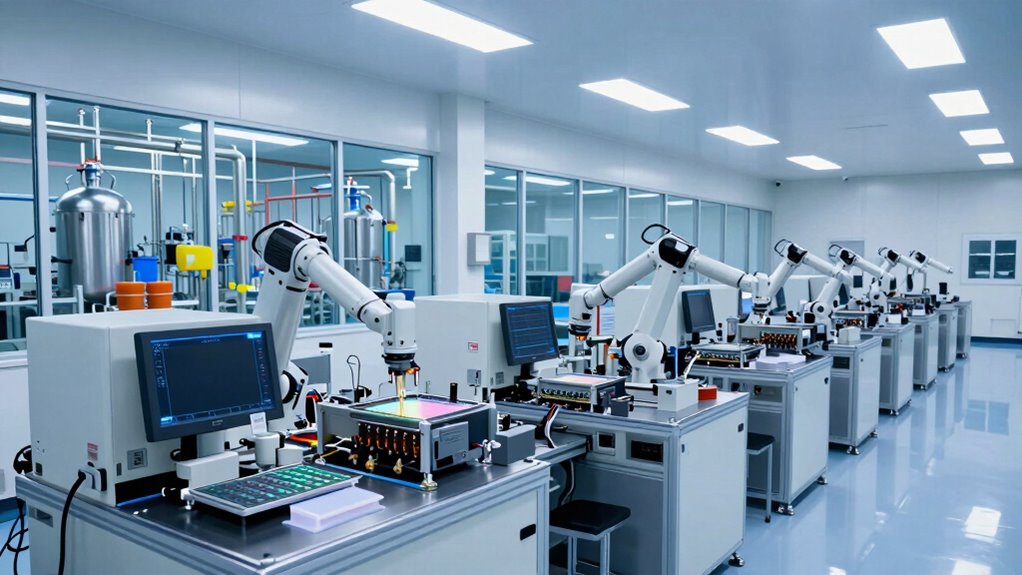
As semiconductor manufacturing begins to shift work back to domestic facilities, a considerable opportunity emerges for chemical suppliers to meet the rising demand. This reshoring movement isn’t just about bringing production home; it’s a strategic step toward strengthening supply chain resilience. When manufacturing processes are localized, you gain better control over quality, delivery times, and costs, reducing reliance on complex international logistics. For chemical suppliers, this means adapting quickly to supply the specialized materials needed for semiconductor fabrication, such as photoresists, etchants, and cleaning agents. Meeting this demand isn’t just about scaling up production—it’s about forming strong, reliable partnerships that foster innovation.
In this new landscape, collaboration becomes essential. You’ll find that success hinges on building innovation partnerships with chipmakers and equipment manufacturers. These collaborations enable you to develop tailored chemical solutions optimized for specific manufacturing processes. By working closely with your partners, you can anticipate their evolving needs and respond with agility, ensuring a steady supply of high-quality materials. Innovation partnerships also allow you to co-invest in research and development, driving forward new chemistries that improve yield, reduce defects, and lower environmental impact. This proactive approach positions you as a trusted partner in the semiconductor ecosystem, rather than just a supplier. Additionally, understanding the importance of supply chain resilience can help you better navigate potential disruptions and maintain a competitive edge.
Supply chain resilience becomes even more crucial as you navigate the complexities of reshoring. You must diversify sourcing, optimize inventory management, and develop contingency plans to mitigate disruptions. The semiconductor industry’s high standards for purity and consistency mean that any variability in chemical supply can profoundly impact production schedules and product quality. Strengthening your supply chain resilience involves establishing multiple sourcing options and investing in local manufacturing capacity. This not only shortens lead times but also enhances your ability to respond swiftly to unexpected challenges, keeping your customers’ production lines running smoothly. Furthermore, integrating advanced manufacturing techniques can improve your production efficiency and quality control, ensuring you meet industry standards consistently. Additionally, investing in domestic manufacturing capacity can help reinforce local supply chains and reduce dependence on international sources.
Furthermore, staying ahead of technological trends is essential. As semiconductor devices become more advanced, so do the chemical requirements. Continuous innovation ensures your offerings remain compatible with cutting-edge processes, giving you a competitive edge. Emphasizing quality control, sustainability, and regulatory compliance also builds trust with your partners and end customers. Keeping abreast of industry advancements allows you to adapt quickly and maintain relevance in a rapidly evolving sector.
Ultimately, the reshoring of semiconductor manufacturing presents a substantial opportunity for chemical suppliers willing to adapt. By focusing on supply chain resilience and fostering innovation partnerships, you can position yourself as a critical enabler in the industry’s evolution. Your proactive strategies will help ensure a reliable, efficient, and innovative chemical supply that meets the demands of a reshored semiconductor sector.
semiconductor photoresist chemicals
As an affiliate, we earn on qualifying purchases.
As an affiliate, we earn on qualifying purchases.
Frequently Asked Questions
How Does Reshoring Impact Global Chemical Supply Chain Stability?
Reshoring improves your chemical supply chain stability by reducing reliance on distant suppliers, enhancing supply chain resilience. It helps you navigate geopolitical risks more effectively, as you’re less exposed to international conflicts or trade disputes. By bringing production closer to home, you gain better control, faster response times, and decreased vulnerability, ultimately strengthening your overall supply chain security and ensuring consistent access to essential chemicals needed for your operations.
What Are the Environmental Implications of Increased Chemical Manufacturing Domestically?
Imagine a garden blooming brighter with each new plant—that’s how increased domestic chemical manufacturing impacts environmental sustainability. You might reduce reliance on distant suppliers, but it also means managing waste more effectively. Proper waste management becomes crucial to prevent pollution and protect ecosystems. By prioritizing eco-friendly processes, you can guarantee that growth doesn’t come at the environment’s expense, fostering a healthier balance between industry expansion and ecological responsibility.
How Do Chemical Supply Costs Compare Before and After Reshoring Efforts?
You’ll find that chemical supply costs often decrease after reshoring efforts, thanks to improved supply chain resilience. By bringing manufacturing closer to home, you reduce transportation expenses, mitigate delays, and gain better control over quality, all of which contribute to cost reduction. This streamlined approach helps you avoid disruptions, lowers overall expenses, and guarantees a more reliable supply chain, ultimately strengthening your competitive edge in the market.
What Specific Chemicals Are Most Critical for Semiconductor Manufacturing?
You might think only silicon matters, but crucial chemicals like high-purity photoresists, etchants, and dopants are indispensable for semiconductor manufacturing. Their chemical purity guarantees device reliability, while material compatibility prevents contamination or damage during production. You need these chemicals at specific purity levels to meet strict industry standards. Guaranteeing a consistent supply of these critical chemicals, with proper chemical purity and material compatibility, is essential for producing high-quality semiconductors.
How Can New Regulations Influence Chemical Sourcing Strategies in Reshoring?
New regulations can substantially impact your chemical sourcing strategies by enforcing stricter compliance standards, which may increase lead times and costs. You should prioritize regulatory compliance to avoid legal issues and supply disruptions. To stay ahead, enhance supply chain agility by diversifying suppliers and building inventory buffers. This proactive approach helps you adapt quickly to regulatory changes, ensuring continuous semiconductor production and maintaining your competitive edge in reshoring initiatives.
Conclusion
If you seize this chemical supply opportunity now, you could revolutionize the entire semiconductor industry, turning your business into an unstoppable force that reshapes global manufacturing. Imagine leading the charge as the world’s most influential supplier, dominating markets, and setting unstoppable trends. Miss this chance, and you risk being left in the dust, forever stuck in the shadows while others soar to unimaginable heights. Don’t just watch history — make it yours.
Fall Picks
fall essentials
As an affiliate, we earn on qualifying purchases.