
Pull-off test results can be misleading if you don’t guarantee proper surface preparation, testing conditions, and standards. Contamination or inadequate roughness might make the bond seem weaker than it truly is, and environmental factors like humidity and temperature can distort results. If protocols aren’t carefully followed, outcomes may not reflect actual adhesion quality. Keep in mind that understanding how controls and procedures influence results can help you interpret them correctly as you explore further.
Key Takeaways
- Inadequate surface preparation can cause false low pull-off results, misrepresenting actual adhesion quality.
- Environmental factors like humidity and temperature can skew test outcomes if not properly controlled.
- Deviating from standardized testing protocols may lead to inconsistent or misleading adhesion measurements.
- Pull-off numbers alone do not account for surface or procedural issues that influence test results.
- Proper testing conditions and surface prep are essential to ensure the reliability and validity of adhesion assessments.

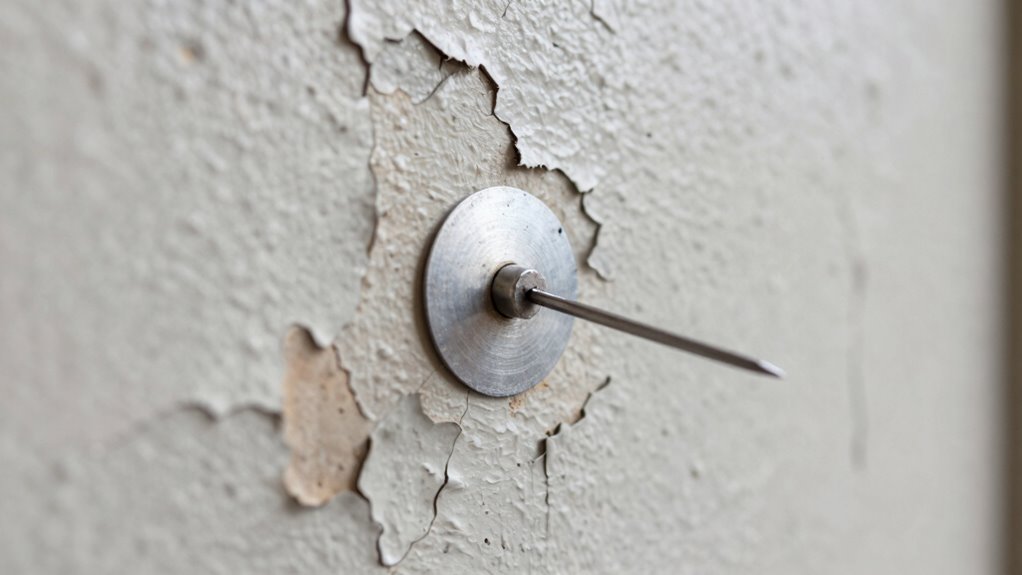
Adhesion testing is a crucial process used to evaluate how well a coating, adhesive, or material bonds to a surface. When you perform these tests, you might rely heavily on pull-off results to determine the strength of the bond. However, these numbers can sometimes be misleading if you don’t consider the importance of proper surface preparation and adherence to testing standards. Surface preparation, in particular, plays a critical role because the quality of the bond depends largely on how clean, rough, and properly prepared the surface is before applying the coating or adhesive. If the surface isn’t adequately prepared, the pull-off test might indicate a weak bond, but that weakness could be due to surface contamination or inadequate roughness, not the material’s inherent adhesion properties. Additionally, understanding testing standards is essential because they set the protocol for conducting these tests consistently and reliably. When you follow recognized standards, such as ASTM or ISO, you ensure that your results are comparable and valid. Without strict adherence to these testing standards, your results might vary markedly from one test to another, leading to false conclusions about the adhesive’s performance. It’s tempting to focus solely on the pull-off test value, but if the surface wasn’t prepared correctly or the test wasn’t performed according to standards, the results lose their meaning. Proper surface preparation can significantly influence the accuracy of the test outcome, emphasizing the need for meticulous procedures. Moreover, test environment factors like humidity and temperature can greatly impact the results, so controlling these conditions is crucial for obtaining reliable data. Ensuring consistent testing conditions helps improve the reliability and reproducibility of adhesion assessments.

Professional Adhesion Tester Kit with Result Comparison Chart – 3-Blade Cross-Cut Tester for Paint, Coatings, Plating & Spray Finishes Surface Testing | ASTM Standards
This cross-cut adhesion tester is precision-engineered to ASTM D3359 standards for professional-grade adhesion assessment on painted, coated, plated,…
As an affiliate, we earn on qualifying purchases.
As an affiliate, we earn on qualifying purchases.
Frequently Asked Questions
How Can Environmental Factors Affect Pull-Off Test Results?
Environmental conditions can substantially impact your pull-off test results, affecting testing accuracy. Changes in temperature, humidity, or moisture can weaken adhesion or cause materials to expand or contract, leading to misleading readings. When environmental factors aren’t controlled or accounted for, your results might not reflect the true adhesion strength. To guarantee reliable testing accuracy, you should perform tests under consistent conditions and consider environmental influences that could skew your data.
What Are Alternative Methods to Evaluate Adhesion Strength?
Think of testing methods as different tools in a toolbox. To evaluate adhesion strength, you might consider shear, peel, or scratch tests, which often offer better insights than pull-off tests. These alternatives focus on surface compatibility and provide more testing accuracy by simulating real-world stresses. By choosing the right method, you guarantee your adhesion assessments are reliable, minimizing misinterpretations and strengthening your overall material performance analysis.
How Does Surface Preparation Influence Pull-Off Test Outcomes?
Surface contamination markedly influences pull-off test outcomes, as dirt, oil, or moisture weaken adhesion. Proper preparation techniques, like cleaning with solvents, abrasive blasting, or using primers, guarantee the surface is free of contaminants and roughened appropriately. This improves adhesion strength and yields more accurate test results. Neglecting surface preparation can lead to misleading pull-off values, suggesting poor adhesion where, in reality, contamination or inadequate prep are the culprits.
Are There Industry Standards for Interpreting Pull-Off Test Data?
Like a compass guiding sailors, industry standards steer your interpretation of pull-off data. Standard guidelines provide a framework, but interpretation criteria vary across sectors. You should compare your results against these benchmarks, considering factors like substrate type and test conditions. While these standards help, remember that real-world variables can influence outcomes, so use them as a guide rather than an absolute rule. Trust your expertise to make informed decisions.
Can Adhesive Type Impact the Reliability of Pull-Off Testing?
Yes, the adhesive type can impact the reliability of pull-off testing. You need to ensure adhesive compatibility and material compatibility because some adhesives bond better with certain substrates, leading to more accurate results. If the adhesive isn’t suitable for the materials you’re testing, the pull-off test might underestimate or overestimate the true adhesion. Choosing the right adhesive ensures your test results truly reflect the adhesion quality between materials.
Professional Adhesion Tester Kit with Result Comparison Chart – 3-Blade Cross-Cut Tester for Paint, Coatings, Plating & Spray Finishes Surface Testing | ASTM Standards
This cross-cut adhesion tester is precision-engineered to ASTM D3359 standards for professional-grade adhesion assessment on painted, coated, plated,…
As an affiliate, we earn on qualifying purchases.
As an affiliate, we earn on qualifying purchases.
Conclusion
Remember, relying solely on pull-off results can be like judging a book by its cover—misleading and incomplete. While they offer valuable insights, they don’t tell the whole story of adhesion strength. To truly understand the bond, consider multiple testing methods and real-world conditions. Only then can you peel back the layers and see the full picture, ensuring your assessments are as solid as the adhesion you aim to measure.
Professional Adhesion Tester Kit with Result Comparison Chart – 3-Blade Cross-Cut Tester for Paint, Coatings, Plating & Spray Finishes Surface Testing | ASTM Standards
This cross-cut adhesion tester is precision-engineered to ASTM D3359 standards for professional-grade adhesion assessment on painted, coated, plated,…
As an affiliate, we earn on qualifying purchases.
As an affiliate, we earn on qualifying purchases.

LT300, Environmental Test Equipment Light Meter, Analog and Digital
Product Type: Environmental Test Equipment
As an affiliate, we earn on qualifying purchases.
As an affiliate, we earn on qualifying purchases.