Simulating natural sunlight in UV weathering chambers is tough because sunlight’s full spectrum and environmental effects are incredibly complex and change constantly. You can’t perfectly mimic factors like angle of incidence, atmospheric pollutants, humidity, or weather variations in a lab. These variables influence how materials degrade outdoors, making perfect simulation nearly impossible. If you keep exploring, you’ll discover how these challenges affect testing accuracy and what it means for your projects.
Key Takeaways
- UV lamps in chambers mimic the solar spectrum but cannot replicate the full complexity of natural sunlight.
- Variations in weather, angle, and atmospheric conditions affect sunlight, making accurate simulation challenging.
- Environmental factors like humidity, ozone, and pollution are difficult to reproduce precisely in controlled chambers.
- The dynamic and location-specific nature of sunlight makes exact replication in laboratory settings nearly impossible.
- Laboratory tests provide consistent results but cannot fully substitute for outdoor exposure conditions.
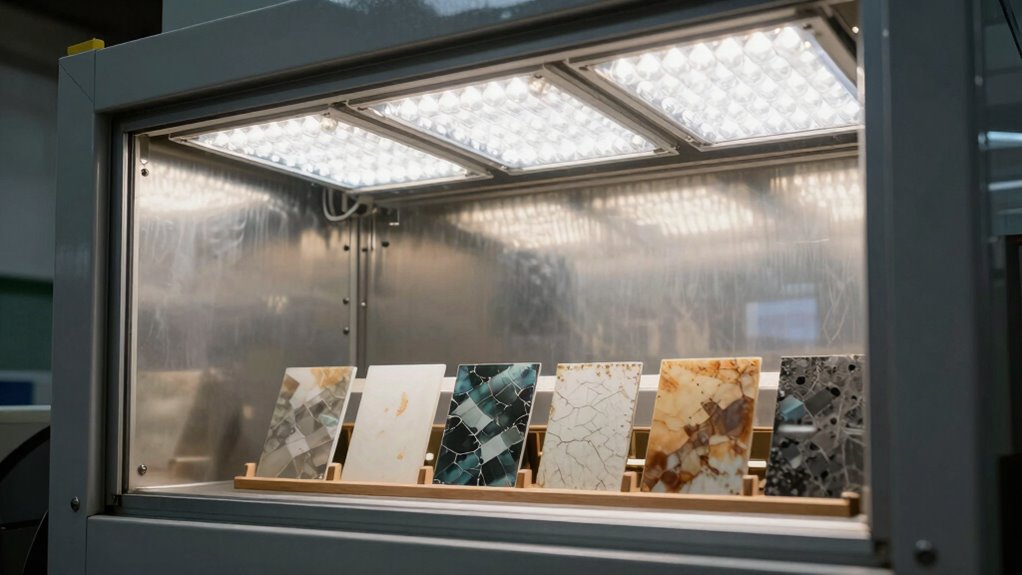
UV weathering chambers use specialized UV lamps that emit radiation closely matching the solar spectrum, but even these advanced systems can’t perfectly mimic the full complexity of natural sunlight. Factors like angle of incidence, atmospheric pollutants, and weather variations influence how materials degrade outside, making it difficult to produce a perfect simulation. Additionally, solar spectrum varies throughout the day and across different locations, adding further complexity to accurate replication. Material degradation caused by UV aging is a critical concern for manufacturers and engineers. When materials are exposed to sunlight over extended periods, they often lose their original properties—color, strength, flexibility, and resistance. In the real world, these changes can lead to product failure, safety issues, or aesthetic decline. UV weathering chambers help you predict these outcomes by accelerating the aging process in a controlled setting. You can expose samples to specific UV intensities, durations, and temperature cycles, enabling detailed analysis of how your materials will perform after months or years of outdoor exposure. However, simulating sunlight’s full impact remains a challenge. Natural sunlight isn’t static; it varies with weather, location, and time of day. Environmental factors such as humidity, ozone levels, and pollution influence material degradation but are often difficult to replicate precisely in a chamber. As a result, UV weathering chambers are invaluable for consistent testing, but they can’t fully replace outdoor testing for every application. Instead, they serve as an essential step in material development, helping you identify vulnerabilities caused by UV aging before your products reach the market. Understanding the limitations of laboratory testing is crucial for comprehensive material durability assessments. Recognizing these testing limitations allows manufacturers to better interpret lab results in real-world scenarios. Additionally, understanding the complexity of natural sunlight helps improve the design of testing protocols to better reflect outdoor conditions. Incorporating environmental variables into testing can enhance the predictive accuracy of laboratory simulations.
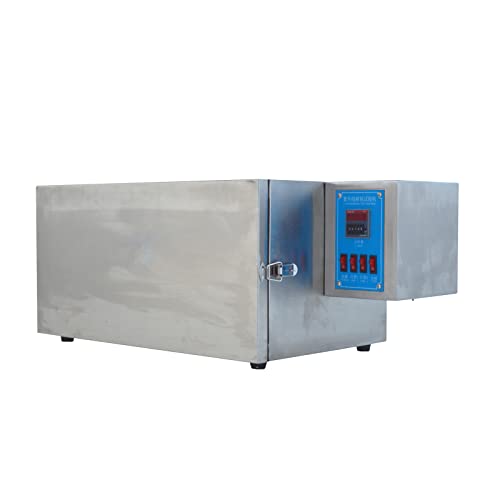
DINENOVATE UV Aging Test Chamber 110V 304 Stainless Steel UV Accelerated Weathering Tester 5.9"-9.8" Test Distance for Leather Plastic Rubber Cloth
Stainless Steel Body: The enclosure of the UV accelerated aging tester is made of SUS304 stainless steel-elegant, durable…
As an affiliate, we earn on qualifying purchases.
As an affiliate, we earn on qualifying purchases.
Frequently Asked Questions
How Long Should Testing in UV Weathering Chambers Last?
You should run UV weathering tests for at least 500 to 1,000 hours to effectively simulate UV degradation, but the duration depends on your material and desired weathering effects. Longer tests help account for weathering variability, revealing how materials perform over time under UV exposure. Keep in mind that accelerated testing may not perfectly mimic natural conditions, so adjust the duration based on your specific application and material properties.
Can UV Weathering Chambers Simulate All Environmental Conditions?
Can UV weathering chambers mimic all environmental conditions? Not quite. Think of them as a symphony with missing instruments—while they simulate essential factors like UV exposure, temperature, and humidity, they can’t replicate environmental variability perfectly. Testing limitations mean some real-world influences, such as weather fluctuations and pollutants, escape their reach. So, you get a controlled test, but it’s not a complete picture of natural outdoor aging.
What Materials Are Most Affected by UV Exposure?
You’ll notice that materials like plastics, rubber, and paints are most affected by UV exposure because they undergo material degradation over time. These materials often lack strong UV resistance, leading to cracking, fading, or brittleness. To guarantee longevity, testing in UV weathering chambers helps identify how well a material withstands UV rays, but real sunlight can still cause more complex degradation patterns that are hard to fully simulate.
How Accurate Are UV Weathering Tests Compared to Real Sunlight?
UV weathering tests are quite accurate in simulating real sunlight, especially in replicating the UV spectrum responsible for material degradation. You’ll find that these chambers expose materials to controlled UV rays, mimicking natural conditions. While they can’t perfectly replicate all sunlight factors like temperature and humidity, they provide reliable insights into how materials will degrade over time, making them valuable tools for evaluating durability under UV exposure.
Are There Safety Concerns When Operating UV Weathering Chambers?
Yes, there are safety concerns when operating UV weathering chambers. You should prioritize UV safety by wearing protective gear like gloves and goggles, as UV rays can harm your skin and eyes. Be aware of chamber hazards such as high temperatures and UV exposure, which can cause burns or eye damage. Always follow safety protocols, guarantee proper ventilation, and keep the chamber secure to prevent accidental exposure or injuries.

HQHAOTWU UV Aging Test Chamber, UV Light Simulation Chamber for Rubber and Plastic Testing Machine 110V
Intelligent Control Panel: The intelligent automatic control panel can set the working time of two lamps, making the…
As an affiliate, we earn on qualifying purchases.
As an affiliate, we earn on qualifying purchases.
Conclusion
While UV weathering chambers aim to replicate sunlight, they often fall short of capturing its true essence. Sunlight’s complexity is like a tall order to fill; no matter how advanced the chambers are, they can’t fully mimic the natural environment. So, when testing your materials, remember that you’re trying to catch lightning in a bottle. It’s a reminder that nature still holds the upper hand—no substitute can quite match the real thing.

QuantaDose® UVC Light Test Card with UVC Light Wavelength Indicator and Photochromic UV Intensity Test
Multi-analyte constituents provide fast chromatic analytical data for UV/UVC testing.
As an affiliate, we earn on qualifying purchases.
As an affiliate, we earn on qualifying purchases.

DARKBEAM Flashlight UV Black Light 395 NM, Mini but Powerful USB- C LED Rechargeable Woods Lamp, Ultraviolet Flashlights for Pet Dog Urine, Stains Detection/Resin Curing/Fluorescent Agent
【Upgraded Powerful UV 395nm Light Flashlight】 The 395nm Light Flashlight provides 1300mw and 395 nm wavelength UV light…
As an affiliate, we earn on qualifying purchases.
As an affiliate, we earn on qualifying purchases.