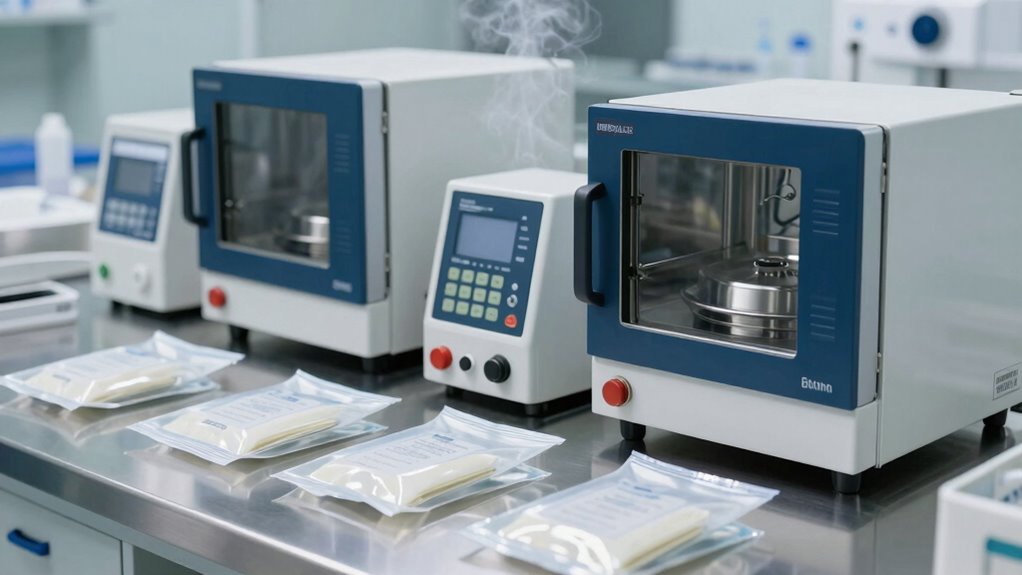
To achieve sterility assurance levels, guarantee your sterilization process is validated with reliable process and biological indicators that confirm proper sterilant penetration and effective spore inactivation. Regularly verify sterilizer performance through routine testing and calibration, and keep detailed records of these activities. Proper maintenance of equipment and continuous quality assurance assure consistent results. By following these steps, you help guarantee safety and compliance. Keep going to discover how these measures work together for ideal sterilization success.
Key Takeaways
- Use sterilization indicators to confirm proper sterilant penetration and process conditions during each cycle.
- Employ biological indicators with resistant spores to validate the sterilization process’s effectiveness.
- Regularly verify and calibrate sterilizers to ensure they operate within validated parameters.
- Maintain detailed documentation of validation activities, indicator results, and sterilizer performance.
- Implement ongoing quality assurance procedures to monitor and maintain sterilization efficacy over time.
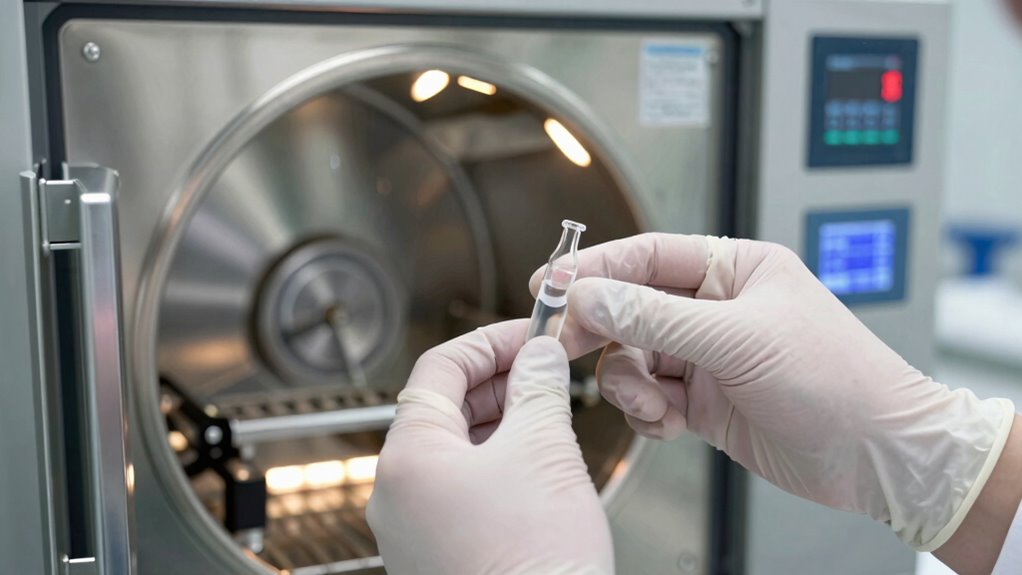
Sterilization indicators play a vital role in confirming that the sterilization process reaches the required conditions. These indicators are specially designed materials that change appearance or properties when exposed to specific sterilizing conditions, such as heat or chemical agents. You use sterilization indicators during each cycle to provide immediate, visual confirmation that the sterilization parameters have been met. For example, process indicators like autoclave tape or chemical indicators are placed inside packages to verify that the sterilizing agent has penetrated and reached the necessary levels. More extensive sterilization indicators, such as biological indicators, contain spores known for their resistance. When these spores are exposed to the sterilization process, their inactivation confirms that the process achieves the desired SAL. Regular use of sterilization indicators is essential for verifying sterilizer performance and ensuring safety. Additionally, integrating quality assurance procedures helps maintain consistent sterilization efficacy over time. In implementing sterilization protocols, you must regularly verify and calibrate sterilizers to guarantee they operate within validated parameters. This includes routine performance checks using sterilization indicators to monitor each cycle’s effectiveness. You also need to document all validation activities, including the results of sterilization indicators and biological testing, to maintain traceability and compliance with regulatory standards. Performing routine maintenance on sterilizers further ensures the equipment functions correctly and reduces the risk of sterilization failures. Proper documentation provides evidence of validation and supports ongoing compliance efforts. Regular calibration and performance verification are crucial to ensure the sterilization process consistently achieves the necessary SAL.
autoclave biological indicators
As an affiliate, we earn on qualifying purchases.
As an affiliate, we earn on qualifying purchases.
Frequently Asked Questions
How Is Sterility Assurance Level (SAL) Quantified?
You quantify SAL by performing sterility testing on samples from your sterilized batch, ensuring they meet predefined standards. You also assess packaging integrity to confirm it remains intact, preventing contamination. Combining these methods, you determine the probability that a product remains non-sterile after sterilization. This statistical approach helps you establish a specific SAL, like 10^-6, indicating a one-in-a-million chance of a non-sterile item.
What Factors Influence SAL in Sterilization Processes?
They say “know your enemy,” and in sterilization, that enemy is contamination. Your SAL depends on factors like the effectiveness of sterilization techniques, ensuring they deliver the required microbial kill rate. Material compatibility also plays a key role; some materials can withstand sterilization methods better than others. Variations in temperature, pressure, and exposure time influence SAL, so understanding these factors helps you maintain consistent, effective sterilization.
Are SAL Standards the Same Worldwide?
Sterility assurance level (SAL) standards aren’t the same worldwide; they vary depending on regulatory agencies and industry guidelines. During sterilization, you rely on sterility testing and sterilization equipment to meet specific SAL targets. International standards like ISO provide guidance, but local regulations might require different levels. To guarantee compliance, you must understand these differences and adapt your sterilization processes accordingly, maintaining consistent sterility across markets.
How Is SAL Validated During Sterilization Validation?
Think of sterilization validation like a chef tasting their dish; you need proof it’s perfectly cooked. You validate SAL by using sterilization indicators that change color if sterilization occurs, and biological testing with spore tests to confirm microbial kill. These methods guarantee your process reliably achieves the desired SAL, providing confidence that your sterilization process consistently delivers the safety standards required for medical products.
Can SAL Be Improved After Sterilization?
Yes, SAL can be improved after sterilization by refining your sterility techniques and ensuring proper validation. You should review sterilization parameters, enhance cleanroom procedures, and address potential contamination sources. Avoid sterilization myths, such as over-reliance on one method, and adopt an all-encompassing approach to validation. Continuous monitoring and process adjustments help maintain or improve SAL, ensuring products consistently meet required sterility levels.
sterilization process validation kits
As an affiliate, we earn on qualifying purchases.
As an affiliate, we earn on qualifying purchases.
Conclusion
You might think achieving sterility is just about following protocols, but in reality, it’s a precise science backed by rigorous testing and validation. Some argue that sterilization methods are foolproof, yet challenges like resistant spores still exist. The truth is, maintaining high Sterility Assurance Levels requires continuous vigilance and adaptation. So, while your sterilization process might seem foolproof, staying skeptical and informed guarantees you’re genuinely protecting patient safety and product integrity.
sterilizer calibration tools
As an affiliate, we earn on qualifying purchases.
As an affiliate, we earn on qualifying purchases.
sterilization indicator strips
As an affiliate, we earn on qualifying purchases.
As an affiliate, we earn on qualifying purchases.