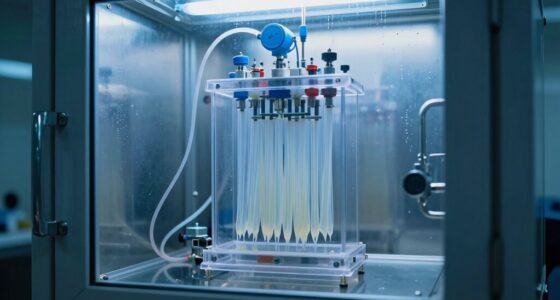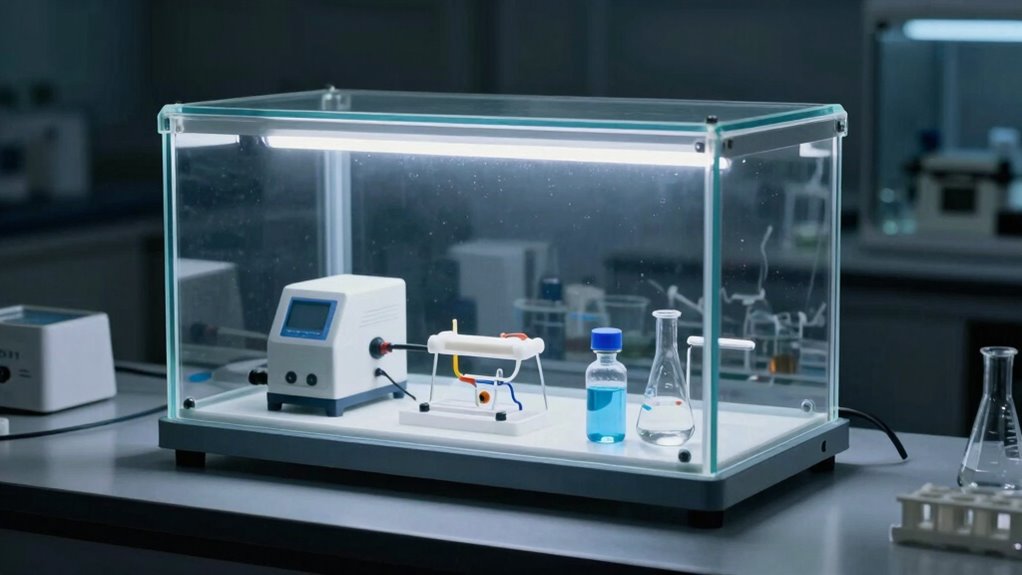

A glove box is your key to controlling moisture and oxygen around sensitive materials. It creates a sealed environment filled with inert gases like nitrogen or argon, preventing contamination and degradation. You can adjust humidity, temperature, and gas composition to match specific needs, ensuring ideal conditions. By using built-in gloves, you handle delicate items safely without exposing them to outside elements. Keep exploring, and you’ll discover how these controls safeguard your materials and improve your processes.
Key Takeaways
- Glove boxes provide a sealed environment with controlled moisture and oxygen levels to protect sensitive materials.
- They use inert gases like argon or nitrogen to prevent oxidation and hydrolysis.
- Precise monitoring and adjustment of environmental parameters ensure optimal conditions for specific processes.
- Proper handling, maintenance, and calibration are essential for maintaining environmental integrity.
- Overall, control in glove boxes safeguards material purity, enhances process reliability, and prevents contamination.
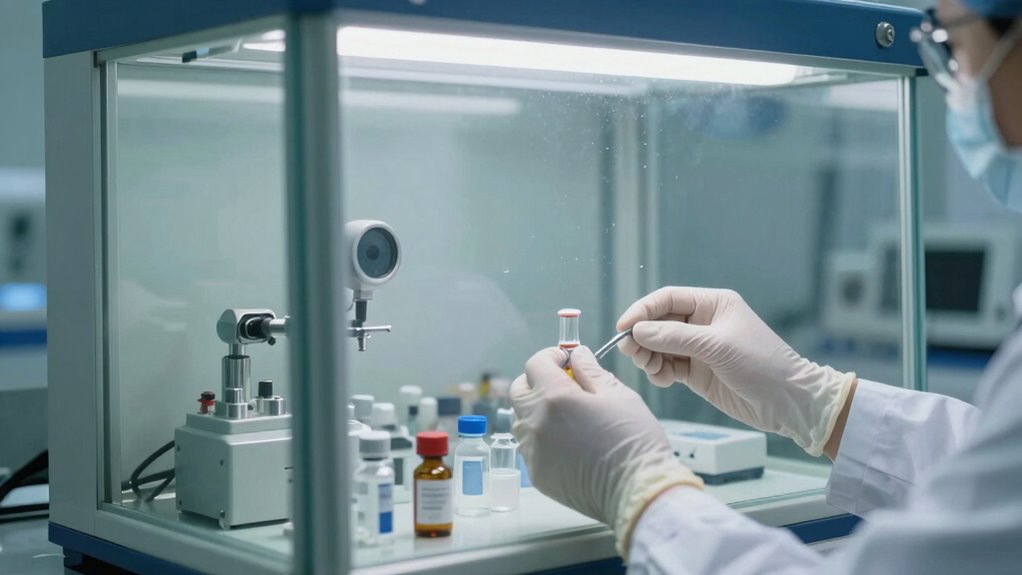
Glove boxes are indispensable tools for managing sensitive materials that require strict control of moisture and oxygen levels. When dealing with delicate substances like pharmaceuticals, electronics, or chemicals, you need a system that keeps these materials isolated from the environment. That’s where glove boxes excel, providing a sealed environment that allows you to handle your materials safely without exposing them to external contaminants. Proper material handling within a glove box ensures that your substances remain pure and effective, which is critical in high-stakes industries like biotech or aerospace.
Contamination prevention is the core benefit of using a glove box. By maintaining a controlled atmosphere—often filled with inert gases like argon or nitrogen—you reduce the risk of moisture and oxygen degrading your materials. This environment prevents oxidation, hydrolysis, and other reactions that could compromise your work. You can manipulate your samples or components with built-in gloves, giving you the confidence that no external particles or microbes will enter the chamber. This tight control not only preserves the integrity of your materials but also minimizes the risk of cross-contamination between different samples or processes.
The true power of a glove box lies in its ability to offer precise control over environmental conditions. You can monitor and adjust humidity, temperature, and gas composition in real-time, tailoring the environment to match your specific requirements. Whether you’re working with moisture-sensitive compounds or gases that need to be kept at a particular purity level, a glove box gives you the tools to do so effectively. This level of control guarantees your work remains consistent and reproducible, which is essential when quality and safety standards are non-negotiable. Additionally, understanding the importance of environmental control helps you optimize your processes for maximum safety and effectiveness. Regular calibration and monitoring of environmental parameters are essential to maintain this level of precision.
Handling materials inside a glove box might seem straightforward, but it demands a high degree of skill and attention to detail. You need to be aware of how your movements affect the internal environment, avoiding any actions that could introduce contamination. Proper training ensures you use the glove box efficiently, preserving its protective atmosphere and maintaining the environment’s integrity. Regular maintenance and calibration are also indispensable to keep the system functioning at peak performance, preventing leaks or failures that could jeopardize your materials. Being vigilant about system integrity helps prevent environmental breaches that could compromise your work. Moreover, understanding the gas purity inside the glove box is critical for maintaining the desired atmosphere and preventing unintended reactions.
In essence, a glove box isn’t just a containment chamber; it’s a precision tool for material handling that guarantees contamination prevention and environmental control. When you understand and utilize its capabilities fully, you can work with confidence, knowing your sensitive materials are protected from moisture, oxygen, and external pollutants. This control not only safeguards your products but also enhances the reliability and quality of your entire process.

Lab Acrylic Glove Box mini Pmma Seal Operation Box Benchtop Inert Gas Sealed case for Nitrogen Environment Test Isolated air Test
- Size: 300mm x 400mm x 500mm
- Rear Door Dimensions: 180mm x 180mm
- Material: Transparent acrylic
As an affiliate, we earn on qualifying purchases.
As an affiliate, we earn on qualifying purchases.
Frequently Asked Questions
How Are Glove Boxes Customized for Specific Industrial Applications?
You customize glove boxes for specific industrial applications by selecting material compatibility to match your needs, ensuring they withstand corrosive substances or delicate materials. You can also explore customization options like additional ports, lighting, or filtration systems to optimize performance. Tailoring these features helps you maintain strict control over environmental conditions, making the glove box perfectly suited for your unique process, whether it’s handling sensitive chemicals or maintaining sterile environments.
What Are the Maintenance Requirements for Glove Box Systems?
You need to regularly perform cleaning protocols to keep your glove box free of contaminants, guaranteeing ideal performance. Calibration procedures are essential to maintain accuracy and control over environmental conditions. While cleaning keeps the system pristine, calibration fine-tunes sensors for precision. Balancing these maintenance tasks ensures your glove box remains reliable, protecting your materials and processes from moisture and oxygen interference. Consistent upkeep extends equipment lifespan and guarantees safety and efficiency.
How Do Glove Boxes Handle Hazardous or Toxic Materials Safely?
You handle hazardous or toxic materials safely in glove boxes by ensuring proper hazard containment. The glove box’s sealed environment prevents toxic materials from escaping, protecting you and the environment. You use gloves integrated into the system to manipulate hazardous substances without direct contact. Additionally, the system maintains a controlled atmosphere—often with filtered, inert gases—to minimize risks, ensuring safe handling and containment of toxic materials at all times.
What Innovations Are Emerging in Glove Box Technology?
You might worry that glove box technology has plateaued, but breakthroughs like smart sensors and automated controls are transforming the field. These innovations enable real-time monitoring of environmental conditions, reducing human error and increasing safety. Automated systems can adjust internal atmospheres instantly, maintaining ideal conditions without manual intervention. This evolution guarantees safer handling of hazardous materials, boosts efficiency, and opens new possibilities for research and manufacturing in environments once deemed too risky.
How Does Glove Box Design Influence Long-Term Operational Costs?
Your glove box design ensures long-term operational costs through enhanced cost efficiency and design optimization. A well-designed glove box reduces maintenance needs, minimizes leaks, and optimizes airflow, leading to lower energy consumption and fewer repairs. By prioritizing features like durable materials and ergonomic layouts, you can streamline operations, cut expenses, and ensure reliable performance over time, making your investment more economical and sustainable.
Conclusion
You now see how vital glove boxes are for maintaining precise environments, especially when handling sensitive materials. Did you know that over 60% of pharmaceutical manufacturing relies on these controlled environments? By preventing moisture and oxygen intrusion, you guarantee product integrity and safety. So, next time you work with delicate substances, remember that controlling these elements isn’t just about convenience—it’s about safeguarding quality and advancing scientific progress with confidence.