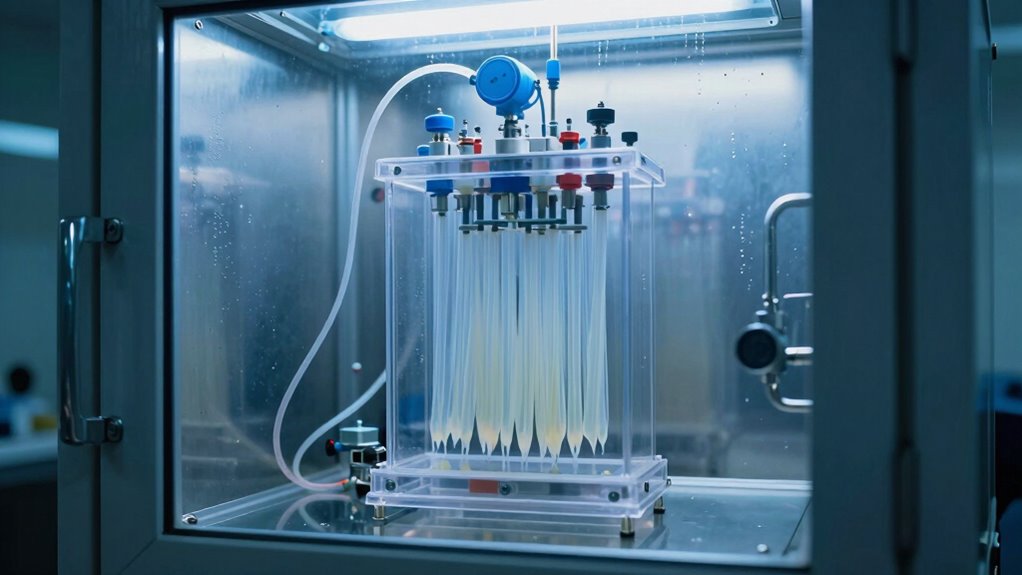

In environmental chamber testing, humidity can create a “trap” that skews polymer aging results. If temperature and humidity aren’t carefully controlled and monitored, condensation may form, leading to accelerated or uneven aging. This can mask true material vulnerabilities and give false impressions of durability. Adjustments to testing protocols are essential to avoid these pitfalls. Want to understand how to spot and prevent this humidity trap? Keep exploring for detailed insights.
Key Takeaways
- Improper humidity control can cause condensation, leading to inaccurate aging results in polymers.
- Fluctuations in temperature may create moisture buildup, falsely accelerating or delaying polymer degradation.
- Inconsistent humidity levels can induce surface swelling or hydrolysis, skewing material performance data.
- Using uncalibrated sensors or protocols may result in misleading moisture readings, affecting test validity.
- Overlooking environmental interactions, like temperature-humidity interplay, can produce artifacts that distort aging assessments.
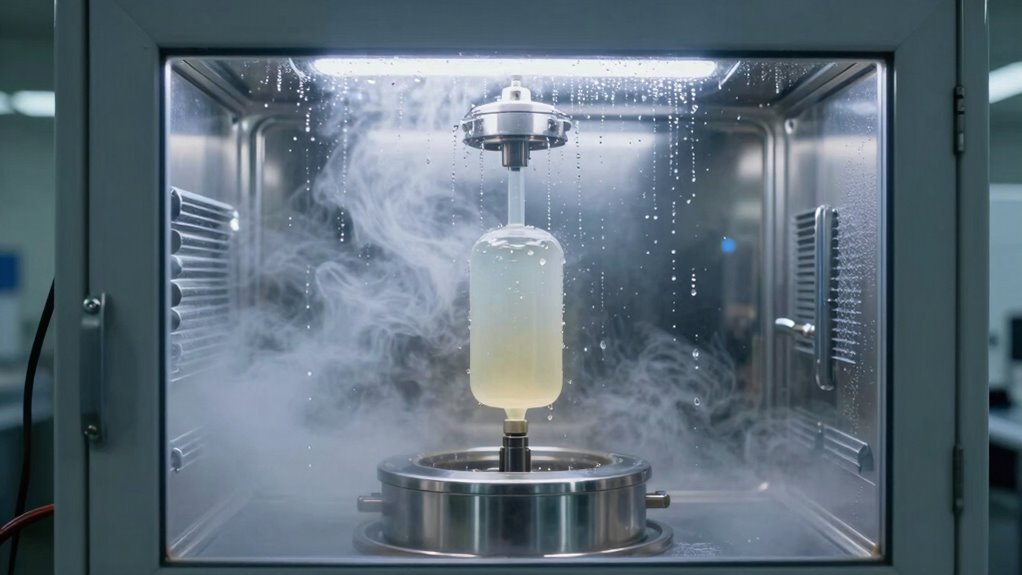
Environmental chamber testing is a essential process that helps you assess how products perform under various environmental conditions. When it comes to evaluating polymers, understanding humidity effects becomes especially crucial. Humidity can accelerate or alter aging processes, leading to misleading results if not properly controlled. That’s why adhering to testing standards is essential—they provide the guidelines to accurately simulate real-world conditions without skewing data.
Environmental chamber testing ensures accurate assessment of polymer performance under controlled humidity conditions.
In these tests, you expose your materials to controlled humidity levels within the chamber, observing how moisture interacts with the polymer’s surface and internal structure. High humidity environments can cause swelling, softening, or even hydrolysis in certain polymers. Conversely, low humidity might lead to embrittlement or cracking over time. The challenge lies in accurately replicating these conditions while maintaining consistency across tests, which is where strict testing standards come into play. Standards such as ASTM D2247 or IEC 60068 specify the humidity ranges, durations, and measurement techniques necessary to produce reliable results. Following these guidelines ensures your data reflects true material behavior and not anomalies caused by improperly calibrated environments.
However, humidity effects are tricky because they don’t act in isolation. Fluctuations in temperature, for example, can intensify the impact of humidity, creating condensation or moisture gradients that distort aging assessments. If your testing standards don’t account for these interactions, you risk misinterpreting the polymer’s durability. It’s vital to monitor and control both humidity and temperature precisely, ensuring your tests replicate the complex environments your products will face in real-world applications. This approach helps you distinguish between genuine material weaknesses and artifacts introduced by testing conditions. Monitoring environmental variables is crucial for obtaining accurate and meaningful data.
Moreover, understanding humidity’s role in polymer aging is key to developing more durable products. By carefully designing tests within the parameters set by testing standards, you can identify vulnerabilities related to moisture exposure. This insight guides material selection and formulation adjustments, ultimately improving product longevity. But it’s also important to recognize that not all humidity conditions are equal—some polymers respond differently depending on the humidity level and exposure duration. That’s why comprehensive testing, aligned with established standards, provides the best picture of how your materials will perform over time.

Room Alert Digital Temperature & Humidity Sensor w/ 25' Cable – Monitor Temperature, Humidity, Heat Index, and Dew Point with One Sensor
- Easy Plug & Play Setup: Immediate use with Room Alert monitors
- Temperature Range: -40°F to 185°F (-40°C to 85°C)
- Temperature Accuracy: +/- 2°C
As an affiliate, we earn on qualifying purchases.
As an affiliate, we earn on qualifying purchases.
Frequently Asked Questions
How Do Humidity Levels Vary Across Different Environmental Chambers?
You’ll notice humidity levels can vary across different environmental chambers due to factors like humidity uniformity issues. Proper chamber calibration is essential to guarantee consistent humidity distribution, minimizing discrepancies. Regular calibration checks help maintain accurate humidity control, preventing localized moisture traps that could skew results. By carefully monitoring and adjusting calibration settings, you ensure your testing environment remains stable, providing reliable data on polymer aging and preventing humidity-related inaccuracies.
What Are the Limitations of Current Humidity Control Technologies?
You should know that current humidity control technologies face limitations like the need for precise humidity calibration and sensor reliability issues. Sensors can drift over time, affecting accuracy, and calibration requires regular maintenance. Sometimes, humidity levels can fluctuate unexpectedly due to sensor errors or equipment limitations, which impacts test consistency. Improving sensor reliability and calibration methods is crucial to guarantee consistent, accurate environmental conditions during testing.
Can Chamber Humidity Be Adjusted Dynamically During Testing?
Yes, chamber humidity can be adjusted dynamically during testing. You’ll use humidity calibration to guarantee accuracy, relying on moisture sensors to monitor real-time conditions. These sensors provide feedback that allows precise adjustments, maintaining consistent humidity levels throughout the test. This dynamic control helps prevent the humidity trap issue, ensuring reliable results and more accurate aging simulations without skewing polymer properties.
How Does Temperature Interact With Humidity in Polymer Aging?
You should know that temperature interacts with humidity in polymer aging by influencing moisture diffusion and thermal coupling. Higher temperatures increase moisture diffusion rates, accelerating aging processes. Simultaneously, thermal coupling causes heat transfer between the environment and the polymer, affecting how humidity impacts the material. Managing both factors carefully guarantees accurate testing results, preventing unintended aging effects caused by temperature-humidity interactions in environmental chambers.
Are There Industry Standards for Humidity Accuracy in Testing Chambers?
Sure, industry standards for humidity accuracy exist, but don’t expect them to guarantee perfection. You’re expected to follow calibration protocols that guarantee sensor accuracy, yet many chambers still drift like a boat on choppy waters. While guidelines from organizations like ASTM or ISO set benchmarks, it’s on you to verify and maintain chamber calibration regularly. After all, in the world of polymer aging, precision is often more illusion than reality.
Conclusion
Remember, even the tiniest detail, like a humidity trap, can dramatically distort your results. Don’t let unseen flaws deceive you—like a wolf in sheep’s clothing, they hide the truth. By understanding and addressing these hidden pitfalls, you safeguard your research and ensure genuine durability. Stay vigilant, question everything, and let your integrity be the guiding light in every test. Because in the pursuit of truth, no flaw is too small to matter.