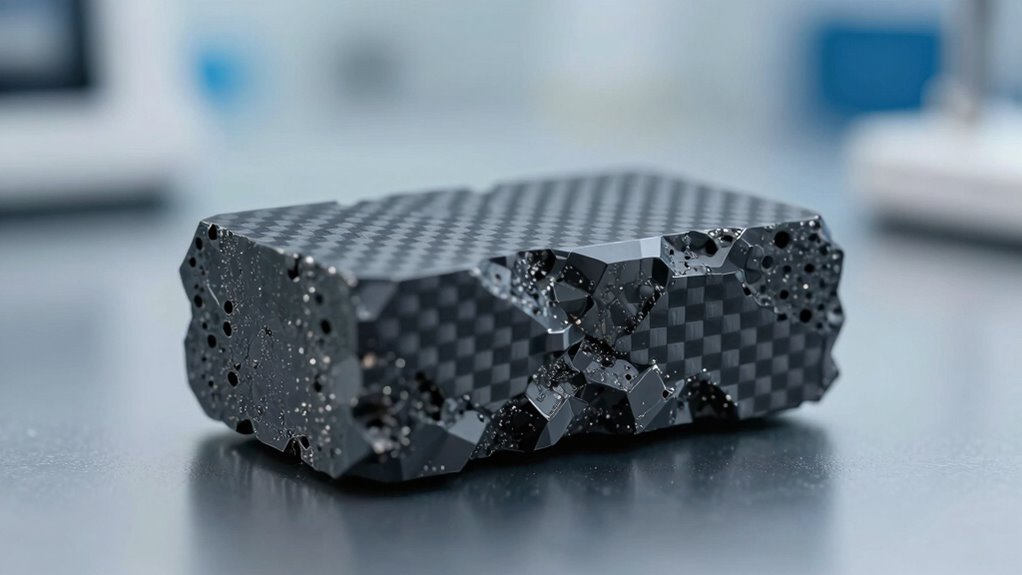

Hard carbon in sodium-ion batteries stands out because of its amorphous, disordered structure that maintains stability after many cycles. It better accommodates larger sodium ions than crystalline materials like graphite, which helps prevent capacity loss. This structure also promotes uniform SEI formation and faster ion diffusion, leading to longer-lasting, more reliable performance. If you want to understand how these features work together to improve battery durability, keep exploring further details.

Prime made for students and young adults
- Fast, free delivery for dorm and study essentials
- Prime Video and Amazon Music included
- Member-only deals
Key Takeaways
- Hard carbon’s amorphous, disordered structure allows for better accommodation of larger sodium ions than crystalline materials.
- It offers enhanced structural stability and durability over multiple charge/discharge cycles.
- Hard carbon promotes uniform SEI formation, improving battery stability and reducing capacity loss.
- Its unique electrochemical mechanisms enable higher reversible capacity and better sodium ion diffusion.
- Compared to graphite, hard carbon provides more reliable, long-lasting performance in sodium-ion batteries.
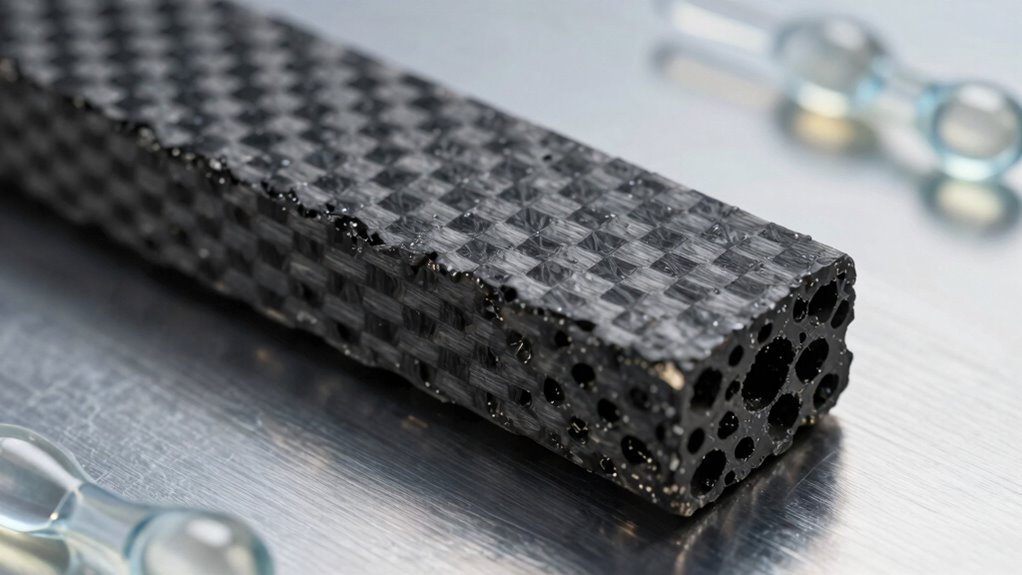
Have you ever wondered why hard carbon is gaining attention as an anode material in sodium-ion batteries? It’s because of its unique combination of properties that set it apart from traditional materials. One of the key factors is its electrode stability. Unlike other carbon-based materials, hard carbon maintains its structure even after numerous charge and discharge cycles, which is crucial for the longevity of batteries. This stability comes from its disordered, amorphous structure that accommodates sodium ions more effectively, reducing the stress and degradation typically seen in more crystalline materials. Because of this resilience, hard carbon can endure the repeated insertion and extraction of sodium ions without significant loss in performance, making it a reliable choice for long-term energy storage. Its disordered structure also promotes a more uniform SEI formation, further enhancing stability. Additionally, the amorphous structure facilitates better sodium ion diffusion, improving the overall electrochemical performance. This structural advantage is complemented by its ability to accommodate the larger sodium ions compared to lithium, which is critical for efficient energy storage. Moreover, the disordered nature of hard carbon also contributes to its flexibility in electrochemical reactions, allowing it to adapt to various operational conditions and enhancing durability. Furthermore, the disordered nature of hard carbon allows for more versatile sodium ion interactions, leading to improved electrochemical responses. But what truly makes hard carbon different is how it interacts with sodium ions at the electrochemical level. Its electrochemical mechanisms are distinct from those of other anodes like graphite. When sodium ions enter hard carbon, they don’t simply intercalate between layers; instead, they adsorb onto the surfaces of the disordered carbon matrix or occupy nanopores within the material. This multi-faceted process leads to a broader voltage profile during operation, which helps prevent issues like voltage plateaus that can cause capacity fade. The electrochemical mechanisms are also more forgiving of the larger size of sodium ions compared to lithium, allowing for better accommodation within the hard carbon structure. This results in higher reversible capacity and improved cycling stability. Moreover, the electrochemical mechanisms involved are less prone to the formation of unstable solid electrolyte interphase (SEI) layers, which are common culprits behind capacity loss in other battery chemistries. Because of its disordered structure, hard carbon fosters a more stable SEI formation, contributing to the electrode’s overall stability. This means your battery can operate efficiently over many cycles without significant performance drops. The combination of electrode stability and favorable electrochemical mechanisms makes hard carbon particularly appealing for sodium-ion batteries, especially as researchers seek cost-effective, durable, and environmentally friendly energy storage solutions. Its ability to handle sodium ions efficiently while maintaining structural integrity positions it as a promising candidate to meet the growing demand for sustainable energy storage technologies.
hard carbon anode for sodium-ion batteries
As an affiliate, we earn on qualifying purchases.
As an affiliate, we earn on qualifying purchases.
Frequently Asked Questions
How Does Hard Carbon Impact Overall Battery Lifespan?
Hard carbon enhances your sodium-ion battery’s lifespan by offering superior material durability and electrochemical stability. Its robust structure withstands repeated charge and discharge cycles, reducing degradation over time. This resilience prevents capacity loss, extending the overall battery life. You’ll benefit from improved longevity and reliable performance, making hard carbon an ideal choice for durable, long-lasting sodium-ion batteries.
Are There Environmental Concerns With Hard Carbon Production?
Imagine you’re in the year 3023, pondering today’s concerns—yes, environmental issues still matter! Hard carbon production poses environmental impact and sustainability challenges because it involves mining and processing materials that can harm ecosystems. While it offers benefits for sodium-ion batteries, manufacturers need to address these concerns by adopting greener extraction methods and recycling practices to reduce the ecological footprint, ensuring a more sustainable future for energy storage.
What Are the Cost Differences Between Hard Carbon and Other Anodes?
You’ll find that the price comparison between hard carbon and other anodes varies, primarily due to material availability and processing costs. Hard carbon generally costs more than graphite, but its unique properties can justify the expense. Since its raw materials are more abundant and less expensive than some alternatives, production costs are lower, potentially making it a more cost-effective choice in the long run for sodium-ion batteries.
How Scalable Is Hard Carbon Manufacturing for Commercial Use?
You’ll find that hard carbon manufacturing is quite scalable for commercial use, especially since raw material availability is high—abundant biomass and waste materials feed production. With existing industrial processes, scaling up can increase output considerably without major technological hurdles. In fact, the global demand for sodium-ion batteries is projected to grow by over 20% annually, making the ability to scale hard carbon production vital for meeting future energy storage needs.
Can Hard Carbon Be Recycled Efficiently After Battery End-Of-Life?
You can recycle hard carbon from sodium-ion batteries, but recycling challenges exist due to material degradation during use. Over time, the hard carbon’s structure can break down, making it harder to recover and reuse effectively. Efficient recycling requires advanced processes to minimize material loss and restore performance. While possible, current methods need further development to become truly sustainable and economically viable for large-scale end-of-life hard carbon battery recycling.
Conclusion
In the world of sodium-ion batteries, hard carbon stands out like a resilient traveler steering through rough terrains. Its unique structure allows for efficient sodium storage, making it a game-changer. Understanding what sets it apart helps you appreciate its potential to revolutionize energy storage. As you explore this material, remember—hard carbon isn’t just another component; it’s the backbone that could support a more sustainable future, like a sturdy bridge connecting innovation and practicality.
Halloween Picks
halloween
As an affiliate, we earn on qualifying purchases.