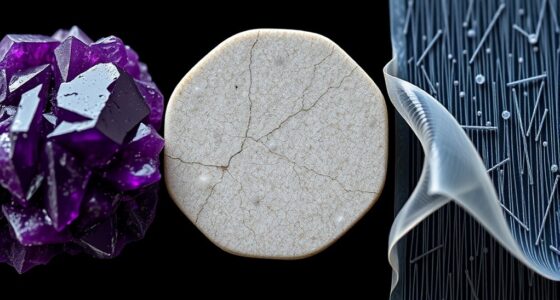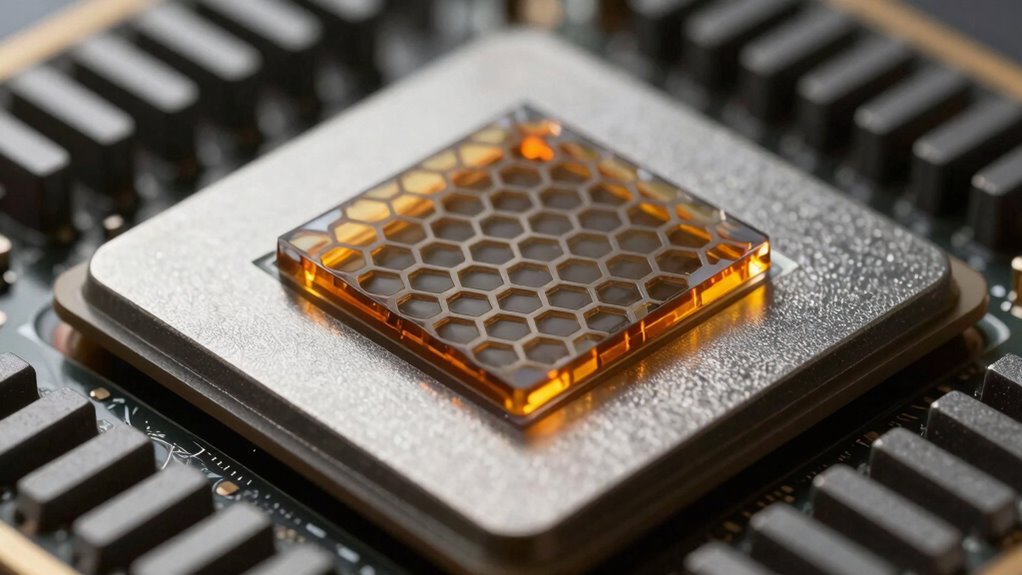

The performance of thermally conductive adhesives comes from a combination of their specially formulated materials. They blend thermally conductive fillers, like ceramic particles, with polymer matrices to guarantee efficient heat transfer while maintaining electrical insulation. These adhesives are designed to be durable and environmentally stable, resisting degradation in tough conditions. They also offer flexibility for various manufacturing needs, boosting system cooling and safety. To discover how these formulas are continually improving, keep exploring further.
Key Takeaways
- Performance derives from the combination of thermally conductive fillers and polymer matrices that facilitate heat transfer.
- Filler materials, such as ceramic particles, create efficient thermal pathways within the adhesive.
- Electrical insulating properties ensure safe operation without compromising thermal conductivity.
- Environmental stability and durability maintain consistent performance under varying conditions.
- Continuous formulation improvements enhance thermal performance, adhesion, and long-term reliability.

One of the key advantages of these adhesives is their electrical insulating property. Unlike metallic thermal interface materials, these adhesives prevent electrical currents from passing through the bonded interface. This means you can use them safely in sensitive electronic circuits without risking short circuits or electrical interference. This electrical insulation simplifies assembly processes and enhances device safety, especially in complex electronic assemblies where maintaining electrical isolation is essential.
Electrical insulation in adhesives ensures safe, interference-free connections within sensitive electronic circuits.
Environmental stability is another vital factor that determines the performance of thermally conductive adhesives. Devices are often exposed to varying temperatures, humidity, and mechanical stresses. A high-quality adhesive maintains its thermal conductivity and adhesion properties despite these environmental challenges. It resists degradation, such as cracking or delamination, which can compromise heat transfer and electrical insulation over time. By choosing adhesives with excellent environmental stability, you guarantee your electronics stay protected and perform consistently, whether in consumer gadgets, automotive systems, or industrial equipment. Additionally, their long-term reliability is crucial for applications where maintenance or replacement is difficult. Incorporating materials with environmental resilience further enhances their durability in demanding conditions. The ongoing research into fillers and polymers continues to push the boundaries of what these adhesives can achieve in terms of performance. Moreover, advancements in adhesive formulations are aimed at improving their overall durability and thermal management capabilities.
The formulation of thermally conductive adhesives often involves a careful balance of materials. They typically incorporate thermally conductive fillers like ceramic particles, which provide efficient heat transfer, and a polymer matrix that holds everything together. When applied, these adhesives form a thin, uniform layer that bridges heat-generating components with heat sinks or spreaders. Their flexibility and ease of application make them ideal for both small-scale and large-scale manufacturing. Additionally, advancements in filler materials and polymer chemistry continue to improve their thermal performance.
Ultimately, the strength of thermally conductive adhesives lies in their ability to combine thermal performance with electrical insulation and environmental resilience. This trifecta ensures that your electronic systems stay cool, safe, and reliable, even under demanding conditions. As technology advances, these adhesives continue to evolve, offering even better insulation, stability, and ease of use, making them indispensable in the pursuit of high-performance, durable electronics.
thermally conductive adhesive for electronics
As an affiliate, we earn on qualifying purchases.
As an affiliate, we earn on qualifying purchases.
Frequently Asked Questions
How Do Temperature Fluctuations Affect Adhesive Performance Over Time?
Temperature fluctuations can cause the adhesive to expand and contract due to thermal expansion, which may weaken its bond over time. If the adhesive isn’t compatible with the materials you’re bonding, repeated temperature changes can lead to delamination or cracking. To guarantee long-term performance, you need to select an adhesive with good material compatibility and flexibility, allowing it to withstand thermal stresses without degrading or losing adhesion.
Are Thermally Conductive Adhesives Suitable for Outdoor or Harsh Environments?
Yes, thermally conductive adhesives are suitable for outdoor or harsh environments. You’ll find that their outdoor durability withstands weather elements like rain, UV rays, and temperature swings. Additionally, their chemical resistance helps prevent degradation from exposure to pollutants, chemicals, or moisture. This makes them ideal for applications where long-term performance in extreme conditions is essential, ensuring reliable thermal management and adhesion over time.
What Are the Environmental Impacts of Different Adhesive Formulations?
You’re hitting the nail on the head by considering environmental impacts. Eco-friendly formulations reduce toxicity concerns and lessen harmful effects on ecosystems. Some adhesives use greener ingredients, minimizing pollution and health risks, while others rely on volatile organic compounds (VOCs) that can harm air quality. Choosing environmentally conscious options helps protect the planet and aligns with sustainable practices. In the long run, it’s a win-win for both performance and the environment.
How Does Curing Time Influence Thermal Conductivity?
Curing time directly affects thermal conductivity by influencing curing consistency and temperature stability. If you cure an adhesive too quickly, it may not develop ideal bond strength or thermal pathways, reducing heat transfer efficiency. Conversely, a controlled, consistent curing process ensures stable temperature conditions and maximizes thermal conductivity. As a result, managing curing time carefully helps you achieve reliable, high-performance adhesive bonds that efficiently conduct heat.
Can These Adhesives Be Recycled or Reused?
Think of thermally conductive adhesives as delicate bridges between components—once bonded, they’re challenging to undo. Recycling challenges stem from their strong chemical bonds and mixed materials, making reuse potential limited. While some formulations allow partial reprocessing, most adhesives aren’t designed for easy recycling. You’ll find that reusing them requires careful separation, and often, their performance drops after reapplication. So, their eco-friendly comeback is more of a hopeful whisper than a solid reality.
Conclusion
You now know the power of pairing performance with precision in thermally conductive adhesives. By blending bold bonding with brilliant heat transfer, you can build better, more reliable devices. Remember, choosing the right adhesive isn’t just about sticking; it’s about seamlessly syncing thermal transfer and structural strength. So, step confidently into your projects, and let these thermally talented adhesives transform your tech into a masterpiece of heat management and hearty hold.