Organosilica membranes are changing the game by offering highly customizable and precise transport of gases and liquids. You can tailor pore sizes, surface chemistry, and permeability for specific separation needs. Their advanced fabrication techniques guarantee consistent quality and easy integration into existing systems. These membranes operate efficiently at lower pressures and temperatures, saving energy and costs. If you want to explore how their innovative features can benefit your applications, there’s more to discover below.
Key Takeaways
- Organosilica membranes offer tunable pore sizes and surface chemistry for highly selective gas and liquid separations.
- Advanced fabrication techniques enable precise customization to target specific contaminants or molecules.
- Their hybrid structure provides a balance of flexibility, stability, and chemical versatility in transport processes.
- Operating at lower pressures and temperatures reduces energy consumption and enhances process efficiency.
- Scalability and integration ease make them suitable for diverse environmental applications like carbon capture and wastewater treatment.
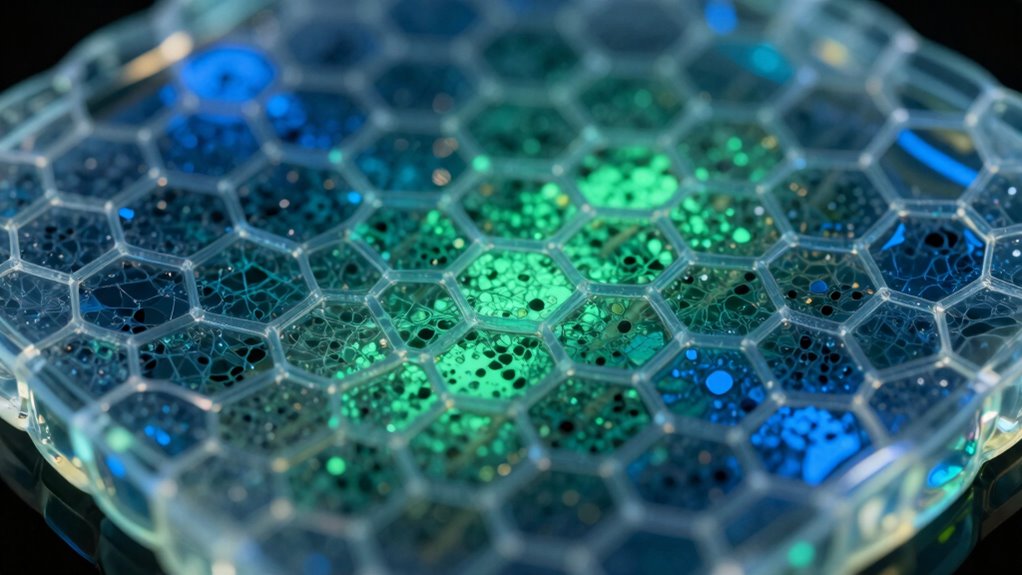
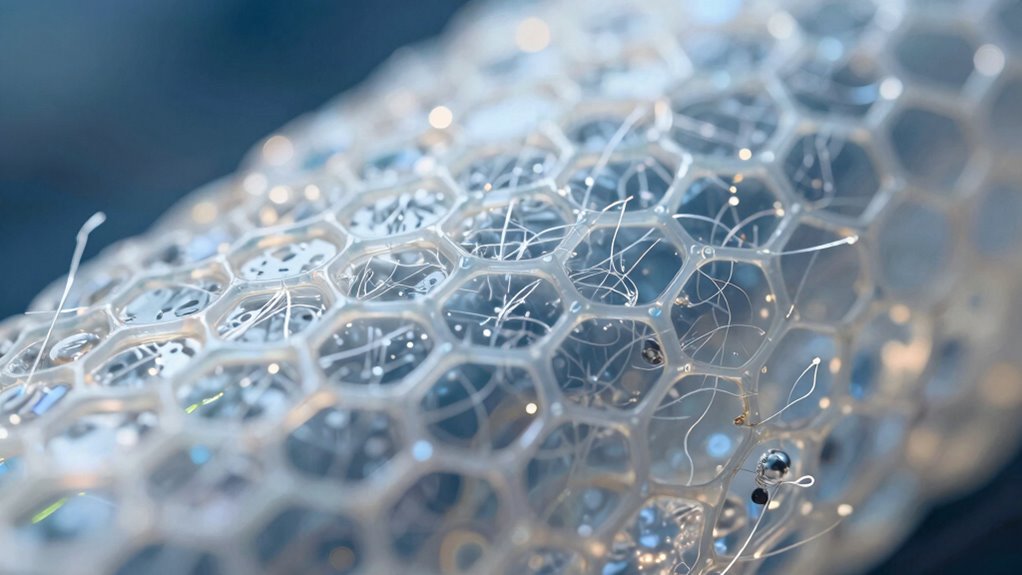
Organosilica membranes are advanced materials designed to efficiently separate gases and liquids based on molecular size and properties. These membranes are the result of innovative advanced fabrication techniques that allow precise control over their pore sizes and chemical structures. This level of customization makes them highly effective for a range of applications, especially in areas where selective transport is vital. As you explore their potential, you’ll discover that their unique composition combines organic and inorganic components, offering both flexibility and stability. This hybrid nature enables organosilica membranes to withstand harsh conditions, making them suitable for demanding processes.
Organosilica membranes offer precise, customizable separation with organic-inorganic stability for demanding, eco-friendly applications.
In the domain of environmental applications, these membranes shine brightly. You can leverage their capabilities to improve processes like carbon capture, wastewater treatment, and air purification. For example, in carbon capture, organosilica membranes selectively trap CO₂ from industrial exhaust gases, reducing greenhouse emissions. Their precision in molecular separation means you can achieve higher purity levels with less energy expenditure compared to traditional methods. Similarly, in wastewater treatment, these membranes efficiently remove organic pollutants and other contaminants, helping to protect water sources and meet regulatory standards. Their robustness allows for frequent cleaning and long-term operation, which is essential in environmental management. Additionally, their customizable properties enable you to optimize membranes for specific environmental challenges and regulatory requirements.
The advanced fabrication processes behind organosilica membranes give you the advantage of tailoring their properties to specific needs. You can modify pore sizes, surface chemistry, and permeability to optimize performance for particular gases or liquids. This level of design flexibility means you’re not limited to a one-size-fits-all solution. Instead, you can develop membranes suited for niche applications, whether for separating hydrocarbons, removing toxins, or capturing volatile compounds. Their chemical versatility also means they can be integrated into existing systems without extensive modifications, making adoption more straightforward and cost-effective. Moreover, these fabrication techniques allow for scalable production, ensuring consistent quality across batches. Their chemical versatility also means they can be integrated into existing systems without extensive modifications, making adoption more straightforward and cost-effective.
Furthermore, the environmental benefits of using organosilica membranes are substantial. They often operate at lower pressures and temperatures, decreasing energy consumption and operational costs. Their durability ensures fewer replacements, minimizing waste and environmental impact. As you consider sustainable technologies, these membranes stand out as promising options, supporting greener industrial practices. They also offer the potential to improve the overall efficiency of separation processes, leading to less resource use and a smaller ecological footprint.
organosilica membrane gas separation
As an affiliate, we earn on qualifying purchases.
As an affiliate, we earn on qualifying purchases.
Frequently Asked Questions
How Do Organosilica Membranes Compare to Other Membrane Materials?
You’ll find organosilica membranes excel over other materials because of their superior chemical stability and pore customization. They resist harsh chemicals better, making them ideal for demanding applications. Plus, you can tailor their pore sizes precisely to target specific molecules, enhancing selectivity. Compared to traditional membranes, organosilica offers more versatility and durability, ensuring consistent performance and longevity in various industrial processes.
What Are the Main Challenges in Scaling up Production?
You face a mountain of challenges in scaling up production, like trying to carve a delicate sculpture from marble. Manufacturing scalability demands precise control over membrane synthesis, which can be tricky and costly. To achieve cost reduction, you must refine manufacturing processes, optimize material use, and develop robust, reproducible methods. Overcoming these hurdles guarantees you can transform lab successes into practical, widespread applications without compromising quality or efficiency.
Can Organosilica Membranes Be Used in Extreme Temperature Conditions?
Yes, organosilica membranes can be used in extreme temperature conditions due to their excellent thermal stability and chemical resilience. You’ll find these membranes maintain performance under high temperatures and harsh chemical environments, making them suitable for demanding industrial applications. Their robustness ensures reliable operation, helping you attain efficient separation processes even in challenging conditions. These qualities make organosilica membranes a versatile choice for extreme temperature and chemically aggressive environments.
How Does Membrane Fouling Affect Long-Term Performance?
Imagine you’re back in the era of steam engines—membrane fouling gradually clogs your system, reducing efficiency over time. Fouling, especially biofouling, hampers long-term performance by blocking pores and decreasing permeability. To combat this, you need effective biofouling mitigation strategies and regular cleaning protocols. Without these, your membrane’s selectivity drops, and the system’s lifespan shortens, jeopardizing your process’s reliability and productivity.
Are There Environmental Impacts Associated With Their Manufacturing?
Manufacturing organosilica membranes does have environmental impacts, mainly due to manufacturing emissions and resource use. You need to comply with environmental regulations to minimize these effects, such as controlling volatile organic compounds and greenhouse gases released during production. Implementing cleaner production techniques can reduce pollution, but some environmental footprint remains. Being mindful of these impacts helps guarantee sustainable practices and aligns with regulations, ultimately protecting ecosystems and public health.
Conclusion
You now see how organosilica membranes are revolutionizing selective transport, blending organic and inorganic features for tailored performance. Their versatility makes them a game-changer in various applications, from gas separation to catalysis. As you explore further, remember that the key to innovation is thinking outside the box—these membranes prove that breaking the mold can lead to remarkable breakthroughs. Keep an eye on this exciting field; the future’s bright when you’re willing to push boundaries.