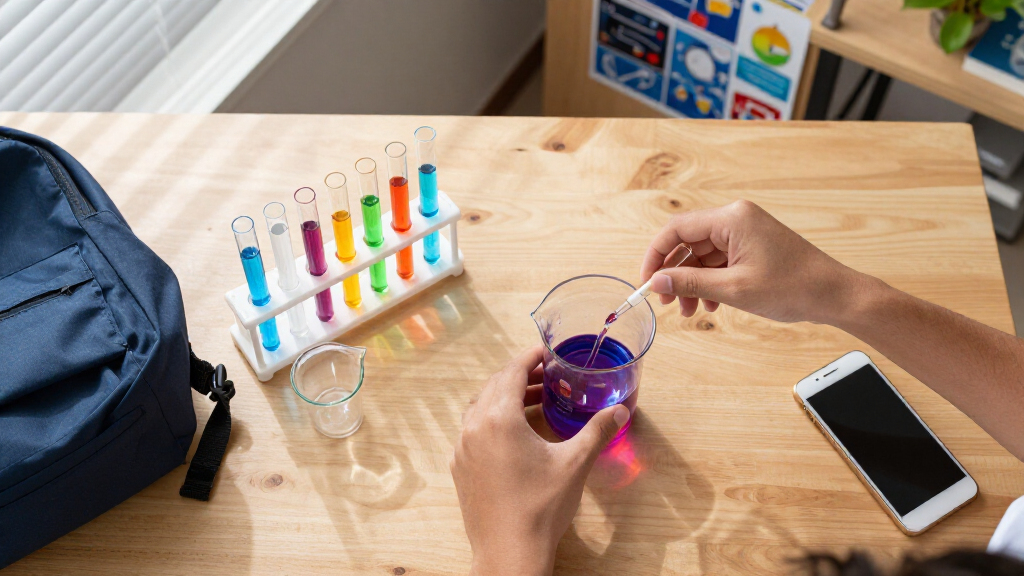

Finding student-friendly chemistry lab kits that balance real science with safe, frustration-free use comes down to one question: how much depth does the student actually want? The Thames & Kosmos Chem C2000 (V 2.0) earns my best overall spot because its 250 experiments, real glassware, and full-color manual hit the sweet spot between a serious curriculum tool and a kit a middle schooler can run with minimal supervision. For younger students, the National Geographic Amazing Chemistry Set delivers over 100 safe, visually exciting experiments at a friendlier price, while the Chem C3000 is the clear choice for high schoolers preparing for AP-level work. The main tradeoff in this category is safety and independence versus real lab equipment and complexity — the premium kits include alcohol burners and glassware that demand adult involvement. Read on for the full breakdown of all seven kits.

Prime made for students and young adults
- Fast, free delivery for dorm and study essentials
- Prime Video and Amazon Music included
- Member-only deals
Key Takeaways
- Thames & Kosmos owns the serious-student segment: the C1000, C2000, and C3000 form a genuine skill ladder, and the C2000 is the best stopping point for most middle and high schoolers.
- National Geographic kits dominate the under-$40 price tier, but only the 100+ experiment version offers enough depth to hold a student’s interest past the first weekend.
- Every kit here uses non-hazardous or household-supplemented chemicals, which means the premium sets fill the gap with real lab technique — titration, filtration, and flame work — rather than dangerous reactions.
- The Ooze Labs Chemistry Station is the only true standalone option for ages 6–8; every other kit assumes at least a 10-year-old’s reading level and fine motor control.
- Expect restocking costs: kits with 250+ experiments consume their reagents faster than expected, so factor refill availability into the real price of the C2000 and C3000.


| student-friendly chemistry lab kit | Number of Experiments | Brand | Age Range |
|---|---|---|---|
| Thames & Kosmos Ooze Labs Chem | ~20 | Thames & Kosmos | 6 years to adult (72-300 months) |
| National Geographic Amazing Ch | 100+ | National Geographic | 8-12 years |
| Thames & Kosmos Chem C3000 Che | 333 | Thames & Kosmos | 12+ |
| Thames & Kosmos Chem C2000 | 250 | Thames & Kosmos | 11+ |
| National Geographic Junior Che | 50 | Blue Marble (National Geographic) | 4 years and up |
| National Geographic Chemistry | 45 | National Geographic | — |
| Thames & Kosmos Chem C1000 | 125 | — | 10+ |
More Details on Our Top Picks
Thames & Kosmos Ooze Labs Chemistry Station Science Experiment Kit
This option stands out as the friendliest entry point in the lineup, thanks to its 20 non-hazardous experiments built around slime, fizzing reactions, and pH testing. Compared with the National Geographic Junior Chemistry Set, it skews slightly older and feels more like a real lab, with a dedicated station format, multiple vessels, and experiment cards that teach kids how to follow a procedure. The tradeoff is capacity: the National Geographic Amazing Chemistry Set offers five times the experiments for a similar price, so a child who burns through activities quickly may outgrow this one within weeks. Where this pick makes the most sense is a first chemistry kit for an 8-to-10-year-old who wants the look and feel of a lab without any chemical handling worries. Setup and cleanup take real time, so a parent should plan to be involved.
Pros:- All 20 experiments are non-hazardous, removing chemical-handling worries entirely
- Station format with real lab vessels and tools builds authentic lab habits
- Detailed experiment cards and manual make procedures easy to follow
- Colorful, playful activities that hook kids who aren’t yet science-obsessed
Cons:- Only about 20 experiments — far fewer than competing sets at this price
- Station setup and cleanup are time-consuming after every session
- Requires adult supervision for younger children despite the safe materials
Best for: Parents buying a first chemistry kit for ages 6-10 who want zero chemical hazards and a play-station format
Not ideal for: Kids ages 10 and up or anyone who wants long-term experiment volume — 20 activities will run out fast compared to 100+ experiment sets
- Brand:Thames & Kosmos
- Number of Experiments:~20
- Hazard Level:Non-hazardous
- Age Range:6 years to adult (72-300 months)
- Key Activities:Slime-making, fizzing reactions, chromatography, pH testing
- Includes:Lab vessels, tools, experiment cards, manual
- UPC:814743013346
Our verdict“Buy this for a younger child’s first taste of chemistry; skip it if your kid is ready for serious experiment volume.”
National Geographic Amazing Chemistry Set with 100+ Experiments for Kids Ages 8-12
This set earns the top spot because it hits the sweet spot between volume, safety, and accessibility for the widest range of students. With over 100 experiments plus 85 bonus activities, it dramatically outlasts the Thames & Kosmos Ooze Labs kit while staying far less intimidating than the Chem C3000. The included test tubes, beakers, and pipettes are genuine tools rather than toys, which matters for kids who want to feel like real scientists before high school. Compared with the Chem C2000, this option skips the alcohol burner and harsher chemicals, making it something an 8-year-old can work through with light supervision rather than constant oversight. The compromises: some experiments need household items you’ll have to scrounge for, and the printed safety guidance is thinner than I’d like — parents should fill that gap themselves.
Pros:- Over 100 experiments plus 85 bonus activities deliver exceptional longevity
- Real scientific tools (test tubes, beakers, pipettes) rather than toy substitutes
- Award-winning set that genuinely engages kids across a wide age band
- Big visual payoffs like color-changing solutions and glowing test tubes keep motivation high
Cons:- Some experiments require household items not included in the box
- Safety instructions are sparse compared to Thames & Kosmos manuals
- Younger children in the 8-9 range still need active adult supervision
Best for: Families with kids ages 8-12 who want the most experiments per dollar with real lab tools but no dangerous chemicals
Not ideal for: Students preparing for high school or AP chemistry — the experiments lack the depth and rigor of the Chem C2000 or C3000
- Brand:National Geographic
- Number of Experiments:100+
- Bonus Experiments:85
- Age Range:8-12 years
- Includes:Test tubes, beakers, pipettes, experiment materials, guide
- Highlight Activities:Color-changing solutions, glowing test tubes, crystal growth
Our verdict“The safest default purchase for most families — nothing else matches its experiment count and broad age appeal at this price.”
Thames & Kosmos Chem C3000 Chemistry Set, 333 Experiments
This is the serious-student option, and nothing else in this roundup comes close to its depth. With 333 experiments spanning inorganic, organic, and electrochemistry and a 192-page manual, the Chem C3000 is essentially a middle-school-to-high-school curriculum in a box. Compared with its sibling the Chem C2000, the C3000 adds roughly 80 more experiments and pushes into genuinely advanced territory — but that rigor is exactly why most families should skip it. The chemicals require careful handling and constant adult supervision, and a complete beginner will be overwhelmed within the first chapter. Where this set shines is homeschool chemistry or high school preparation, where a motivated 12-plus-year-old (with a committed adult) can work through it over a full school year. This is an investment in depth, not entertainment, and the price reflects that.
Pros:- 333 experiments covering inorganic, organic, and electrochemistry — true curriculum depth
- Real lab equipment and authentic chemicals, not simplified substitutes
- 192-page illustrated manual functions almost like a textbook
- Excellent long-term preparation for formal high school chemistry courses
Cons:- Requires adult supervision at all times due to real chemical handling
- Far too complex and expensive for beginners or casual interest
- Chemicals need careful storage and disposal planning
Best for: Homeschoolers and motivated students ages 12+ preparing for high school chemistry who have an adult willing to supervise
Not ideal for: Casual buyers and younger kids — it’s expensive, chemical-intensive, and genuinely complex for anyone without prior lab experience
- Brand:Thames & Kosmos
- Number of Experiments:333
- Pieces:103
- Age Range:12+
- Manual Pages:192
- Topics Covered:Inorganic, organic, and electrochemistry
- Safety Standard:EN 71-4
Our verdict“Buy this only for a dedicated student ready for near-classroom rigor; everyone else should start with the C2000 or a National Geographic set.”
Thames & Kosmos Chem C2000 (V 2.0) Intermediate Chemistry Set
The Chem C2000 occupies the gap nobody else in this lineup covers: it’s the bridge between play-focused kits and the Chem C3000‘s curriculum-grade depth. Its alcohol burner is the defining feature — it introduces heat-based reactions, which the National Geographic Amazing Chemistry Set deliberately avoids, and that single addition changes what a student learns about reaction control and lab discipline. The 128-page full-color manual walks through 250 experiments with a structure that builds toward high school chemistry without the C3000’s intimidating pace. The tradeoffs are real: heat plus chemicals means constant adult supervision is non-negotiable, and a true beginner who has never measured reagents will struggle in the early chapters. This pick makes the most sense for a student who has already outgrown a basic set like the Chem C1000 and is visibly ready for more demanding work.
Pros:- 250 experiments provide serious depth at a lower price than the C3000
- Alcohol burner enables genuine heat-based reactions rarely found in kid kits
- Professional-quality lab equipment including safety goggles
- 128-page full-color manual with clear step-by-step progression toward high school chemistry
Cons:- Heat-based experiments are unsafe without close adult supervision
- Too complex for complete beginners — assumes some lab familiarity
- Sits in an awkward middle: cheaper sets entertain more, the C3000 goes deeper
Best for: Students ages 11+ who have finished a beginner chemistry set and are ready for heat-based reactions and more rigorous procedures
Not ideal for: First-time chemistry kids and hands-off households — the alcohol burner and chemical handling demand active adult involvement every session
- Brand:Thames & Kosmos
- Number of Experiments:250
- Age Range:11+
- Manual Pages:128 (full-color)
- Includes:Real lab equipment, alcohol burner, safety goggles, chemicals
- Version:V 2.0
Our verdict“The right upgrade for a student between beginner kits and the C3000 — provided an adult is committed to supervising every session.”
National Geographic Junior Chemistry Set with 50 Experiments for Kids
This set solves a problem the rest of the lineup doesn’t touch: chemistry for kids who can’t read yet. Rated for ages 4 and up, it relies on household items and over 20 kid-sized lab tools, so there’s nothing hazardous to store or worry about. Compared with the Thames & Kosmos Ooze Labs Chemistry Station, the experiments here are simpler and the illustrated instructions are designed for pre-readers, with a parent reading aloud — that makes it a true first-science experience rather than a scaled-down big-kid kit. Fifty experiments is generous for this age group, though many are variations on a theme. The obvious limitation: an 8-year-old will find it babyish within days, which is exactly when the National Geographic Amazing Chemistry Set becomes the better buy. As a low-cost, low-risk introduction for the youngest scientists, this pick makes the most sense.
Pros:- Age rating starts at 4, the youngest entry point in this lineup
- 50 experiments is a large count for a preschool-oriented kit
- Uses safe household items — no chemicals to buy, store, or dispose of
- Illustrated instructions pre-readers can follow with adult help
Cons:- Too simple for children beyond early elementary school
- Limited to basic household chemicals, so no real chemistry depth
- Requires a parent involved in nearly every experiment
Best for: Parents of ages 4-7 who want a safe, supervised first science experience using everyday household items
Not ideal for: Kids 8 and up — the experiments are too basic, and older children will quickly find it repetitive and babyish
- Brand:Blue Marble (National Geographic)
- Number of Experiments:50
- Age Range:4 years and up
- Lab Tools Included:20+ kid-friendly tools including test tubes and goggles
- Materials Required:Common household items
- Educational Objective:STEM
- Model Number:NGJRCHEMT
Our verdict“A low-risk first chemistry kit for the under-7 crowd — move on to a bigger set once your child hits age 8.”
National Geographic Chemistry Set with 45 Experiments for Kids 8-12
Between the two kits in this lineup aimed at the 8-to-12 age band, this one is the easier entry point. The 45 experiments lean toward spectacle — volcanoes, geysers, rocket launches — which keeps younger kids engaged in a way that textbook-style chemistry rarely manages. Compared with the Thames & Kosmos Chem C1000, this set trades real glassware and formal lab technique for approachable, illustrated instructions that an eight-year-old can actually follow, and that’s the right call for this audience. It’s also a smaller, cheaper commitment than the National Geographic Amazing Chemistry Set’s 100+ experiments, which can overwhelm a first-time scientist. The tradeoff is depth: none of these experiments build toward a progressive curriculum, and several still require an adult nearby. Think of this as chemistry as play, not chemistry as practice.
Pros:- 45 varied experiments with dramatic results that keep young kids engaged
- Illustrated, kid-friendly instructions that early readers can follow with minimal help
- Gentle introduction to STEM concepts without any hazardous chemicals
- Lower price point than larger National Geographic and Thames & Kosmos sets, making it a low-risk first purchase
Cons:- Experiments are one-off spectacles rather than a structured chemistry curriculum
- Several activities still require adult supervision, so it isn’t fully independent play
Best for: Parents of 8-to-10-year-olds who want a fun, low-pressure first chemistry set that sparks curiosity without demanding prior lab skills
Not ideal for: Middle schoolers and up — the experiment style is too elementary and won’t build the lab fundamentals they need for school science
- Number of Experiments:45
- Recommended Age:8-12
- Brand:National Geographic
- Exclusive To:Amazon
- Experiment Types:Volcano eruptions, geysers, rocket launches
- Instruction Style:Illustrated, kid-friendly
Our verdict“Buy this for a younger child whose first taste of chemistry should be fun and flashy; skip it if the student is ready for real lab work.”
Thames & Kosmos Chem C1000 (V 2.0) Beginner Chemistry Set for Ages 10+
This is where chemistry stops being a magic show and starts being a discipline. The Chem C1000 ships with genuine lab equipment — test tubes, graduated beakers, a funnel, glass tubing, and safety goggles — plus an 80-page manual that teaches technique alongside the 125 experiments. Compared with the National Geographic 45-experiment set, the difference is philosophical: invisible inks, electrolysis, and crystal growing here are framed as lessons in chemical principles, not just visual thrills. It’s also the sensible stepping stone before the Chem C2000, which adds an alcohol burner and assumes more confidence; the C1000 lets a student build fundamentals first. The tradeoff is responsibility — this kit contains chemicals like copper(II) sulfate that demand careful handling, careful storage, and an involved adult. That supervision burden is the price of authenticity.
Pros:- Authentic lab equipment including test tubes, beakers, glass tubing, and safety goggles
- 80-page manual explains both the how and the chemistry behind each of the 125 experiments
- Builds a proper foundation that prepares students for the Chem C2000 and C3000
- Meets EN 71-4 safety standards for experimental chemistry sets
Cons:- Chemicals such as copper(II) sulfate and calcium hydroxide require careful handling and secure storage
- Genuinely too advanced for younger children without a guiding adult
- Feels slow and technical for kids who mainly want dramatic reactions
Best for: Students around 10 and up who are genuinely interested in chemistry and ready to learn real lab procedure, with a parent willing to supervise
Not ideal for: Kids under 10 or families wanting mess-free independent play — the real chemicals and technique-focused experiments require adult involvement
- Number of Experiments:125
- Age Range:10+
- Manual:80 pages, illustrated with safety guidance
- Key Experiments:Invisible inks, electrolysis, crystal growing
- Equipment:Test tubes, graduated beakers, funnel, droppers, copper wire, rubber stoppers, glass tube, test tube brush, measuring spoon, safety goggles
- Chemicals Included:Sodium carbonate, potassium hexacyanoferrate(II), calcium hydroxide, ammonium iron(III) sulfate, copper(II) sulfate, citric acid, litmus powder
- Safety Standard:EN 71-4
Our verdict“The right pick for a ~10+ student who wants to learn chemistry properly rather than just watch it — provided an adult is on hand.”
How We Picked
I judged each kit against four criteria that matter most to students and parents: experiment count versus actual learning value, equipment quality, age-appropriate independence, and total cost of ownership. A kit advertising 100 experiments built from the same three reactions scores lower than one with 50 experiments that each teach a distinct concept, like the difference between National Geographic’s volume-focused sets and Thames & Kosmos’s curriculum-style manuals.
Ranking also reflected how well each kit grows with the student. The Thames & Kosmos C-series climbed the list because the C1000, C2000, and C3000 map cleanly onto grade levels and reuse foundational equipment, while one-and-done kits with disposable components landed lower despite strong first impressions. Safety labeling, manual clarity, and the availability of refills rounded out the evaluation.
| student-friendly chemistry lab kit | Brand |
|---|---|
| Thames & Kosmos Ooze Labs Chem | Thames & Kosmos |
| National Geographic Amazing Ch | National Geographic |
| Thames & Kosmos Chem C3000 Che | Thames & Kosmos |
| Thames & Kosmos Chem C2000 | Thames & Kosmos |
| National Geographic Junior Che | Blue Marble (National Geographic) |
| National Geographic Chemistry | National Geographic |
| Thames & Kosmos Chem C1000 | — |
Factors to Consider When Choosing Student-friendly Chemistry Lab Kits
The right chemistry kit depends less on specs and more on who will open it — and how often. These are the factors that actually change the buying decision.Match the Kit to the Student’s Reading Level, Not Just Their Age
Age ratings on chemistry kits are loose guides, but reading comprehension is the real gatekeeper. A 10-year-old who reads confidently can handle the C1000’s manual-driven experiments independently, while a struggling reader the same age will abandon even the fanciest kit within a week. Kits aimed at ages 6–8, like the Ooze Labs station, lean on visual instructions and dramatic results precisely because the text is minimal. Before buying, skim sample manual pages from the manufacturer’s website — if the student can’t follow a numbered procedure alone, either step down a tier or plan on active adult participation. The most common mistake I see is parents buying ‘aspirational’ kits two levels ahead, which produces one exciting afternoon and then a shelf ornament.
Consumables Run Out Before Curiosity Does
Every kit in this category ships with a finite supply of chemicals, test strips, and indicator solutions, and the experiment count on the box assumes careful measuring. A student who doubles the recommended amounts — which most will — can exhaust a 45-experiment kit’s reagents in a dozen sessions. Thames & Kosmos sells refills and designates which experiments use household substitutes like vinegar and baking soda, which stretches value considerably. National Geographic’s sets rely more heavily on common household items, making them cheaper to extend but less ‘real lab’ in feel. Factor a $15–30 annual refill budget into any kit above the beginner tier, and check refill availability before you buy, not after.
Real Equipment Versus Plastic Convenience
There is a visible quality cliff between toy chemistry sets and lab-style kits, and it shows up in the glassware. Plastic test tubes and graduated cylinders survive drops and dishwasher trips but can’t go near a flame, which caps what experiments are possible. Glassware and an alcohol burner, as found in the C2000 and C3000, unlock filtration, distillation, and heat-driven reactions that are genuinely closer to school lab work — but they require a supervised, cleared workspace and a student mature enough to respect hot glass. If the goal is entertainment with a science flavor, plastic is the honest choice. If the goal is preparing for middle or high school lab classes, glass pays for itself in learned technique.
Safety Margins: What ‘Non-Hazardous’ Actually Means
Every kit here is marketed as safe, but the label hides a spectrum. Non-hazardous sets from National Geographic and the Ooze Labs line use food-grade or household-adjacent chemicals, meaning the worst realistic outcome is a stained countertop. The intermediate and advanced Thames & Kosmos kits introduce heat sources, glass breakage risk, and low-concentration acids that require goggles, gloves, and ventilation — appropriate for a 12+ student, not a curious 8-year-old sibling nearby. My advice: buy goggles regardless of the kit, treat the age floor as firm rather than flexible, and assign the kit a permanent non-kitchen-table location if it includes a burner. Safety complaints in this category almost always trace to supervision gaps, not product defects.
The Upgrade Path Question
Think about whether this kit is a one-off gift or the start of a multi-year interest. The Thames & Kosmos C-series is the only lineup here with a built-in progression: a student can move from C1000 to C2000 to C3000 while reusing core equipment and building on prior experiments, which softens each upgrade’s cost. National Geographic’s sets overlap heavily with each other — a student who completes the 45-experiment version will recognize most of the 50-experiment junior set’s content. If you suspect long-term interest, spending more upfront on a mid-tier kit like the C2000 avoids rebuying similar beginner content within a year. If this is a birthday experiment in every sense, the cheaper overlapping sets are fine.
Frequently Asked Questions
Which kit is best if my child will work mostly unsupervised?
For independent work, the National Geographic Amazing Chemistry Set and the Thames & Kosmos C1000 are the safest bets. Both use non-hazardous reagents and include step-by-step manuals a strong reader can follow alone, with no flames or breakable glass in play. The C2000 and C3000 should not be run unsupervised by anyone under 16 because of the alcohol burner and glassware, and even the Ooze Labs station benefits from an adult nearby for cleanup. A useful rule: any kit with a heat source gets supervision, any kit without one can be independent for a responsible student. Building that habit early also prepares students for real school labs later.
Is the Chem C3000 worth it over the C2000 for a high school student?
It depends on the student’s trajectory. The C3000 adds roughly 80 more experiments, more specialized equipment, and content that approaches first-year chemistry coursework, which makes it worthwhile for a student who has already burned through a mid-tier kit or is preparing for AP Chemistry. For a high schooler just discovering an interest in chemistry, the C2000 actually teaches about 80% of the same foundational techniques at roughly half the price, and its experiments are less intimidating to set up. The C3000 also assumes more manual dexterity and patience with multi-step procedures, so a reluctant science student may stall in it. My honest take: buy the C3000 only when the C2000 would clearly be too easy.
Do these kits actually teach chemistry, or are they just sensory play?
The lineup splits cleanly on this. The Ooze Labs station and the National Geographic junior sets lean toward guided discovery — color changes, fizzing, slime — which builds scientific curiosity but teaches few transferable techniques. The Thames & Kosmos C-series is different: students learn to measure precisely, record observations, follow multi-step procedures, and understand why reactions happen through manual explanations tied to each experiment. If a parent or teacher asks follow-up questions — what did you measure, what changed, why — even the playful kits gain educational value. But for textbook-adjacent learning, the C1000 and above are the only kits here that approach classroom rigor.
What happens when the chemicals run out — can I refill these kits?
Thames & Kosmos supports its C-series with refill packs and publicly lists which experiments can be completed with household substitutes like baking soda, vinegar, and citric acid, so a depleted kit still has plenty of life. National Geographic sets are designed around household chemicals from the start, which makes them nearly free to extend but limits the reactions to acid-base and crystallization basics. The practical ceiling is that no kit supports advanced reagents — you cannot legally or safely refill real laboratory chemicals into a consumer set. Budget-minded buyers should check refill availability and price before purchase, since a kit requiring a $25 refill after two months costs more than its sticker suggests.
My child is 7 — is it better to buy a young kids’ kit now or a bigger kit they’ll grow into?
Buy for the student you have now. A 7-year-old handed a 125-experiment kit aimed at ages 10+ will hit a reading-level wall immediately, and the frustration often curbs the interest you were trying to nurture. The Ooze Labs Chemistry Station and the National Geographic Junior set are built for exactly this age: short experiments, instant visual payoffs, and minimal cleanup, which is what builds the habit of asking scientific questions. The tradeoff is that these kits are typically finished within a few months of regular use, so you may buy again sooner. Think of it as tuition rather than waste — a confident 9-year-old with two starter kits behind them gets far more from a C1000 than one who skipped straight to it.
Conclusion
After comparing all seven kits, the recommendations sort cleanly by buyer type. Best overall goes to the Thames & Kosmos Chem C2000, which delivers the strongest blend of real lab equipment, curriculum-grade experiments, and room to grow for ages 11 and up. Best value belongs to the National Geographic Amazing Chemistry Set — over 100 experiments at a price that makes it an easy gift, with enough variety to last months. Best premium is the Chem C3000, the only kit here that genuinely prepares a student for high school and AP-level chemistry.
For younger and newer scientists, the Chem C1000 is my beginner pick for ages 10+, while the Ooze Labs Chemistry Station and National Geographic Junior set serve the 6–8 crowd with safe, playful discovery. The National Geographic 45-experiment set fills the specific niche of a low-cost travel-friendly option for occasional use. Match the kit to the student’s reading level, supervision availability, and how long you expect the interest to last — that single decision matters more than any spec on the box.
Halloween Picks
halloween
As an affiliate, we earn on qualifying purchases.