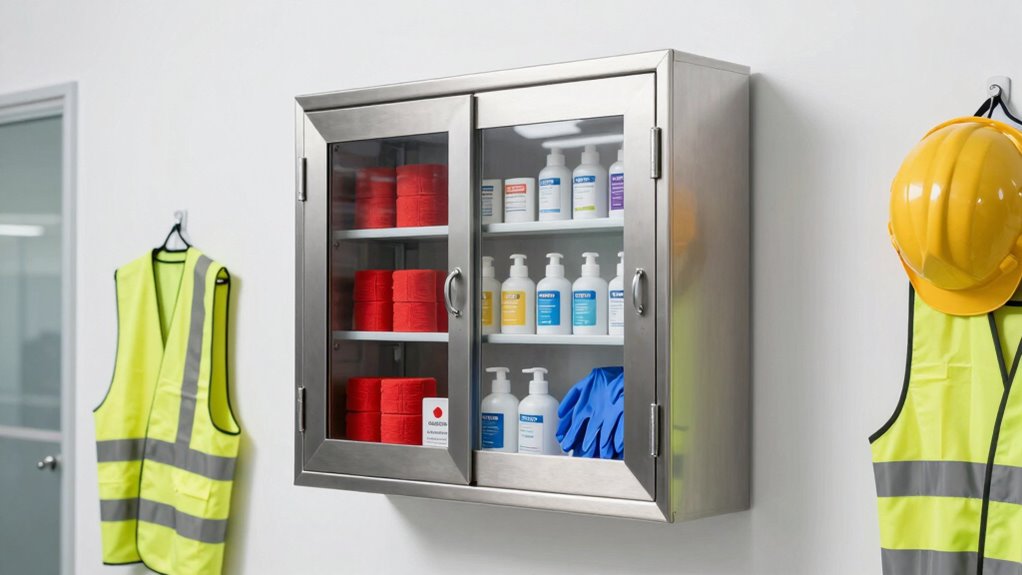
To guarantee effective emergency preparedness, you need to view first aid and emergency cabinets as an essential part of your safety system. Proper placement, clear labeling, and regular maintenance are crucial for quick access during crises. Integrating thorough protocols, routine checks, and staff training fosters a safety-first culture. When these elements work together as a system, response times improve and risks decrease. Keep exploring how these strategies can strengthen your workplace’s safety readiness.
Key Takeaways
- Strategic placement and clear labeling of cabinets enable swift access during emergencies, reducing injury severity.
- Regular drills and staff training reinforce familiarity with cabinet contents and emergency protocols.
- Proper storage standards and routine inventory checks ensure supplies are effective and available when needed.
- A comprehensive preparedness system integrates signage, maintenance, and quick access to foster a safety-first culture.
- Commitment to proactive safety practices demonstrates organizational responsibility and enhances overall workplace security.
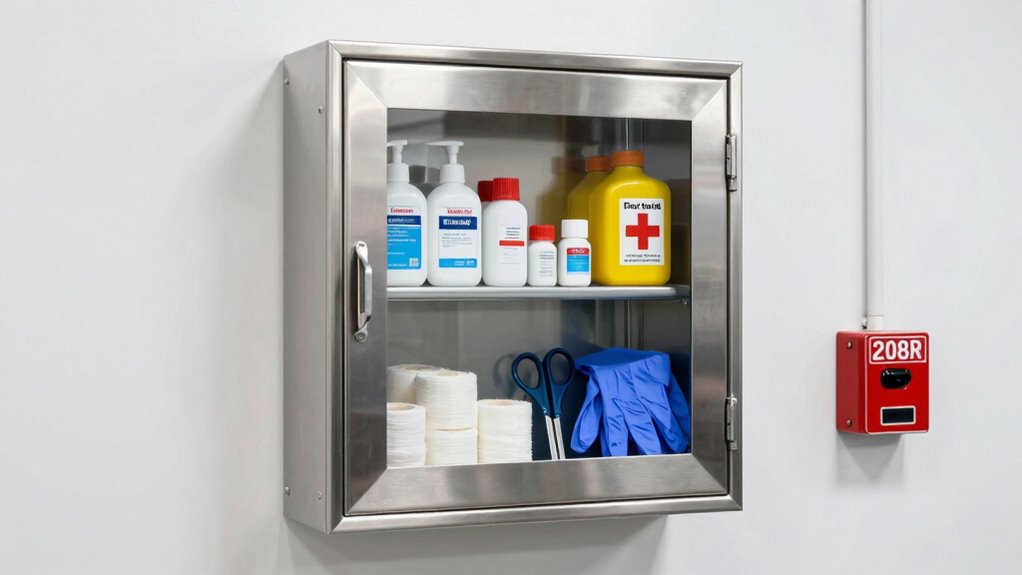
Have you ever considered how quickly you can access essential medical supplies in an emergency? In an industrial setting, every second counts when someone gets injured or suddenly falls ill. That’s why having well-organized and accessible first aid and emergency cabinets isn’t just a good practice—it’s a crucial part of workplace safety. These cabinets should be strategically placed in easily reachable locations, clearly labeled, and stocked with the supplies needed to handle common injuries, from cuts and burns to more serious incidents. Proper placement and maintenance guarantee you can respond swiftly, reducing the severity of injuries and promoting a safer work environment. Incorporating biodiversity-conscious practices into your safety protocols can also contribute to a healthier workplace environment overall.
Workplace safety relies heavily on effective emergency protocols. When these protocols are clear and everyone knows their role, response times improve, and injuries can be managed more efficiently. Emergency cabinets serve as a cornerstone of these protocols. They’re not just storage spaces—they are indispensable tools that support your team’s ability to act quickly and confidently in a crisis. Regular drills and training reinforce this preparedness, guaranteeing that employees aren’t fumbling for supplies when it matters most. When everyone understands the importance of these cabinets and knows how to access and use their contents, the overall safety culture strengthens. Additionally, understanding the importance of proper storage can prevent contamination and ensure supplies remain effective when needed. Proper inventory management is also essential to maintaining readiness, as it helps prevent stock shortages during emergencies. Ensuring proper storage safety standards are followed further minimizes risks associated with improper handling of medical supplies.
Clear protocols and accessible emergency cabinets strengthen safety culture and enable quick, confident response in crises.
Implementing a system that prioritizes readiness involves more than just placing cabinets around the facility. It requires a thorough approach to workplace safety, where emergency preparedness is integrated into daily routines. This includes routine checks to confirm supplies are stocked and in good condition, as well as clear signage that guides employees directly to the nearest cabinet. It’s also imperative to keep records of maintenance and restocking, so nothing is overlooked when an emergency arises. By creating a system that emphasizes preparedness, you empower your team to respond confidently, knowing they have the right tools at their fingertips.
Having well-maintained emergency cabinets demonstrates a commitment to protecting your workforce. It shows that you value safety and are proactive about preventing further harm after an incident occurs. When emergency protocols are supported by accessible supplies, your team can focus on providing first aid quickly and effectively, minimizing injuries and potential complications. Ultimately, making emergency preparedness a systems choice underscores the importance of consistent safety practices, fostering a workplace where everyone feels secure and ready to handle unexpected situations. In the end, it’s about creating a culture of safety that keeps everyone protected, no matter what unforeseen incident might happen.
industrial first aid cabinet with supplies
As an affiliate, we earn on qualifying purchases.
As an affiliate, we earn on qualifying purchases.
Frequently Asked Questions
How Often Should Industrial First Aid Cabinets Be Inspected?
You should inspect your industrial first aid cabinets at least once a month. During these inspections, perform thorough first aid kit maintenance and cabinet inventory checks to guarantee all supplies are stocked and in good condition. Regular checks help identify expired items or missing supplies, so you stay prepared for emergencies. Consistent inspections promote safety and compliance, ensuring your team always has access to essential first aid resources when needed.
What Are the Legal Requirements for Emergency Cabinet Placement?
Think of emergency cabinets as the lighthouse guiding help to those in need. Legally, you must place cabinets in conspicuous, accessible locations, with clear workplace signage and proper cabinet labeling. They should be near potential hazards and easily reachable without obstruction. Regulations often specify specific distances from work areas and lighting requirements to guarantee safety. Regularly check that signage remains visible and labels are legible to keep your system shipshape.
How Do I Customize a First Aid Cabinet for Specific Hazards?
You should start with a thorough hazard assessment to identify specific risks in your workplace. Use this information to customize your first aid cabinet by including supplies tailored to potential injuries, like burn treatments or eye wash stations. Regularly review and update the cabinet contents based on new hazards or incidents. Proper cabinet placement and clear labeling also guarantee quick access during emergencies, reinforcing your overall safety preparedness.
What Training Is Needed for Employees on First Aid Kits?
You need to provide your employees with thorough first aid training to guarantee they can respond effectively during emergencies. This training should cover basic first aid skills, how to use the first aid kits correctly, and emergency response procedures specific to your workplace hazards. Regular refresher courses help keep skills sharp. Well-trained employees can act confidently and swiftly, minimizing injury severity and ensuring a safer work environment.
How Do I Ensure Compliance With OSHA Standards?
To guarantee OSHA compliance, you should regularly review safety signage and keep it visible and clear. Conduct frequent emergency drills so employees know how to respond swiftly during incidents. Keep first aid kits well-stocked and accessible, and document all training and drills. Staying proactive by updating safety signage, practicing emergency procedures, and maintaining records helps demonstrate your commitment to OSHA standards and keeps everyone prepared.
Conclusion
Now that you understand the importance of industrial first aid and emergency cabinets, imagine a moment when they’re truly needed—when every second counts. Will your system be ready to respond swiftly and effectively? The difference between chaos and control hinges on your preparedness. Don’t leave safety to chance; take action today. Because in an emergency, being prepared isn’t just an option—it’s your best defense. Will you be ready when it matters most?