Bananas turn brown quickly because their enzymes, particularly polyphenol oxidase, react with oxygen when exposed, causing enzymatic browning. As they ripen, starches convert to sugars, making the fruit softer and more susceptible to this process. Handling, temperature, and air exposure influence how fast they brown. Warmer temperatures speed up enzyme activity, while refrigeration can slow it down. If you want to understand how to manage this natural process, you’ll find useful tips ahead.

Get school and study supplies delivered free — and shop member deals
- Fast, free delivery on millions of items
- Access to Prime Big Deal Days deals on October 6–7
- Prime Video, Amazon Music and more included
Key Takeaways
- Enzymatic browning occurs when polyphenol oxidase reacts with oxygen during ripening.
- Exposure to air activates enzymes, causing discoloration and browning.
- Warmer temperatures speed up enzyme activity, accelerating browning.
- Peeling exposes enzymes to air, triggering rapid oxidation and darkening.
- Cold storage slows enzyme reactions but can cause peel darkening faster.

Ever wonder why bananas turn brown so quickly after you buy or peel them? It all comes down to the banana ripening process and the way enzymes react inside the fruit. When a banana ripens, it undergoes a series of chemical changes that transform its flavor, texture, and color. One key part of this process involves enzymatic browning reactions, which are responsible for that familiar brown discoloration. These reactions happen when certain enzymes come into contact with oxygen, causing the fruit to develop those telltale brown spots.
After you peel a banana, exposure to air triggers enzymatic browning. Inside the banana, there’s an enzyme called polyphenol oxidase (or PPO), which remains inactive while the fruit is unripe. As the banana ripens, the breakdown of cell structures releases PPO, allowing it to react with phenolic compounds present in the fruit. When oxygen interacts with these compounds, it leads to the formation of melanin-like pigments, which create the brown spots and overall darkening. This process is natural and serves as an indicator that the fruit is ripe and ready to eat, but it’s also what causes bananas to turn brown so fast once peeled or exposed to air.
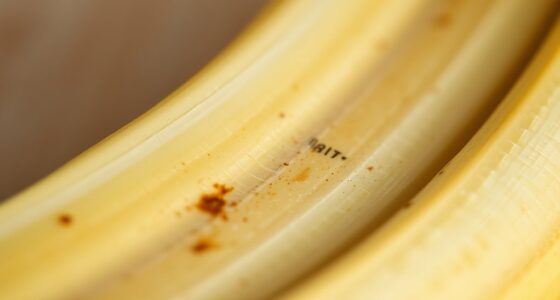
Peeling a banana exposes enzymes to air, causing natural browning as the fruit ripens and reacts with oxygen.
The banana ripening process itself is quite complex. It involves the conversion of starches into sugars, making the fruit sweeter and softer. As this happens, the cell walls weaken, and the fruit becomes more susceptible to enzymatic browning. The change in texture and color is part of the fruit’s natural development, but it’s accelerated by factors like temperature, handling, and exposure to air. If you want to slow down browning, keeping bananas in the fridge can help, as the cold temperature slows enzymatic reactions. However, the peel might darken more rapidly, even though the inside remains fresh longer. Proper storage techniques can help mitigate these effects and extend the freshness of your bananas. Additionally, understanding the role of enzyme activity in the browning process can help you better manage ripening and spoilage.
Furthermore, exposure to temperature plays a significant role in the speed of browning, as warmer conditions tend to speed up enzymatic activity, while cooler temperatures slow it down. It’s also important to note that oxidation is a key chemical reaction involved in browning, and controlling exposure to air can influence how quickly the fruit changes. Ultimately, the browning of bananas is a combination of the banana ripening process and enzymatic browning reactions. It’s a natural occurrence that signals a change in the fruit’s state, but it’s also influenced by chemical reactions that occur within the fruit. It can be managed with simple storage techniques. Understanding what’s happening at the chemical level helps you appreciate why bananas look the way they do and how you can keep them looking fresh for longer. So, next time your banana turns brown faster than expected, you’ll know it’s just part of the fruit’s natural transformation triggered by these enzymatic reactions.
As an affiliate, we earn on qualifying purchases.
Frequently Asked Questions
Do Ripening Bananas Produce More Ethylene Gas?
Yes, ripening bananas produce more ethylene gas. This ethylene influence accelerates the ripening process by triggering enzymes that break down starches into sugars, making the fruit sweeter and softer. As your bananas ripen, they emit more ethylene, which can also influence nearby fruit to ripen faster. So, the more bananas ripen, the more ethylene they produce, speeding up the ripening process overall.
Can Storing Bananas With Other Fruits Speed up Browning?
Storing bananas with other fruits can indeed speed up browning, thanks to fruit interaction. When you keep bananas close to ethylene-producing fruits like apples or tomatoes, the gas accelerates ripening and oxidation. Proper banana storage involves keeping them separate from such fruits to slow browning. Understanding this interaction helps you control ripening, keeping your bananas fresher longer and avoiding premature browning caused by the surrounding fruit environment.
Are Brown Bananas Safe to Eat?
Yes, brown bananas are safe to eat. The brown color results from banana peel oxidation and enzymatic browning processes, which occur naturally as the fruit ripens. These changes don’t indicate spoilage or harmful bacteria. However, the texture might be softer, and the flavor sweeter. If the banana shows mold, an off smell, or sliminess, it’s best to discard it. Otherwise, enjoy your ripe banana safely.
How Does Temperature Affect Banana Browning?
Think of temperature as the maestro orchestrating banana browning. When it’s warm, enzymatic reactions speed up like a wildfire, accelerating browning. Cooler temperatures slow oxidative processes, keeping bananas vibrant longer. High heat invites rapid browning, while chilling delays it, but too cold can cause chilling injury. So, control the temperature like a conductor, and you’ll master the art of keeping bananas fresh and colorful.
Do Different Banana Varieties Brown at Different Rates?
Yes, different banana varieties brown at different rates. This variation is due to differences in banana peel pigments and the enzymatic browning processes. Some varieties have higher levels of natural antioxidants, which slow down browning, while others contain more enzymes that accelerate it. You’ll notice that certain types stay fresh longer, thanks to their unique peel chemistry, influencing how quickly they develop brown spots during ripening and storage.
Conclusion
So, next time you see your banana ripening faster than expected, remember there’s more happening than just a simple peel change. The secret lies in the complex dance of enzymes and environmental factors you might not even notice. But what if there’s a way to slow it down, or even reverse it? The mystery of banana browning keeps us guessing, inviting you to explore further. After all, some secrets are just waiting to be uncovered—aren’t they?
Halloween Picks
halloween
As an affiliate, we earn on qualifying purchases.