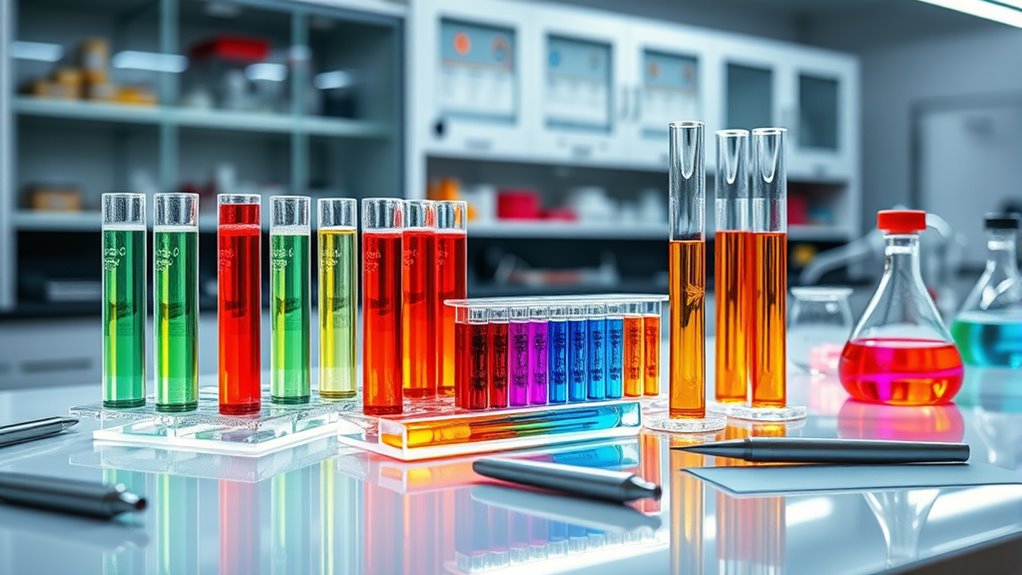

For a practical starting point, I’d choose the StonyLab TLC plate and developing tank bundle as the best overall pick because it pairs two core TLC components in one setup. The chromatography column bundle with 500 mL reservoir stands out for column work, while the Innovating Science kit for 15 student groups suits classroom demonstrations. The main tradeoff is whether you need a coordinated kit, a specific consumable, or gear for a different method such as paper chromatography. Plate dimensions, backing material, tank compatibility, and intended use matter more than the word “kit” on a listing. Read on for the full comparison and guidance on matching each option to your lab or teaching needs.

Prime made for students and young adults
- Fast, free delivery for dorm and study essentials
- Prime Video and Amazon Music included
- Member-only deals
Key Takeaways
- The StonyLab bundle is the clearest all-in-one TLC starting point in this lineup because it combines a silica plate with a developing tank; buyers should still check plate dimensions and tank fit.
- The 500 mL reservoir column bundle serves a different separation workflow from the TLC products, so it is the more relevant choice when gravity-fed column chromatography—not plate development—is the main task.
- Plate format changes the kind of work each option supports: small 25 × 75 mm plates suit compact runs, while 20 × 20 cm plates offer more room for larger samples or multiple lanes.
- Backing material is a practical tradeoff, not a cosmetic detail: aluminum-backed plates are easier to handle and cut, while glass-backed plates are more rigid and may be preferable for steady bench work.
- The teaching kits and lab hardware are not interchangeable: paper chromatography kits support guided demonstrations, while TLC plates, tanks, and columns serve different lab workflows.
| TLC Plates 25 x 75mm, Lab Thin Layer Chromatography Plate, 80/Box |  | Best for Routine TLC Plate Replenishment | Plate size: 25 x 75 mm | Quantity: 80 plates per box | Stationary phase: Silica Gel GF254 | VIEW ON AMAZON | See Our Full Breakdown |
| Innovating Science Thin Layer Chromatography Kit: Separating Chemical Substances for 15 Groups of Students |  | Best for Multi-Group TLC Instruction | Brand: Aldon / Innovating Science | Age range: 18 years and up | Student groups supported: 15 groups | VIEW ON AMAZON | See Our Full Breakdown |
| Chromatography Column Bundle with 500 mL Reservoir |  | Best for Column Chromatography Setups | Column material: Borosilicate glass | Column length: 11.8 inches | Column outer diameter: 1.97 inches | VIEW ON AMAZON | See Our Full Breakdown |
| Labasics Glass TLC Developing Tank, Round, Lab Equipment for Thin Layer Chromatography |  | Best Compact TLC Developing Chamber | Material: Borosilicate glass | Compatible plate size: Up to 2.5 x 7.5 cm | Chamber shape: Round | VIEW ON AMAZON | See Our Full Breakdown |
| Aldon Innovating Science Paper Chromatography Distance Learning Kit |  | Best for Small-Group Remote Learning | Brand: Aldon / Innovating Science | Method: Paper chromatography | Intended group size: Two students or groups | VIEW ON AMAZON | See Our Full Breakdown |
| TLC Plates, 25 x 75mm, Thin Layer Chromatography Plates, 80Pcs |  | Best for High-Volume Plate Replenishment | Plate size: 25 x 75 mm | Quantity: 80 plates | Coating: Silica gel | VIEW ON AMAZON | See Our Full Breakdown |
| Innovating Science Chromatography of Plant Pigments: Distance Learning Kit |  | Best for Remote Plant-Pigment Lessons | Chromatography method: Paper chromatography | Activity focus: Plant pigments involved in photosynthesis | Included materials: Chromatography solvent, plant pigment extract, chromatography paper, plastic microscope slides, plastic cups, and petri dishes | VIEW ON AMAZON | See Our Full Breakdown |
| TLC Plates, Aluminum Backed Silica Gel 60 F254, 20x20cm, 10 Pack |  | Best for Larger-Format Analytical TLC | Plate dimensions: 20 x 20 cm | Layer thickness: 250 μm | Stationary phase: Silica Gel 60 F254 | VIEW ON AMAZON | See Our Full Breakdown |
| Silica Gel TLC Plates with Glass Backing, 25x75mm, Pack of 80 |  | Best for UV-Readable Small-Format TLC | Plate size: 25 x 75 mm | Quantity: 80 plates | Stationary phase: Silica gel | VIEW ON AMAZON | See Our Full Breakdown |
| StonyLab Bundle: TLC Classical Silica Gel Plate and TLC Developing Square Tank |  | Best Starter Bundle for TLC Development | Included plates: 80 classical silica gel TLC plates | Included equipment: TLC developing square tank | Listed product dimensions: 2.95 x 0.98 x 0.1 inches | VIEW ON AMAZON | See Our Full Breakdown |
| Innovating Science Paper Chromatography Kit to Separate Chemical Substances |  | Best for Classroom Introductions | Manufacturer: Innovating Science | Model number: IS2503 | Intended age: 13 and up | VIEW ON AMAZON | See Our Full Breakdown |
| TLC Developing Tank for 20 cm Plates with Lid |  | Best for Larger-Format TLC Plates | Capacity: 2 plates without rack | Maximum plate length: 20 cm | Interior dimensions: 22 x 21.8 x 6 cm | VIEW ON AMAZON | See Our Full Breakdown |
More Details on Our Top Picks
TLC Plates 25 x 75mm, Lab Thin Layer Chromatography Plate, 80/Box
For labs that already have a developing chamber and need dependable consumables, these 80 glass-backed silica gel plates are the most direct fit in this group. Their 25 x 75 mm format matches the Labasics Glass TLC Developing Tank, which is specified for plates up to 2.5 x 7.5 cm. The GF254 layer supports UV visualization, while the 60 Å pore size and stated sharp separation performance suit qualitative and trace-analysis work. Compared with the Innovating Science Thin Layer Chromatography Kit, this is a replenishment supply rather than a ready-to-teach activity: you provide the samples, solvents, and other setup components. The tradeoff is that the compact plates limit sample capacity, and the silica is not suitable for strong alkalis or hydrofluoric acid. UV light is also needed for the stated visualization method.
Pros:- 80 plates provide a substantial supply for repeated runs.
- Compact 25 x 75 mm size fits the Labasics tank listed in this roundup.
- GF254 silica supports UV-based spot visualization.
- Glass backing and stated solvent resistance suit routine laboratory handling.
Cons:- Plates alone do not provide a chamber, solvents, samples, or instructions.
- Not suitable for strong alkalis or hydrofluoric acid.
- UV light is required for the stated visualization approach.
Best for: Laboratory users who already own a compatible TLC chamber and need a bulk supply of small plates for qualitative or trace analysis.
Not ideal for: Instructors seeking a complete student activity, or labs separating samples that require strong alkalis or hydrofluoric acid.
- Plate size:25 x 75 mm
- Quantity:80 plates per box
- Stationary phase:Silica Gel GF254
- Pore size:60 Å
- Backing:Glass
- Visualization:UV light
- Chemical limitation:Not suitable for strong alkalis or hydrofluoric acid
Our verdict“Choose these plates if you already have a TLC setup and want a bulk supply in the same compact format as the Labasics developing tank.”
Innovating Science Thin Layer Chromatography Kit: Separating Chemical Substances for 15 Groups of Students
This kit makes the strongest classroom choice among these products because it supplies materials for 15 student groups, along with four dyes, solvents, instructions, and safety data sheets. That package gives an instructor a defined activity for exploring whether dyes contain one component or several, rather than just a set of plates or an individual piece of lab hardware. Compared with the Aldon Innovating Science Paper Chromatography Distance Learning Kit, this kit focuses on TLC and supports far more groups, but it is less suited to remote work and includes a narrower experimental aim. It is explicitly educational, not a substitute for validated professional analysis. The listed age range is 18 and up, so it is not the right pick for younger classes; instructors should also review the included safety information and supervise solvent handling.
Pros:- Materials are provided for 15 student groups.
- Includes four dyes for a focused mixture-versus-single-component activity.
- Instructions and safety data sheets support planned classroom use.
- Provides a TLC-specific teaching setup rather than paper chromatography.
Cons:- Designed for education, not professional testing or validated analytical work.
- Listed for ages 18 and up, limiting its fit for younger classes.
- The activity is centered on four dyes rather than a broad range of sample types.
Best for: College instructors or lab educators running a guided TLC lesson for up to 15 student groups.
Not ideal for: Professional analytical labs needing validated methods, younger students, or remote learners without a supervised lab setup.
- Brand:Aldon / Innovating Science
- Age range:18 years and up
- Student groups supported:15 groups
- Dyes included:4
- Chromatography sheets:15
- Solvent bottles:15
- Documentation:Manuals and safety data sheets
- Model number:IS2504
Our verdict“Choose this kit for a supervised, multi-group TLC lesson; skip it for professional analysis or younger-student activities.”
Chromatography Column Bundle with 500 mL Reservoir
This is the lineup’s clearest choice for a buyer moving beyond TLC to liquid column chromatography. The bundle pairs an 11.8-inch borosilicate column with a 500 mL glass reservoir, so it offers more of a working setup than the standalone TLC plates or the Labasics developing tank. A PTFE stopcock provides solvent control, while the fritted disc supports the column bed; the 24/40 joint gives a defined connection size for compatible glassware. Compared with the compact TLC equipment here, this setup is intended for liquid separations and needs careful handling because its components are glass. It also does not replace TLC plates for scouting solvent systems, and the product information does not specify a column diameter capacity, packing material, or clamps. Buyers should plan for those supporting components as needed.
Pros:- Bundles a borosilicate glass column and 500 mL reservoir.
- PTFE stopcock allows controlled liquid flow.
- Fritted disc is included as part of the column assembly.
- 24/40 joint provides a specified connection size for compatible glassware.
Cons:- Glass components require careful handling and appropriate support.
- Designed for liquid chromatography, not TLC plate development.
- Packing material and other supporting equipment are not specified as included.
Best for: Research and teaching labs that need a glass column-and-reservoir assembly for liquid chromatography experiments.
Not ideal for: Buyers whose work is limited to TLC, or labs expecting a complete system with packing material, supports, and specified capacity details.
- Column material:Borosilicate glass
- Column length:11.8 inches
- Column outer diameter:1.97 inches
- Joint type:24/40 standard
- Reservoir capacity:500 mL
- Reservoir material:Glass
- Stopcock material:PTFE
- Column feature:Fritted disc
Our verdict“Choose this bundle when your work calls for a glass liquid-chromatography column, not a TLC chamber or plate supply.”
Labasics Glass TLC Developing Tank, Round, Lab Equipment for Thin Layer Chromatography
The Labasics tank stands out as a focused chamber for small-format TLC, not as a complete chromatography kit. Its stated compatibility with plates up to 2.5 x 7.5 cm makes it a direct match for the 25 x 75 mm plates in this roundup, including the B0GSDRDCQB pack. A narrow base is intended to reduce solvent use, while the lid helps limit evaporation during development—useful when running compact plates with a controlled solvent environment. Unlike the Chromatography Column Bundle with 500 mL Reservoir, this is specifically for plate development, not packed-column separations. Its limits are just as clear: it will not accommodate the larger 20 cm TLC plates listed elsewhere in the roundup, and no additional accessories are specified. It suits routine small-plate work, but not a lab seeking a flexible chamber for multiple plate sizes.
Pros:- Compatible with plates up to 2.5 x 7.5 cm, matching the compact plates in this roundup.
- Narrow base is designed to reduce solvent use.
- Secure lid helps limit solvent evaporation during development.
- Borosilicate glass is corrosion resistant.
Cons:- Plate capacity is limited to the stated small format.
- No plates, solvents, or other accessories are specified as included.
- The round chamber is a specialized TLC component, not a column setup.
Best for: Labs using 25 x 75 mm TLC plates that want a dedicated, solvent-conscious glass developing chamber.
Not ideal for: Labs developing 20 cm plates or buyers who need plates, solvents, or a broader chromatography setup included.
- Material:Borosilicate glass
- Compatible plate size:Up to 2.5 x 7.5 cm
- Chamber shape:Round
- Base design:Narrow, solvent-saving base
- Lid:Secure sealing lid
- Chemical resistance:Corrosion resistant
- Warranty:1 year
Our verdict“Choose this tank if you already have small TLC plates and need a dedicated chamber; choose a larger tank for 20 cm plates.”
Aldon Innovating Science Paper Chromatography Distance Learning Kit
Among the products here, this is the most accessible option for a small, guided introduction to separation science outside a dedicated TLC lab. It includes dyes, solvents, materials, instructions, and worksheets for two students or groups, giving remote learners a defined paper-chromatography activity. That makes it a different kind of purchase from the Innovating Science Thin Layer Chromatography Kit: the TLC kit serves 15 groups and teaches plate-based separation, while this one is scaled for two and explicitly suits distance learning or homeschooling. The tradeoff is limited scope. Paper chromatography is not a replacement for TLC plates, a developing tank, or a column setup when lab-style workflows are the goal. Its small group capacity also makes it a poor fit for a full classroom unless multiple kits are supplied, and chemical handling still calls for supervision.
Pros:- Includes dyes, solvents, activity materials, instructions, and worksheets.
- Designed for distance learning and homeschooling as well as classroom use.
- Two-student or two-group scale suits a small guided activity.
- Introduces separation concepts without requiring a TLC chamber or column.
Cons:- Covers basic paper chromatography rather than TLC or column methods.
- Materials are limited to two students or groups.
- Chemical handling requires appropriate supervision.
Best for: A homeschool instructor or remote-learning teacher preparing a basic chromatography activity for one or two students or groups.
Not ideal for: Labs seeking TLC or column hardware, or classroom instructors needing supplies for many groups from a single kit.
- Brand:Aldon / Innovating Science
- Method:Paper chromatography
- Intended group size:Two students or groups
- Included materials:Dyes, solvents, and activity materials
- Documentation:Instruction manual and worksheets
- Model number:IS1502
- Category:Science & Education
Our verdict“Choose this kit for a small remote or homeschool lesson on basic paper chromatography, not for a lab TLC or column workflow.”
TLC Plates, 25 x 75mm, Thin Layer Chromatography Plates, 80Pcs
This pack is a straightforward way to keep small-format TLC work supplied: 80 silica-coated glass plates arrive ready to use, so it suits repeated teaching exercises or routine sample checks better than a kit that includes only a few plates. Its 25 x 75 mm format matches the compact scale of the Silica Gel TLC Plates with Glass Backing, 25x75mm, Pack of 80, but the listing gives less detail about indicators or UV visualization. The glass backing offers a stable surface during spotting and development, though it also means handling and storage need more care than aluminum-backed plates. Unlike the StonyLab Bundle, this is a consumable refill rather than a plates-and-tank setup. I’d choose it when plate quantity matters more than a complete workflow; limited compatibility and shelf-life information leaves some purchasing questions open.
Pros:- 80 ready-to-use plates support repeated experiments and group instruction
- Silica gel coating is suited to routine TLC separations
- Glass backing provides a firm surface for spotting and handling
Cons:- No indicator or UV visualization capability is specified
- Compatibility with particular equipment and solvent systems is not documented
- Storage conditions and shelf life are not stated
Best for: Teaching labs and research groups that regularly run small-format TLC and already have a developing chamber.
Not ideal for: Buyers who need a complete TLC setup, UV-indicator plates, or clear guidance on storage and solvent compatibility.
- Plate size:25 x 75 mm
- Quantity:80 plates
- Coating:Silica gel
- Backing:Glass
- Package dimensions:6.3 x 4.3 x 1 inches
- Item weight:1.7 pounds
Our verdict“Choose this refill pack for recurring small-plate work if your lab already has the development equipment and does not require a stated fluorescent indicator.”
Innovating Science Chromatography of Plant Pigments: Distance Learning Kit
This is the most teaching-focused option here, but it is not a TLC plate or column setup. Its paper chromatography materials and instructions let remote learners investigate plant pigments without needing a laboratory developing tank, making it a better fit for a guided lesson than the plate-focused StonyLab Bundle. The included solvent, pigment extract, paper, slides, cups, and petri dishes support a defined activity, rather than open-ended analytical work. That focus is also the limitation: it does not provide silica TLC plates, a column, or advanced analysis, and microscopy requires equipment beyond the listed kit. Compared with the Aldon Innovating Science Paper Chromatography Distance Learning Kit, this listing specifically frames the activity around pigments involved in photosynthesis. I’d pick it for structured home or distance instruction, not for labs building chromatography capability.
Pros:- Materials and instructions are aimed at distance and home learning
- Plant-pigment activity gives the experiment a clear educational focus
- Includes solvent, pigment extract, chromatography paper, and basic activity vessels
Cons:- Uses paper chromatography rather than TLC plates or column chromatography
- Microscopes needed for fuller analysis are not included
- Scope is limited to basic educational experiments and may require supervision
Best for: Teachers or families running a remote lesson on plant pigments who want a supplied paper-chromatography activity.
Not ideal for: Lab users seeking TLC plates, a developing tank, column chromatography equipment, or quantitative analysis.
- Chromatography method:Paper chromatography
- Activity focus:Plant pigments involved in photosynthesis
- Included materials:Chromatography solvent, plant pigment extract, chromatography paper, plastic microscope slides, plastic cups, and petri dishes
- Intended setting:Distance learning and home learning
Our verdict“Choose this for a guided remote lesson about plant pigments, not as a lab TLC or column chromatography kit.”
TLC Plates, Aluminum Backed Silica Gel 60 F254, 20x20cm, 10 Pack
For labs that need room to separate or compare samples across a broad plate, this pack’s 20 x 20 cm format is the standout difference from the 25 x 75 mm glass-backed packs in this roundup. The Silica Gel 60 F254 layer adds a fluorescent indicator for viewing UV-active compounds, while aluminum backing makes the plates easier to handle and less prone to breakage than glass. Moisture-proof packaging and stated compatibility with common solvent systems and staining methods make the product information more useful than that for the smaller generic plate packs. The tradeoff is quantity: ten large plates may suit analytical work better than high-throughput teaching, where the 80-piece glass-backed plates offer more individual runs. UV visualization also depends on access to a suitable lamp. This is the strongest fit here for larger-format TLC, not a column setup.
Pros:- Large 20 x 20 cm format accommodates broader separations
- F254 fluorescent indicator supports UV visualization of suitable compounds
- Aluminum backing is easier to handle and less fragile than glass
- Moisture-proof foil packaging and stated solvent-system compatibility
Cons:- Pack contains 10 plates, fewer individual plates than the 80-piece small-format options
- UV visualization requires suitable UV equipment
- Does not include a developing tank or other chromatography apparatus
Best for: Analytical and teaching labs that need larger TLC plates with a fluorescent indicator and use UV visualization.
Not ideal for: Small-scale users who only need compact plates, labs without UV equipment, or buyers looking for a column chromatography bundle.
- Plate dimensions:20 x 20 cm
- Layer thickness:250 μm
- Stationary phase:Silica Gel 60 F254
- Backing:Aluminum
- Quantity:10 plates
- Package type:Moisture-proof foil
- Compatibility:Common solvent systems and staining methods
- Standard:USP <621> compliant
Our verdict“Choose these when larger-format, UV-indicator TLC plates matter more than getting a high count of compact plates or a complete setup.”
Silica Gel TLC Plates with Glass Backing, 25x75mm, Pack of 80
This pack pairs the same compact 25 x 75 mm size and 80-plate quantity as the generic glass-backed option with one useful distinction: a stated GF254 fluorescent indicator for viewing under UV light. That makes it a more informative pick for labs that need to inspect UV-visible spots than the “TLC Plates, 25 x 75mm, Thin Layer Chromatography Plates, 80Pcs,” whose indicator is not specified. Glass backing supports steady spotting and resists solvent exposure, but it remains more breakable than the aluminum-backed 20 x 20 cm plates. The product description also claims quick development and clear spots, yet does not spell out compatibility across solvent systems. I’d favor these for routine small-scale research or instruction when UV visualization is part of the workflow; buyers without a UV source may not benefit from the indicator.
Pros:- GF254 indicator supports UV visualization
- 80 plates suit recurring small-format TLC work
- Glass backing provides a stable, solvent-resistant support
- Compact size is practical for routine sample separations
Cons:- UV equipment is needed to use the stated fluorescent indicator
- Glass plates are more vulnerable to breakage than aluminum-backed plates
- Compatibility with specific solvent systems is not detailed
Best for: Small-scale research or teaching labs that run repeated 25 x 75 mm TLC separations and have UV visualization equipment.
Not ideal for: Labs needing large-format plates, an included developing tank, or plates with documented compatibility for a wide range of solvents.
- Plate size:25 x 75 mm
- Quantity:80 plates
- Stationary phase:Silica gel
- Backing:Glass
- Indicator:GF254 fluorescent under UV light
Our verdict“Choose this over the generic 80-plate glass option when a stated GF254 indicator is useful for your small-format TLC workflow.”
StonyLab Bundle: TLC Classical Silica Gel Plate and TLC Developing Square Tank
The StonyLab bundle is the most immediately usable TLC choice in this group because it combines 80 silica gel plates with a developing tank. That makes it a better starting point than the plate-only packs, including the Silica Gel TLC Plates with Glass Backing, 25x75mm, Pack of 80, for a lab that does not already own a chamber. Its advantage is workflow convenience rather than documented analytical detail: the listing does not specify plate dimensions, backing, indicator, or tank capacity, so it is harder to match to a particular method than the 20 x 20 cm F254 plates. A one-year limited warranty is stated, but the bundle’s usage and compatibility information remains sparse. I’d select it for a basic TLC station when having the main development components together matters more than precise method specifications; column chromatography equipment is not included.
Pros:- Combines 80 silica gel plates with a TLC developing tank
- Reduces the need to source a chamber separately
- Includes a stated one-year limited manufacturer warranty
Cons:- Plate dimensions, backing, and indicator are not specified
- Tank capacity and compatibility details are not provided
- Does not include column chromatography equipment
Best for: New teaching or research labs that need a basic TLC plate-and-tank starting point and can confirm the tank suits their methods.
Not ideal for: Buyers requiring specified plate dimensions, a stated fluorescent indicator, a column setup, or detailed solvent and tank compatibility.
- Included plates:80 classical silica gel TLC plates
- Included equipment:TLC developing square tank
- Listed product dimensions:2.95 x 0.98 x 0.1 inches
- Warranty:1-year limited manufacturer warranty
Our verdict“Choose this bundle for a basic TLC setup when the included tank is more useful than the detailed plate specifications offered by other picks.”
Innovating Science Paper Chromatography Kit to Separate Chemical Substances
This kit is the roundup’s most approachable route into chromatography: its dye-separation materials and instructional guides are aimed at learners aged 13 and up, rather than labs assembling a reusable TLC or column workflow. Compared with the Innovating Science Thin Layer Chromatography Kit for 15 Groups, this paper-based option is better framed as a guided introduction to how substances travel and separate, not as a group-scale TLC setup. That distinction makes it a fit for a homeschool lesson or a classroom demonstration, while the separate TLC Developing Tank for 20 cm Plates is the more relevant choice for users already working with TLC plates. The tradeoff is limited scope: the supplied details describe educational dye experiments, not plate-based TLC or column hardware. Small parts also call for adult supervision.
Pros:- Includes materials for dye-separation experiments
- Instructional guides support structured classroom or homeschool lessons
- Hands-on format helps teach how substances move through a chromatography system
Cons:- Focused on educational paper chromatography rather than TLC plate or column setups
- Intended for ages 13 and up, with small parts requiring adult supervision
Best for: Teachers and homeschool educators introducing students aged 13 and up to chromatography through guided dye-separation activities.
Not ideal for: Lab users seeking TLC plates, a developing chamber, or column components for practical analytical workflows; this is an educational paper chromatography kit.
- Manufacturer:Innovating Science
- Model number:IS2503
- Intended age:13 and up
- Experiment type:Dye separation by paper chromatography
- Package dimensions:10 x 7 x 5 inches
- Item weight:0.64 ounces
- Category:Science Education
Our verdict“Choose this for guided student lessons on chromatography basics, not for equipping a lab with TLC or column apparatus.”
TLC Developing Tank for 20 cm Plates with Lid
For buyers already using larger TLC plates, this tank supplies a defined developing space rather than a full chromatography kit. Its 22 x 21.8 x 6 cm interior and capacity for two plates up to 20 cm make it a more direct match for larger-format work than the small educational paper chromatography activities in the Innovating Science Paper Chromatography Kit. The included lid helps contain the chamber during development and offers a way to cover it between uses; with an optional rack, the tank can accommodate more plates. The tradeoff is that the rack is not listed as included, so its stated two-plate capacity may limit parallel runs out of the box. It is also a specialized chamber, not a complete setup: plates and other lab materials are not specified.
Pros:- Holds up to two TLC plates measuring up to 20 cm
- Interior dimensions provide a clear fit reference for plate selection
- Included lid covers the chamber during development and storage
- Can accommodate additional plates with an optional rack
Cons:- Capacity is limited to two plates without a separately obtained rack
- Material and durability details are not specified
- Specialized chamber only; plates and other setup components are not listed as included
Best for: TLC users who already have compatible plates up to 20 cm and need a lidded chamber for developing up to two plates at a time.
Not ideal for: Beginners seeking a ready-to-run educational kit, column chromatography equipment, or a chamber for plate sizes other than those specified.
- Capacity:2 plates without rack
- Maximum plate length:20 cm
- Interior dimensions:22 x 21.8 x 6 cm
- Wall thickness:0.5 cm
- Lid:Included
- Additional plate capacity:More plates with a rack
- Application:Thin-layer chromatography
Our verdict“Pick this chamber if your TLC workflow uses plates up to 20 cm and you can work within its two-plate capacity without the optional rack.”

How We Picked
I ranked these options by how directly they help a buyer assemble a usable setup for TLC or column chromatography, then by how clearly their stated format and purpose match common lab or classroom needs. For TLC, I weighed whether an option includes plates, a developing chamber, or both; plate size and backing also matter because they shape handling, sample capacity, and compatibility. For column work, I focused on the distinct reservoir-based format rather than treating it as another TLC kit.
I also separated classroom and distance-learning kits from reusable lab hardware and consumables. The ranking favors options that reduce guesswork for the stated use, but a standalone plate pack can be a better fit than a bundle for a lab that already owns a tank. Product listings do not establish every compatibility or performance detail, so buyers should verify dimensions, included components, and intended applications before ordering.
Factors to Consider When Choosing Chromatography Kits For Labs Tlc And Column Setups
Choosing chromatography gear starts with the separation method and the equipment already on your bench. I’d settle those questions before comparing pack sizes or labels, since TLC, column, and paper chromatography use different formats and are not direct substitutes.
Match the equipment to the separation method
TLC uses a flat stationary phase developed inside a chamber, while column chromatography moves a sample through a packed bed in a column. Paper chromatography is often used for demonstrations and simpler separations, but it does not replace a silica TLC workflow. A common buying mistake is choosing a teaching kit because it says “chromatography” and expecting it to include lab-ready TLC hardware. Start with the method your protocol specifies, then check that every included component supports it. If you run both TLC and columns, plan for separate equipment rather than expecting one kit to cover both jobs.
Check plate size, backing, and chamber fit together
Plate dimensions affect how many lanes you can run and how much room you have for larger samples, but a larger plate is useful only if your developing tank can accommodate it. Compact 25 × 75 mm plates can suit small-scale runs; 20 × 20 cm plates offer a larger working area and call for a suitably sized chamber. Backing affects handling: aluminum is flexible and can be cut, while glass is rigid and needs more careful handling. Do not assume plates fit a tank just because both are sold for TLC. Compare the actual internal chamber dimensions with the plate format before buying.
Decide whether a bundle saves work or duplicates gear
A bundle can simplify setup when it pairs compatible basics, especially for a new bench or teaching station. It can also leave you with duplicate parts or a plate format that does not match your existing chamber. Before choosing one, list the equipment already available: plates, tank, lid, and any tools required by your workflow. Then compare that list with what the package explicitly includes rather than relying on the product title. Standalone plates may be the better value for a stocked lab, while a coordinated bundle can make more sense when assembling a first TLC setup.
Plan for solvent use and routine maintenance
The chamber and column materials must suit the solvents and procedures used in your lab. Product names alone may not give enough information about chemical compatibility, cleaning instructions, or safe operating limits, so check the supplier’s specifications before exposing equipment to a solvent. A lid helps limit evaporation during TLC development, but it does not remove the need to follow lab ventilation and handling procedures. Reusable glassware can call for careful cleaning and storage; disposable or consumable plates need a plan for replenishment and waste handling. Build these recurring tasks into the choice, not just the initial equipment list.
Choose the right scale for teaching or lab work
For group instruction, kits designed for multiple student groups can reduce preparation and make it easier to distribute materials consistently. Distance-learning kits may prioritize guided activities and accessible demonstrations rather than compatibility with a research lab’s routine TLC workflow. A single lab bench may benefit more from a reusable tank and appropriately sized plates than from a classroom-focused package. Consider how many people will work at once, how often the activity will run, and whether learners need a complete exercise or simply apparatus. This helps prevent paying for materials that do not match the setting.
Frequently Asked Questions
Can I use a TLC plate pack with any developing tank?
No. The plate must fit inside the tank with enough clearance for the chamber to close and the plate to stand as intended. Compare plate width and height with the tank’s internal dimensions, not just its external size. Also check whether the plate format and chamber design suit your procedure. If the listing does not provide dimensions or compatibility details, confirm them with the seller before ordering.
Should I buy a TLC bundle or separate plates and tank?
A bundle is useful when you need both components and the stated sizes are compatible, as with a paired plate-and-tank option. Buying separately gives you more control over plate backing, size, and chamber capacity, and avoids duplicating equipment you already own. Compare the included items line by line; “bundle” does not necessarily mean every accessory your procedure needs is included. For an established lab, replacing only the depleted consumable is often the more sensible route. For a new setup, a bundle can reduce compatibility guesswork if dimensions are clearly stated.
Are paper chromatography kits suitable for routine TLC lab work?
Not as a direct substitute. Paper chromatography kits are generally designed around paper-based activities, often for teaching or distance learning, while TLC relies on a coated plate and a developing chamber. The separation method, materials, and expected workflow differ. A paper kit may be a good fit for an introductory demonstration, but it does not provide the same apparatus as a TLC plate-and-tank setup. Choose according to the method required by your lesson or lab protocol.
When does a 20 × 20 cm TLC plate make more sense than a small plate?
A larger plate can provide more room for lanes, comparison samples, or a broader separation area, which may help when compact plates limit your layout. It also requires a chamber that fits its dimensions and more care during handling and storage. For small demonstrations or routine compact runs, 25 × 75 mm plates may be easier to manage and can reduce unused plate area. Match the plate size to both the sample workload and the equipment already available. If the protocol specifies a format, follow that rather than choosing by size alone.
What should I verify before buying the column bundle for a TLC-focused lab?
Confirm that you actually need column chromatography, since a reservoir-equipped column does not replace a TLC tank or TLC plates. Check the column dimensions, included fittings, reservoir connection, and any stated materials or solvent compatibility against your procedure. Also find out whether packing material and other required components are included; a bundle title may not describe every item in the package. If your main task is checking fractions or screening mixtures, TLC equipment may be the more relevant purchase. A column setup makes sense when the workflow calls for preparative separation through a packed bed.
Conclusion
My best overall pick is the StonyLab plate-and-tank bundle for buyers assembling a basic TLC setup; it pairs core components, though dimensions still need checking. For best value, I’d look first at the TLC plate packs if a suitable tank is already on hand, since buying only the needed consumable avoids duplicate hardware. The best premium-style choice for larger-format work is the 20 × 20 cm aluminum-backed silica plate pack, provided your chamber supports that size. For beginners and classroom groups, the Innovating Science student kit is the more guided option, while the paper chromatography kits fit introductory demonstrations rather than lab TLC. For column-specific work, choose the 500 mL reservoir bundle; for a compact bench setup, prioritize small plates and a matching tank. The right pick depends on method, scale, and what your lab already owns—not on the broad label “chromatography kit.”