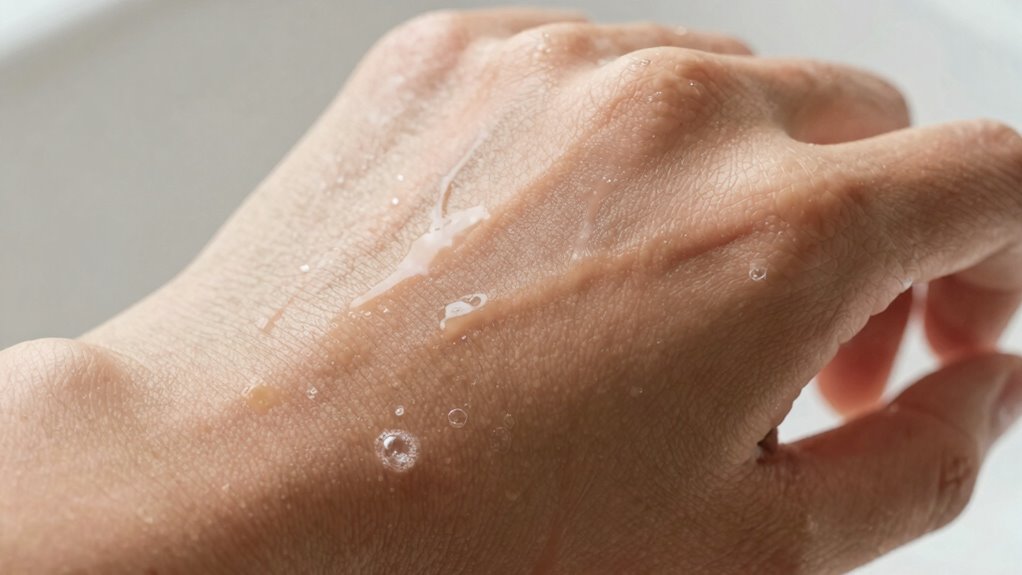
Some soaps leave residue on your skin because of their ingredients, formulation, and how they interact with water and rinsing. Thick, creamy soaps with emollients or natural oils can create a coating that doesn’t wash off easily, especially if water isn’t used effectively. Hard water can also cause soap scum to cling to your skin, leaving behind unwanted film. To understand more about the factors influencing soap residue, keep exploring what makes a soap rinse away cleanly.

Prime made for students and young adults
- Fast, free delivery for dorm and study essentials
- Prime Video and Amazon Music included
- Member-only deals
Key Takeaways
- Long-lasting fragrances can trap residues, leaving sticky or film-like buildup on the skin.
- Hard water reacts with soap to form soap scum, increasing residue on skin surfaces.
- Thick, creamy soaps contain emollients that may not rinse off completely, causing residue.
- Improper rinsing techniques or insufficient water use leave soap residues and film.
- Natural oils or low-quality surfactants in soap formulations can leave behind unwanted buildup.
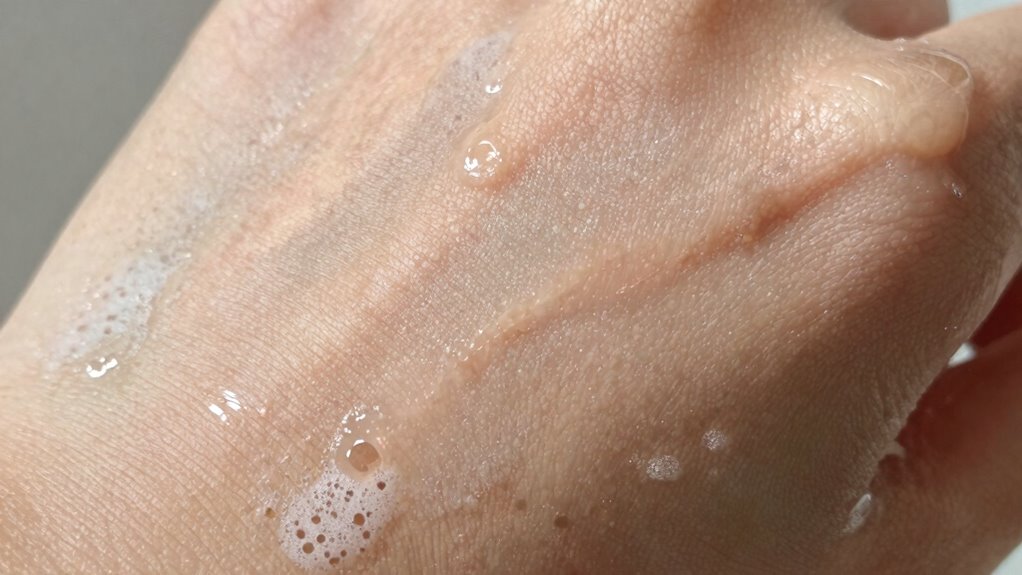
Many people notice that their soap leaves a residue on their skin, clothes, or surfaces, and it can be frustrating to deal with. This lingering film often makes you feel sticky or grimy, even after washing, and it can be confusing to figure out why it happens. One key factor is the soap’s fragrance retention. Some soaps are formulated with fragrances that cling to your skin or surfaces longer than others. These fragrances can sometimes trap oils or residues on your skin, contributing to that unwanted film. If a soap has a strong scent that persists, it’s likely because the fragrance compounds are designed to be long-lasting, but this can come with the downside of leaving behind a residue that feels uncomfortable or sticky. Additionally, water quality can significantly affect how well soap rinses away, with hard water increasing the likelihood of residue formation. Hard water contains minerals that react with soap, forming soap scum, which can cling to your skin and surfaces, making residues more noticeable and difficult to remove. The soap’s texture is another important aspect. The consistency of the soap influences how it interacts with water and your skin. For example, soaps with a thick, creamy texture often contain more emollients or thickeners that can resist rinsing away completely. These ingredients might create a coating that doesn’t wash off easily, especially if you don’t rinse thoroughly. Conversely, soaps with a more liquid or gel-like texture tend to rinse away more cleanly, reducing residue. The soap’s texture also impacts how well it lathers; a soap that doesn’t produce a rich, stable foam might not clean as effectively, leaving behind oils or dirt that contribute to residue buildup. Additionally, the ingredients in the soap play a significant role. Some soaps contain high levels of surfactants, which are responsible for cleansing. If these surfactants aren’t balanced properly or are of lower quality, they might not rinse thoroughly, leaving behind a film. Natural oils or butters in certain soap formulations can also cause buildup if not fully washed away, especially if you use too much or don’t rinse properly. Environmental factors and water quality further influence residue formation. Hard water, rich in minerals like calcium and magnesium, can react with soap, forming insoluble compounds called soap scum. This scum can cling to your skin and surfaces, making residues more noticeable and difficult to remove. So, even a well-formulated soap with excellent fragrance retention and a pleasant texture can leave residue if your water is hard or if you don’t rinse thoroughly. Additionally, pH level of the soap can affect how well it rinses away, with more alkaline soaps often leaving more film behind. Proper rinsing techniques are essential to prevent residue buildup, especially when using soaps with certain formulations. Using the right amount of water and agitation can also help in removing soap residues effectively. In the end, understanding how fragrance retention, soap texture, ingredients, and water quality interact helps you choose soaps that leave less residue. Paying attention to how much soap you use and ensuring thorough rinsing can make a big difference in avoiding that unwanted film on your skin or clothes.
As an affiliate, we earn on qualifying purchases.
Frequently Asked Questions
Can Soap Residue Cause Skin Irritation or Allergies?
Yes, soap residue can cause skin irritation or allergies. When residue remains, it can lead to chemical reactions that irritate sensitive skin. If you have skin sensitivity, trapped soap particles might trigger redness, itching, or allergic reactions. To prevent this, rinse thoroughly after washing and choose gentle, fragrance-free soaps designed for sensitive skin. Proper rinsing minimizes soap residue and reduces the risk of irritation.
Are Natural Soaps Less Likely to Leave Residue?
Yes, natural soaps are less likely to leave residue on your skin. They typically contain natural ingredients that don’t react negatively with your skin’s chemistry, reducing the chance of leftover soap. Synthetic chemicals in regular soaps can cause chemical reactions that leave a film. By choosing natural soaps, you minimize residue, making your skin feel cleaner and healthier without harsh or unnecessary additives.
Does Water Temperature Affect Soap Residue Buildup?
Yes, water temperature affects soap residue buildup. Warm water can dissolve soap better, reducing residue, but hot water may strip natural oils and disrupt the pH balance, leading to more residue. Water hardness also plays a role; hard water with minerals reacts with soap, causing buildup. To minimize residue, use lukewarm water and choose soaps formulated for your water type, maintaining proper pH balance for your skin.
How Can I Tell if My Soap Is Leaving Residue?
You can tell if your soap is leaving residue by noticing changes in soap texture and lather quality. If the soap feels slimy or sticky, it’s likely leaving residue on your skin. Also, if your lather isn’t as rich or frothy as before, that’s a sign. Pay attention to how your skin feels afterward; if it feels greasy or coated, your soap might be leaving behind unwanted residue.
Are There Specific Ingredients That Contribute to Soap Residue?
Imagine a sticky film clinging to your skin—that’s often caused by specific soap ingredients. Synthetic fragrances and chemical stabilizers can leave behind residues because they don’t fully rinse away, forming a stubborn film. These ingredients tend to be persistent, especially in soaps with heavy additives. To avoid this, choose gentler, natural soaps, and look for labels that specify fewer synthetic ingredients, ensuring your skin feels clean, not coated.
Conclusion
So, next time you notice soap residue on your skin, remember it’s often due to soap formulation or water hardness. Notably, studies show that over 60% of people experience residue buildup with certain soap types. To avoid this, try switching to gentler, pH-balanced soaps or rinse thoroughly. Keeping your skin residue-free helps maintain its natural moisture and prevents irritation. Don’t let residue linger—your skin will thank you for the extra care!
Halloween Picks
halloween
As an affiliate, we earn on qualifying purchases.