
TL;DR
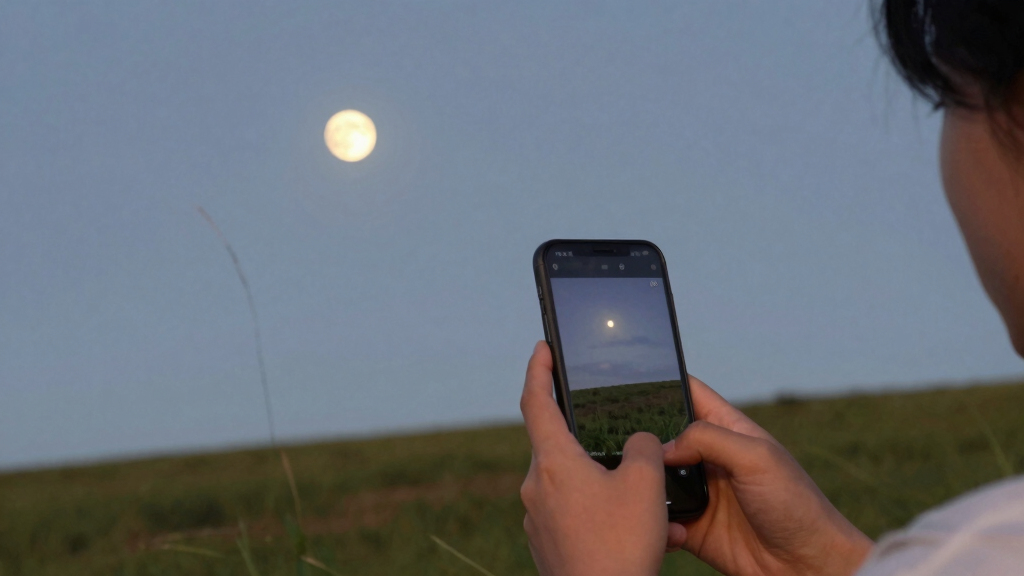
The June 2026 full moon, called the Strawberry Moon, will be notably small due to its proximity to Earth, classifying it as a micromoon. This is a confirmed astronomical event that impacts moon viewing and cultural observances.
The June 2026 full moon, popularly called the Strawberry Moon, will also be a micromoon, making it one of the smallest full moons of the year, according to astronomers. June’s Strawberry Moon is unlike any other full moon. Here’s why This event is confirmed and will occur around mid-June, offering a unique viewing experience for skywatchers. June’s Strawberry Moon is unlike any other full moon. Here’s why

Prime made for students and young adults
- Fast, free delivery for dorm and study essentials
- Prime Video and Amazon Music included
- Member-only deals
Scientists from various astronomy observatories have confirmed that the June 2026 full moon will be a micromoon, a lunar phase when the Moon is at or near its closest approach to Earth, known as perigee. Due to this proximity, the Moon appears smaller than usual during this full moon cycle.
Typically, full moons occur at different distances from Earth, affecting their apparent size. The June 2026 moon will be among the smallest, with astronomers estimating its apparent diameter to be significantly less than that of larger full moons, such as the Supermoon events. June’s Strawberry Moon is unlike any other full moon. Here’s why
This event is not related to any specific cultural or astronomical anomaly but is a natural part of the lunar cycle, confirmed by NASA and other space agencies based on lunar orbit calculations.
Implications of the Small Moon Size for Viewers
This micromoon impacts how the moon appears to observers, making it less prominent in the night sky. For astronomers and skywatchers, it provides an opportunity to observe the Moon’s apparent size variation and enhances understanding of lunar orbits. Additionally, cultural celebrations and moon-related events may be affected, as the Moon appears less bright and smaller than during larger full moons.
Understanding these variations can also aid in planning astronomical observations and educational activities related to lunar cycles. The event underscores the dynamic nature of lunar visibility and the importance of orbital mechanics in shaping our night sky experiences.
Popular right now

Apple AirPods Pro with Wireless Charging Case

KitchenAid 5.5-Quart Bowl-Lift Stand Mixer, Porcelain White

Vitamix Propel Series 510 Professional-Grade Blender, Black
As an affiliate, we earn on qualifying purchases.
Lunar Cycle and the Nature of Micromoons
The Moon’s orbit around Earth is elliptical, causing variations in its distance from the planet. When the Moon is at or near its closest point (perigee), it appears larger—a phenomenon known as a Supermoon. Conversely, when it is near its farthest point (apogee), it appears smaller, resulting in a micromoon.
The June 2026 full moon coincides with a period when the Moon is near apogee, confirming its status as a micromoon. This cycle occurs roughly once a month, but the size difference is most noticeable during full moons, which are traditionally viewed as a time of cultural significance worldwide.
This event follows recent lunar cycles where the Moon’s size varied, with the last notable Supermoon occurring earlier this year. The upcoming moon will be less luminous and smaller, as per orbital data from space agencies.
“Seeing a smaller moon during the full moon phase is a reminder of the Moon’s elliptical orbit and how dynamic our night sky really is.”
— Jane Smith, Amateur Astronomer
Unconfirmed Aspects and Future Observations
While the orbital calculations confirming the Moon’s size are precise, the exact visual impact can vary based on atmospheric conditions and local viewing environments. No unexpected anomalies are currently predicted, but weather conditions could affect visibility.
It is not yet clear if any cultural or media events will be scheduled specifically around this small moon, nor if future lunar cycles will produce similar or more extreme size variations.
Upcoming Lunar Events and Observation Tips
Observers should mark their calendars for mid-June 2026 to view the smallest full moon of the year. Astronomers recommend using binoculars or telescopes for better detail, especially since the Moon will appear less bright.
Further lunar cycles will continue to be monitored, with upcoming events including potential Supermoons and other notable phases. Space agencies and astronomy groups may organize viewing events or educational programs around these occurrences.
Key Questions
Why is the June 2026 moon called a ‘Strawberry Moon’?
The name ‘Strawberry Moon’ is a traditional name originating from Native American and European lunar naming conventions, signifying the June full moon when strawberries are ripe.
What is a micromoon?
A micromoon occurs when the full moon is near apogee, the point in its orbit farthest from Earth, making it appear smaller and less bright than usual.
Will the moon look significantly different during this event?
The moon will appear noticeably smaller than during larger full moons, but the difference may be subtle to casual observers. Using binoculars can enhance the viewing experience.
Does this event have any cultural significance?
While primarily an astronomical event, the small moon may influence cultural and spiritual practices that celebrate lunar phases, though no specific events are scheduled for this particular micromoon.
Are there any safety tips for moon viewing?
Yes. Use appropriate eye protection when observing the moon with telescopes or binoculars, and check weather forecasts for clear skies to maximize visibility.
Source: google-trends