
Calcium-aluminate cements work well with various chemical admixtures to enhance their properties. You can add superplasticizers to improve workability and control setting times, making your mix easier to handle. These admixtures also boost resistance to chemicals like sulfates, extending the durability of your structure. Since calcium-aluminate cements respond positively to different additives, exploring further will reveal how you can optimize their performance for tough environments and demanding projects.
Key Takeaways
- Calcium-aluminate cements respond well to chemical admixtures that enhance workability and control setting times.
- Superplasticizers improve fluidity without compromising early strength development.
- Admixtures can boost chemical resistance, especially against sulfates and aggressive chemicals.
- Proper selection of admixtures optimizes performance for specific applications like underwater or chemically harsh environments.
- Combining calcium-aluminate cements with admixtures reduces curing time and enhances durability.
Have you ever wondered what makes calcium-aluminate cements unique among construction materials? The answer lies in their exceptional chemical and physical properties, which make them highly valuable for specialized applications. One of their standout features is alkali resistance. Unlike ordinary Portland cement, calcium-aluminate cement resists degradation when exposed to high-alkali environments, such as those found in certain industrial settings or in the presence of aggressive chemicals. This alkali resistance guarantees the longevity of structures built with these cements, especially when they face harsh chemical conditions that typically weaken other materials. Additionally, calcium-aluminate cements boast remarkable hydraulic properties, meaning they can set and harden rapidly upon contact with water. This rapid setting is beneficial in situations requiring quick turnaround times or in cold weather conditions where slower-setting cements might delay construction schedules. The hydraulic nature of calcium-aluminate cements allows them to develop strength early, which is vital for applications like repair works or precast elements.
These hydraulic properties also mean that calcium-aluminate cements are highly adaptable to different types of construction environments. They can be used in underwater structures, sewer linings, or other infrastructure projects where moisture exposure is inevitable. Their ability to hydrate quickly and form a durable, resistant matrix makes them ideal for such demanding conditions. Moreover, their chemical composition confers them with superior resistance to sulfate attacks and other aggressive agents, which can compromise traditional cements over time. As a result, structures built with calcium-aluminate cement tend to have a longer lifespan and require less maintenance.
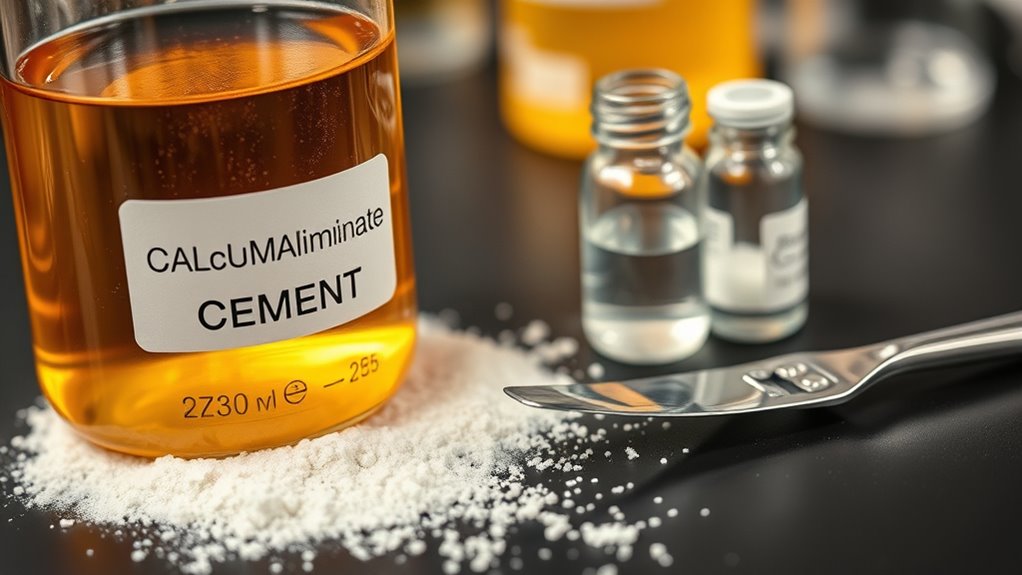
When it comes to incorporating chemical admixtures, calcium-aluminate cements respond well, enhancing their already impressive properties. These admixtures can improve workability, control setting times, or modify other characteristics to meet specific project needs. For example, adding certain superplasticizers can make the mix more fluid without compromising strength, while other admixtures can further boost resistance to chemical attack. You’ll find that using these chemical admixtures with calcium-aluminate cements allows you to tailor the material’s performance precisely, guaranteeing it meets the demands of complex or critical projects.
Frequently Asked Questions
How Do Chemical Admixtures Affect Calcium‑Aluminate Cement Durability?
Chemical admixtures influence calcium-aluminate cement durability through admixture interactions that can either enhance or compromise the material’s strength. When properly chosen, these admixtures promote durability enhancement by improving resistance to chemical attacks, reducing permeability, and controlling setting times. However, incorrect combinations may lead to adverse reactions, weakening the cement structure. Always consider compatibility to guarantee maximum durability and performance of your calcium-aluminate cement.
What Environmental Factors Influence Calcium‑Aluminate Cement Performance?
You’ll notice that calcium‑aluminate cement performance drops by up to 20% in climates with high sensitivity to moisture variability. Climate sensitivity and moisture fluctuations markedly influence its durability, causing potential cracking and deterioration. You should consider environmental factors like temperature swings and humidity levels, as they directly affect the cement’s setting and long-term stability. Managing these variables helps guarantee ideal performance and longevity of your concrete structures.
Can Calcium‑Aluminate Cements Be Recycled or Reused Effectively?
You can recycle and reuse calcium‑aluminate cements, but recycling challenges like separation and contamination exist. To reuse them effectively, you should consider methods like crushing and grinding old cement for new mixes or employing chemical treatments to remove impurities. These approaches help extend the cement’s life, reduce waste, and promote sustainability, though optimizing these reuse methods is vital to guarantee performance remains high and environmental impacts are minimized.
How Do Chemical Admixtures Impact Setting Time of Calcium‑Aluminate Cement?
Chemical admixtures substantially impact the setting time of calcium‑aluminate cement. Retarders slow down the process, giving you more working time, while accelerators speed it up, allowing quicker setting. You can choose specific admixtures based on your project needs to control the setting time effectively. Keep in mind that the right admixture can optimize performance, ensuring your cement sets at the desired rate without compromising strength or durability.
Are There Compatibility Issues Between Calcium‑Aluminate Cements and Specific Admixtures?
You’ll find that admixture compatibility with calcium-aluminate cements isn’t always a walk in the park. Some admixtures clash spectacularly, causing unpredictable setting times or compromised strength. It’s like mixing oil and water—sometimes they refuse to cooperate. Always test for compatibility first, because incompatible admixtures can sabotage your project’s durability and timing. Trust me, a little trial goes a long way in avoiding costly surprises down the line.
Conclusion
While calcium-aluminate cements and chemical admixtures gently open new doors in construction, their true potential remains a subtle whisper waiting to be fully explored. By understanding their delicate interplay, you can unleash innovative solutions that quietly enhance durability and performance. Embrace these materials thoughtfully, and you’ll discover the understated power they hold—offering a promising path toward stronger, more resilient structures without shouting for attention. Sometimes, the most profound advancements come softly.