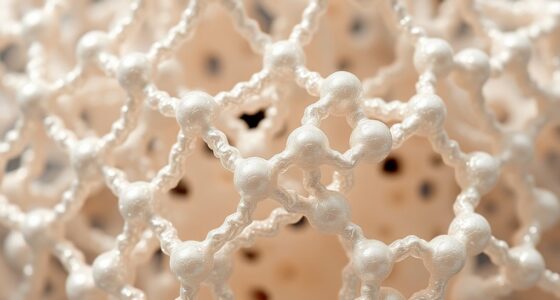

Nanocellulose takes wood pulp and transforms it into ultra-strong, lightweight composites. These nanoscale fibers combine high strength with low weight, making them perfect for eco-friendly packaging and advanced medical uses. Due to its biocompatibility and biodegradability, nanocellulose is also revolutionizing sustainable materials and biomedical solutions. Its ability to be functionalized allows for tailored applications, from drug delivery to biosensors. Keep exploring to discover how this innovative material is shaping a greener future.
Key Takeaways
- Nanocellulose is derived from wood pulp, consisting of nanoscale fibers with exceptional strength and lightweight properties.
- Its high surface area allows for functionalization, enabling the creation of super-strong, lightweight composites.
- These composites are environmentally friendly, biodegradable, and promote sustainability in various industries.
- Nanocellulose-based composites are used in packaging, automotive, and construction for enhanced strength-to-weight ratio.
- Ongoing research focuses on integrating nanocellulose into advanced materials for innovative, eco-friendly applications.

Have you ever wondered what makes nanocellulose such an exciting material? It’s because this tiny yet powerful substance has the potential to revolutionize multiple industries, thanks to its remarkable strength, lightweight nature, and eco-friendly profile. Derived from wood pulp, nanocellulose consists of nanoscale fibers that pack an incredible amount of strength into a minuscule form.
This combination of properties makes it perfect for creating super-strong, lightweight composites that can replace heavier, less sustainable materials. Its versatility is especially evident in eco friendly packaging, where it offers a sustainable alternative to plastic, and in biomedical applications, where its biocompatibility and biodegradability open new frontiers in healthcare.
When you think about eco friendly packaging, nanocellulose stands out as a game-changer. Traditional packaging materials like plastics pose environmental challenges due to their persistence in ecosystems and difficulty to recycle. Nanocellulose, however, is biodegradable and sourced from renewable resources, making it an ideal candidate for sustainable packaging solutions.
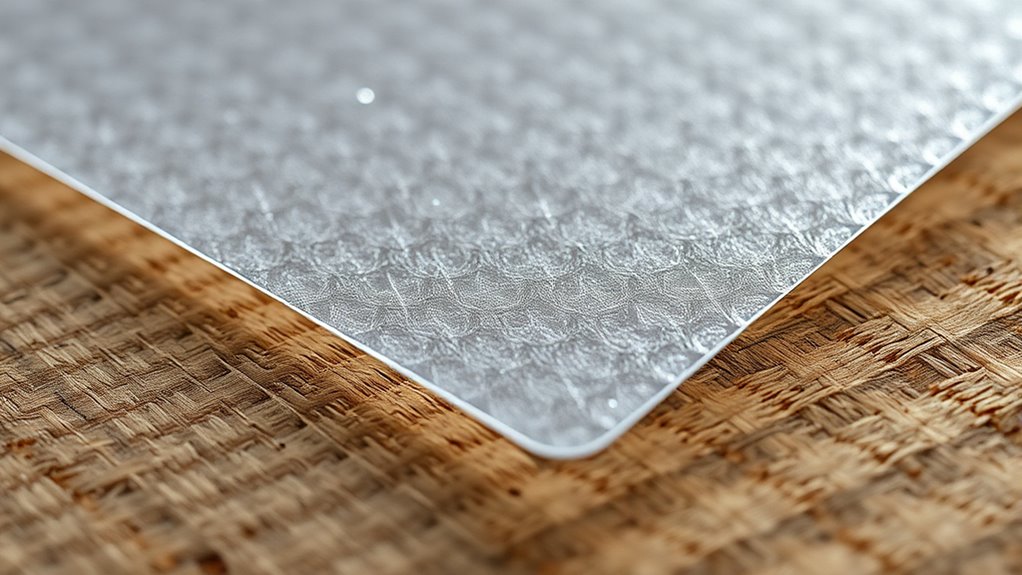
Its high surface area and excellent barrier properties help create packaging that’s not only strong and lightweight but also capable of protecting contents effectively. Imagine wrapping your products in packaging that naturally decomposes after use, reducing landfill waste and pollution. Plus, nanocellulose-based packaging can be tailored to be water-resistant and oxygen-impermeable, providing the same functionality as conventional plastics but without the environmental baggage.
This shift toward eco friendly packaging is driven by consumer demand for sustainable products and stricter regulations on plastic waste, positioning nanocellulose as a crucial material in the future of green packaging.
Beyond packaging, nanocellulose’s biomedical applications are equally impressive. Its biocompatibility means it can interact safely with human tissues, making it ideal for medical use. You mightn’t realize it, but nanocellulose can be used to develop wound dressings that promote faster healing or as scaffolds for tissue engineering, helping regenerate damaged tissues. The biocompatibility of nanocellulose also allows for its use in drug delivery systems, providing targeted therapy with minimal side effects.
Additionally, its high surface area allows for functionalization with drugs or other bioactive agents, enabling targeted delivery systems. The biodegradable nature of nanocellulose ensures that these medical devices or implants can break down naturally within the body, minimizing the need for removal surgeries and reducing long-term risks. Furthermore, ongoing research into nanocellulose composites continues to expand its potential in advanced biomedical devices and regenerative medicine.
Researchers are also exploring its use in biosensors, where nanocellulose’s sensitivity can lead to more accurate diagnostics. Overall, nanocellulose bridges the gap between sustainability and advanced healthcare, opening up new possibilities for safer, more effective medical solutions.
In essence, nanocellulose’s unique combination of strength, lightweight properties, and eco friendliness makes it a material with vast potential. Whether transforming packaging to be more sustainable or advancing biomedical technology, it offers a promising path forward.
You’re witnessing the beginning of a shift toward greener, smarter materials that could reshape industries and improve everyday life—highlighting just how vital nanocellulose is becoming in our pursuit of a more sustainable future.

Nanocellulose-Based Packaging: Fabrication, Properties, and Applications
As an affiliate, we earn on qualifying purchases.
As an affiliate, we earn on qualifying purchases.
Frequently Asked Questions
How Sustainable Is Nanocellulose Production Compared to Traditional Materials?
You might wonder how sustainable nanocellulose production is compared to traditional materials. It’s quite eco-friendly because nanocellulose is biodegradable and derived from renewable resources like wood pulp.
Plus, it generally requires less energy consumption during manufacturing. This means it has a smaller environmental footprint, making it a more sustainable option.
What Are the Current Commercial Applications of Nanocellulose?
Did you know nanocellulose is already in use in various industries? You might find it in automotive components, where it helps reduce vehicle weight, improving fuel efficiency.
It’s also common in food packaging, offering a sustainable alternative to plastics. These applications leverage nanocellulose’s strength and lightweight nature, making products more eco-friendly.
As demand grows, expect to see more innovative uses of this versatile material across multiple sectors.
Are There Any Health Risks Associated With Nanocellulose Exposure?
You’re wondering if nanocellulose poses health risks. Occupational safety is essential, so proper handling and protective equipment are vital to prevent inhalation or skin contact.
Current toxicity assessments suggest nanocellulose isn’t highly toxic, but long-term effects remain under study.
Always follow safety guidelines, and stay updated on research to minimize risks, ensuring a safe environment when working with this innovative material.
How Does Nanocellulose Impact the Recycling Process of Composites?
Like trying to untangle a knot, recycling composites with nanocellulose presents unique challenges. Its biodegradability can hinder recycling efficiency, as it may break down prematurely or complicate separation processes.
You might find that nanocellulose-based materials require specialized methods, making recycling more complex. This impacts overall sustainability, demanding innovations to improve recycling compatibility and address biodegradability challenges for more effective reuse of composites.
What Are the Limitations of Scaling up Nanocellulose Manufacturing?
When you consider scaling up nanocellulose manufacturing, you’ll face cost barriers that make large-scale production expensive. Additionally, establishing a reliable supply chain is challenging because sourcing consistent, high-quality raw materials isn’t always straightforward.
These limitations hinder the widespread adoption of nanocellulose, as you need to balance cost-efficiency with maintaining quality. Overcoming these hurdles will be key to making nanocellulose more accessible for various applications.
Conclusion
So, imagine turning ordinary wood pulp into a super-strong, lightweight marvel that could revolutionize everything from cars to space shuttles. Nanocellulose isn’t just a breakthrough—it’s a game-changer that makes steel look like cardboard and plastic seem fragile. You’re on the brink of witnessing a material so incredible, it could make the impossible possible. Get ready, because this tiny fiber is about to *unleash* a new era of strength and innovation beyond your wildest dreams!