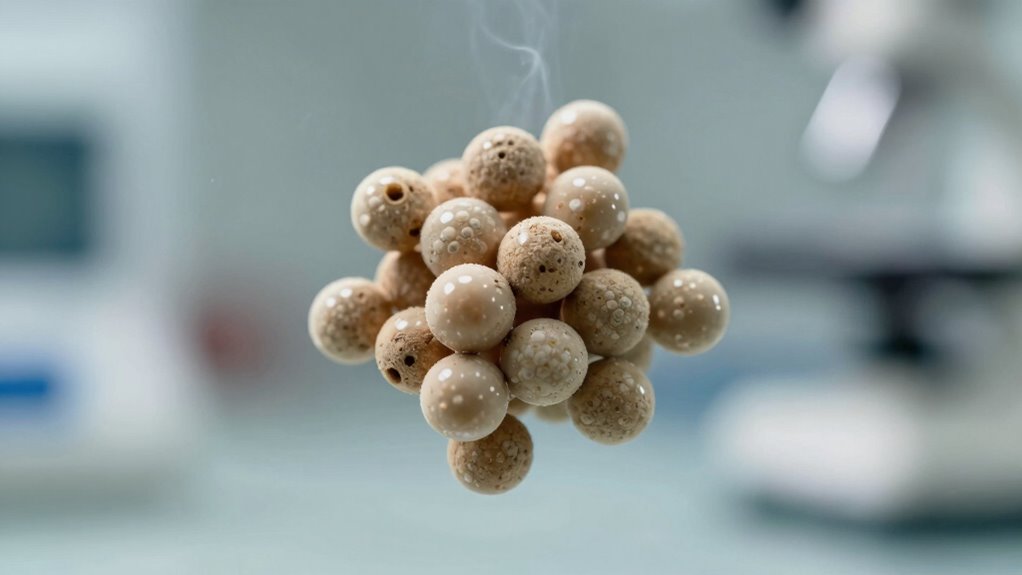

To tune spray drying particle morphology precisely, focus on controlling droplet size and feed rate based on feed properties like viscosity and surface tension. Smaller droplets produce smoother, uniform particles, while larger ones lead to porous, irregular shapes. Adjust feed rate to manage droplet formation without relying on guesswork. By understanding and refining these key parameters, you can achieve the desired particle surface and structure consistently—if you explore further, you’ll uncover even smarter optimization strategies.

Prime made for students and young adults
- Fast, free delivery for dorm and study essentials
- Prime Video and Amazon Music included
- Member-only deals
Key Takeaways
- Adjust atomizer parameters (pressure, nozzle type) based on feed viscosity and surface tension to control droplet size precisely.
- Optimize feed rate to produce the desired droplet size, balancing drying time and particle uniformity.
- Monitor and modify feed properties (viscosity, surface tension) to influence droplet formation without guesswork.
- Fine-tune drying temperature and airflow to achieve consistent particle morphology aligned with droplet size.
- Use real-time process monitoring and feedback control systems to maintain targeted particle features systematically.
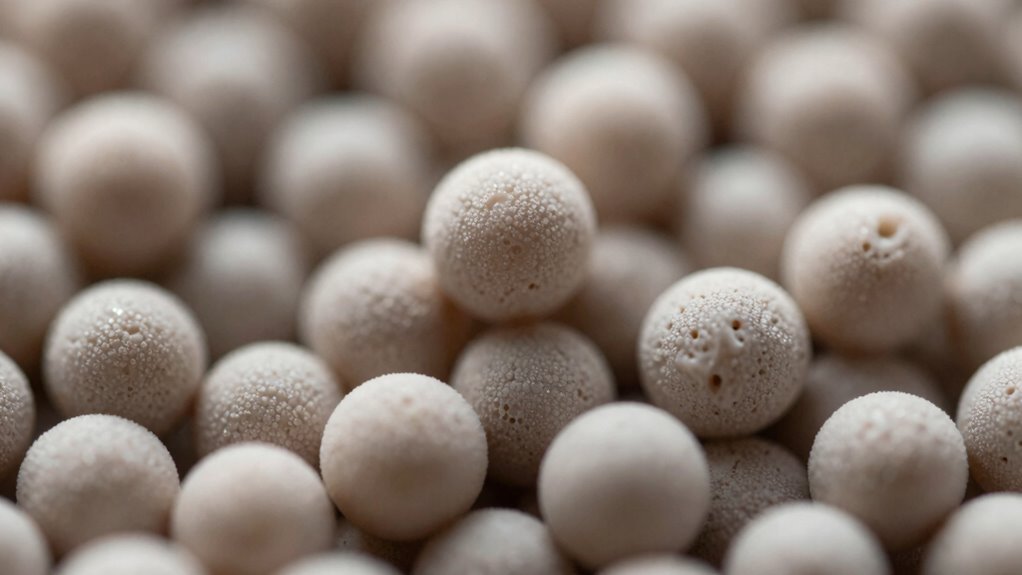
Spray drying particles are vital in transforming liquids into dry powders quickly and efficiently. When you’re optimizing your process, understanding how to control particle morphology can make a significant difference in product quality. One of the key factors influencing the final particle structure is the droplet size created during atomization. Smaller droplets tend to produce finer powders with smoother surfaces, while larger droplets can lead to more porous, irregular particles. Managing droplet size allows you to tailor the morphology to meet specific application requirements, whether you need instant solubility or controlled release.
Another critical parameter is the feed rate, which directly impacts how droplets form and evaporate. If you increase the feed rate, you might produce larger droplets because the liquid volume entering the atomizer grows. Larger droplets take longer to dry, which can lead to increased stickiness or agglomeration, affecting the powder’s flowability and morphology. Conversely, reducing the feed rate promotes the formation of smaller droplets, resulting in powders with higher surface area and potentially more uniform shapes. Balancing the feed rate is essential; too high, and you risk producing inconsistent particles, too low, and your process becomes inefficient.
Controlling droplet size and feed rate isn’t just about adjusting equipment settings blindly. It involves a careful understanding of your feed’s properties, such as viscosity and surface tension, and how they interact with atomizer design and operating conditions. For example, a high-viscosity feed might require modifications to atomizer pressure or nozzle type to generate the desired droplet size. Similarly, optimizing the feed rate ensures that droplets dry uniformly, preventing issues like cracking, collapse, or irregular surface textures. Additionally, understanding the role of color accuracy in your process can help enhance the visual consistency of the final product.
As an affiliate, we earn on qualifying purchases.
Frequently Asked Questions
Can Spray Drying Particles Be Customized for Specific Applications?
Yes, you can customize spray drying particles for specific applications by adjusting parameters that influence particle surface and cohesion. You can modify drying temperature, feed rate, and atomization to control surface texture and cohesion levels. This helps you create particles with desired morphology, whether it’s smoother surfaces for easier flow or tailored cohesion for stability. Fine-tuning these variables allows you to meet your unique product requirements without guesswork.
How Does Particle Size Influence Drying Efficiency?
Particle size directly impacts drying efficiency; smaller particles dry faster because they have a larger surface area relative to their volume. When you optimize particle size, you improve drying speed and energy use, making the process more efficient. Larger particles, however, may require longer drying times and more energy. By carefully tuning particle size, you can achieve a balance that enhances overall drying performance and reduces operational costs.
Are There Environmental Concerns With Spray Drying Processes?
Environmental concerns with spray drying include emissions of volatile organic compounds and dust, which can impact air quality. You can mitigate this by implementing effective emission control measures like filters, scrubbers, and proper ventilation. Regular maintenance ensures maximum performance, reducing environmental impact. Staying compliant with regulations not only minimizes pollution but also improves process efficiency, helping you balance productivity with environmental responsibility.
What Are the Latest Innovations in Spray Drying Technology?
You’re witnessing the future of spray drying with groundbreaking innovations! Your process gets a turbo boost thanks to innovative nozzle designs that precisely control droplet formation, and advanced drying chambers that optimize heat transfer. These cutting-edge tech marvels allow you to fine-tune particle morphology effortlessly, drastically improve efficiency, and reduce waste. Embrace these innovations, and turn your spray drying operation into a powerhouse of precision and performance!
How Do Different Feed Solutions Affect Particle Morphology?
Different feed solutions considerably influence particle morphology by affecting feed composition and solution viscosity. When you adjust feed composition, you alter the drying dynamics, leading to varied particle shapes and sizes. Higher viscosity solutions tend to produce larger, denser particles, while lower viscosity yields more porous structures. By carefully tuning these parameters, you can control morphology precisely without guesswork, optimizing spray drying outcomes for your specific application.
Conclusion
To optimize your spray drying particles, focus on controlling your feed properties, adjusting your drying parameters, and selecting the right atomization method. By fine-tuning these factors, you can shape your particle morphology, improve product consistency, and achieve desired performance. Don’t leave it to chance—test, analyze, and refine. With careful control and understanding, you’ll master the art of tuning spray drying particles to meet your specific needs.
Halloween Picks
halloween
As an affiliate, we earn on qualifying purchases.