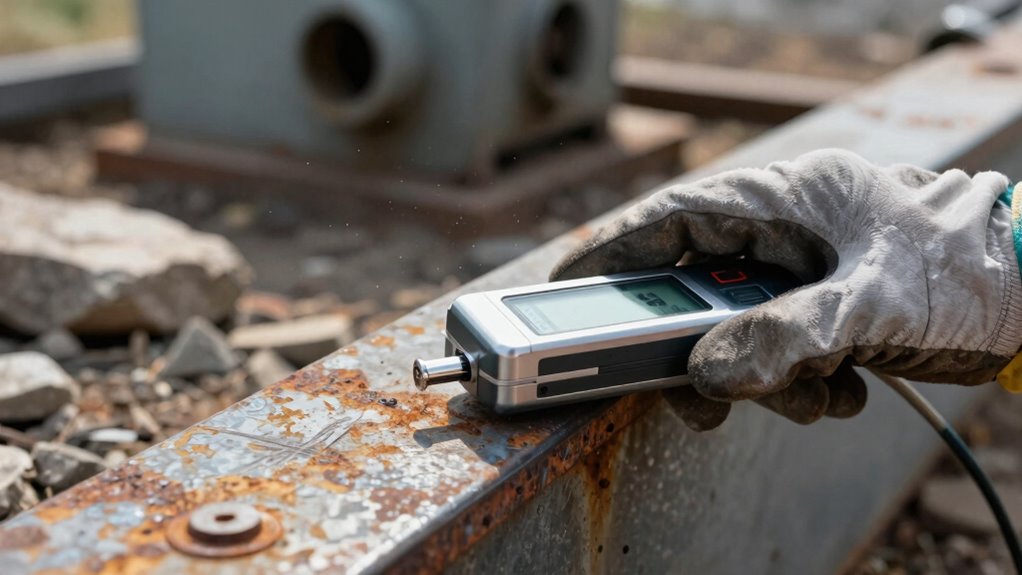

Portable hardness testers give you quick, reliable results right in the field, allowing you to make fast decisions and stay on schedule. They’re easy to operate, often with simple interfaces that don’t need specialized training. Designed for durability, these units handle tough environments and various materials, ensuring consistent accuracy. They help you meet industry standards safely and efficiently. Keep exploring to discover how these tools can improve your testing process and project outcomes.
Key Takeaways
- Provide immediate, on-site hardness results for quick decision-making and project progress.
- Easy to operate with minimal setup, suitable for users without specialized training.
- Built for durability, ensuring reliable performance in demanding field environments.
- Offer quick calibration and high measurement accuracy across various materials.
- Support compliance with industry standards and safety protocols for reliable testing.
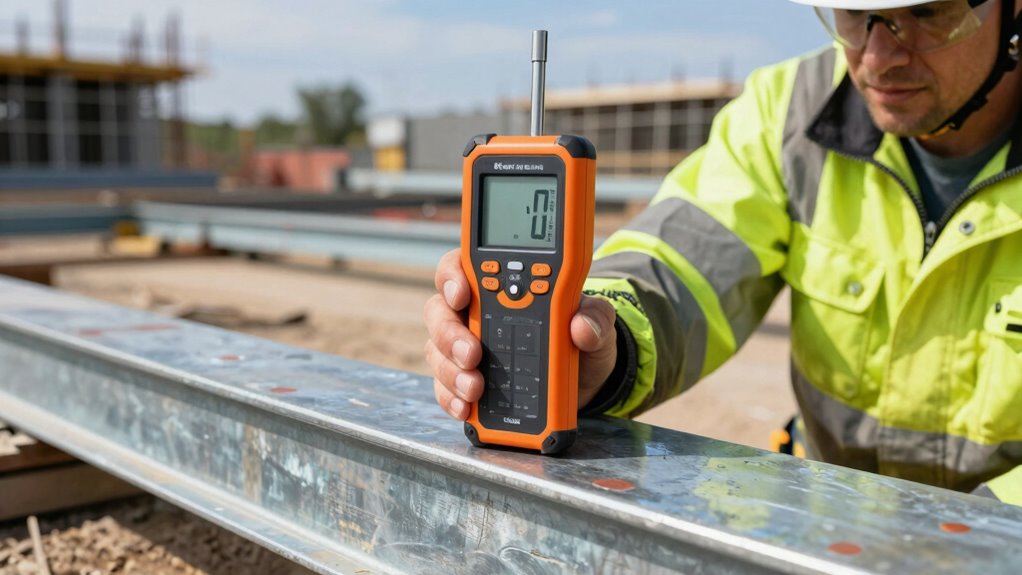
When you need quick and reliable material assessments, hardness testing in the field offers an efficient solution. Portable hardness testers are designed to provide immediate results, allowing you to make informed decisions without the delays associated with traditional lab testing. These devices are especially useful when working on-site, where time is critical, and transporting samples to a lab isn’t practical. Their ability to deliver instant feedback helps you maintain project timelines and guarantee quality control remains on track.
One of the key advantages of portable hardness testers is their ease of use. You don’t need to be a specialist to operate them effectively. Many units feature simple interfaces, making it straightforward to perform tests even in challenging environments. With minimal setup required, you can quickly calibrate your equipment to assure accurate, consistent results. Material calibration is crucial for maintaining measurement precision, especially when switching between different materials or testing conditions. Portable units often come with built-in calibration features or easy-to-use calibration standards, so you can quickly verify and adjust your device before testing. Proper calibration is essential for ensuring that your measurements reflect the true hardness of the material, which is crucial for quality assurance and compliance. Additionally, field-ready durability ensures these units can withstand the rigors of demanding testing environments. Understanding the material properties you are testing also plays a vital role in achieving accurate and reliable results. Incorporating an understanding of testing standards helps ensure your measurements meet industry requirements and benchmarks. Being aware of measurement accuracy is fundamental to maintaining consistency across different testing scenarios. Furthermore, considering safety protocols when handling testing equipment and chemicals is essential to prevent accidents and ensure compliance with safety regulations.

Helivivfy Metal Hardness Tester – Portable Hardness Tester Kit with Test Block,Pen Type Richter Hardness Tester,Rockwell Metal Hardness Meter
- 7 Hardness Testing Systems: Richter, Brinell, Rockwell, Vickers, Shore
- Suitable for 20 Materials: Steel, cast iron, aluminum, copper alloys
- Data Storage Capacity: Stores up to 350 test results
As an affiliate, we earn on qualifying purchases.
As an affiliate, we earn on qualifying purchases.
Frequently Asked Questions
What Materials Can Portable Hardness Testers Accurately Evaluate?
You can accurately evaluate metals like steel, aluminum, and cast iron with portable hardness testers, thanks to their material compatibility. However, be aware of testing limitations; very hard or very soft materials may produce less reliable results. Always consider the material’s surface condition and thickness, as these factors influence accuracy. Proper calibration and understanding the tester’s specifications ensure you get the best results in the field.
How Do Environmental Conditions Affect Portable Hardness Testing Results?
Environmental impact can profoundly influence your portable hardness testing results. Factors like temperature fluctuations, humidity, and dirt can affect the testing accuracy you achieve. For example, extreme temperatures may cause equipment to give inconsistent readings, while moisture or debris can interfere with the contact between the tester and material. To guarantee reliable results, you need to take these environmental conditions carefully and adapt your testing approach accordingly.
What Is the Maximum Thickness Suitable for Portable Hardness Testing?
You should keep the maximum thickness suitable for portable hardness testing around 25mm (1 inch). Thicker materials can hinder accurate readings, and calibration procedures might become less reliable. Always prioritize user safety by making sure the equipment is correctly calibrated and used on appropriate surfaces. When testing thicker samples, consider alternative methods or specialized equipment to ensure accurate results without risking damage or safety issues.
How Long Does Calibration of Portable Units Typically Take?
Calibration of portable hardness testing units typically takes about 15 to 30 minutes, depending on the device and calibration procedures involved. You should perform calibration at standard intervals, as recommended by the manufacturer, to guarantee accuracy. Regular calibration involves using calibration blocks or standards, and keeping to these intervals helps maintain reliable results in the field. Always follow the manufacturer’s instructions for precise calibration procedures.
Are Portable Hardness Testers Suitable for Non-Metallic Materials?
You might find portable hardness testers aren’t always the best fit for non-metallic materials, as they face subtle non-metallic challenges that can affect accuracy. Material compatibility is key, and these units are primarily designed for metals. While some specialized testers can handle non-metals, for precise readings, it’s often better to use methods tailored specifically for non-metallic surfaces, ensuring you get reliable results without compromise.
Conclusion
When you choose a portable hardness tester, you might find that it surprisingly fits seamlessly into your workflow, making tough jobs easier. It’s almost like the device is designed to meet your needs before you even realize them—convenient, reliable, and ready when you are. In the end, the right tool feels less like a coincidence and more like a smart decision, turning what once seemed complex into something straightforward and even enjoyable.