
Sulfide electrolytes offer high ionic conductivity and fast-charging but are moisture-sensitive and tricky to handle. Oxide electrolytes are stable and safe but usually have lower conductivity and require high-temperature processing. Polymers are flexible and easy to manufacture but often struggle with conductivity and durability at higher temperatures. Each type has unique pros and cons, so exploring further will help you understand which one best suits your needs.
Key Takeaways
- Sulfide electrolytes offer high ionic conductivity but are moisture-sensitive and challenging to handle during manufacturing.
- Oxide electrolytes are chemically stable and moisture-resistant but typically have lower ionic conductivity and require high-temperature sintering.
- Polymer electrolytes are flexible and easy to process, yet generally exhibit lower ionic conductivity and less stability at elevated temperatures.
- Sulfides enable fast charging but pose stability issues, whereas oxides are more stable but harder to manufacture at scale.
- Ongoing research aims to improve ionic conductivity and stability across all electrolyte types for better solid-state battery performance.
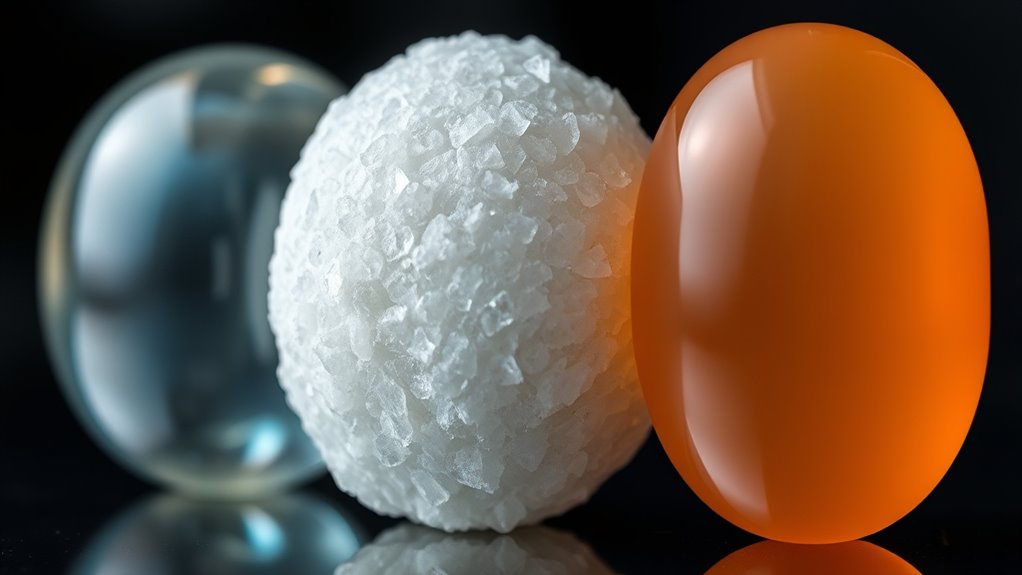
Solid-state electrolytes are a promising advancement in battery technology, offering a safer and more efficient alternative to traditional liquid electrolytes. They eliminate many safety risks associated with liquid electrolytes, such as flammability and leakage, and can potentially enable higher energy densities. However, transitioning from liquids to solid materials isn’t without hurdles. One of the key challenges lies in material stability and manufacturing processes, which vary considerably among sulfide, oxide, and polymer electrolytes.
When you look at sulfide electrolytes, you’ll notice they’re known for their high ionic conductivity, making them attractive for fast-charging batteries. But these materials often face stability issues. Sulfides tend to react with moisture in the air, forming harmful gases and degrading over time, which complicates handling and storage. Manufacturing sulfide electrolytes can also be tricky. Their processing requires high-pressure sintering and specialized equipment to achieve uniform, defect-free materials. These steps increase production costs and complexity, making large-scale manufacturing less straightforward.
Oxide electrolytes, on the other hand, are celebrated for their exceptional chemical stability and robustness. They resist moisture and chemical reactions much better than sulfides, which makes them easier to handle and store. Yet, their material stability comes at a cost: oxide electrolytes typically have lower ionic conductivity compared to sulfides. Achieving high conductivity involves sintering at high temperatures, which can lead to grain boundary issues and mechanical stress within the material. Manufacturing oxides also demands precise control over processing conditions, and scaling up production while maintaining consistency poses a significant challenge.
Polymer electrolytes offer a different set of advantages. They’re flexible, lightweight, and easier to process, often produced through solution casting or extrusion techniques. Their material stability is generally good at room temperature, and they’re less sensitive to moisture than sulfides. However, polymers usually have lower ionic conductivity, especially at ambient temperatures, limiting their use in high-performance applications. Manufacturing polymer electrolytes tends to be simpler and more adaptable to scalable production, but achieving the necessary conductivity and stability at elevated temperatures remains difficult. Additionally, they can suffer from mechanical degradation over time. Advances in materials science continue to seek solutions for enhancing their ionic conductivity and mechanical stability to broaden their practical applications.

INTSUPERMAI 110V 10L Jacketed Glass Reactor, Double-Layer Chemical Reaction Vessel with Digital Display and Support Frame, Jacketed Reactor for Lab Chemistry Reaction Distillation
10L Lab-Scale Capacity with Durable GG17 Glass: This jacketed glass reactor provides a full 10L interior working volume,...
As an affiliate, we earn on qualifying purchases.
Frequently Asked Questions
How Do Solid-State Electrolytes Impact Overall Battery Lifespan?
Solid-state electrolytes profoundly impact your battery’s lifespan by enhancing electrolyte stability and cycling durability. When these electrolytes resist degradation over time, they prevent capacity loss and extend the battery’s life. You benefit from more reliable performance and fewer replacements. Choosing electrolytes with high stability ensures your battery can endure repeated charge-discharge cycles, ultimately improving overall longevity and maintaining consistent power output over years of use.
Are There Environmental Concerns With Sulfide, Oxide, or Polymer Electrolytes?
Did you know that nearly 70% of electronic waste isn’t properly recycled, raising environmental concerns? When it comes to sulfide, oxide, and polymer electrolytes, each presents unique issues. Sulfide electrolytes can release toxic gases, raising environmental toxicity concerns. Oxides are more stable but harder to recycle, complicating waste management. Polymers may break down into microplastics, impacting ecosystems. So, while promising, these materials pose recycling challenges and environmental risks you should consider.
What Are the Safety Advantages of Solid-State Over Liquid Electrolytes?
You benefit from solid-state electrolytes’ safety advantages because they markedly improve fire safety and thermal stability compared to liquid electrolytes. Since they don’t contain flammable liquids, the risk of fires during accidents drops sharply. Their robust structure withstands higher temperatures without degrading, reducing thermal runaway. This makes solid-state batteries safer, especially in high-stress situations, providing peace of mind and enhanced protection for your devices and vehicles.
How Do Manufacturing Costs Compare Among Different Solid Electrolytes?
You’ll find that manufacturing costs vary among solid electrolyte types, influenced by cost efficiency and material scalability. Sulfide electrolytes tend to be cheaper initially due to simpler processes but face scalability challenges. Oxide electrolytes are more costly due to complex fabrication, yet offer better long-term stability. Polymers are generally cost-effective and scalable, making them attractive for large-scale production. Your choice depends on balancing these factors for your specific application and budget.
Can Solid Electrolytes Be Integrated Into Existing Battery Production Lines?
You can often integrate solid electrolytes into existing battery production lines, but it requires careful attention to manufacturing compatibility and material handling. Sulfide electrolytes, for example, may need specialized equipment due to their sensitivity to moisture, whereas oxides and polymers tend to blend more seamlessly. With some adjustments, your current setups can accommodate these materials, paving the way for more advanced, safer batteries without overhauling your entire manufacturing process.

TECHTONGDA 10L Jacketed Reactor 110V Single Layer Glass Reactor Rotating Speed 60-600RPM, Lab Chemical Reaction Vessel with Heating and Digital Display for Reaction Distillation
Thickened Kettle Body: The glass reactor is a single-layer design of high borosilicate glass, thickened kettle body with...
As an affiliate, we earn on qualifying purchases.
Conclusion
Imagine holding the future of batteries in your hands—solid-state electrolytes are truly revolutionizing energy storage! Whether sulfides, oxides, or polymers, each type is like a superhero with unique powers, transforming your devices into unstoppable powerhouses. This breakthrough isn’t just incremental; it’s like releasing a tidal wave of innovation that will flood every gadget, car, and grid with unstoppable, lightning-fast energy. Get ready—you’re on the brink of a battery era so intense, it’ll blow your mind!

HNZXIB Double-Layer Cylindrical 10L Glass Jacket Type Reactor Chemical Reaction Unit
Voltage: 110V/60HZ.GG17 high borosilicate glass, which can ensure good chemical and physical properties. If hot oil cycles through...
As an affiliate, we earn on qualifying purchases.

10L Jacketed Double Layer Glass Vacuum Distillation Reactor with Electric Lifting & Rotating Function - Lab Grade for Chemical & Pharmaceutical Use
High-Capacity and Durable Design: Featuring a 10L capacity and double-layer borosilicate glass construction, this vacuum distillation reactor is...
As an affiliate, we earn on qualifying purchases.