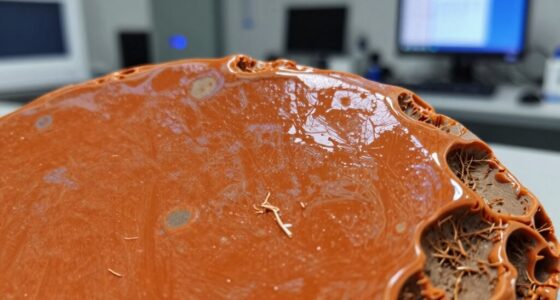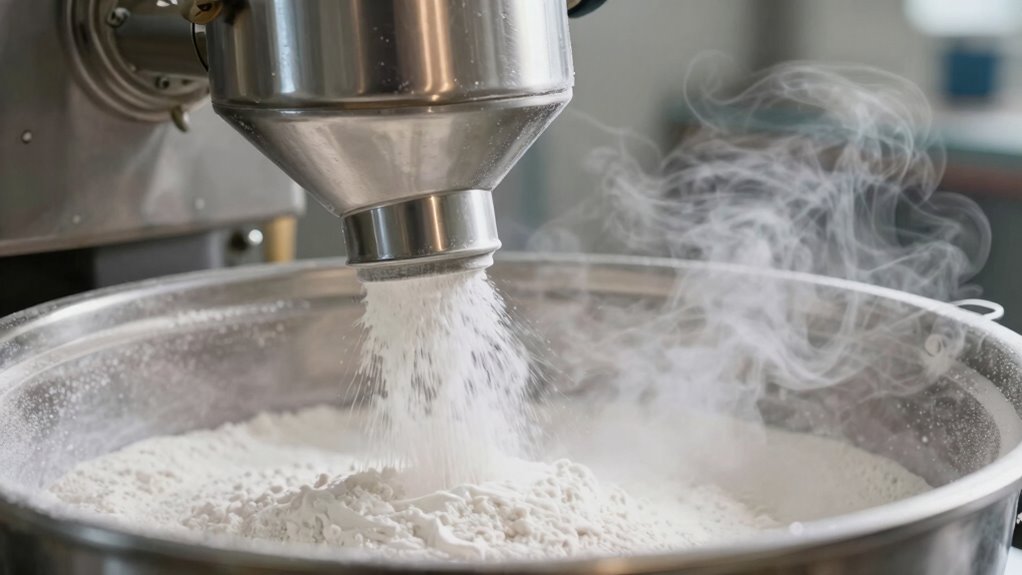

In spray dryers, drying kinetics—how quickly moisture is removed—directly impact your powder’s properties. Faster moisture evaporation results in finer, more uniform particles, improving flowability and stability. Slower drying can lead to larger, moister powders that may clump or be less soluble. By controlling factors like heat transfer and aerosol formation, you influence particle size, moisture content, and overall quality. Keep exploring to see how mastering these elements guarantees consistent, high-quality powders tailored to your needs.

Prime made for students and young adults
- Fast, free delivery for dorm and study essentials
- Prime Video and Amazon Music included
- Member-only deals
Key Takeaways
- Drying kinetics determine particle size, moisture content, and solubility, directly influencing powder quality and usability.
- Faster heat transfer results in finer, more uniform powders, while slower drying can cause larger particles or residual moisture.
- Controlling aerosol formation ensures consistent droplet size, affecting moisture evaporation and powder uniformity.
- Optimizing residence time and air temperature balances drying rate and ingredient stability.
- Real-time monitoring of drying conditions allows adjustments to maintain desired powder properties.
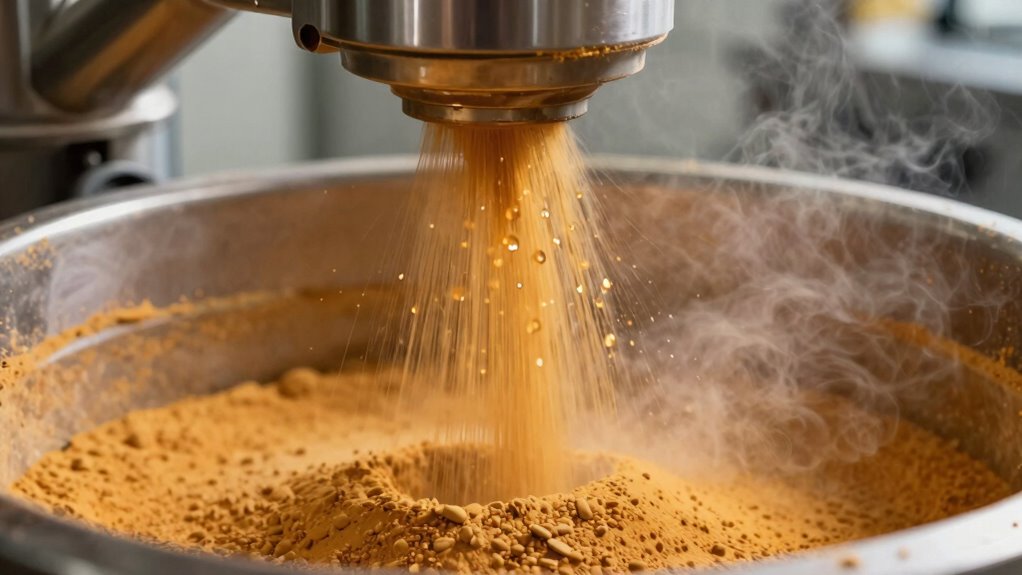
Have you ever wondered how liquid substances are transformed into powders so quickly and efficiently? The secret lies in the spray drying process, where understanding the intricacies of aerosol formation and heat transfer is crucial. When you operate a spray dryer, you’re fundamentally creating a fine mist or aerosol of the liquid feed. This aerosol consists of tiny droplets that are propelled into a chamber filled with hot air. The rapid evaporation of moisture from these droplets turns them into dry particles almost instantly.
Aerosol formation plays a pivotal role in determining the final powder quality. The size and distribution of these droplets influence how uniformly the moisture evaporates, affecting powder consistency and flowability. Smaller droplets, for instance, have a larger surface area relative to their volume, enabling quicker heat transfer and faster drying. As you control the droplet size, you directly impact the drying kinetics—faster moisture removal leads to powders with specific textures and moisture content. If the aerosol formation isn’t well-managed, you risk producing powders with uneven moisture, clumping, or poor dispersibility.
Heat transfer is the driving force behind the entire process. When the hot air contacts the aerosol droplets, heat is transferred rapidly, facilitating phase change from liquid to vapor. The efficiency of this heat transfer depends on multiple factors: temperature of the hot air, droplet size, and the residence time within the drying chamber. You want to optimize these parameters to ensure that each droplet loses moisture quickly without overheating, which could degrade sensitive ingredients or cause stickiness. Precise temperature control ensures the moisture evaporates swiftly while preserving the integrity of the powders’ active components. Additionally, understanding the heat transfer mechanisms involved can help improve process efficiency and product quality. Recognizing the importance of aerosol dynamics can further enhance your control over the spray drying process. Furthermore, advancements in process monitoring can provide real-time data to optimize these variables dynamically. Proper management of thermal gradients within the chamber is essential for consistent product quality. Moreover, controlling airflow patterns can help achieve a more uniform heat distribution throughout the chamber, improving overall process stability.
The rate of heat transfer directly affects drying kinetics, which in turn influences powder properties like particle size, moisture content, and solubility. Faster heat transfer results in quicker drying, producing powders with fine, uniform particles. Slower heat transfer might lead to larger particles or powders with residual moisture, affecting their stability and performance. As you fine-tune these processes, you’re shaping the powder’s qualities—its flowability, solubility, and overall usability.
In reality, mastering aerosol formation and heat transfer isn’t just about speeding up production; it’s about achieving the desired powder characteristics reliably. When you understand how to control these factors, you can produce high-quality powders tailored to specific applications, whether in food, pharmaceuticals, or chemicals. The efficiency of your spray dryer depends on your ability to balance these elements, turning liquid ingredients into perfect powders in a flash.
As an affiliate, we earn on qualifying purchases.
Frequently Asked Questions
How Do Humidity Levels Affect Spray Drying Outcomes?
Humidity impact greatly influences spray drying outcomes, and you need to prioritize moisture control. High ambient humidity slows the drying process, leading to wetter powders with poor flowability and increased stickiness. Conversely, low humidity promotes faster moisture removal, resulting in dry, consistent powders. By managing humidity levels carefully, you guarantee ideal drying kinetics, which improve powder quality, reduce clumping, and enhance product stability.
What Are the Best Practices for Scaling up Spray Drying Processes?
Scaling up spray drying is like steering through uncharted waters—you need precise tools. You should focus on equipment calibration to guarantee consistent performance and process automation to maintain uniformity across larger batches. Regularly validate parameters, monitor critical quality attributes, and use pilot runs to fine-tune conditions. This approach helps you replicate lab results reliably, ensuring your powder’s quality stays high as you grow production.
How Can Particle Size Distribution Be Optimized During Drying?
To optimize particle size distribution during drying, you should focus on maintaining particle uniformity and precise size control. Adjust atomization parameters—like nozzle type and feed rate—to produce consistent droplet sizes. Monitor drying conditions closely, ensuring uniform moisture removal. Using in-line particle size analyzers helps you make real-time adjustments. These steps help you achieve a narrow size distribution, resulting in better powder flow, solubility, and overall quality.
What Are Common Troubleshooting Steps for Incomplete Drying?
Imagine the spray dryer as a busy artist, drying each particle to perfection. If drying’s incomplete, start by checking moisture measurement tools—they might give false readings. Confirm equipment maintenance is up to date, cleaning any clogs or buildup that block airflow. Adjust temperature and airflow settings if needed. Regularly inspect and calibrate sensors. These steps help you troubleshoot effectively, guaranteeing your powder dries uniformly and achieves the desired quality.
How Does Feed Composition Influence Drying Kinetics?
Your feed composition influences drying kinetics considerably. Higher feed viscosity slows moisture removal because it hinders atomization and heat transfer. Conversely, solvents with high volatility evaporate quickly, speeding up drying, but may cause uneven moisture loss if not controlled. Adjusting the feed’s viscosity and solvent volatility helps optimize drying rates, ensuring consistent powder quality. Proper formulation balances these factors, leading to efficient drying and desirable powder characteristics.
Conclusion
Think you know how spray drying works? The truth is, understanding drying kinetics is key to controlling powder quality. By mastering these processes, you can optimize your production and guarantee consistent, high-quality results. Don’t just accept traditional methods—question and explore how drying rates influence particle properties. When you grasp the science behind it, you’ll open new possibilities for innovation and efficiency in your drying operations. So, challenge assumptions and refine your approach for better outcomes.
Fall Picks
fall essentials
As an affiliate, we earn on qualifying purchases.