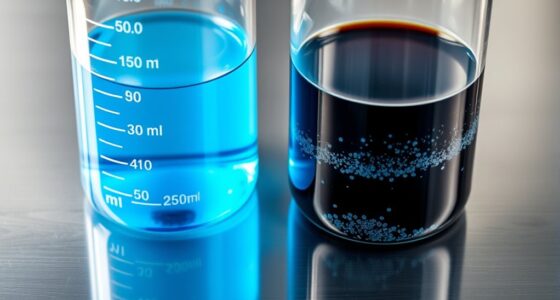
You might think absorption and adsorption are the same, but they are quite different. Absorption happens when a substance soaks into the interior of a material, like a sponge soaking up water. Adsorption, on the other hand, involves molecules sticking to the surface of a material, like charcoal trapping odors. Recognizing this difference helps in choosing the right filtration or purification method. Keep exploring, and you’ll discover how understanding these processes makes a big difference in real-world applications.

Prime made for students and young adults
- Fast, free delivery for dorm and study essentials
- Prime Video and Amazon Music included
- Member-only deals
Key Takeaways
- Absorption involves molecules penetrating and filling the interior of a material, while adsorption involves surface attachment only.
- Absorption is volumetric; adsorption is a surface phenomenon involving molecules sticking to the surface.
- Adsorption is typically rapid and reversible; absorption tends to be slower and involves bulk material.
- Surface area and porosity greatly influence adsorption efficiency, unlike absorption.
- Recognizing the difference helps select appropriate filtration or purification processes.
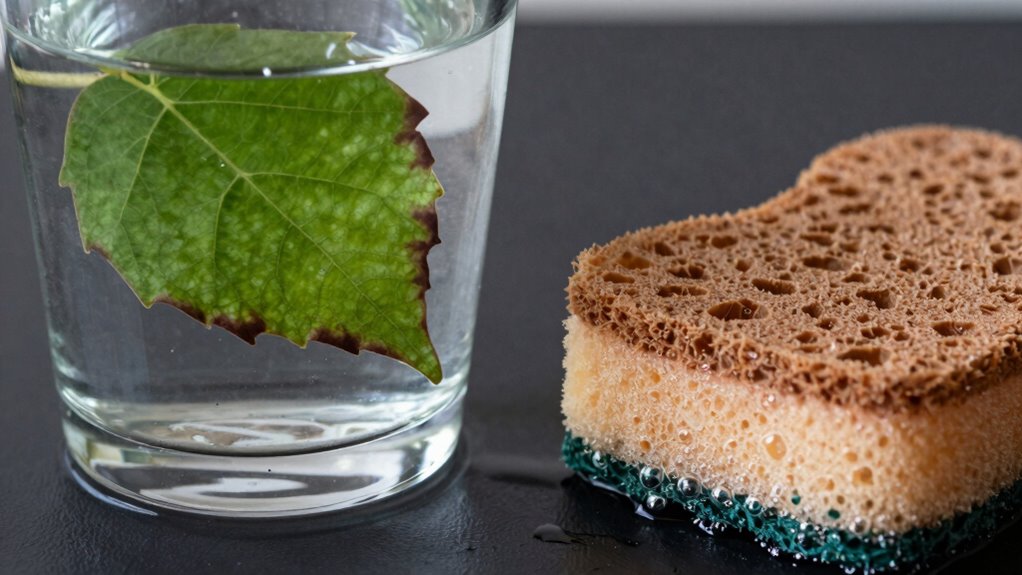
Have you ever wondered how certain substances interact with others, especially in processes like filtration or purification? Understanding the difference between absorption and adsorption is vital because it affects how we design systems to clean water, purify air, or even develop new materials. These processes rely on different chemical mechanisms, which determine their practical applications and effectiveness. Absorption involves a substance being incorporated into the bulk of another material, much like a sponge soaking up water. The molecules penetrate the entire volume, which makes the process volumetric. Adsorption, on the other hand, is a surface phenomenon where molecules adhere only to the surface of a material. Think of it as tiny particles sticking to the outside of a charcoal filter. These distinctions are fundamental because they influence how these processes are used in real-world scenarios. Additionally, the surface area of the material greatly impacts the efficiency of adsorption, making it a key consideration in designing effective filters. In terms of chemical mechanisms, absorption typically involves diffusion and solvation. The absorbed molecules diffuse into the interior of the absorbing material, often driven by concentration gradients. For example, in water treatment, activated carbon can absorb contaminants into its pores, effectively removing impurities from the water. This process is often selective, depending on the chemical properties of the substances involved. Recognizing the chemical interactions that facilitate these processes can help improve filtration and separation techniques. Moreover, the material properties such as porosity and surface chemistry significantly influence the effectiveness of adsorption. The surface chemistry of materials can be tailored to enhance their ability to attract specific molecules, which is crucial for customizing filters for particular contaminants. Adsorption, however, relies on surface interactions like Van der Waals forces or chemical bonding. The molecules stick to the surface without penetrating deeper, which makes it a rapid and reversible process. Charcoal filters for water purification are classic examples of adsorption, trapping organic compounds and odors on their surface. In industrial settings, adsorption plays a key role in gas purification, such as removing sulfur compounds from natural gas, or in air filters designed to trap pollutants. The efficiency of adsorption depends on surface area, porosity, and the nature of the adsorbent material, making it highly customizable for specific practical applications.
Absorption involves molecules filling a material’s interior; adsorption involves molecules sticking to its surface.
Knowing these differences helps you choose the right method for a given task. Whether you’re designing a filtration system or developing a new purification process, understanding the chemical mechanisms behind absorption and adsorption ensures you select the most effective solution. So, next time you see a filter or purification device, remember: absorption involves molecules going inside a material, while adsorption is about molecules sticking to the surface. Recognizing this distinction can make a big difference in how you approach solving contamination or separation problems.
As an affiliate, we earn on qualifying purchases.
Frequently Asked Questions
How Do Absorption and Adsorption Affect Industrial Wastewater Treatment?
You use absorption and adsorption in industrial wastewater treatment to remove pollutants efficiently. Absorption involves chemicals binding with contaminants, often through chemical binding, while adsorption captures pollutants on surfaces like activated carbon. Technologies like membrane separation can enhance these processes by physically filtering out particles, making treatment more effective. Combining these methods helps guarantee cleaner water, reduces environmental impact, and meets regulatory standards more reliably.
What Are Common Everyday Examples of Absorption and Adsorption?
You encounter absorption and adsorption daily through simple chemical interactions and surface phenomena. For absorption, think of a sponge soaking up water, where the liquid penetrates the entire material. Adsorption happens when gases like deodorants cling to a surface, like activated charcoal trapping odors. These processes are crucial in cleaning, air purification, and even in your body’s nutrient absorption, showing how surface phenomena and chemical interactions play indispensable roles in everyday life.
Can Absorption and Adsorption Occur Simultaneously?
Yes, absorption and adsorption can occur simultaneously through different molecular interactions and surface phenomena. For example, in activated charcoal, molecules might be absorbed into its bulk material while others adsorb onto its surface. This process involves complex surface phenomena where some molecules penetrate deeply, engaging in absorption, while others cling to the surface via adsorption. Understanding both mechanisms helps clarify how materials interact with various substances at the molecular level.
How Do Temperature and Pressure Influence Absorption and Adsorption?
Temperature effects and pressure influence both absorption and adsorption considerably. When temperature increases, absorption generally decreases because it drives substances away from the absorbing medium, while adsorption may increase initially but eventually declines at high temperatures. Higher pressure enhances absorption by forcing more gas into a liquid or solid, while it also promotes adsorption by increasing the contact between molecules. You’ll see these effects clearly in industrial processes and natural systems.
What Materials Are Best Suited for Absorption Versus Adsorption?
You should choose materials based on their compatibility and surface properties. For absorption, select porous materials like sponges or cellulose that can take in liquids or gases internally. For adsorption, opt for materials with high surface area, such as activated carbon or silica gel, which trap particles on their surfaces. Understanding these properties helps you maximize efficiency in filtering, purification, or storage applications.
Conclusion
So, now you see, confusing absorption with adsorption is like mixing up a hurricane with a gentle breeze — they’re worlds apart! If you don’t get it right, you might as well be trying to catch rain with a colander. Remember, absorption drinks everything in, while adsorption clings to surfaces like a best friend. Master these differences, and you’ll be a science hero — no more mix-ups, just pure, unstoppable knowledge!
Fall Picks
fall essentials
As an affiliate, we earn on qualifying purchases.