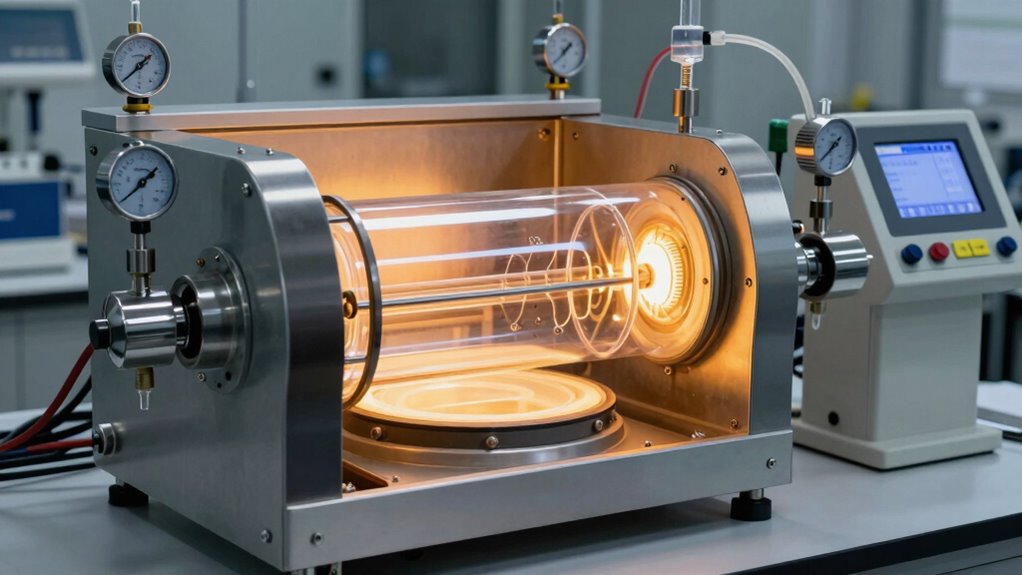
To control atmospheres in a tube furnace for oxides, nitrides, and more, you should carefully select and regulate inert or reactive gases like argon, nitrogen, or forming gas, ensuring steady flow to maintain consistency. Adjust the temperature profiles with gradual ramps, soaking steps, and controlled cooling to influence phase development. Precise control of both gas flow and temperature is key to achieving reliable, desired material properties—continue exploring to master these essential parameters.
Key Takeaways
- Precisely control gas flow rates (argon, nitrogen, forming gas) to maintain desired atmospheres and prevent contamination.
- Design temperature profiles with gradual ramps, soaking steps, and controlled cooling to ensure uniform reactions and phase formation.
- Adjust gas composition and flow during specific temperature stages to promote oxide or nitride formation.
- Use real-time monitoring of gas flow and temperature to dynamically optimize reaction conditions.
- Document and replicate exact atmosphere and thermal profiles for consistent, reproducible furnace processes.
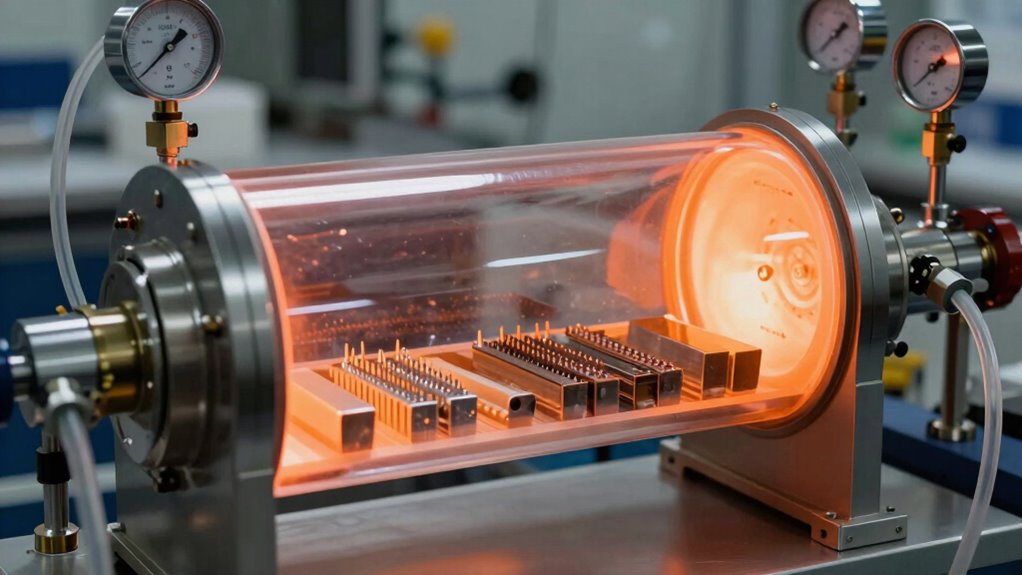
Are you ready to explore the versatile world of tube furnace recipes? When working with different materials, especially oxides, nitrides, or other advanced compounds, precise control over the atmosphere inside your furnace becomes essential. Gas flow and temperature profiles are the backbone of successful synthesis, enabling you to tailor conditions for specific reactions and material properties. Starting with gas flow, it’s crucial to establish a steady, uniform flow of inert or reactive gases—such as argon, nitrogen, or forming gas—throughout the process. Proper gas flow ensures that the atmosphere remains consistent, preventing contamination and helping control the partial pressures of reactive species. You want a flow rate that’s high enough to replace the internal atmosphere regularly but not so high that it causes turbulence or uneven heat distribution. Adjusting the gas flow can influence reaction kinetics, oxide formation, or nitridation, so monitor it carefully during your process.
Temperature profiles are equally important, dictating the reaction path and material phase. Most recipes involve ramping the temperature gradually to a target setpoint, holding it for a specific duration, then cooling down at a controlled rate. A well-designed temperature profile ensures uniform heating and prevents thermal stresses or uneven phase development. You may need to implement multiple temperature steps—ramp-up, soak, and cool-down—to optimize material characteristics. For example, in oxide synthesis, a slow ramp-up might promote uniform grain growth, while rapid cooling could suppress unwanted secondary phases. In nitridation processes, maintaining a steady temperature with minimal fluctuations is critical to achieve consistent nitrogen incorporation. Use precise temperature controllers and thermocouples placed appropriately inside the tube to monitor and adjust the profile dynamically.
Combining the right gas flow and temperature profile allows you to craft ideal conditions for specific reactions. For instance, during nitridation, a steady flow of nitrogen at elevated temperatures facilitates nitrogen diffusion into the material, forming nitrides with desired properties. Conversely, for oxide formation, maintaining a controlled oxygen partial pressure via gas flow and temperature adjustments can produce high-quality oxide layers. Always document your settings, as small tweaks in gas flow rate or temperature ramping can substantially impact the final product. Remember, the key is consistency: stable gas flow and well-planned temperature profiles are essential to reproducibility and success in your furnace recipes. With careful attention to these parameters, you’ll unlock a wide range of possibilities to synthesize complex materials with precise control and confidence.

Rheem Furnace Parts Pipe – Outlet Air
As an affiliate, we earn on qualifying purchases.
As an affiliate, we earn on qualifying purchases.
Frequently Asked Questions
How Do I Calibrate Atmosphere Sensors in a Tube Furnace?
To calibrate atmosphere sensors in your tube furnace, start by ensuring the furnace is at room temperature. Use a calibration gas with a known composition, then adjust the sensor readings accordingly. Perform atmosphere adjustment by comparing the sensor output to the known gas values, and fine-tune the calibration settings until the readings match accurately. Regular sensor calibration helps maintain precise atmosphere control during your experiments.
What Safety Precautions Are Essential During High-Temperature Atmosphere Control?
Imagine a delicate dance between flames and gas, where safety is your partner. You must check for gas leaks regularly, ensuring no hazardous leaks occur. Always wear proper protective gear and keep emergency shutdown procedures clear. In case of a gas leak, act swiftly to shut down the furnace and ventilate the area. Staying vigilant minimizes risks, safeguarding you during high-temperature atmosphere control.
Can Atmosphere Composition Be Adjusted Mid-Process Without Interruption?
Yes, you can perform dynamic atmosphere adjustment mid-process using real-time gas monitoring. By continuously monitoring the gas composition, you can make precise adjustments to the atmosphere without stopping the furnace. This allows you to maintain ideal conditions for oxide, nitride, or other material synthesis. Implementing automated control systems ensures smooth, safe, and efficient modifications, helping you achieve consistent results while minimizing risks during high-temperature treatments.
What Are the Environmental Impacts of Different Furnace Atmospheres?
Imagine you’re refining ceramics in a nitrogen atmosphere; this reduces emissions of nitrogen oxides, lowering environmental impact. Different furnace atmospheres notably influence emission considerations, impacting air quality and safety. For example, using inert gases minimizes harmful emissions, but some gases may produce toxic byproducts if leaks occur. Always evaluate the environmental impact of your chosen atmosphere, balancing process needs with safety and ecological responsibility.
How Do Impurities Affect Oxide and Nitride Formation?
Impurity effects can considerably hinder oxide and nitride formation by introducing unwanted elements that compete with the desired reactions. These impurities can create defects or alter the atmosphere purity, leading to inconsistent or poor-quality products. To guarantee ideal formation, you should maintain a highly pure atmosphere and minimize contamination, which helps promote the correct chemical pathways and results in better-controlled, high-quality oxide or nitride synthesis.
Conclusion
Mastering atmosphere control in tube furnace recipes can substantially impact your material synthesis, ensuring precise oxide, nitride, or other compound formations. Did you know that optimizing furnace atmosphere can improve product purity by up to 30%? By carefully adjusting your parameters, you’ll reveal consistent, high-quality results, saving time and resources. So, experiment confidently—your next breakthrough might just be one well-controlled atmosphere away!