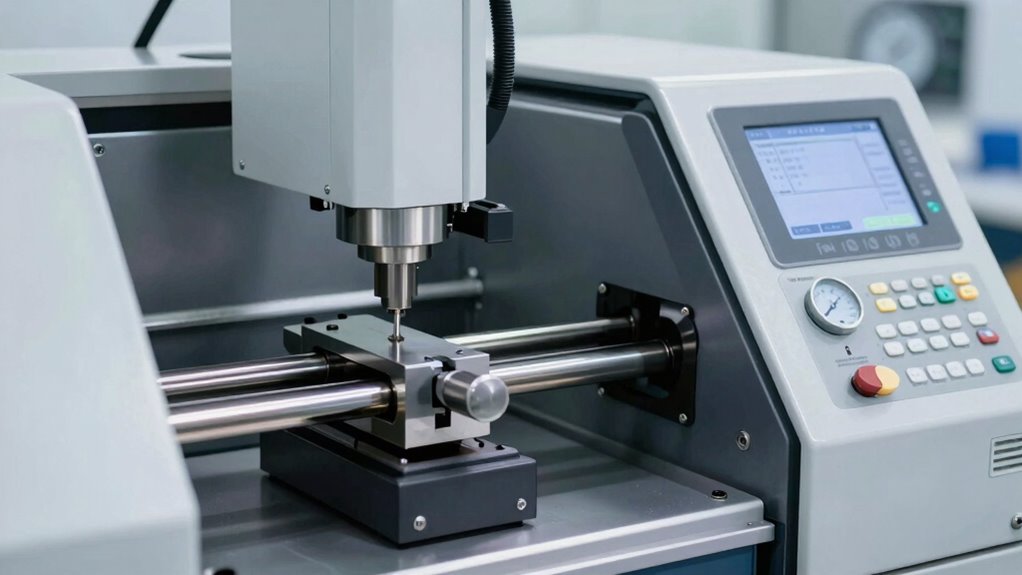

The crosshead speed in a universal testing machine controls how quickly the load is applied or removed during tests. Setting the right speed is crucial because it affects how your material responds under cyclic stresses. Too fast, and you might get premature failure results; too slow, and you could miss weaknesses. Consistent speed ensures accurate, reliable data that reflects real-world conditions. Keep exploring to discover how proper speed control improves your testing outcomes.
Key Takeaways
- Crosshead speed controls the rate of applied load, affecting material fatigue behavior during testing.
- Proper speed ensures test results accurately simulate real-world service conditions.
- Consistent crosshead speed improves test reliability and comparability across samples.
- Variations in speed can lead to premature failure or masked weaknesses in materials.
- Calibration of testing machines maintains accurate crosshead speed for valid test outcomes.
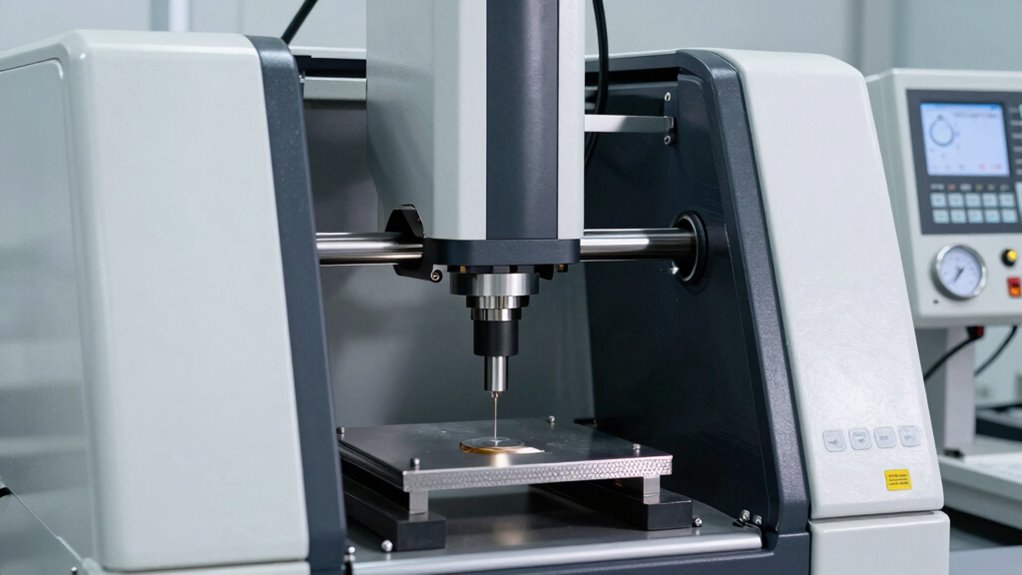
Material fatigue testing particularly benefits from precise control over crosshead speed. When a material is subjected to repeated loading and unloading cycles, the rate at which force is applied can affect the material’s response. Too rapid a speed might induce premature failure or exaggerated fatigue effects, while too slow a speed could mask potential weaknesses. By maintaining an appropriate and consistent crosshead speed, you can better simulate actual service conditions and observe how the material withstands cyclic stresses over time. This consistency is essential for developing durable products and preventing unexpected failures in real-world applications. Additionally, calibration procedures ensure that the testing process remains accurate and reliable over time. calibration procedures are central to guaranteeing that the testing machines deliver accurate and repeatable results, especially when adjusting crosshead speeds. Regular calibration guarantees that the machine’s force measurements and displacement readings are precise, which is critical when analyzing material fatigue or other fundamental properties. During calibration, you verify that the machine’s sensors and control systems function correctly, allowing you to set and maintain the correct crosshead speed throughout your tests. Proper calibration also helps identify any mechanical or electronic issues that could distort your data, giving you confidence that your test results truly reflect the material’s characteristics. Furthermore, understanding the impact of crosshead speed on test outcomes can help optimize test protocols for different materials and applications. A thorough understanding of how material response varies with test conditions can further enhance the accuracy and relevance of your results. Additionally, accurate control of testing parameters is crucial for ensuring that the test conditions replicate real-world scenarios as closely as possible, leading to more meaningful data interpretation.
Furthermore, utilizing automated grammar tools to review your reports can help spot passive voice and improve clarity, ensuring your findings are communicated effectively.
In essence, understanding why crosshead speed matters and maintaining rigorous calibration procedures guarantees your testing process is reliable and meaningful. It’s not just about pushing a button and waiting for results; it’s about controlling the variables that influence your data quality. When you pay close attention to these factors, you can make more informed decisions about material selection, design improvements, and quality assurance. Ultimately, mastering crosshead speed control and calibration practices will elevate your testing accuracy, helping you better understand material behavior and improve product performance.
universal testing machine crosshead speed controller
As an affiliate, we earn on qualifying purchases.
As an affiliate, we earn on qualifying purchases.
Frequently Asked Questions
How Does Crosshead Speed Affect Material Testing Results?
Your crosshead speed impacts material testing results by influencing stress distribution and potential material fatigue. A higher speed can cause uneven stress distribution, possibly leading to premature failure or inaccurate data. Conversely, a slower speed offers more precise readings, revealing true material properties. Adjusting the crosshead speed guarantees you accurately assess how the material handles stress, helping you predict its behavior under real-world conditions and avoid fatigue failures.
What Is the Optimal Crosshead Speed for Different Materials?
Think of selecting the most effective crosshead speed like tuning a musical instrument; too fast or slow, and the harmony suffers. For brittle materials, use slower speeds to avoid inducing material fatigue or temperature effects that could skew results. Ductile materials require faster speeds to accurately capture their behavior. Always match your crosshead speed to the material’s properties, ensuring precise data and reliable insights into how it will perform under real-world conditions.
Can Crosshead Speed Influence the Machine’s Calibration?
Yes, crosshead speed can influence the machine’s calibration accuracy. Variations in speed may cause measurement errors, especially if the machine isn’t properly calibrated for different testing speeds. To guarantee consistent and accurate results, you should prioritize speed consistency during tests. Regular calibration checks account for any discrepancies caused by speed fluctuations, helping maintain precise measurements and reliable data throughout your testing process.
How Do I Select the Appropriate Crosshead Speed for a Test?
You should select the appropriate crosshead speed based on your test procedure and equipment compatibility. Check the material specifications and industry standards to determine the recommended speed. Make certain your testing machine can handle that speed without compromising accuracy. Adjust the crosshead speed accordingly, so the test reflects real-world conditions and provides reliable, consistent results. Always verify your setup before starting to avoid errors.
Does Crosshead Speed Impact Testing Machine Maintenance?
Yes, crosshead speed can impact testing machine maintenance. Operating at higher speeds increases wear and tear on components, making proper lubrication practices crucial to reduce friction and prevent damage. Additionally, operator training is essential to ensure correct speed settings and maintenance routines, avoiding undue stress on the machine. Regular maintenance combined with proper training helps maintain performance, prolongs equipment lifespan, and ensures consistent, reliable test results.
Conclusion
Understanding the importance of crosshead speed in universal testing machines helps you harness accurate, actionable data. By balancing speed and precision, you improve your testing techniques and guarantee reliable results. Remember, mastering measurement means maintaining momentum, minimizing mistakes, and maximizing mastery. So, stay steady, streamline your strategies, and succeed in your testing endeavors. With the right speed, you’ll stay sharp, save seconds, and secure sensational success in every test!