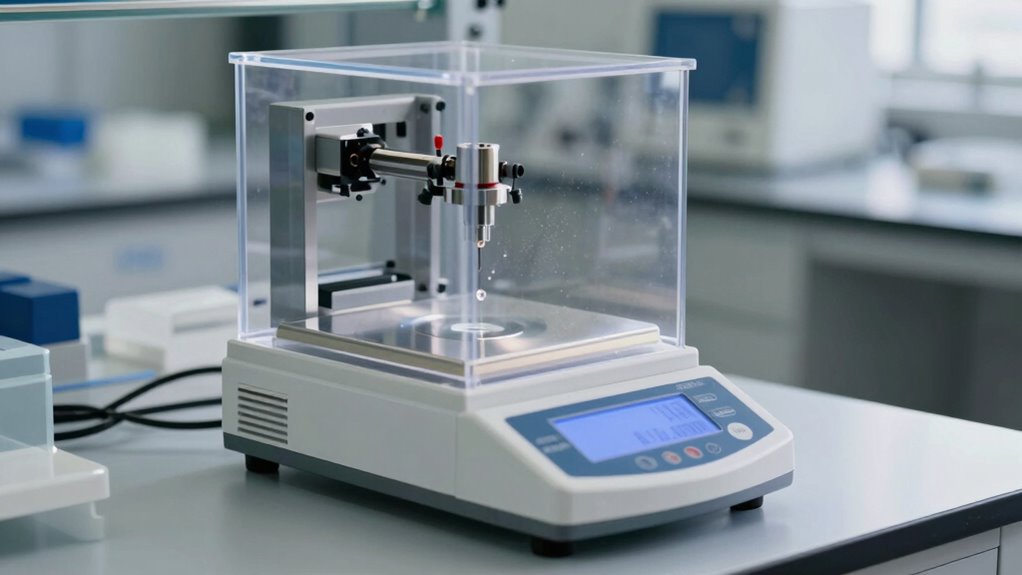

Invisible air currents are your balance’s biggest enemy when measuring micrograms. Even tiny drafts from air vents, swings in temperature, or someone walking nearby can cause fluctuations and inaccurate results. To protect your work, place the balance inside a draft-free enclosure and control environmental factors like humidity and temperature. If you want to learn how to safeguard your measurements and improve accuracy, keep exploring ways to minimize airflow effects.

Prime made for students and young adults
- Fast, free delivery for dorm and study essentials
- Prime Video and Amazon Music included
- Member-only deals
Key Takeaways
- Air currents can cause fluctuations and unstable readings on sensitive analytical balances.
- Using draft shields or placing balances inside enclosed, draft-free chambers minimizes airflow interference.
- Environmental controls like stable temperature and humidity reduce external airflow effects on measurements.
- Proper handling of samples with forceps and waiting for balance stabilization prevent airflow-related errors.
- Regular calibration with certified weights helps detect and correct for airflow-induced measurement deviations.
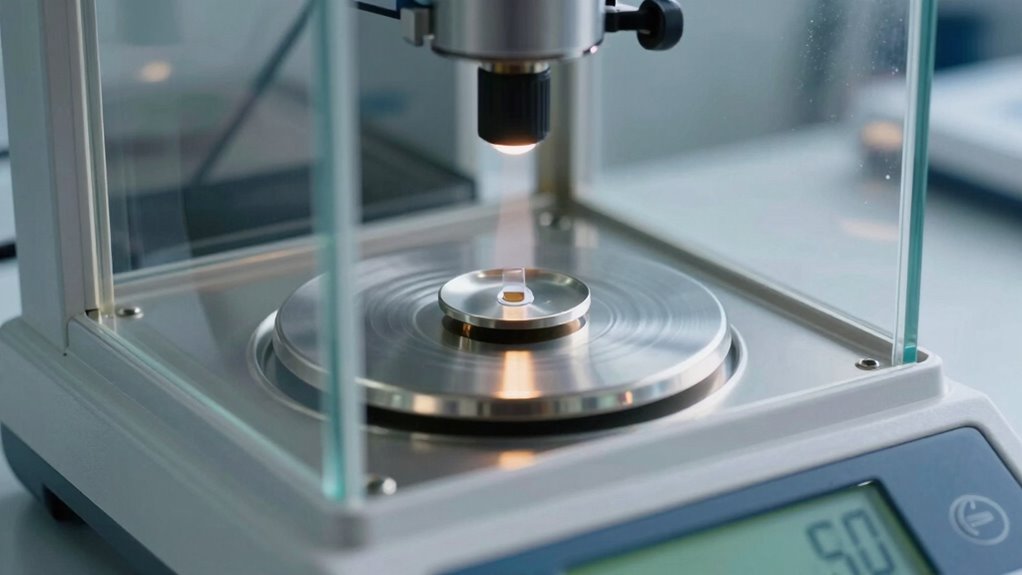
Have you ever needed to measure tiny quantities with exceptional precision? If so, you know that even the slightest inconsistency can throw off your results. When working with microgram-level accuracy using an analytical balance, every detail matters. The key to achieving reliable measurements lies in understanding and controlling the environment around your instrument, as well as following strict calibration procedures. These elements are essential for minimizing errors caused by external factors and ensuring your balances give consistent, accurate readings.
Calibration procedures are the foundation of precise weighing. Regular calibration ensures your balance maintains its accuracy over time. You should calibrate your instrument with certified weights that match the measurement range you’re working within. This process isn’t just a one-time step; it’s an ongoing necessity. By routinely verifying your balance’s accuracy, you catch any deviations early and correct them before they impact your results. Proper calibration also helps you adhere to laboratory standards and regulatory requirements, making your measurements more trustworthy.
Regular calibration with certified weights ensures ongoing accuracy and compliance in precise weighing.
Equally important are environmental controls. Your analytical balance is highly sensitive to disturbances, including air currents, temperature fluctuations, and humidity changes. These environmental factors can cause the balance to fluctuate or drift, making your readings unreliable. To combat this, always place your balance inside a draft-free enclosure or balance shield to block airflow disturbances. Maintain a stable room temperature and humidity level, avoiding drafts, direct sunlight, or proximity to heating or cooling vents. A controlled environment minimizes these external influences, allowing your balance to operate at its best. Additionally, understanding airflow effects can help you implement better environmental safeguards for your instrument.
In addition to environmental controls, you should handle your samples and weights carefully. Always use appropriate tools like forceps or gloves to avoid transferring oils or moisture onto the weighing objects. Before weighing, allow your balance to stabilize after turning it on, and give it a few moments to equilibrate if the room conditions change. Consistent procedures, such as tare weighing and zero calibration, help maintain accuracy and repeatability.
draft shield for analytical balance
As an affiliate, we earn on qualifying purchases.
As an affiliate, we earn on qualifying purchases.
Frequently Asked Questions
How Does Temperature Affect Balance Accuracy?
Temperature affects balance accuracy because fluctuations can impact airflow sensitivity and cause instability. If the room isn’t temperature stable, air currents around the balance change, leading to inaccurate readings. You should keep the environment consistent, avoiding drafts or sudden temperature shifts. Ensuring temperature stability minimizes airflow sensitivity, helping your balance provide precise measurements essential for microgram work.
Can Vibrations Impact Microgram Measurements?
Vibrations can considerably impact your microgram measurements by causing instability in the balance. These vibrations, whether from nearby equipment or foot traffic, create vibration impact that disrupts the delicate balance readings. Additionally, airflow interference from open windows or fans can compound this issue, making precise measurements difficult. To guarantee accuracy, keep the balance in a vibration-free environment and shield it from airflow disturbances.
What Maintenance Is Required for Optimal Airflow?
Maintaining perfect airflow is vital; even a tiny gust can throw off your measurements. You should regularly check your balance’s airflow management system, ensuring vents are clean and unobstructed. Follow strict calibration routines to keep airflow consistent. Keep the environment stable—avoid drafts and vibrations. Periodic inspections and cleaning help prevent airflow issues, so your balances stay precise and reliable, even when measuring micrograms.
Are There Specific Environments Better for Precise Weighing?
Yes, you get the best results for precise weighing in environments with stable temperature, humidity, and minimal airflow disturbances. Proper airflow control is vital, so use draft shields and place the balance in a draft-free area. Maintaining environmental stability reduces fluctuations caused by external air currents, ensuring that airflow remains controlled and your measurements stay accurate. This helps you achieve microgram-level precision consistently.
How Do Calibration Standards Influence Measurement Reliability?
Calibration standards, like standard weights, are essential because they guarantee your analytical balance provides accurate measurements. By following proper calibration protocols, you verify that the balance’s readings remain reliable over time. Regularly using certified weights helps identify any deviations, allowing you to adjust accordingly. This process maintains measurement integrity, minimizes errors, and guarantees consistent, trustworthy results vital for microgram-level work.
Conclusion
Just like a gentle breeze can topple a delicate house of cards, tiny air currents can ruin your precise measurements. By understanding and controlling these invisible flows, you can guarantee your analytical balances provide accurate, reliable results every time. Don’t let unseen airflow sabotage your work—think of it as a silent thief stealing your microgram accuracy. Stay vigilant, keep your balances shielded, and trust your measurements to be as steady as a mountain peak.
Fall Picks
fall essentials
As an affiliate, we earn on qualifying purchases.