
To prevent sample loss, selecting the right centrifuge rotor is essential. You need to guarantee it matches your centrifuge model, has the appropriate capacity, and is compatible with your sample type. Proper balancing by evenly distributing samples and following the manufacturer’s specifications keeps your operation safe and stable. Making the correct choice helps avoid damage, guarantees accurate results, and keeps your samples secure throughout the process. Keep exploring to discover the key factors for ideal rotor selection.
Key Takeaways
- Match rotor capacity to your sample volume to prevent overloading and sample loss.
- Ensure rotor compatibility with your centrifuge model for safe and effective operation.
- Follow manufacturer guidelines for balanced loading to maintain stability and prevent sample disruption.
- Choose rotors with appropriate speed and RCF ratings based on your sample type and volume.
- Regularly verify proper balance and load distribution before each use to minimize vibrations and sample loss.

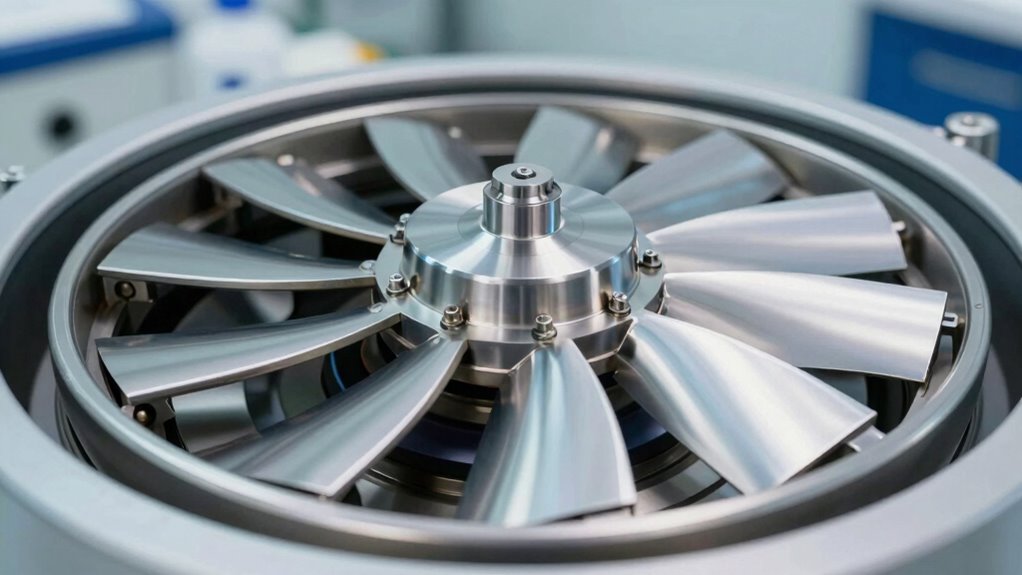
Choosing the right centrifuge rotor is essential for ensuring your experiments run smoothly and safely. The rotor you select directly impacts the accuracy of your results and the safety of your samples. One of the most critical factors to consider is balance accuracy. When your rotor isn’t properly balanced, it can cause vibrations, noise, and even damage to the centrifuge. To prevent this, ensure that all tubes or containers are evenly loaded and balanced according to the rotor’s specifications. This means matching sample volumes and placing them opposite each other in the rotor to maintain balance. Accurate balancing reduces wear and tear on your equipment and minimizes the risk of sample loss due to mechanical failure. Additionally, understanding rotor design can help you better appreciate how the rotor’s construction influences stability and performance during centrifugation.
Properly balanced rotors ensure accurate results and prevent centrifuge damage.
Another vital aspect is the rotor capacity, which refers to how much sample it can hold per run. Selecting a rotor with appropriate capacity is crucial because overloading can lead to uneven separation, damage to the rotor, or compromised sample integrity. Conversely, underutilizing a large rotor might be inefficient, wasting space and resources. You should choose a rotor size that aligns with your typical sample volume and experimental needs. For high-throughput applications, a rotor with larger capacity can save time and streamline your workflow. However, always verify that the rotor’s maximum capacity isn’t exceeded, as this can lead to unbalanced spins and potential sample loss.
Furthermore, the capacity of the rotor influences the speed and force you can safely apply. Larger rotors often require different speed settings compared to smaller ones, so understanding the rotor capacity helps you operate within safe parameters. Always cross-reference manufacturer guidelines for maximum RCF (relative centrifugal force) and RPM (revolutions per minute) based on your sample types and rotor capacity. Ensuring your rotor is suitable for your specific experiments minimizes the chance of sample disruption or loss during centrifugation.
In addition, consider the compatibility of the rotor with your centrifuge model. Not all rotors fit every machine, and using an incompatible rotor can compromise balance accuracy and safety. It’s essential to select a rotor designed for your centrifuge’s make and model, and to follow the manufacturer’s instructions for installation and operation.
Ultimately, selecting a centrifuge rotor with the right balance accuracy and capacity is a decisive step toward preventing sample loss. It guarantees that your samples are processed reliably and safely, with results you can trust. By paying close attention to these factors, you’ll optimize your centrifugation process, protect your samples, and extend the lifespan of your equipment.
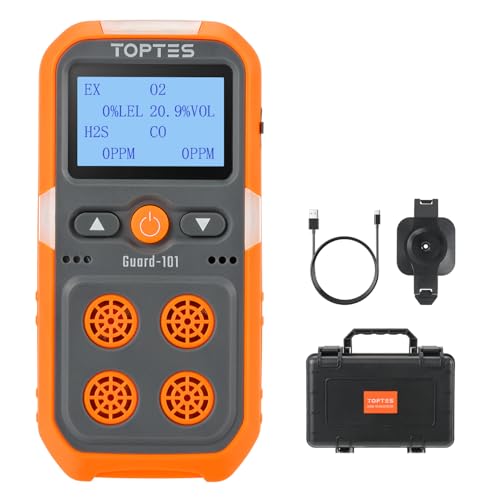
TopTes Guard-101 Gas Detector, 4 Gas Monitor for H2S, CO, LEL and O2, with Vibration, Visual and Audible Alarms, 14h Long Battery Life, Safety Explosion-Proof, for Work, Home - Orange
Quick Detection, Safety First: Guard-101 4 gas monitor multi gas detector is designed for rapid detection of 4...
As an affiliate, we earn on qualifying purchases.
Frequently Asked Questions
How Often Should Centrifuge Rotors Be Calibrated?
You should calibrate your centrifuge rotors at least once every six months to guarantee proper rotor balancing and accurate results. Regular calibration helps detect any imbalances or wear that could lead to sample loss. If you notice unusual vibrations or inconsistent results, increase calibration frequency. Keeping a maintenance schedule and documenting each calibration ensures your rotors remain reliable and prevent sample loss during centrifugation.
Can Rotor Materials Affect Sample Integrity?
Yes, rotor materials can influence your sample integrity. If the material isn’t compatible with your samples, it may cause contamination or damage. Material compatibility ensures your samples stay pure and undisturbed. Additionally, poor-quality materials can lead to rotor corrosion over time, risking contamination and rotor failure. Choosing rotors made from corrosion-resistant materials suitable for your specific samples helps maintain sample integrity and prolongs rotor lifespan.
Are There Safety Concerns With Incompatible Rotor Sizes?
Sure, incompatible rotor sizes might seem harmless, but they actually pose serious safety risks. You can avoid accidents by double-checking rotor compatibility before spinning. Using the wrong size can cause imbalance, rotor failure, or even equipment damage. Don’t underestimate the importance of matching rotor specifications—it’s a simple step that keeps you safe and your samples intact. Always verify compatibility to prevent potential hazards and ensure smooth, safe operation.
What Is the Typical Lifespan of a Centrifuge Rotor?
You can generally expect a centrifuge rotor to last between 3 to 10 years, depending on usage and maintenance. Regular rotor maintenance, including inspections for cracks and corrosion, helps extend its lifespan. To guarantee accurate lifespan estimation, follow manufacturer guidelines for cleaning and balancing. Proper handling and timely replacements prevent accidents and sample loss, keeping your centrifuge safe and efficient over time.
How Do I Dispose of Used or Damaged Rotors?
When disposing of used or damaged rotors, you should follow proper disposal procedures. First, clean the rotor thoroughly to remove any residual samples, ensuring safe handling. Then, check your facility’s guidelines for rotor disposal and use designated waste containers or recycling programs if available. Never throw rotors in regular trash. Proper rotor cleaning and disposal help prevent contamination and keep your lab safe.

25ml Hydrothermal Synthesis Autoclave Reactor Stainless Steel Vessel Kettle with PTFE Liner for Rapid Digestion of Insoluble Material, 220℃ 3Mpa 304 Steel High Pressure Digestion Tank
DISSOLUTION PRE-TREATMENT: Our Hydrothermal Autoclave Reactor can be used for sample dissolution pre-treatment in analysis like atomic absorption...
As an affiliate, we earn on qualifying purchases.
Conclusion
So, you’ve chosen the perfect rotor—seems simple enough, right? Ironically, that single decision might be the one thing that saves your samples or causes their loss. While you focus on protocols and reagents, don’t forget that the rotor’s fit and design are your silent heroes or hidden villains. Sometimes, the smallest choice holds the biggest impact—proving that in centrifugation, the real game-changer is surprisingly just one rotation away.

Electromagnetic Diaphragm Metering Pump, Industrial-Grade Polypropylene Chemical Metering Pump, Water Treatment Liquid Weak Acid Chemical Chlorine Self-Priming Pump (6LPH 5bar)
Manually adjustable metering pump with power-off reset or power-off hold function
As an affiliate, we earn on qualifying purchases.
Electromagnetic Diaphragm Metering Pump, Industrial-Grade Polypropylene Chemical Metering Pump, Water Treatment Liquid Weak Acid Chemical Chlorine Self-Priming Pump (20LPH 1bar)
Manually adjustable metering pump with power-off reset or power-off hold function
As an affiliate, we earn on qualifying purchases.