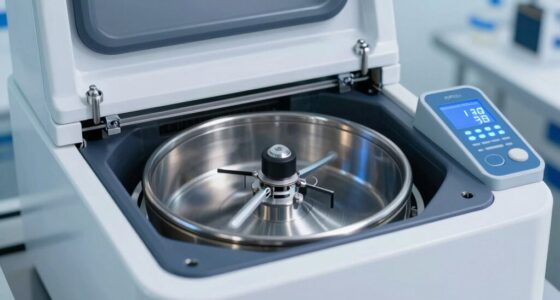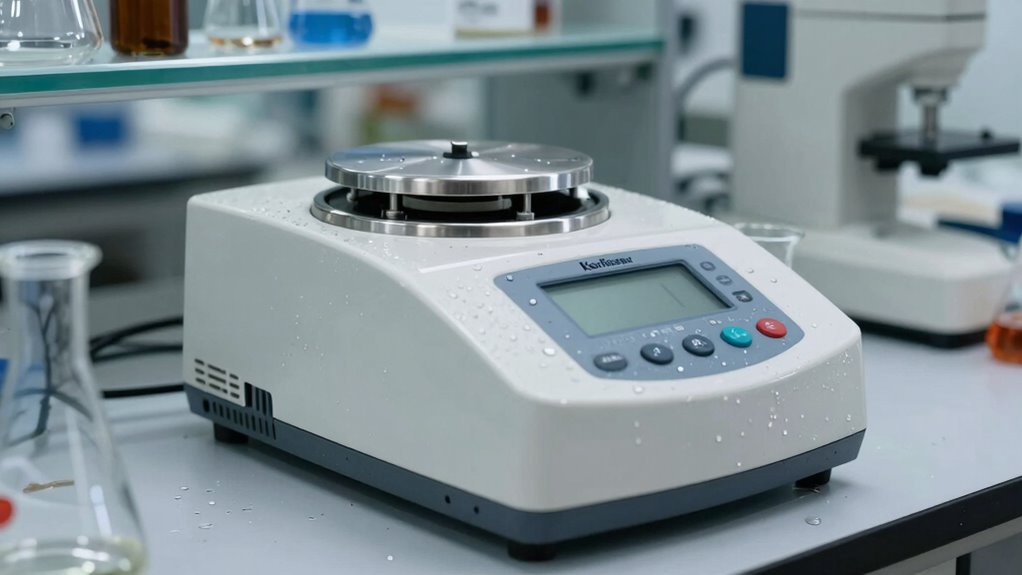

Ambient humidity can seriously affect your Karl Fischer titrations if you don’t control it. Moisture in the environment can disrupt calibration standards, cause sample water content to fluctuate, and lead to inaccurate results. Inconsistent humidity levels make you spend more time recalibrating and increase costs. Without proper environmental controls like dehumidifiers or humidity chambers, your measurements can be unreliable. Keep these challenges in mind—there’s more you need to know to safeguard your testing accuracy.

Prime made for students and young adults
- Fast, free delivery for dorm and study essentials
- Prime Video and Amazon Music included
- Member-only deals
Key Takeaways
- Ambient humidity can disrupt calibration standards, leading to inaccurate water content measurements.
- Fluctuating moisture levels in the environment cause inconsistent titration results.
- Moisture from the air can be absorbed by samples, skewing true water content readings.
- Without proper environmental controls, humidity interferes with measurement reliability and reproducibility.
- Using humidity-controlled chambers and automatic compensation features helps maintain accurate titration outcomes.
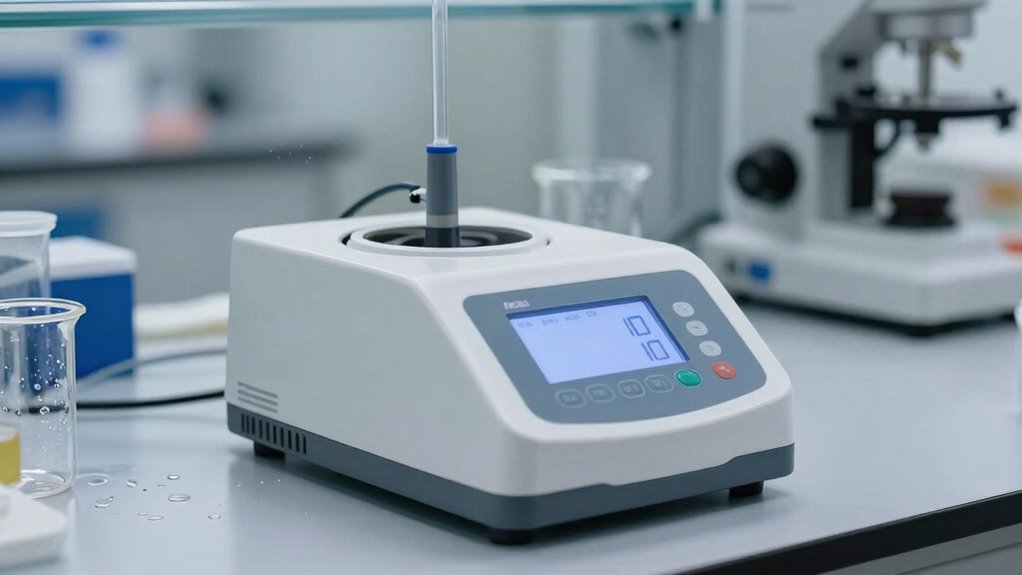
One of the biggest hurdles you face with Karl Fischer titrators is calibration challenges driven by humidity. Regular calibration is vital to maintain accuracy, but ambient moisture can throw off calibration standards. If your lab environment isn’t stable, your titrator might require frequent recalibration, which can be time-consuming and costly. You might find yourself repeatedly adjusting the instrument, only to discover that humidity shifts cause inconsistent readings. This cycle can undermine your confidence in the results and complicate quality control processes. To minimize these issues, you need to guarantee that your titrator is calibrated in a controlled environment or use devices with built-in humidity compensation features. Additionally, indoor air quality plays a crucial role in maintaining stable conditions that support reliable measurements. Humidity interference doesn’t just affect the measurement itself; it also impacts sample handling. When you’re working with samples in a humid environment, the water content of your samples can change before you even start the titration, leading to inaccurate readings. You might think you’re testing a specific sample, but in reality, environmental moisture has altered its water content. This problem is compounded if your lab lacks proper dehumidification equipment or if you don’t take steps to protect samples from atmospheric moisture. In such cases, results become unreliable, and you risk making decisions based on flawed data. To combat these issues, it’s essential to implement environmental controls and adopt best practices for calibration and sample handling. Using a glove box or a humidity-controlled chamber can considerably reduce interference. Additionally, some modern Karl Fischer titrators are designed to compensate automatically for humidity fluctuations, easing calibration challenges. Understanding humidity fluctuations and their impact on measurements is crucial for maintaining accuracy over time. Ultimately, understanding how ambient humidity impacts your measurements allows you to take proactive steps, guaranteeing your results are as accurate and reliable as possible. Proper environmental controls are essential for ensuring consistent and trustworthy titration results.
humidity-controlled chamber for titration
As an affiliate, we earn on qualifying purchases.
As an affiliate, we earn on qualifying purchases.
Frequently Asked Questions
How Often Should I Calibrate My Karl Fischer Titrator?
You should calibrate your Karl Fischer titrator regularly, ideally before each use, to guarantee accuracy. Calibration frequency depends on how often you operate it and the humidity impact in your environment. If humidity levels fluctuate or are high, consider calibrating more frequently. Regular calibration helps maintain precise measurements and counters the effects of ambient humidity, which can skew results and diminish the reliability of your titrations.
Can Ambient Humidity Affect Titration Speed?
Humidity interference can definitely slow down your titration process. You might think it’s a minor issue, but environmental control is key. When ambient humidity rises, moisture can cause the titration to lag or give inaccurate readings, making your work a real headache. To keep things running smoothly, make certain your lab has proper humidity control, like dehumidifiers, and always monitor environmental conditions closely. This way, your titration speed stays steady and reliable.
What Are the Signs of Moisture Contamination in Reagents?
You’ll notice moisture contamination in reagents through decreased reagent stability, causing inconsistent titration results. Look for changes like cloudiness, clumping, or sedimentation, which indicate moisture presence. Using moisture indicators helps you detect early signs of contamination, ensuring reagent quality. If these signs appear, replace or properly dry your reagents to maintain accuracy in your titrations, especially since ambient humidity can accelerate moisture absorption.
How Do I Store Reagents to Prevent Moisture Absorption?
You’d think storing reagents would be simple, but ironically, ambient humidity is the biggest enemy. To preserve reagent stability, always keep them in airtight storage containers, preferably glass or well-sealed bottles. Store them in a cool, dry place away from direct sunlight and moisture sources. Proper storage prevents moisture absorption, ensuring your reagents stay accurate and reliable, saving you time and frustration down the line.
Are There Portable Solutions for Moisture Analysis in the Field?
Yes, there are portable solutions for moisture analysis in the field. You can use handheld or mobile devices designed for on-site testing, which help you overcome field challenges like ambient humidity. These devices are compact, easy to operate, and provide quick results, allowing you to analyze moisture levels directly at the site without needing lab facilities. This guarantees your measurements stay accurate despite environmental factors.
Conclusion
So, next time you set up your Karl Fischer titrator, imagine the invisible humidity creeping in like a silent thief, stealing accuracy from your measurements. Keep your workspace dry and sealed tight—don’t let moisture sneak past the defenses. With vigilant care, you’ll protect your tests from the subtle sabotage of ambient humidity. Stand firm against the moisture’s quiet assault; your precise results depend on it, shining like a lighthouse through a foggy night.
Halloween Picks
halloween
As an affiliate, we earn on qualifying purchases.