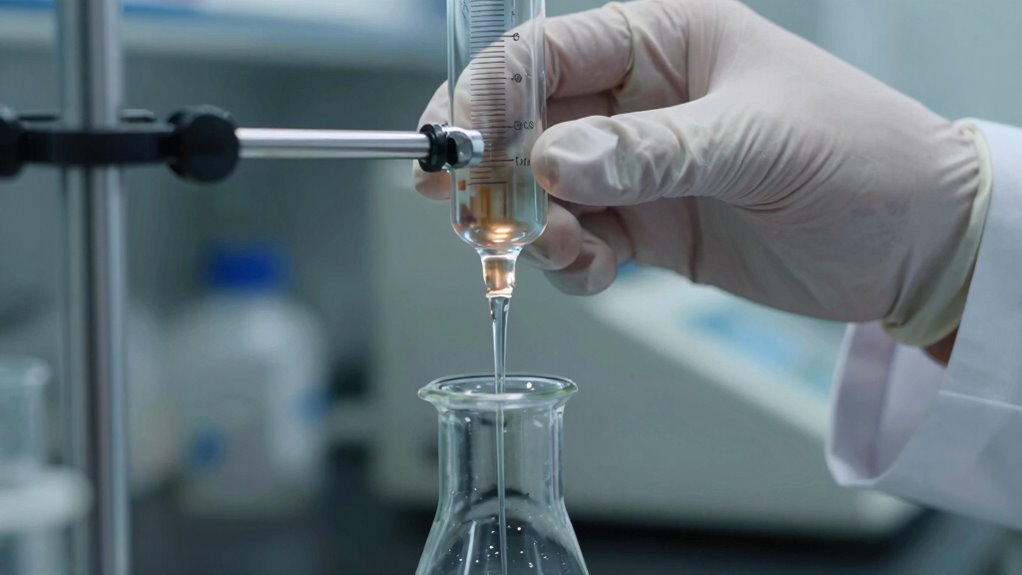

Many unseen moisture sources can skew your Karl Fischer titration results. Inadequate sample preparation, such as not drying samples properly or handling them in humid environments, introduces external moisture. Using uncalibrated reagents or contaminated equipment also impacts accuracy. Surface contaminants, residual solvents, or improper storage may go unnoticed but still cause errors. Paying close attention to sample homogeneity, reagent quality, and environmental conditions can improve your measurements. Discover more tips to prevent these hidden moisture pitfalls.

Prime made for students and young adults
- Fast, free delivery for dorm and study essentials
- Prime Video and Amazon Music included
- Member-only deals
Key Takeaways
- Inadequate sample drying and handling can introduce external moisture, skewing Karl Fischer titration results.
- Environmental humidity and surface contamination may cause unintentional moisture absorption during sample prep.
- Improper reagent calibration or degraded reagents lead to inaccurate water content measurements.
- Variations in titrant concentration and equipment calibration affect endpoint detection and measurement precision.
- Inconsistent sample homogenization and surface residues interfere with accurate, reproducible moisture analysis.

Karl Fischer titration is a widely used method for measuring water content in samples, but it’s not immune to errors that can affect accuracy. Many of these mistakes stem from overlooked factors during sample preparation and reagent calibration. If you skip proper sample prep, you risk introducing moisture or contaminants that distort your results. For instance, failing to dry the sample thoroughly before analysis can lead to artificially high water readings. Conversely, overhandling or exposing samples to ambient humidity can add moisture, skewing your data. Making sure that your samples are prepared consistently is critical; use clean, dry containers and handle samples quickly to minimize environmental moisture absorption. Also, consider the nature of your sample—some materials may require specific pretreatment steps to eliminate surface moisture or solvents that interfere with titration. Ensuring proper color accuracy during visual endpoint detection can also prevent misinterpretation of titration results.
Reagent calibration is equally crucial. The titration reagent must be precisely calibrated to deliver accurate measurements. If your reagent isn’t properly standardized, your water content readings will be unreliable. Regular calibration against a known moisture standard ensures that your titrant concentration remains consistent over time. This process involves using a certified water standard to verify that your reagent delivers the expected volume per unit of water. Neglecting calibration can cause systematic errors, either overestimating or underestimating moisture content. Remember, even small deviations in reagent concentration can greatly impact your results, especially when dealing with low moisture levels. Consequently, establishing a routine calibration schedule and maintaining detailed records helps catch discrepancies early.
Another common source of error lies in the preparation of your reagent and sample. Inaccurate pipetting or mixing can introduce variability, so use high-quality, properly calibrated equipment. If your reagents degrade or become contaminated, recalibrate or replace them promptly. Additionally, make sure to store your reagents according to manufacturer instructions to preserve their stability. When preparing your sample, avoid contamination from residual solvents, dust, or other chemicals that could react with the titrant or produce interfering signals. Properly homogenizing the sample and ensuring its compatibility with the titration method reduces the likelihood of errors.
Karl Fischer titration reagent calibration kit
As an affiliate, we earn on qualifying purchases.
As an affiliate, we earn on qualifying purchases.
Frequently Asked Questions
How Do Temperature Fluctuations Affect Karl Fischer Titration Accuracy?
Temperature fluctuations can markedly impact your Karl Fischer titration accuracy by disrupting temperature stability. When temperatures vary, the reaction’s speed and endpoint detection may shift, leading to errors. To minimize this, you should regularly check calibration frequency and guarantee your equipment operates in a temperature-controlled environment. Maintaining consistent temperature conditions helps you achieve precise moisture measurements, reducing inaccuracies caused by environmental changes.
Can Container Material Influence Moisture Measurements in Titration?
Yes, container material can influence moisture measurements in titration. If the container is prone to contamination or absorption, it can add or retain moisture, skewing your results. Glass and certain plastics may absorb moisture or leach contaminants, affecting accuracy. To minimize errors, use inert, moisture-resistant containers and make sure they’re properly cleaned and sealed. This helps maintain reliable measurements by preventing external moisture influences.
What Role Does Sample Heterogeneity Play in Titration Errors?
A chain is only as strong as its weakest link, and in titration, sample heterogeneity weakens your results. If your sample lacks uniformity, a heterogeneous distribution of moisture can cause inconsistent measurements, leading to errors. You need to guarantee sample uniformity to reduce variability. When moisture isn’t evenly distributed, your titration results become unreliable, so thoroughly mixing and preparing your sample is vital for accurate, repeatable measurements.
Are There Specific Storage Conditions to Prevent Moisture Contamination?
You should store your samples in a sealed environment with airtight containers to prevent moisture contamination. Using desiccant storage helps absorb any residual moisture and keeps samples dry. Make certain containers are tightly closed after each use and keep them in a cool, dry place away from humidity sources. Proper storage conditions like these considerably reduce the risk of moisture interference during titration, ensuring more accurate results.
How Does Operator Variability Impact Titration Reproducibility?
You might think operator variability doesn’t affect titration, but research shows it does. Inconsistent techniques, rushed procedures, or lack of proper operator training can lead to unreliable results. To improve reproducibility, guarantee procedural consistency and invest in thorough training. When everyone follows the same steps meticulously, your titration results become more accurate and reliable, minimizing the impact of human error and ensuring better moisture measurement.
Conclusion
Understanding common moisture sources in Karl Fischer titration is key to improving accuracy. Did you know that improper sample handling can introduce up to 15% additional moisture? By being aware of unseen errors, you can prevent costly mistakes and guarantee precise results. Remember, even small overlooked factors can considerably impact your measurements. Stay vigilant, double-check your procedures, and enjoy more reliable, consistent outcomes in your moisture analysis.
Evergreen bestsellers Picks
bestsellers
As an affiliate, we earn on qualifying purchases.