
Portable XRF analyzers give you quick, on-site elemental data, making real-time decisions easier. However, for accurate results, you must prepare samples properly—clean, flat, and consistent surfaces help reduce errors. Calibration is also essential; using standards that match your sample matrix and maintaining the instrument ensures reliability. Keep environmental factors in mind and follow best practices to get trustworthy data. If you want to learn how to maximize these tools, there’s more to discover.

Get school and study supplies delivered free — and shop member deals
- Fast, free delivery on millions of items
- Access to Prime Big Deal Days deals on October 6–7
- Prime Video, Amazon Music and more included
Key Takeaways
- Proper sample preparation and surface uniformity are essential for accurate, reliable elemental readings with portable XRF analyzers.
- Calibration with appropriate standards and regular checks ensure consistent instrument performance.
- Environmental conditions like temperature and humidity can impact measurement accuracy; field conditions should be considered.
- Limitations in surface heterogeneity and sample matrix require confirmatory laboratory analysis for critical results.
- Proper maintenance and adherence to best practices maximize device longevity and data reliability.
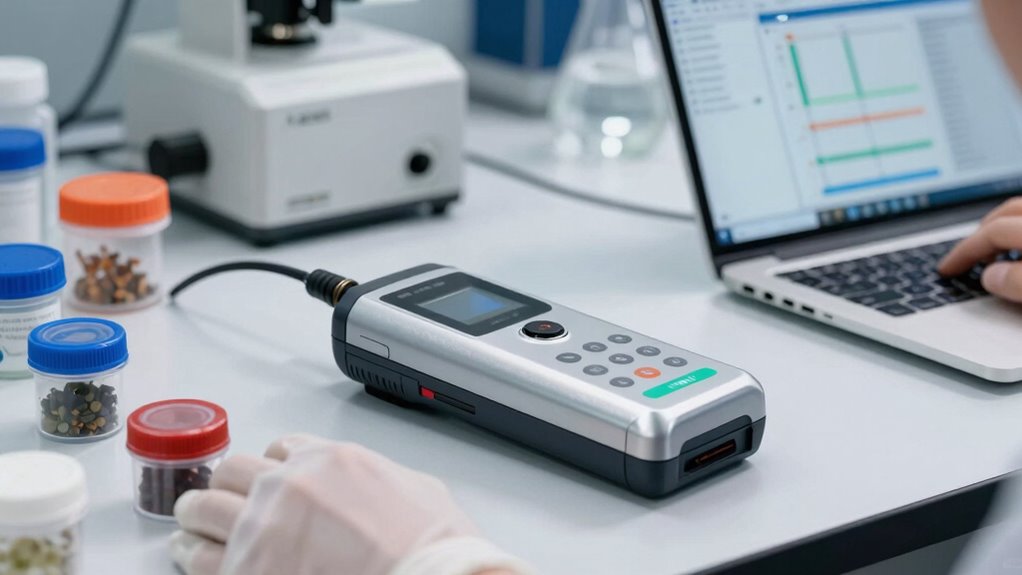
Sample preparation is essential when using portable XRF analyzers. You want to verify your sample surface is clean, flat, and representative of the bulk material. For solids, this may mean removing surface contaminants like dirt, paint, or corrosion, and sometimes pressing powders into a pellet or flattening uneven surfaces. Inconsistent sample surfaces can cause scattering or absorption issues, skewing your readings. When dealing with powders or granular materials, you might need to compress or pack them tightly to minimize porosity and achieve uniformity. Proper sample prep reduces measurement variability and enhances the precision of your analysis. Additionally, understanding the importance of calibration techniques ensures your readings remain accurate over time. Regular calibration checks and adherence to instrument maintenance practices can also help sustain the device’s performance and longevity.
Proper sample prep ensures accurate, consistent results by eliminating contaminants and achieving surface uniformity for reliable portable XRF analysis.
Calibration techniques are equally indispensable for accurate results. Portable XRF devices typically come with factory calibration, but these are often not enough for specialized or complex samples. You should perform site-specific calibration using standards that match your sample matrix. This involves selecting reference materials with known element concentrations and measuring them under the same conditions as your samples. Regular calibration checks ensure the instrument’s response remains consistent over time. Remember, environmental factors like temperature and humidity can also affect readings, so calibrate your device regularly and under conditions similar to your field environment. Proper calibration procedures are vital to maintaining the reliability of your measurements, especially when analyzing diverse sample types. Incorporating quality assurance measures can further improve the confidence in your data. Additionally, documenting calibration procedures and results helps track instrument performance and ensures compliance with safety protocols.
While portable XRF analyzers are powerful tools, they aren’t foolproof. They provide rapid insights, but their accuracy depends heavily on proper techniques. Inadequate sample prep can lead to errors, and improper calibration can produce misleading data. For critical applications, confirm your findings with laboratory-based methods or use the portable device as a preliminary screening tool. Understanding the limitations and maintaining good practices—like consistent sample preparation and diligent calibration—are essential to leveraging the full potential of portable XRF technology.
In the end, these analyzers are about efficiency and convenience, but they demand careful handling. When you follow proper sample preparation procedures and apply robust calibration techniques, you’ll get far more reliable, meaningful results. This way, you can make informed decisions quickly, without sacrificing accuracy, and optimize your field analysis processes effectively.
As an affiliate, we earn on qualifying purchases.
Frequently Asked Questions
How Do Portable XRF Analyzers Compare to Laboratory-Based XRF Systems?
You’ll find that portable XRF analyzers offer quick, on-site results, but their material versatility and data accuracy often lag behind laboratory-based systems. While portable devices provide rapid insights into elemental composition, they may struggle with complex samples or low concentrations. Laboratory XRF systems, on the other hand, deliver higher accuracy and can handle more diverse materials, making them ideal for detailed, definitive analysis.
What Are the Typical Costs of Portable XRF Analyzers?
You’ll find portable XRF analyzers typically cost between $5,000 and $30,000, depending on features, calibration procedures, and brand. As you consider investment, think about battery life, which impacts fieldwork efficiency, and calibration procedures, which guarantee accurate results. While prices vary, understanding these factors helps you determine the best device for your budget and needs, balancing cost with performance and reliability.
How Long Does It Take to Get Results With a Portable XRF?
You usually get results from a portable XRF analyzer within seconds to a few minutes, depending on your calibration procedures. If your device is well-calibrated, it scans quickly, providing near-instant data. Keep in mind that battery life influences how long you can use it without recharging, which can affect your workflow. Regular calibration guarantees accurate results, making your analysis faster and more reliable.
Are Portable XRF Analyzers Suitable for All Types of Materials?
Portable XRF analyzers aren’t suitable for all types of materials. You need to take into account material compatibility, as some substances like ceramics, plastics, or thick coatings may give inaccurate results. Surface preparation also matters; clean, smooth surfaces improve accuracy, while rough or dirty surfaces can hinder measurements. Always evaluate whether the material and surface conditions meet the device’s specifications before relying on portable XRF analysis.
What Are the Common Maintenance Requirements for Portable XRF Devices?
Think of your portable XRF analyzer as a trusted companion on a journey; to keep it in top shape, you need to monitor its battery life regularly and recharge or replace batteries as needed. Calibration procedures are essential—perform them frequently to guarantee accuracy. Keep the device clean, especially the detector window, and store it properly. Regular maintenance boosts performance and extends your analyzer’s lifespan, making every measurement reliable.
Conclusion
In conclusion, portable XRF analyzers offer lightning-fast elemental data right in your hands, making them an indispensable tool for on-the-spot analysis. However, don’t forget the important caveats—accuracy can sometimes be affected by surface conditions and calibration issues. Think of these devices as your trusty sidekick, but even superheroes have their limits. Use them wisely, and you’ll access insights faster than you ever imagined, transforming how you approach your work.
Fall Picks
fall essentials
As an affiliate, we earn on qualifying purchases.