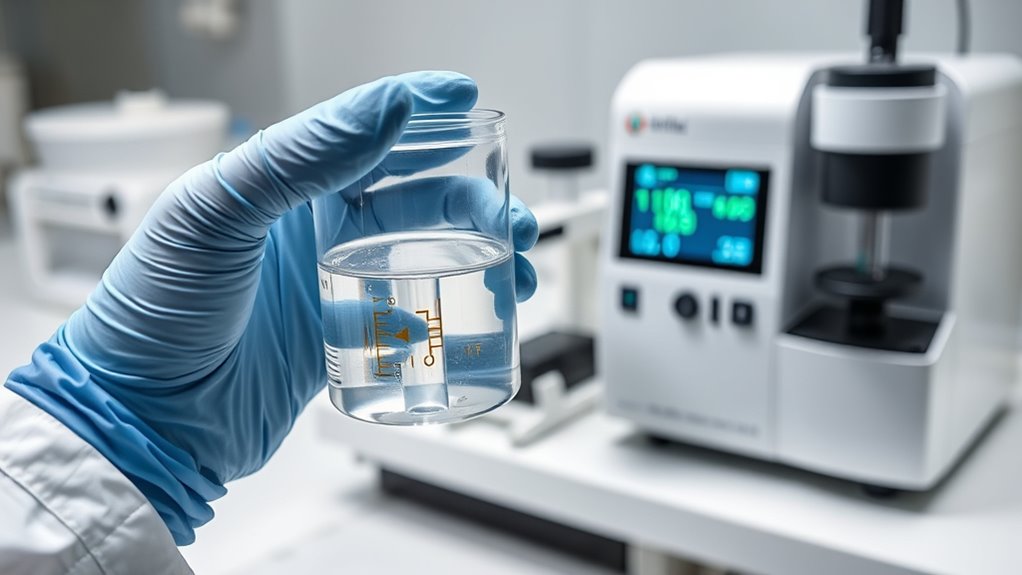

Residual monomer testing in polymers is vital to ensure your products meet safety standards and are safe for use. It involves extracting unreacted monomers, typically through solvent immersion, and analyzing the samples with chromatography to determine their exact levels. This helps identify potential health risks like allergic reactions or tissue irritation. Staying within regulatory limits guarantees product quality and patient safety. Keep exploring to discover how these tests can protect both your consumers and your brand.
Key Takeaways
- Residual monomer testing detects unreacted monomers in polymers to ensure safety and compliance.
- Analytical methods like chromatography quantify residual monomer levels in polymer samples.
- Testing procedures involve solvent extraction and standardized protocols to assess monomer migration.
- Regulatory standards specify maximum residual monomer thresholds for dental and biomedical polymers.
- Accurate testing helps optimize polymerization processes, enhancing product quality and biocompatibility.

Have you ever wondered how safe a dental prosthetic or polymer product really is? When it comes to these materials, one of the most vital concerns is residual monomer content. Residual monomers are unreacted monomers left behind after polymerization, and if present in high amounts, they can cause allergic reactions, toxicity, or other health issues. That’s why residual monomer testing has become an essential step in evaluating the safety of dental and polymer products. By conducting these tests, manufacturers can determine the levels of monomer migration—the process where monomers leach out from the polymer matrix into the surrounding environment or tissues. Monitoring monomer migration helps guarantee that the product complies with established safety standards, which are designed to limit acceptable residual monomer levels and reduce health risks.
Residual monomer testing ensures dental products meet safety standards and protect patient health.
Safety standards vary depending on the application and governing body, but they all aim to protect users from potential adverse effects. In dentistry, for example, international organizations have set specific thresholds for residual monomers in dental materials. If these limits are exceeded, the material may be deemed unsafe for clinical use. Residual monomer testing involves extracting samples of the polymer or prosthetic, often through solvent immersion or other standardized methods, and analyzing them with techniques like chromatography. These analyses reveal the exact concentration of unreacted monomers, allowing manufacturers to adjust their processes accordingly. By guaranteeing that residual monomer levels stay within safe limits, they uphold both product integrity and user safety.
Understanding the importance of monomer migration is vital because it directly impacts the long-term biocompatibility of dental prostheses and other polymer-based products. When residual monomer levels are high, they can slowly release into the oral cavity or the body, potentially causing inflammation, allergic reactions, or tissue irritation. This makes compliance with safety standards not just a regulatory requirement but a critical aspect of patient health. Manufacturers who prioritize residual monomer testing demonstrate their commitment to quality and safety, fostering trust among practitioners and patients alike.
In essence, residual monomer testing isn’t just about meeting regulatory demands—it’s about safeguarding health by controlling what leaches out from polymer products. By adhering to safety standards and thoroughly evaluating monomer migration, manufacturers can produce safer, more reliable products. For you, as a user or healthcare provider, this means greater confidence in the materials used in dental restorations and other polymer applications. It’s a vital step that bridges scientific quality control with patient safety, ensuring that polymer products serve their purpose without posing unnecessary risks.
Frequently Asked Questions
How Does Residual Monomer Affect Polymer Biodegradability?
Residual monomers can hinder polymer degradation because they slow down the breakdown process, leading to longer persistence in the environment. As a result, the environmental impact increases since these monomers may be toxic or non-biodegradable themselves. By reducing residual monomers through proper testing and processing, you can improve polymer biodegradability, minimizing environmental harm and promoting more sustainable waste management.
Are There Industry Standards for Residual Monomer Levels?
You’ll find that industry standards set residual monomer limits to guarantee safety and quality, like those from ASTM or ISO. These standards specify acceptable residual levels in polymers, helping manufacturers control monomer content and meet regulatory requirements. While limits vary by product type, adhering to these standards minimizes health risks and environmental impact. So, it’s essential to stay updated on relevant residual limits to maintain compliance and consumer trust.
Can Residual Monomers Migrate Into Food or Beverages?
Residual monomers can migrate into food or beverages through various migration pathways, especially in food contact applications. You should be aware that these monomers can transfer from the polymer surface or matrix into the food, potentially affecting safety. To minimize this risk, make certain that your materials meet industry standards for residual monomer levels and perform proper testing. This way, you protect consumers and comply with safety regulations effectively.
What Are the Health Risks Associated With Residual Monomers?
Residual monomers can pose health risks, including potential toxicity and adverse health implications. When these monomers migrate into food or beverages, you risk exposure to monomer toxicity, which might cause allergic reactions, irritation, or long-term health issues. You should be aware that high levels of residual monomers increase health implications, so proper testing and regulation are vital to minimize your exposure and guarantee safety.
How Often Should Residual Monomer Testing Be Conducted?
You should conduct residual monomer testing regularly, typically aligning with manufacturing schedules or product updates. Testing frequency depends on regulatory compliance requirements, which may specify testing at initial production, after significant changes, or periodically during product lifespan. By maintaining consistent testing, you guarantee your products remain safe, meet industry standards, and minimize health risks from residual monomers. Staying compliant helps avoid penalties and safeguards consumer health effectively.
Conclusion
In conclusion, testing for residual monomers is vital to guarantee your polymer products are safe and meet quality standards. By catching these leftovers early, you prevent potential health risks and product failures. Think of it as trimming the fat—you get rid of the excess to keep things running smoothly. Don’t overlook this step; it’s the backbone of reliable, high-quality polymers that your customers can trust. With proper testing, you’ll stay ahead of the game.